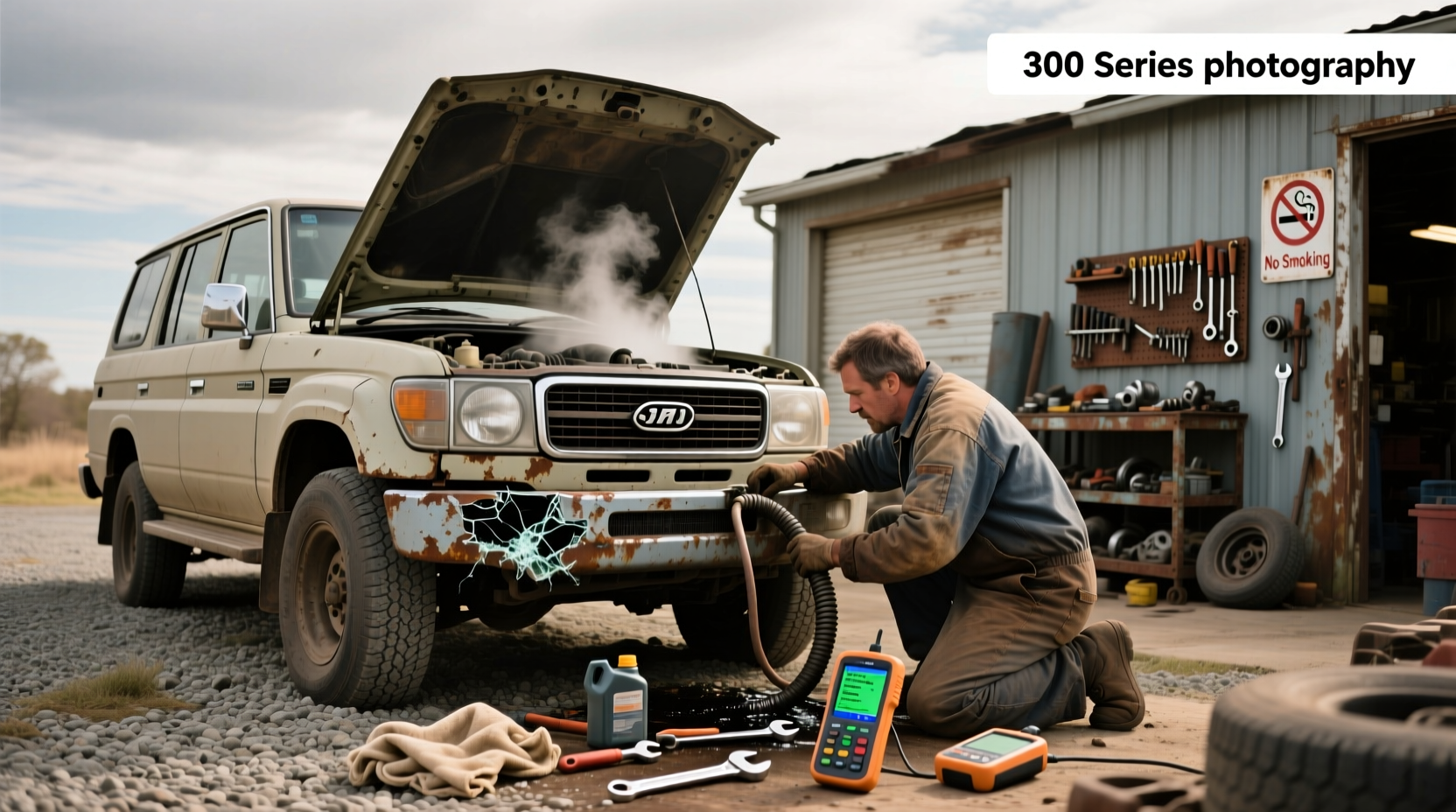
Owners of the Toyota Land Cruiser 300 (LC300) have generally reported high satisfaction with its off-road performance, modern interior, and improved fuel efficiency compared to previous generations. However, as with any new vehicle platform, a growing number of users are identifying recurring issues—particularly around the twin-turbo V6 engines and 10-speed automatic transmission. This in-depth analysis explores verified reports from owner forums, service centers, and technical reviews to answer the pressing question: what are the most common 300 series Landcruiser problems, and how do they impact long-term ownership?
Understanding the LC300 Platform and Its Engine Options
The Land Cruiser 300 Series, introduced globally in 2021, marked a major shift for Toyota’s legendary SUV line. It replaced the long-standing V8 engines with more efficient, lighter twin-turbo V6 powertrains—a move aimed at improving on-road dynamics, emissions, and fuel economy without sacrificing durability ⚙️.
Two primary engines power the LC300 worldwide:
- 3.5L Twin-Turbo V6 Gasoline (V35A-FTS): Produces approximately 415 hp and 650 Nm of torque.
- 3.3L Twin-Turbo V6 Diesel (F33A-FTV): Delivers about 304 hp and 700 Nm of torque.
Both engines are mated to a new 10-speed automatic transmission, representing a significant upgrade over older 6-speed units used in the LC200 series 🌐. While this combination offers better acceleration and smoother shifting under normal conditions, it has also introduced new mechanical behaviors and potential failure points not seen in earlier Land Cruisers.
Key Reported Problems in the 300 Series Landcruiser
Despite Toyota’s reputation for reliability, early adopters of the LC300 have encountered several notable issues. These range from minor software glitches to serious mechanical failures that could affect long-term value and usability, especially in harsh environments or under heavy loads.
1. Diesel Engine Overheating and Piston Damage (F33A-FTV)
One of the most concerning issues involves the 3.3L twin-turbo diesel engine (F33A-FTV), with multiple reports pointing to piston overheating leading to catastrophic engine damage ❗.
According to technical breakdowns and owner testimonials on platforms like YouTube and Reddit 1, excessive heat buildup in the piston crown can cause the top compression ring to lose end gap, resulting in seizure. This often leads to scoring of cylinder walls and subsequent main bearing failure.
Root causes appear linked to:
- Prolonged high-load driving (e.g., towing or desert crossing)
- Inadequate cooling system design under extreme ambient temperatures
- Fuel quality—especially low cetane diesel—which increases combustion temperatures
Toyota has not issued a global recall for this issue as of late 2025, though some regional dealerships have performed field repairs or ECU updates to adjust fuel mapping and boost control ⚠️. Owners in hot climates (such as the Middle East and Australia) report higher incidence rates.
2. Transmission Shifting Behavior and Delayed Response
The 10-speed automatic transmission, while advanced, has drawn criticism for inconsistent shift logic, particularly in low-speed off-road scenarios or when towing 🚚.
Common complaints include:
- Unnecessary upshifts during crawling over rocks
- Delayed downshifts when accelerating from a stop
- Excessive hunting between gears on inclines
This behavior appears rooted in aggressive fuel-saving programming that prioritizes keeping the engine in lower RPM ranges. While drivers can override it using manual mode, many feel the default calibration doesn’t match the vehicle’s intended rugged use case.
Some owners have reported success after ECU remapping or transmission firmware updates, suggesting Toyota may refine this through future OTA or dealership updates ⏱️.
3. Increased Complexity and Electronic Dependency
Compared to the mechanically simpler LC200, the LC300 features significantly more electronics—including adaptive suspension, digital dashboards, advanced driver aids, and complex HVAC systems ✨.
This increased complexity brings new vulnerabilities:
- Infotainment system freezes or reboots
- Sensor errors affecting traction control or AWD operation
- Camera washers failing due to clogging or motor burnout
In remote areas, these electronic gremlins can become more than just annoyances—they may disable critical safety or navigation functions. Unlike mechanical faults, diagnosing and repairing electronic issues often requires specialized tools and dealer access, limiting self-reliance.
4. Reduced Towing Confidence Despite Higher Output
Although the LC300’s diesel engine produces strong torque on paper (700 Nm), some users report reduced confidence during sustained towing, especially uphill or in high heat 🔧.
Reasons cited include:
- Transmission thermal management limitations
- Active grille shutters closing prematurely, reducing radiator airflow
- Lack of a dedicated transmission oil temperature gauge (unlike competitors)
Without real-time monitoring, drivers risk overheating components unknowingly. Aftermarket solutions like auxiliary gauges are becoming popular among expedition builders.
5. Suspension and Ride Comfort Trade-offs
The LC300 introduced a new double-wishbone front suspension replacing the traditional solid axle setup. While this improves on-road handling and comfort, some purists argue it compromises ultimate durability in extreme off-roading 👥.
Reports from modified builds show:
- Increased stress on control arms during rock crawling
- Higher repair costs when damaged vs. solid axle housings
- Less articulation in certain configurations
Additionally, the standard air suspension option (available on higher trims) has shown sensitivity to punctures and compressor failures, particularly in dusty environments.
Regional Differences in Engine Availability and Reliability
It's important to note that not all markets receive the same powertrain options. For example:
| Region | Available Engines | Known Issues |
|---|---|---|
| Australia | 3.3L V6 Diesel only | Engine overheating, DPF clogging |
| Middle East | 3.5L V6 Petrol only | Fuel consumption, AC strain on engine |
| South Africa | 3.3L V6 Diesel | Transmission tuning, sensor faults |
| North America | Hybrid V6 (planned for 2025+) | Limited data; early hybrid teething issues expected |
These differences mean that problem prevalence varies by region. Australian owners, for instance, face unique challenges due to long distances, high ambient temperatures, and reliance on non-premium diesel fuels.
Owner Mitigation Strategies and Preventive Measures
While some issues stem from design choices beyond user control, proactive owners can reduce risks through proper maintenance and modifications ✅.
For Diesel Engine Longevity
- Use high-cetane diesel whenever possible (minimum 51 Cetane Number)
- Install an engine oil temperature gauge to monitor thermal stress
- Consider a secondary oil cooler for frequent towing or desert driving
- Avoid prolonged idling or lugging the engine below 1,800 RPM under load
Transmission Optimization
- Update transmission software if a revised calibration is available
- Use manual shift mode in off-road or towing situations
- Monitor transmission fluid condition regularly—change every 60,000 km in severe use
Electronics and Off-Grid Readiness
- Carry spare fuses and relays for critical systems
- Install a dual-battery system to support accessories without draining the starter battery
- Keep a physical map as backup if GPS fails
How the LC300 Compares to Previous Generations
Many buyers considering the 300 series come from LC200 or even older VX80/VX100 platforms. Here’s how key aspects compare:
| Feature | LC200 (V8) | LC300 (V6 Twin-Turbo) |
|---|---|---|
| Engine Simplicity | ✅ High (naturally aspirated V8) | ⚠️ Moderate (complex turbo setup) |
| Fuel Efficiency | ~14–16 L/100km | ~10–12 L/100km (diesel) |
| Towing Capacity | 3,500 kg | 3,500 kg (same rating) |
| Off-Road Durability | Solid front axle (proven) | Double wishbone (lighter but less robust?) |
| Repair Accessibility | Widely understood mechanics | Requires advanced diagnostics |
The trade-off is clear: the LC300 gains refinement, efficiency, and modern tech—but potentially at the cost of field-serviceable simplicity.
Aftermarket Support and Modifications
The rise in reported issues has spurred growth in the LC300 aftermarket sector 🛠️. Popular upgrades include:
- Upgraded intercoolers to combat intake heat soak
- Performance modules that optimize fuel delivery and boost response
- Reinforced suspension components for lifted builds
- Transmission coolers and bypass valves for thermal management
However, modifying the factory tune carries risk—especially with diesel engines already prone to overheating. Any modification should be paired with enhanced monitoring systems to avoid pushing components beyond safe limits.
Is the LC300 Still a Reliable Choice?
The broader question remains: is the 300 series Landcruiser still reliable despite these emerging problems?
Based on current evidence, the answer depends heavily on usage patterns and environment:
- In moderate climates with regular highway use, the LC300 performs well and benefits from improved ride and efficiency.
- Under extreme conditions—desert crossings, continuous towing, or poor fuel quality—the risk of engine or transmission issues increases noticeably.
- Newer model years (2024–2025) may incorporate incremental fixes based on early feedback, making them potentially more robust than early production units.
Toyota’s long-term track record suggests they will address widespread defects eventually, but early adopters bear the brunt of initial design flaws—a pattern seen across automotive history.
Frequently Asked Questions (FAQs)
- ❓ What are the most common 300 series Landcruiser problems?
- The most frequently reported issues involve diesel engine overheating leading to piston damage, inconsistent 10-speed transmission behavior, electronic system glitches, and concerns over the durability of the new double-wishbone front suspension under extreme off-roading.
- ❓ Is the LC300 V6 engine reliable compared to the old V8?
- Early data suggests the V6 twin-turbo engines are less proven than the naturally aspirated V8s they replaced. While offering better fuel economy and similar output, the V6 designs introduce more complexity and have shown vulnerability to heat-related failures in demanding conditions.
- ❓ Can I prevent engine failure in my LC300 diesel?
- Yes, mitigation strategies include using high-cetane diesel, installing an oil temperature gauge, adding an auxiliary cooler, avoiding lugging the engine, and ensuring timely software updates. Regular monitoring significantly reduces risk.
- ❓ Why did Toyota switch from V8 to V6 in the Land Cruiser 300?
- Toyota shifted to V6 engines to meet stricter global emissions standards, improve fuel efficiency, reduce weight, and enhance on-road handling. The change aligns with industry trends toward downsizing and turbocharging, though it sacrifices some mechanical simplicity.
- ❓ Are there any recalls for the Land Cruiser 300 series?
- As of late 2025, there is no global recall for the LC300 related to engine or transmission defects. However, some regional service actions and technical service bulletins have been issued regarding ECU recalibration and cooling system checks.




 浙公网安备
33010002000092号
浙公网安备
33010002000092号 浙B2-20120091-4