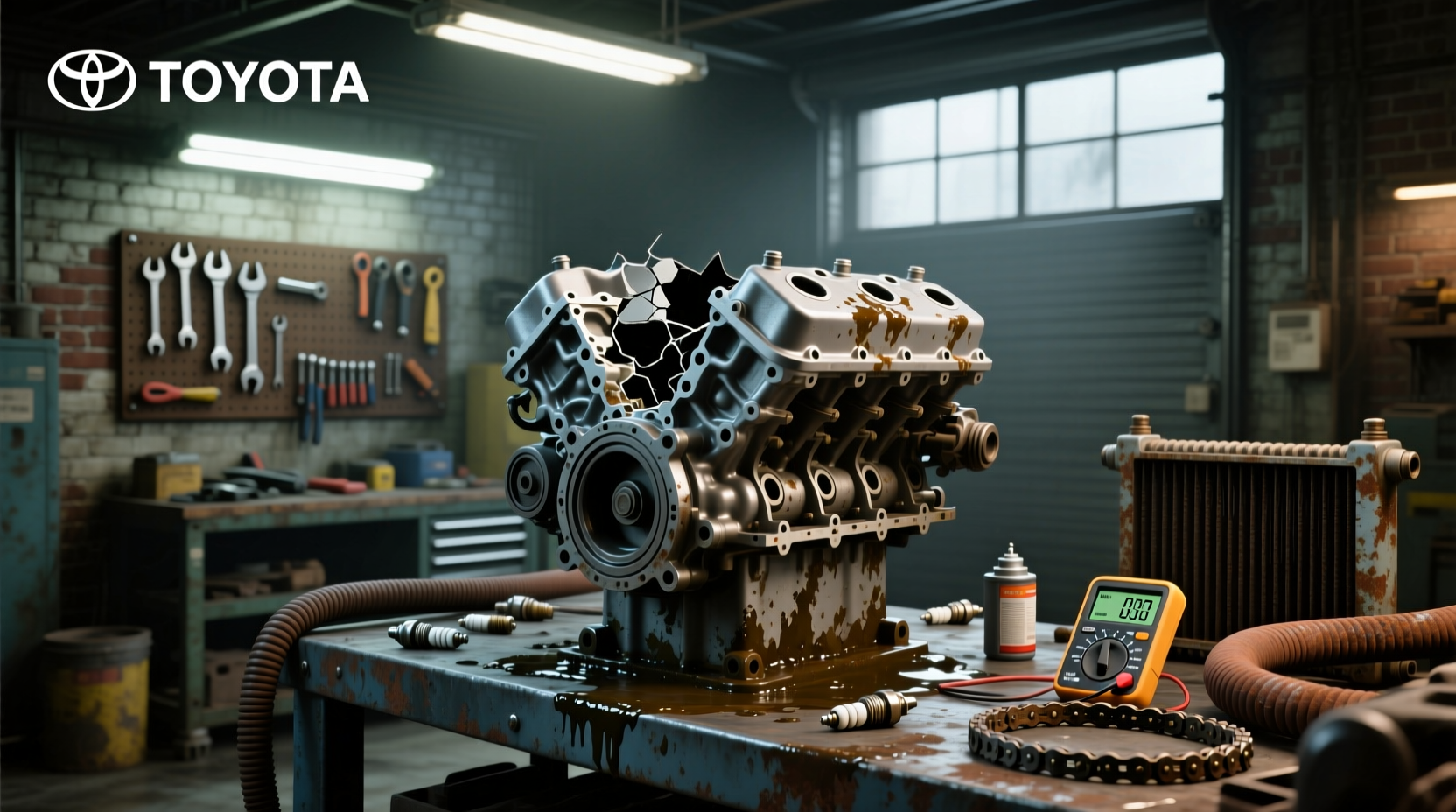
For owners and buyers of Toyota vehicles equipped with V6 engines, understanding potential Toyota V6 engine problems is critical for long-term reliability and cost-effective ownership. While Toyota has built a reputation for durability, certain generations of its GR-series V6 engines—particularly the 2GR-FE and 3.5L 2GR-FKS—have shown recurring mechanical concerns under specific conditions. Key issues include oil consumption, timing chain wear, water pump failures, and coolant leaks, especially in high-mileage or poorly maintained units 1. These problems are not universal but appear more frequently in models from 2007 to 2021, such as the Camry, Highlander, Tacoma, and Tundra. Recognizing early warning signs like ticking noises, overheating, misfires, or blue-tinted exhaust smoke can help prevent catastrophic failure. This guide breaks down every major concern linked to Toyota’s V6 engines, explains root causes, identifies which models and years are most at risk, and provides actionable steps to maintain or repair these powertrains effectively.
Understanding Toyota's V6 Engine Lineup
Before diving into specific problems, it's essential to understand which engines fall under the 'Toyota V6' category. The most widely used modern V6 family is the GR series, introduced in 2005 as a successor to the older MZ and VZ families 1. This aluminum-block, DOHC engine line includes several displacements:
- 1GR-FE: 4.0L – Found in 4Runner, Tacoma, FJ Cruiser
- 2GR-FE: 3.5L – Used in Camry, Avalon, Highlander, RX350
- 2GR-FKS: 3.5L D-4S (port + direct injection) – In newer Tundra, Sequoia, Lexus LS
- 3GR-FE: 3.0L – Limited to some international markets
- 2UR-FSE: 5.0L V8 (not V6, but often confused)
The 2GR-FE and its updated twin-injection variant, the 2GR-FKS, are the most common subjects when discussing Toyota 3.5 L V6 engine problems. Despite strong performance and generally good longevity, certain design and material choices have led to predictable wear patterns over time.
Common Toyota V6 Engine Problems by Model Year and Application
Not all Toyota V6 engines suffer the same fate. Issues tend to cluster around specific production years and vehicle applications due to shared components, usage patterns, and environmental exposure.
Oil Consumption in 2GR-FE Engines (2007–2015)
One of the most frequently reported issues involves excessive oil consumption in the 3.5L 2GR-FE engine, particularly in:
- 2007–2011 Toyota Camry
- 2008–2013 Toyota Highlander
- 2010–2015 Toyota Venza
- 2010–2015 Lexus RX350
Symptoms include needing to add a quart of oil every 1,500 miles, blue exhaust smoke on startup, and carbon buildup on spark plugs. Root causes involve worn piston rings, valve stem seals, or PCV system malfunctions. Some owners report that switching to higher-viscosity oil (e.g., 5W-30 instead of 0W-20) reduces consumption temporarily, though this doesn’t fix underlying wear.
Timing Chain and Tensioner Failures (2010–2020 Models)
A growing number of reports point to premature timing chain wear in both 2GR-FE and 2GR-FKS engines. Unlike older designs with durable chains, these models use roller-type chains with plastic guides that degrade over time. Symptoms include:
- Engine ticking or rattling on cold start
- Check engine light with codes P0016, P0017, or P0008
- Reduced power or rough idle
If left unattended, stretched chains can jump timing, leading to bent valves and internal damage. Replacement before 150,000 miles is recommended, especially if maintenance intervals were extended. The issue appears more prevalent in stop-and-go driving conditions where oil temperatures fluctuate.
Coolant Leaks and Water Pump Failure
The water pump in many GR-series engines is driven by the timing chain and located behind the front cover. When it fails, coolant mixes with oil or drips externally, often requiring extensive disassembly to repair. Common indicators:
- Puddles under the engine near the timing cover
- Overheating despite full coolant levels
- Milky residue on the oil cap (sign of coolant contamination)
This problem is especially notable in 2010–2016 Highlander and Sienna models. Because the water pump shares labor-intensive access with the timing chain, mechanics often recommend replacing both simultaneously during service.
Dual Injection Carbon Buildup (2GR-FKS, 2018+)
Newer 3.5L V6 engines with D-4S dual fuel injection (direct + port) were designed to improve efficiency and reduce emissions. However, they’re prone to intake valve carbon buildup because gasoline no longer flows over the valves via the intake stream. This leads to:
- Reduced throttle response
- Engine hesitation or stalling at low RPM
- Increase in NOx emissions triggering check engine lights
Preventive measures include regular walnut blasting of intake valves every 60,000–80,000 miles and using Top Tier detergent gasoline. Some owners install catch cans to reduce oil vapor entering the intake tract.
Knocking and Rod Bearing Wear (2016–2017 Tacoma & Tundra)
A concerning trend emerged in late-model Tacomas and Tundras equipped with the 3.5L 2GR-FKS engine: reports of loud knocking sounds within 70,000 miles. Investigations suggest possible rod bearing wear due to inadequate lubrication or oil starvation during aggressive acceleration or towing 2. While Toyota hasn’t issued a formal recall, class-action lawsuits have been filed alleging defective crankshaft or bearing design. Owners experiencing knock should immediately stop driving and seek diagnosis to avoid total engine seizure.
Which Toyota V6 Engines Are Most Reliable?
Despite the issues outlined above, many Toyota V6 engines remain highly reliable when properly maintained. The following variants have demonstrated exceptional longevity:
| Engine | Typical Lifespan | Known Strengths | Weaknesses |
|---|---|---|---|
| 1GR-FE (4.0L) | 250,000+ miles | Rugged design, simple EFI, robust cooling | Water pump leaks, timing chain stretch after 150k |
| 2GR-FE (3.5L NA) | 200,000–300,000 miles | Smooth power delivery, proven architecture | Oil consumption, timing tensioner issues |
| 2GR-FKS (3.5L Twin-Injection) | 150,000–200,000 miles (early data) | Better fuel economy, higher output | Carbon buildup, rod knock concerns |
| 3MZ-FE (3.3L) | 200,000+ miles | Fewer reported issues, durable internals | Discontinued, limited availability |
The 3MZ-FE, though discontinued, remains one of the most trouble-free Toyota V6 engines ever made, with documented cases exceeding 400,000 km (250,000 miles) without major repairs 3. Meanwhile, the 1GR-FE continues to earn praise in off-road circles for its resilience in harsh environments.
Why Is Toyota Phasing Out the V6 Engine?
Recent shifts in Toyota’s engine strategy reflect broader industry trends toward electrification and downsizing. As of 2023, the automaker has begun replacing naturally aspirated V6 engines with turbocharged four-cylinder hybrids like the T24A-FTS 2.4L inline-four 2.
Reasons include:
- Emissions regulations: Stricter global standards favor smaller, cleaner engines.
- Fuel efficiency: Turbo-four hybrids offer comparable power with better MPG.
- Cost and complexity: V6 engines require more materials and space than compact turbo units.
- Market demand: Consumers increasingly prefer hybrid SUVs over large sedans.
Models like the Camry and Highlander now come standard with four-cylinder hybrids, while trucks like the Tundra retain the 3.5L twin-turbo V6 (i-Force MAX), a significantly revised version of the older 2GR platform.
How to Diagnose Potential V6 Engine Issues Early
Early detection can save thousands in repair costs. Here’s a practical checklist for spotting developing problems:
🔧 Listen for Unusual Noises
A rhythmic ticking on startup may indicate low oil pressure or timing chain slack. A deep knocking suggests rod or main bearing wear—do not ignore this.
🧼 Check for Fluid Contamination
Inspect the oil dipstick and filler cap. Milky residue means coolant is mixing with oil—a sign of head gasket or water pump failure.
📊 Monitor Oil and Coolant Levels
Regularly track fluid consumption. Adding oil every few thousand miles or noticing dropping coolant levels without visible leaks warrants investigation.
🔍 Scan for Diagnostic Trouble Codes (DTCs)
Use an OBD2 scanner to check for stored codes. Common ones related to V6 issues include:
- P0016 / P0017: Camshaft-Crankshaft Timing Misalignment
- P0171 / P0174: Lean Fuel Trim (could indicate vacuum leak or injector issue)
- P0300: Random Misfire (linked to carbon buildup or ignition wear)
📍 Review Maintenance History
Engines with irregular oil changes or deferred timing services are far more likely to develop serious issues. Always verify service records when buying used.
Tips for Extending Your Toyota V6 Engine Life
You can significantly improve longevity through proactive care:
- Use genuine or high-quality synthetic oil (0W-20 or 5W-30 as specified) and change it every 5,000–7,500 miles.
- Replace the timing chain assembly preemptively at 120,000–150,000 miles, including guides and tensioners.
- Flush coolant every 100,000 miles to prevent corrosion in the water pump and radiator.
- Install an aftermarket oil cooler if frequently towing or driving in hot climates.
- Perform intake cleaning every 60,000 miles on D-4S engines to manage carbon deposits.
Buying a Used Toyota with a V6 Engine? What to Watch For
If you're considering a pre-owned Camry, Highlander, or truck with a V6, follow these guidelines:
- Avoid models with inconsistent maintenance records—especially those missing timing-related services.
- Test drive thoroughly, paying attention to cold-start behavior, smoothness under load, and transmission shifts.
- Get a compression and leak-down test to assess cylinder health.
- Request a bore-scope inspection of the combustion chambers if oil consumption is suspected.
- Check for open recalls or technical service bulletins (TSBs) related to engine performance.
Be especially cautious with 2016–2017 Tacomas and Tundras showing any signs of knock—even intermittent—due to unresolved bearing concerns.
Conclusion: Are Toyota V6 Engines Still Worth It?
The answer depends on the model, year, and usage pattern. Older 2GR-FE engines (pre-2015) are generally dependable if well-maintained, while newer 2GR-FKS units require closer monitoring due to emerging mechanical risks. The phase-out of the traditional V6 in favor of hybrid four-cylinders signals a shift in priorities—from raw power to efficiency and sustainability. However, for drivers who value proven V6 smoothness and towing capability, these engines remain viable options provided they commit to disciplined maintenance and early diagnostics.
Frequently Asked Questions
❓ Can I still buy a new Toyota with a V6 engine?
As of 2025, most Toyota passenger cars no longer offer V6 engines. However, the Tundra and Sequoia pickups continue to use a twin-turbocharged 3.5L V6 (i-Force MAX). Traditional naturally aspirated V6s have been largely replaced by hybrid four-cylinder systems.
❓ How long do Toyota V6 engines usually last?
With proper maintenance, most Toyota V6 engines last between 200,000 and 300,000 miles. The 1GR-FE and 2GR-FE are known for exceeding 250,000 miles when serviced regularly. Newer 2GR-FKS engines show shorter lifespans in early reports, sometimes failing before 200,000 miles due to rod bearing issues.
❓ What are the signs of timing chain failure in a Toyota V6?
Common signs include a metallic ticking noise on startup, check engine light with timing codes (P0016/P0017), rough idling, and reduced engine performance. If ignored, the chain can jump, causing severe internal damage.
❓ Does Toyota cover oil consumption under warranty?
Generally, moderate oil consumption (up to 1 quart per 1,200 miles) is considered normal and not covered under warranty. However, excessive burning due to manufacturing defects may be eligible for coverage, especially if documented within the powertrain warranty period (typically 5 years/60,000 miles).
❓ Is the Toyota 3.5 L V6 engine reliable?
The 3.5L V6 (2GR-FE/FKS) is mostly reliable but has known issues. The earlier 2GR-FE can suffer from oil consumption and timing chain wear. The newer 2GR-FKS adds dual injection benefits but introduces carbon buildup and potential rod knock in certain model years. Regular maintenance greatly improves reliability.





 浙公网安备
33010002000092号
浙公网安备
33010002000092号 浙B2-20120091-4