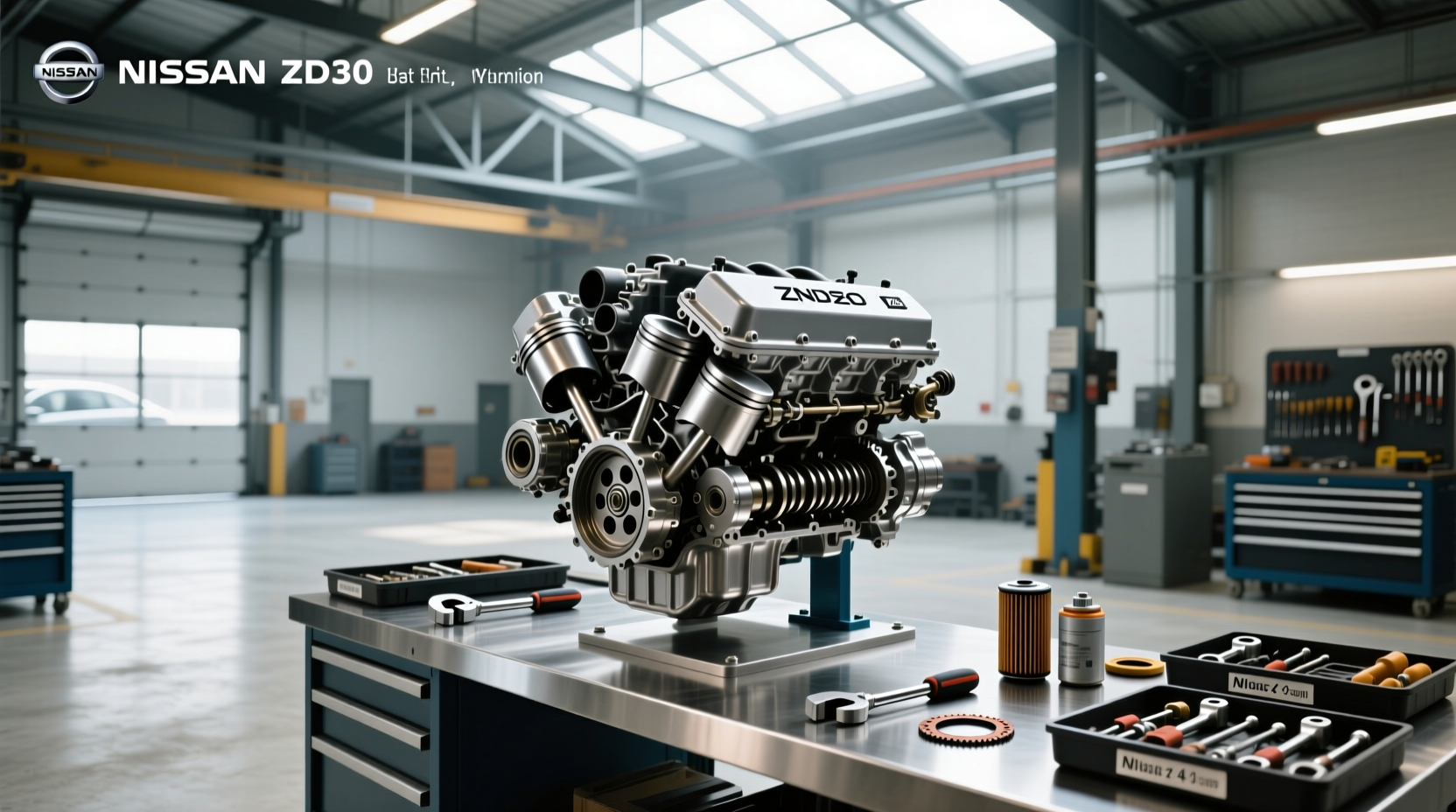
The Nissan ZD30 engine, a 3.0L inline-four turbo-diesel unit widely used in Patrol, Navara, and Cabstar models, is known for its durability under moderate loads. However, one of the most frequently searched concerns—zd30 engine cylinder head failure—reveals a persistent reliability issue that affects many owners, especially those using their vehicles for towing or off-road work. The root cause often lies in the design of the aluminum crossflow cylinder head, which is prone to warping and cracking under sustained high temperatures and improper torque sequencing during assembly 1. Understanding these weaknesses allows operators to make informed decisions about maintenance, upgrades, and repairs before catastrophic damage occurs.
Understanding the ZD30 Engine Design and Applications
⚙️ The Nissan ZD30 engine was introduced in the late 1990s as part of Nissan’s modern diesel lineup. It features a 2,953 cc displacement, DOHC configuration with 16 valves, and an aluminum-alloy cylinder head mounted on a cast-iron block. Variants include naturally aspirated (ZD30), turbocharged (ZD30T), and common rail direct injection (ZD30DDTi/CRD) versions produced from 1997 through 2018 1.
📍 This engine powers several popular commercial and 4x4 platforms:
- Nissan Patrol Y61 (GU series)
- Nissan Navara D22 and D40
- Nissan NP300 (Hardbody)
- Nissan Cabstar
- Terrano II
Its widespread use across Australia, South Africa, the Middle East, and parts of Europe means spare parts availability is generally good—but so are reports of recurring mechanical failures. While the ZD30 delivers solid low-end torque and acceptable fuel economy, long-term reliability hinges heavily on proper cooling system maintenance, correct oil usage, and adherence to factory torque specs during servicing.
Why the ZD30 Cylinder Head Fails: Root Causes Explained
🔧 One of the most documented problems with the ZD30 engine is premature cylinder head degradation. Unlike robust cast-iron heads found in older diesels, the ZD30 uses a lightweight aluminum head that dissipates heat more efficiently but is far less tolerant of thermal stress.
📌 Key factors contributing to cylinder head failure include:
1. Poor Heat Dissipation and Cooling System Neglect
Aluminum expands more rapidly than iron when heated. If the cooling system is compromised—due to a failing thermostat, clogged radiator, or degraded coolant—the head can overheat locally, leading to distortion. Even minor warping disrupts the seal between the head and block, causing combustion gases to leak into the coolant passages—a classic symptom of head gasket failure.
2. Inadequate Torque Sequence During Reassembly
When replacing the head gasket or performing major service, incorrect bolt tightening sequence or torque values can create uneven clamping force. According to technical bulletins from engine rebuild specialists, the timing gear case must be fully seated and all bolts torqued progressively to 25–28 Nm in the correct order to prevent misalignment 2. Skipping this step increases the risk of micro-cracks forming over time.
3. Combustion Pressure Stress on Weak Deck Areas
The ZD30’s high-pressure common rail injection system generates intense combustion forces. Over time, especially under heavy load conditions such as continuous hill climbing or towing, these pressures can fatigue the head around the exhaust valve seats and spark plug bosses—common crack locations observed in failed units.
4. Use of Non-OEM or Low-Quality Replacement Parts
While aftermarket cylinder heads are available globally—including suppliers on Alibaba.com and regional vendors in South Africa and Australia—not all meet OEM material standards. Some budget heads use lower-grade aluminum alloys or imprecise machining tolerances, increasing the likelihood of early failure. Buyers should verify metallurgical specs and look for ISO-certified manufacturers if opting for non-genuine parts.
ZD30 Engine Symptoms: How to Identify Head-Related Issues Early
🔍 Recognizing warning signs before complete failure can save thousands in repair costs. Here are key indicators of developing cylinder head problems:
| Symptom | Possible Cause | Action Required |
|---|---|---|
| White smoke from exhaust (especially under load) | Coolant entering combustion chamber due to cracked head or blown gasket | Inspect coolant level; perform compression and leak-down test |
| Overheating without obvious coolant leaks | Internal coolant loss via head crack | Check for bubbles in expansion tank; conduct pressure test |
| Bubbling sound in radiator when engine running | Combustion gas leaking into cooling system | Confirm with block tester (chemical test for hydrocarbons) |
| Loss of power, rough idle, misfires | Valve train damage or poor sealing from warped head | Perform visual inspection after removal; check flatness with straight edge |
| Milky residue under oil cap or in radiator | Oil-coolant mixing due to internal leakage | Disassemble and inspect head gasket integrity |
⏱️ Delaying diagnosis often leads to secondary damage, including warped blocks, damaged pistons, or seized engines. A proactive approach involving regular cooling system flushes every 30,000 km and monitoring coolant condition can significantly extend service life.
Repair vs. Replacement: Evaluating Your Options
🛒 When faced with a confirmed cylinder head issue, owners typically consider three paths: repair, reconditioning, or full replacement.
Option 1: Repairing Cracked Heads
Some specialized machine shops offer welding or epoxy sealing for small cracks, particularly around non-critical areas like coolant ports. However, structural cracks near valve seats or injector bores are rarely repairable with lasting success. Thermal cycling will likely reopen the fissure within months.
Option 2: Reconditioned or Remanufactured Heads
Rebuilt heads from reputable suppliers often come with new valves, guides, seals, and springs. These are inspected for straightness, pressure-tested, and sometimes upgraded with hardened valve seats for improved longevity. Units from companies like All Head Services or Mr Cylinder Head in Australia typically cost between $900–$1,500 AUD and come with warranties 3.
Option 3: New Aftermarket or OEM Replacement
New cylinder heads are available through dealers and third-party suppliers. OEM Nissan units ensure compatibility but may carry premium pricing. Aftermarket alternatives vary in quality—some match OEM specs while others cut corners. Look for heads labeled “assembled” (with valves, camshafts, and preset clearances) to reduce labor time during installation.
🏭 When sourcing replacements, verify fitment by engine code (e.g., ZD30DDTi vs. ZD30Di) and model year. For example, pre-2007 Patrol GU models with direct injection differ slightly from later CRD versions. Confirm part numbers such as 11039-VC10A before purchasing.
Can You Upgrade the ZD30 Cylinder Head?
✨ While no official factory upgrade exists, some enthusiasts explore modified heads with enhanced cooling channels or stronger materials. However, true performance gains require supporting modifications: upgraded intercoolers, revised ECU tuning, and strengthened bottom ends. Simply bolting on a higher-flow head without addressing airflow balance or fuel delivery yields minimal benefit and may increase stress on already-vulnerable components.
Additionally, any modification affecting emissions output may conflict with local regulations, particularly in regions with strict diesel vehicle standards. Always consult local compliance requirements before making changes.
Preventive Maintenance Tips to Extend ZD30 Engine Life
🧼 Preventing cylinder head issues starts with disciplined maintenance practices:
- Monitor coolant condition: Replace every 2 years or 30,000 km. Use only Nissan-approved antifreeze to avoid corrosion and scaling.
- Avoid short trips and cold idling: Frequent cold starts without reaching operating temperature promote condensation and acid buildup in the oil.
- Use correct engine oil: SAE 15W-40 CI-4 or higher specification diesel oil helps manage heat and reduces sludge formation.
- Inspect hoses and belts regularly: A collapsed radiator hose or slipping fan belt reduces cooling efficiency.
- Install an auxiliary oil cooler: Especially beneficial for vehicles used in hot climates or under constant load.
⚡ Installing a water temperature gauge provides real-time feedback, allowing drivers to detect overheating early—before irreversible damage occurs.
Regional Differences in ZD30 Reliability and Support
🌐 Experiences with the ZD30 vary by region due to climate, fuel quality, and service infrastructure:
- Australia: High ambient temperatures and dusty environments accelerate wear. Many owners report better outcomes after switching to reinforced radiators and dual electric fans.
- South Africa: Facebook groups and local forums indicate growing availability of refurbished heads, though counterfeit parts remain a concern.
- Middle East: Extreme desert heat combined with stop-start city driving creates ideal conditions for thermal fatigue. Regular servicing is critical.
- Europe: Stricter emission rules have led to earlier retirement of ZD30-powered vehicles, limiting long-term data on high-mileage reliability.
🚚 Logistics also affect repair timelines. Remote areas may face delays in obtaining genuine parts, prompting reliance on local machine shops for emergency fixes.
Cost Considerations: What Does a ZD30 Head Repair Really Cost?
📋 Repair expenses depend on location, labor rates, and component choices:
- Labor for head removal, inspection, and reinstallation: $600–$1,200 USD
- New OEM cylinder head: $1,500–$2,000 USD
- Reconditioned head: $800–$1,400 USD
- Gaskets, studs, fluids, and hardware kit: $150–$250 USD
Total outlay typically ranges from $1,600 to $3,500 USD. In some markets, imported aftermarket heads from Asia offer savings but carry risks related to fitment and durability.
Common Misconceptions About the ZD30 Engine
❗ Despite its reputation, several myths persist:
- Myth: The ZD30 is inherently unreliable.
Reality: Many units exceed 300,000 km with proper care. Failures are often linked to neglect, not fundamental design flaws. - Myth: All aftermarket heads are inferior.
Reality: Reputable remanufacturers produce reliable units. Research supplier history and request material certifications. - Myth: Upgrading injectors or tuning improves reliability.
Reality: Increased power raises cylinder pressure and heat, potentially accelerating head failure unless cooling and lubrication systems are upgraded accordingly.
Frequently Asked Questions (FAQs)
❓ Below are answers to common follow-up questions based on user search trends and forum discussions:
Can I drive my vehicle with a cracked ZD30 cylinder head?
No, continued operation risks severe engine damage. Coolant intrusion can lead to hydrolock, while overheating may warp the engine block. Stop driving immediately and arrange for inspection.
How much does a ZD30 cylinder head replacement cost?
Total costs range from $1,600 to $3,500 USD depending on whether you choose OEM, reconditioned, or aftermarket parts and local labor rates.
Are there upgraded cylinder heads available for the ZD30 engine?
There are no factory upgrades, but some specialty shops offer modified heads with improved materials. Most 'upgrades' are standard replacements marketed as enhanced—verify actual improvements before purchase.
What tools are needed to replace a ZD30 cylinder head?
You’ll need a torque wrench, socket set, timing pinning tools, valve spring compressor, and possibly a crane or engine hoist. Factory service manual specifications are essential for accurate reassembly.
Is the ZD30 engine suitable for heavy towing?
It can handle moderate towing, but sustained high loads increase thermal stress on the cylinder head. Ensure cooling system efficiency and consider auxiliary coolers for frequent or heavy-duty use.




 浙公网安备
33010002000092号
浙公网安备
33010002000092号 浙B2-20120091-4