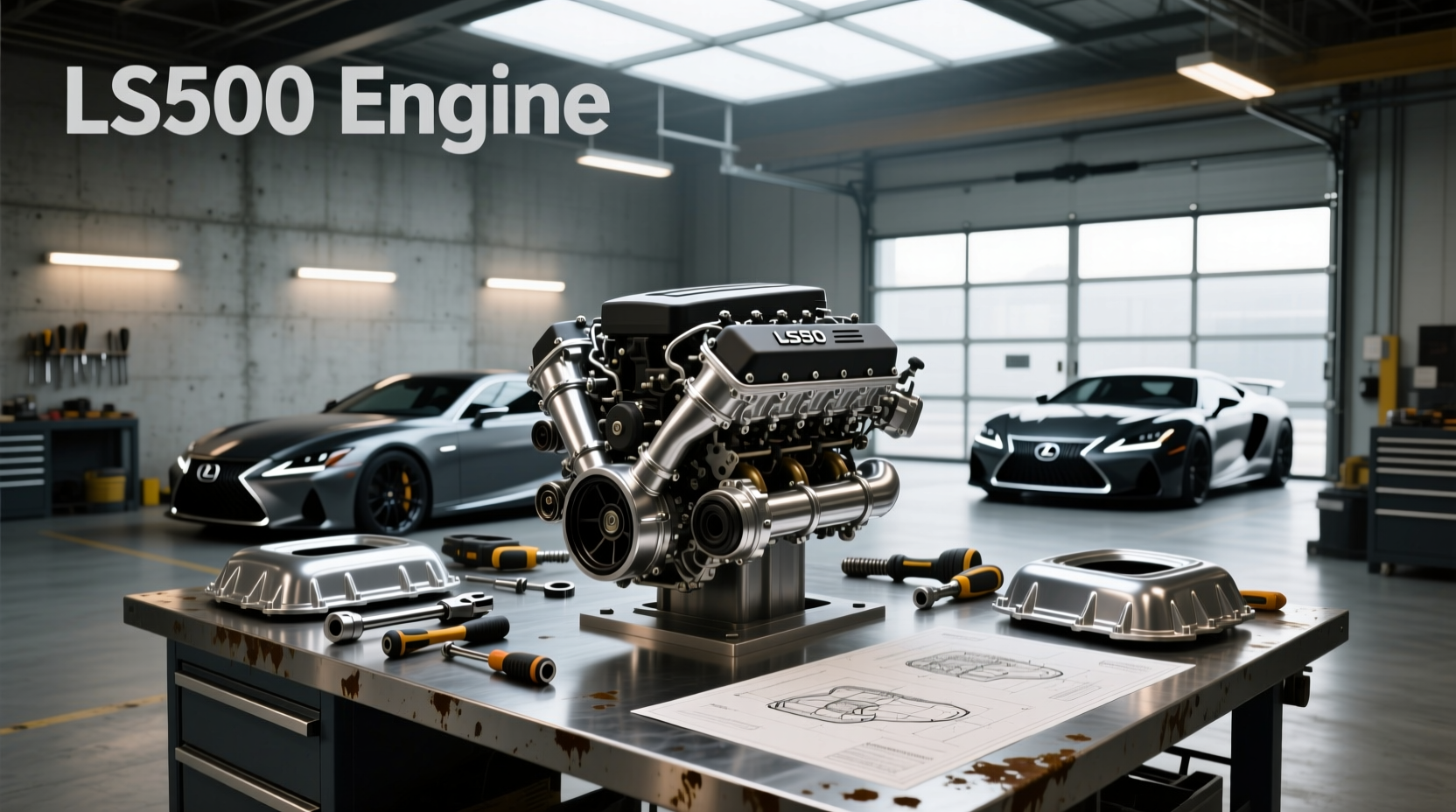
🚗 The Lexus LS500 engine is a twin-turbocharged 3.5-liter V6 (8GR-FXS) that delivers 416 horsepower and 442 lb-ft of torque, powering Lexus’s flagship luxury sedan since 2018. This powertrain offers a balance of smooth performance and efficiency, standing out in the full-size luxury segment against traditional V8s from German competitors like the BMW 7 Series and Mercedes S-Class. Unlike many of its peers, the LS500 does not use a V8, marking a strategic shift toward forced induction and refined six-cylinder performance.
For buyers searching for what kind of engine is in a Lexus LS500, this article provides a comprehensive overview covering technical specifications, real-world performance, maintenance expectations, common issues, and comparisons with alternative models such as the LS500h hybrid and discontinued V8 variants. We’ll also explore user-reported reliability, long-term ownership costs, and whether the current engine setup meets the expectations of luxury sedan drivers—especially those considering used or new 2024–2026 models.
⚙️ LS500 Engine Specifications: What You Need to Know
The heart of the modern Lexus LS500 is the 8GR-FXS 3.5L twin-turbo V6 engine. Introduced with the fourth-generation LS (XF50) in 2018, this engine replaced the naturally aspirated 4.6L V8 used in previous generations. Key specifications include:
- Engine Type: 3.5L Twin-Turbocharged V6 (8GR-FXS)
- Horsepower: 416 hp @ 6,000 rpm
- Torque: 442 lb-ft @ 1,600–3,300 rpm
- Fuel System: Direct and port fuel injection (D-4S)
- Transmission: 10-speed automatic (Direct Shift-10AT)
- Drivetrain Options: Rear-wheel drive (RWD), All-wheel drive (AWD - optional)
- 0–60 mph Time: Approximately 4.6 seconds (AWD)
- Fuel Economy (EPA): 19 mpg city / 30 mpg highway / 23 mpg combined
This engine uses Toyota’s D-4S dual injection system, combining direct and port fuel injection to optimize power, reduce carbon buildup, and improve throttle response1. Paired with a 10-speed automatic transmission, one of the first in a production luxury sedan, the power delivery is smooth and responsive across the rev range.
🏭 Why Did Lexus Replace the V8 with a Twin-Turbo V6?
One of the most frequently asked questions among enthusiasts is: Is the Lexus LS500 a V8? The answer is no—the current LS500 has not used a V8 since the 2017 model year. The decision reflects broader industry trends toward downsizing and turbocharging to meet emissions standards while maintaining or improving performance.
The prior LS 460 model featured a 4.6L 1UR-FSE V8 producing 380 hp. While respected for its refinement, it lagged behind turbocharged competitors in torque and fuel economy. The switch to the twin-turbo V6 allowed Lexus to offer:
- Higher low-end torque for effortless acceleration
- Better fuel efficiency without sacrificing highway cruising ability
- Reduced emissions and compliance with global regulations
- More compact engine packaging, aiding weight distribution and chassis design
While some purists miss the linear power delivery and sound of a large-displacement V8, the turbo V6 provides more usable daily performance, especially in stop-and-go traffic where immediate torque matters.
🔧 Real-World Performance and Driving Experience
Owners and reviewers consistently note that the LS500 feels powerful and serene under normal driving conditions ✨. The wide torque band means the car rarely needs to rev high; even at cruising speeds, there’s ample reserve for passing.
The 10-speed automatic transmission contributes significantly to the refined experience. It shifts smoothly and anticipates driver intent well, though some users report minor hesitation during aggressive downshifts—a trade-off for prioritizing comfort over sportiness.
In F Sport trim, the LS500 gains adaptive suspension, rear-wheel steering, and sport-tuned damping, enhancing cornering stability and responsiveness ⚙️. However, even in this configuration, the LS500 remains focused on comfort rather than track capability. Compared to the BMW M760i or Mercedes-AMG S63, it’s less performance-oriented but excels in ride quality and noise isolation.
🧰 Common Issues and Reliability Concerns
Based on owner forums like Reddit’s r/Lexus and r/cars, the LS500 engine itself has proven largely reliable 2. However, several recurring concerns have emerged over time:
1. Turbocharger Longevity
As with any turbocharged engine, longevity depends heavily on maintenance. Some owners report early turbo failures beyond 80,000 miles if oil changes are delayed or incorrect oil is used. Using OEM-specified 0W-20 full synthetic oil and adhering to service intervals is critical.
2. Fuel Injector Carbon Buildup
Despite the D-4S system reducing carbon deposits, some LS500s develop intake valve coking over time due to reliance on direct injection at higher loads. Regular induction cleaning (every 30,000–50,000 miles) can help prevent rough idle or misfires.
3. PCV Valve and Oil Consumption
A small number of reports mention elevated oil consumption, potentially linked to positive crankcase ventilation (PCV) system behavior under high load. This is not widespread but worth monitoring during long-term ownership.
4. Transmission Software Tuning
Early models (2018–2019) had noticeable shift delays, particularly when accelerating from a stop. Lexus issued software updates to improve responsiveness, so ensure any used LS500 has received all TSBs (Technical Service Bulletins).
Overall, the LS500 benefits from Lexus’s reputation for durability. With proper care, the engine and transmission should exceed 150,000 miles without major repairs.
✅ Maintenance Costs and Ownership Expenses
Another common query found in search results is: Is a Lexus LS500 expensive to maintain? The answer is nuanced.
Compared to German luxury sedans, the LS500 generally has lower scheduled maintenance costs. A typical service interval is every 6 months or 5,000 miles, including oil change, tire rotation, and inspection. Average annual maintenance runs between $500–$700, below the BMW 7 Series (~$900) and Mercedes S-Class (~$1,100)3.
However, unexpected repairs—such as turbo replacement or electronic suspension components—can be costly due to parts pricing and labor complexity. Extended warranties are often recommended for owners planning to keep the vehicle beyond the factory coverage period (4 years/50,000 miles).
| Maintenance Item | Interval | Avg. Cost |
|---|---|---|
| Oil Change | 5,000 mi | $120–$180 |
| Brake Pads + Rotors | 40,000–60,000 mi | $600–$900 |
| Transmission Fluid | 60,000 mi | $300–$400 |
| Coolant Flush | 100,000 mi | $250–$350 |
| Turbo Replacement (each) | 80,000+ mi (if failed) | $3,500–$4,500 |
🔍 LS500 vs. LS500h: Should You Choose the Hybrid?
The LS lineup includes a hybrid variant—the LS500h—which uses a naturally aspirated 3.5L V6 (2GR-FXS) paired with an electric motor and a unique multi-stage hybrid transaxle. Total system output is 354 hp.
Key differences:
- Power: LS500 (416 hp) > LS500h (354 hp)
- Fuel Economy: LS500h achieves up to 32 mpg highway vs. 30 mpg for LS500
- Driving Feel: LS500h uses an e-CVT with simulated gears; some drivers find it less engaging
- Price: LS500h typically starts $3,000–$5,000 higher
The LS500h appeals to eco-conscious buyers who prioritize quiet EV-mode operation at low speeds. However, for those seeking maximum performance, the standard LS500 remains the better choice.
📌 Why Is the LS500 So Rare on the Road?
A recurring theme in online discussions (e.g., Reddit threads asking “Why don’t I see a lot of LS500s on the road?”) points to low sales volume compared to German rivals. Several factors contribute:
- Niche Market Position: The LS competes in a shrinking full-size luxury sedan segment dominated by the S-Class and 7 Series.
- Brand Perception: In North America, Lexus is often associated with reliability and value, not cutting-edge prestige.
- Design Polarization: The bold spindle grille and futuristic interior divide opinions.
- Limited Marketing: Lexus allocates fewer resources to LS advertising compared to SUVs like the RX or NX.
Additionally, rumors suggest the LS may be discontinued after the 2025 model year in favor of electrified successors, further dampening consumer interest4.
📊 Used Market Outlook: What to Look For
If you’re shopping for a used Lexus LS 500 for sale, here are key considerations:
- Verify Service History: Ensure regular maintenance was performed at a Lexus dealership or certified shop.
- Check for Recalls and TSBs: Use the VIN to confirm all updates (e.g., transmission calibration) are applied.
- Inspect Turbochargers: Listen for whining noises or excessive smoke on startup.
- Test Drive Thoroughly: Evaluate transmission smoothness, brake feel, and air suspension operation.
- Obtain a Pre-Purchase Inspection: Have an independent mechanic familiar with Japanese luxury vehicles inspect the car.
Websites like Carfax and CarGurus list numerous used LS500s nationwide, often with detailed vehicle history reports 📍. Prices vary based on trim, mileage, and location, but expect to pay between $50,000 and $80,000 for a well-maintained 2018–2022 model.
🌐 Final Verdict: Is the LS500 Engine Right for You?
The LS500 engine represents a modern approach to luxury performance—prioritizing responsiveness, efficiency, and refinement over raw displacement. While it lacks the emotional appeal of a V8, it delivers strong real-world performance and solid reliability when properly maintained.
It’s ideal for drivers who value:
- Smooth, quiet highway cruising
- Lower-than-average maintenance costs for the class
- Advanced safety and tech features (Lexus Safety System+ 2.5)
- A comfortable ride over sporty handling
However, if you demand exhilarating exhaust notes, track-ready dynamics, or brand cachet, German alternatives may suit you better. Also, consider future resale value—declining LS sales could impact depreciation.
❓ Frequently Asked Questions (FAQs)
- Is the Lexus LS500 a V8?
- No, the current Lexus LS500 uses a twin-turbocharged 3.5L V6 engine (8GR-FXS). It has not used a V8 since the 2017 LS 460 model.
- Is Lexus discontinuing the LS 500?
- Rumors suggest the LS sedan may be phased out after 2025 in favor of electric models, but no official confirmation has been made by Lexus.
- How reliable is the LS500 engine?
- The 8GR-FXS engine is generally reliable with proper maintenance. Key risks include turbo longevity and carbon buildup, both manageable with regular service.
- What is the difference between LS500 and LS500h?
- The LS500 uses a twin-turbo V6 (416 hp), while the LS500h uses a hybrid V6 (354 hp system output). The LS500 offers more power; the LS500h offers slightly better fuel economy.
- Is the LS500 expensive to maintain?
- No, average annual maintenance is $500–$700, which is lower than comparable German sedans. However, major repairs like turbo replacement can be costly.





 浙公网安备
33010002000092号
浙公网安备
33010002000092号 浙B2-20120091-4