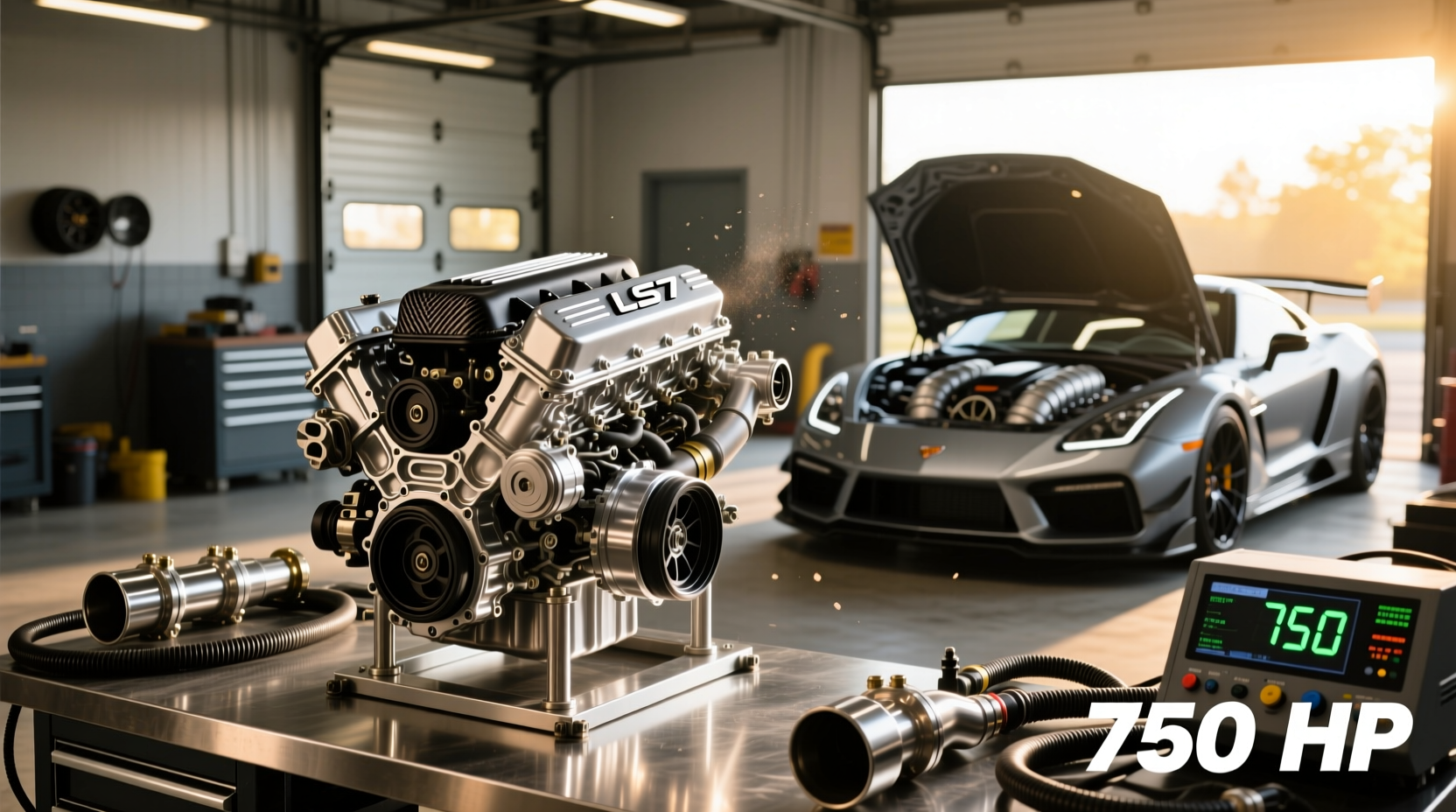
The stock LS7 engine produces 505 horsepower and 470 lb-ft of torque, making it one of the most powerful naturally aspirated V8s General Motors ever released for street use. This high-output 7.0L (427 cubic inch) small-block engine was specifically engineered for performance applications like the C6 Corvette Z06 and Camaro Z/28, combining large displacement with lightweight internal components such as titanium intake valves and a forged steel crankshaft. Understanding the LS7 engine horsepower is essential for enthusiasts considering a build, swap, or purchase of a vehicle equipped with this iconic powerplant.
What Makes the LS7 Engine Unique in GM’s LS Family?
The LS7 stands out in the GM LS engine lineup due to several key design choices that prioritize high-revving performance and maximum airflow. Unlike smaller-displacement LS engines such as the LS3 or LS1, the LS7 features a larger bore and longer stroke, resulting in its massive 7.0-liter (427ci) displacement—largest among factory-produced LS engines 1.
⚙️ Key differentiators include:
- Aluminum block with pressed-in iron cylinder liners for reduced weight and improved heat dissipation
- Large-port CNC-optimized cylinder heads with 2.2-inch titanium intake valves and sodium-filled exhaust valves
- Dry-sump oiling system (in OEM Z06 applications) for enhanced lubrication during high-G cornering
- Forged internals, including connecting rods and crankshaft, for durability at high RPMs
- Hydraulic roller camshaft allowing for aggressive lift profiles while maintaining streetability
This combination enables the LS7 to reach a redline of 7,000 RPM, significantly higher than many contemporary muscle car engines. The result is not just peak horsepower but a broad torque curve that delivers strong mid-range pull and responsive top-end power.
Stock LS7 Horsepower and Torque: Official Specs vs Real-World Output
The official rating for the stock LS7 engine is 505 horsepower at 6,300 RPM and 470 lb-ft of torque at 4,800 RPM. These figures were achieved under SAE net testing standards, which account for all accessories, exhaust, and intake systems—making them representative of real-world performance rather than idealized lab conditions.
However, actual wheel horsepower can vary depending on the application and drivetrain setup. For example:
| Application | Engine Configuration | Horsepower (Flywheel) | Estimated Wheel HP | Redline |
|---|---|---|---|---|
| 2006–2013 Corvette Z06 | OEM Stock | 505 hp | ~440–460 hp | 7,000 RPM |
| 2014–2015 Camaro Z/28 | Tuned Intake/Exhaust | 505 hp | ~450 hp | 7,000 RPM |
| Aftermarket Crate Engine | Chevrolet Performance LS7 | 505 hp | N/A (Bench Tested) | 7,000 RPM |
| Modified Build (Pace Setter) | Ported Heads, Cam Upgrade | 600+ hp | ~530 hp | 7,200 RPM |
📉 Note: Drivetrain losses typically reduce flywheel horsepower by 15–18% in rear-wheel-drive vehicles. So while the engine produces 505 hp at the crank, output measured at the wheels will be lower. Dyno results from verified owners show consistent readings between 440 and 460 hp at the rear wheels when the engine is stock and properly tuned.
Why Do Some Sources Claim Higher LS7 Horsepower?
You may encounter claims of LS7 engines producing 600, 650, or even 800 horsepower. While technically possible, these numbers refer to modified or aftermarket versions—not the factory configuration.
For instance:
- 🛠️ Golen Engines offers a complete LS7 crate engine rated at 650 hp using upgraded internals, custom camshafts, and high-flow heads 2.
- 🏁 Borowski Race Engines builds LS7-based packages producing up to 800 hp on pump gas using forced induction or nitrous oxide.
- 🔧 Enthusiasts often achieve 600+ hp with simple bolt-ons like cold air intakes, long-tube headers, and performance tuning.
✅ Important: When researching “LS7 engine horsepower”, always verify whether the figure refers to:
- Factory-rated output (505 hp)
- SAE gross vs SAE net measurements (net is more accurate)
- Crating vs wheel horsepower
- Naturally aspirated vs forced induction builds
Common Misconceptions About LS7 Power Output
Several myths persist about the LS7’s capabilities and limitations:
❌ Myth 1: “The LS7 has more than 500 hp because it sounds so aggressive”
While the LS7’s deep, metallic exhaust note suggests extreme power, sound does not equal horsepower. Its high-revving nature and dry-sump induction contribute to an aggressive tone, but output remains capped at 505 hp in stock trim.
❌ Myth 2: “All 7.0L engines are LS7s”
No. GM used a 7.0L displacement in other engines, such as the LS3-based LS427/570 crate engine. However, only the LS7 features the unique tall-deck aluminum block, titanium valves, and racing-derived valvetrain.
❌ Myth 3: “An LS7 makes more torque than a modern LT1”
Actually, the newer LT1 (6.2L) produces slightly more torque (460 lb-ft) despite less displacement, thanks to advanced combustion chamber design and variable valve timing. The LS7 excels in high-RPM horsepower delivery, not low-end grunt.
Factors That Affect Actual LS7 Horsepower in Real Use
Even within stock configurations, several factors influence how much usable power an LS7 delivers:
🌡️ Ambient Temperature and Elevation
Air density plays a major role in naturally aspirated engine performance. At sea level on a cool day (60°F), the LS7 performs close to its rated output. At 5,000 feet elevation or above 90°F, expect a drop of 3–7% in horsepower due to reduced oxygen availability.
🔧 Maintenance Condition
An LS7 with worn spark plugs, clogged fuel injectors, or degraded ignition coils may produce significantly less power. Regular maintenance—including valve adjustments every 30,000 miles—is critical to sustaining peak output.
⛽ Fuel Quality
The LS7 is calibrated for premium unleaded fuel (91 octane minimum). Using lower-octane fuel forces the ECU to retard timing, reducing both horsepower and throttle response. For track use, some owners opt for race gas (100+ octane) to unlock marginal gains.
📉 Dyno Variability
Dyno type (inertia vs load-bearing), calibration, and environmental sensors affect readings. Two dynos in different shops might report 440 hp and 470 hp for the same car—neither is necessarily wrong. Always compare results from the same facility under similar conditions.
LS7 Reliability and Known Issues That Impact Performance
Despite its impressive output, the LS7 has one well-documented weakness: cylinder liner movement and valve guide wear.
In early production runs (particularly 2006–2008 Z06 models), some LS7 engines experienced loosening of the pressed-in iron cylinder liners, especially under sustained high-RPM operation. Additionally, exhaust valve guides can wear prematurely, leading to oil consumption and loss of compression.
🔧 Symptoms of developing issues:
- Increased oil consumption (>1 quart per 1,000 miles)
- Blue smoke from exhaust under deceleration
- Misfires or rough idle at operating temperature
- Loss of power over time
🛠️ Solutions include:
- Upgraded aftermarket cylinder liners with better retention
- Reinforced valve guide materials (bronze or powdered metal)
- Regular borescope inspections for high-mileage engines
While these issues don’t affect all units, they’re important considerations when buying a used LS7-powered vehicle or planning a long-term ownership strategy.
How the LS7 Compares to Other LS Engines
To understand where the LS7 fits in the broader LS family, here's a comparative overview:
| Engine | Displacement | Horsepower | Torque | Redline | Primary Application |
|---|---|---|---|---|---|
| LS1 | 5.7L (346ci) | 345–350 hp | 350 lb-ft | 6,500 RPM | C5 Corvette, Firebird |
| LS2 | 6.0L (364ci) | 400 hp | 400 lb-ft | 6,500 RPM | C6 Corvette, GTO |
| LS3 | 6.2L (376ci) | 430 hp | 424 lb-ft | 6,600 RPM | Corvette, Camaro SS |
| LS7 | 7.0L (427ci) | 505 hp | 470 lb-ft | 7,000 RPM | Z06, Z/28 |
| L92 | 6.2L (376ci) | 403 hp | 418 lb-ft | 6,300 RPM | Trucks, SUVs |
📌 Takeaway: The LS7 leads in both displacement and horsepower among naturally aspirated LS engines. However, it sacrifices some low-end torque and daily drivability compared to the LS3. It’s optimized for track-focused performance, not towing or commuting.
Can You Increase LS7 Horsepower Safely?
Yes, the LS7 responds well to modifications. Here are proven methods to increase horsepower without compromising reliability:
✅ Stage 1: Bolt-On Upgrades (550–580 hp)
- Cold air intake: +10–15 hp
- Long-tube headers: +25–35 hp
- High-flow exhaust system: +15–20 hp
- Custom ECU tune: +20–30 hp
✅ Stage 2: Internal Enhancements (600–650 hp)
- Performance camshaft with increased duration/lift
- Ported cylinder heads for better airflow
- Lightweight pulleys to reduce parasitic loss
- Upgraded ignition system (coil packs, plugs, wires)
✅ Stage 3: Forced Induction (700+ hp)
- Supercharger kits (e.g., ProCharger, Whipple): +200–300 hp
- Turbo systems: Require intercoolers, fuel system upgrades
- Stroker kits to increase displacement beyond 7.0L
⚠️ Caution: Adding forced induction increases stress on internals. For sustained high-power use, consider upgrading pistons, rods, and bearings.
Frequently Asked Questions About LS7 Engine Horsepower
- ❓ What car has an LS7 engine?
- The LS7 was factory-installed in the 2006–2013 Chevrolet Corvette Z06 and the 2014–2015 Chevrolet Camaro Z/28. It was also available as a crate engine through Chevrolet Performance.
- ❓ Is the LS7 a 427 cubic inch engine?
- Yes, the LS7 has a displacement of exactly 427 cubic inches (7.0 liters), reviving the classic big-block designation in a modern small-block architecture.
- ❓ How reliable is the LS7 engine?
- The LS7 is generally reliable if maintained properly. However, some early models had issues with cylinder liner retention and exhaust valve guide wear, which can lead to costly repairs if not addressed.
- ❓ Can you daily drive a car with an LS7 engine?
- Yes, many owners daily drive LS7-powered Corvettes. However, the high-revving nature, stiff clutch (in manuals), and potential for oil consumption should be considered.
- ❓ Why did GM discontinue the LS7?
- GM phased out the LS7 in favor of the supercharged LT4 (650 hp) and later the LT5 (755 hp), which offer higher power density and meet evolving emissions standards more easily.





 浙公网安备
33010002000092号
浙公网安备
33010002000092号 浙B2-20120091-4