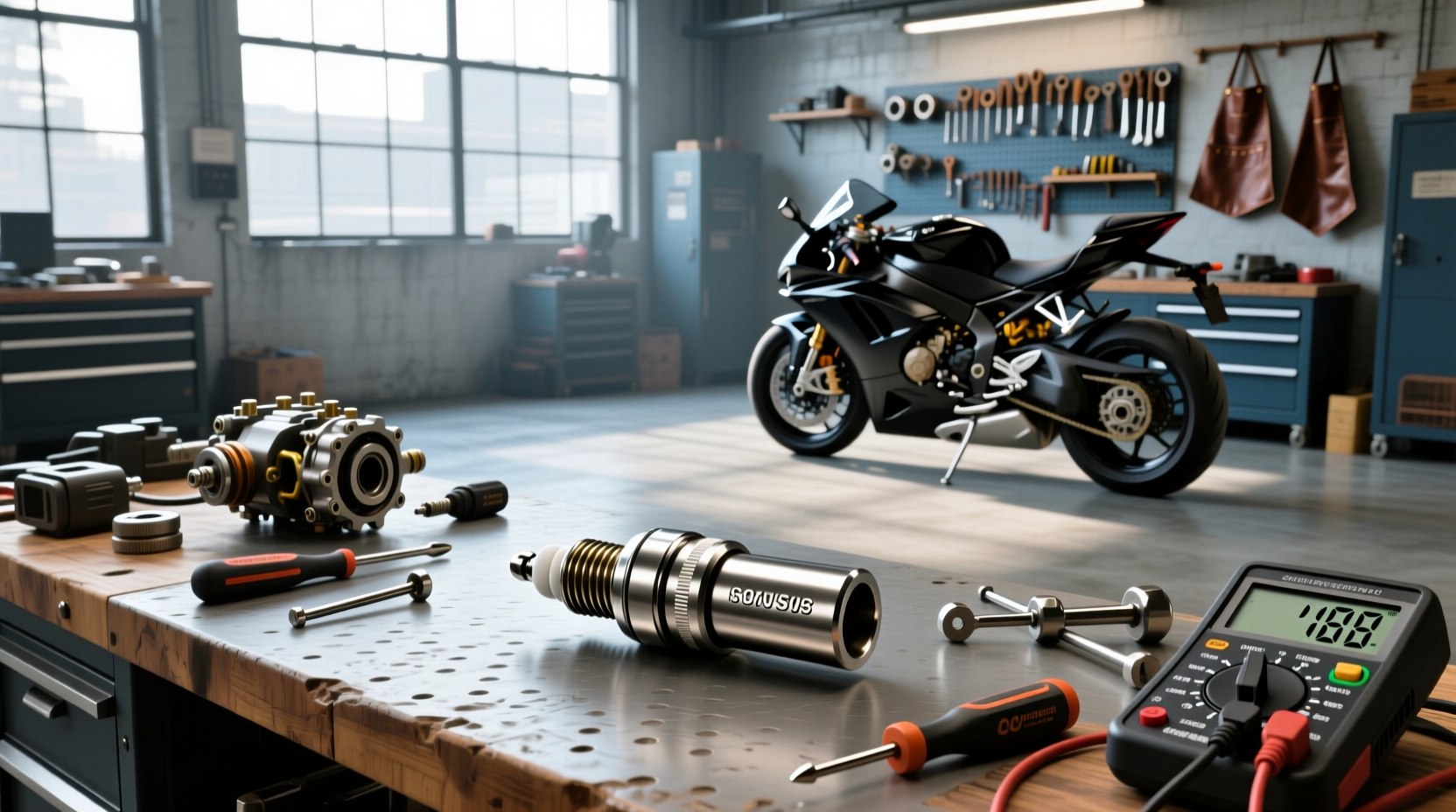
🔧 Replacing a motorcycle spark plug requires more than just the right plug—it demands the correct motorcycle spark plug socket to avoid stripping porcelain or damaging the terminal. Most riders overlook this critical tool, leading to costly mistakes during routine maintenance. The standard size is 5/8-inch (16mm), but many modern bikes use a 13/16-inch (21mm) or even smaller 12mm variant, depending on engine design. Using the wrong socket can crack the insulator or round off the plug’s hex base, resulting in difficult removal and potential engine damage. This guide breaks down everything you need to know about selecting, using, and maintaining the proper spark plug socket for your bike—ensuring every change is smooth, safe, and successful.
Why the Correct Spark Plug Socket Matters
Unlike car engines, motorcycles often have tightly packed engine bays with limited access to spark plugs. This makes precision tools essential. A dedicated motorcycle spark plug socket isn’t just a regular deep socket—it includes key features like a rubber insert or magnetic core that holds the plug securely during installation and removal 1. Without these, the plug can fall into the cylinder head, requiring disassembly to retrieve it.
Moreover, many spark plugs have fragile ceramic insulators. Standard sockets without cushioning can apply uneven pressure, cracking the porcelain and rendering the plug useless. That’s why understanding the physical differences between general-purpose and motorcycle-specific sockets is crucial.
Common Spark Plug Socket Sizes for Motorcycles
The most frequently used sizes are:
- 5/8 inch (16mm): Found on older Japanese standards, Harley-Davidson Evolution engines, and some cruisers
- 13/16 inch (21mm): Common on larger V-twin engines including Harley-Davidson Twin Cam and Milwaukee-Eight models
- 12mm: Used on many modern inline-four sportbikes and European models
- 14mm: Less common, seen in some dual-sport and off-road applications
Always verify your bike’s specification before purchasing a socket. Referencing the owner’s manual or service manual ensures accuracy. For example, a Honda CBR600RR uses 12mm plugs, while a Yamaha V-Star 650 uses 13/16-inch. Mixing them up leads to slippage and damage.
| Motorcycle Model | Spark Plug Size | Typical Socket Needed |
|---|---|---|
| Harley-Davidson Sportster (pre-2000) | 5/8" (16mm) | 5/8" w/ rubber insert |
| Harley-Davidson Road King (2010+) | 13/16" (21mm) | 13/16" w/ magnetic center |
| Kawasaki Ninja ZX-6R | 12mm | 12mm w/ internal rubber grommet |
| Ducati Monster 821 | 14mm | 14mm specialty socket |
| Suzuki DR-Z400 | 12mm | 12mm universal fit |
Key Features of a Quality Motorcycle Spark Plug Socket
Not all sockets are created equal. Here are the critical design elements to look for:
🔹 Internal Rubber Insert or O-Ring
This soft lining grips the porcelain center electrode of the spark plug, holding it firmly in place as you remove or install it. It prevents lateral movement that could chip the ceramic. Sockets without this feature risk dropping the plug into the cylinder head—a serious issue requiring partial engine teardown to fix.
🔹 Magnetic Core
Some sockets use a strong internal magnet instead of rubber. These work well with steel-bodied plugs but should be avoided if your plug has non-magnetic materials or if there's risk of metal debris entering the combustion chamber. Magnets also help hold the plug during blind installations where visibility is limited.
🔹 Swivel or Flex Joint
Many modern sockets include a universal joint or flexible neck. This allows better angle access in cramped engine compartments—common on sportbikes and baggers. While not always necessary, it improves usability significantly when working around fuel injectors or wiring harnesses.
🔹 Depth and Clearance Design
A true motorcycle spark plug socket is deeper than standard automotive versions to accommodate long-reach plugs. Some models have cutouts or slim walls to clear nearby obstacles. Check compatibility with your specific engine layout before buying.
Socket Drive Sizes: Matching Your Ratchet
Most spark plug sockets use either a 3/8-inch or 1/4-inch drive square. Choose based on torque needs and space constraints:
- 3/8-inch drive: Best for higher torque applications, such as removing seized or over-tightened plugs. Offers greater leverage and durability.
- 1/4-inch drive: Ideal for tight spaces where a smaller ratchet fits better. However, less torque capacity increases risk of breakage on stubborn plugs.
Using an adapter (e.g., 1/4” to 3/8”) reduces strength and alignment precision. Whenever possible, match the socket directly to your preferred ratchet size.
When to Use a Universal vs. Dedicated Socket Set
Universal socket sets often include interchangeable inserts or adjustable jaws. While convenient, they lack the secure grip needed for delicate spark plug work. Adjustable teeth can mar the plug’s hex surface, making future removal harder. They also don’t provide consistent centering, increasing the chance of cross-threading.
Dedicated one-size sockets offer superior fit and safety. If you maintain multiple bikes, consider investing in a set with individual 12mm, 16mm, and 21mm units rather than relying on a multi-fit tool.
Step-by-Step: How to Safely Remove and Replace a Spark Plug Using the Correct Socket
- Disconnect the battery negative terminal ⚠️ —Prevents accidental ignition during handling.
- Remove the spark plug cap or ignition coil 🔧 —Gently twist and pull straight off; never yank wires.
- Clean around the plug base 🧼 —Use compressed air or a brush to blow away dirt so debris doesn’t fall into the cylinder upon removal.
- Select the correct socket ✅ —Confirm size matches your bike’s requirement (refer to manual).
- Attach socket to ratchet with extension ⚙️ —Use a 3”–6” extension for better reach and control.
- Finger-start the socket onto the plug 📌 —Ensure full engagement before applying torque to prevent rounding.
- Loosen and remove the plug 🛠️ —Apply steady force. If stuck, use penetrating oil and wait 10 minutes before retrying.
- Inspect old plug condition 🔍 —Check for carbon buildup, oil fouling, or erosion to diagnose engine issues.
- Gap new plug if required 📊 —Use a feeler gauge to adjust gap per manufacturer specs.
- Install new plug by hand first ✨ —Thread carefully to avoid cross-threading.
- Torque to specification ⚖️ —Typically 13–18 ft-lbs depending on size and material. Over-tightening cracks heads; under-tightening causes leaks.
- Reconnect components 🔗 —Replace boot or coil and reconnect battery.
Common Mistakes to Avoid When Using a Spark Plug Socket
- Using a standard socket without cushioning: Leads to dropped plugs and broken ceramics.
- Incorrect size selection: Even a 1mm mismatch can cause slippage and damage.
- Over-torquing: Aluminum cylinder heads are easily stripped. Always use a torque wrench.
- Ignoring plug depth specifications: Some plugs extend further into the chamber; using the wrong type affects combustion efficiency.
- Skipping cleaning steps: Dirt entering the cylinder can score pistons or valves.
Can You Use an Automotive Spark Plug Socket on a Motorcycle?
In some cases, yes—but only if it matches the exact size and includes a rubber insert or magnetic holder. Many automotive sockets are designed for easy access and robust engines, whereas motorcycles demand compact, precise tools. Additionally, automotive sockets may be too long or wide to fit in confined areas typical of bike engines.
If adapting an auto socket, ensure it has sufficient clearance and doesn't interfere with adjacent components. Test fit before final assembly. However, for reliability and safety, a purpose-built motorcycle spark plug socket remains the best choice.
Do You Need Special Tools for Iridium or Platinum Plugs?
No special socket is required solely because a plug uses iridium or platinum electrodes. These refer to the center electrode material, not external dimensions. However, these premium plugs are often more expensive and sensitive to improper handling. Therefore, using a high-quality socket with excellent grip becomes even more important to prevent damage during installation.
Never attempt to adjust the gap on fine-wire iridium plugs excessively—their delicate construction can be ruined by mishandling 2.
How Often Should You Replace Spark Plugs—and Their Sockets?
Most manufacturers recommend replacing spark plugs every 15,000 to 20,000 miles, though iridium-tipped plugs can last up to 30,000 miles. Regular inspection helps catch early signs of wear like misfires or hard starting.
As for the socket: inspect it before each use. Look for worn rubber inserts, chipped edges, or loose magnets. A damaged socket compromises plug integrity. Replace it immediately if any component shows degradation. With proper care, a quality socket lasts for dozens of changes.
Regional Differences and Aftermarket Considerations
In Europe, metric sizing dominates, so 12mm and 14mm are standard. In the U.S., fractional-inch sizes like 5/8” and 13/16” remain common, especially among cruiser owners. When sourcing parts internationally, confirm whether the listing specifies measurements in inches or millimeters.
Aftermarket performance upgrades (like big-bore kits or turbo systems) may require different heat range plugs, but rarely affect socket size. Always consult tuning documentation when modifying engine parameters.
FAQs About Motorcycle Spark Plug Sockets
- ❓ What size socket do I need for most Harley-Davidson motorcycles?
- A 13/16-inch (21mm) socket is standard for post-1999 Harley-Davidson V-twin engines. Older models may use 5/8-inch. Confirm with your service manual.
- ❓ Can I use a universal joint with my spark plug socket?
- Yes, but only if it maintains solid connection and doesn’t reduce torque control. Poorly made swivels can slip and damage the plug.
- ❓ Is a magnetic socket better than one with a rubber insert?
- It depends. Magnetic sockets hold ferrous plugs well but pose debris risks. Rubber inserts are safer and gentler on porcelain, making them ideal for most riders.
- ❓ Do all motorcycle spark plug sockets have rubber inside?
- No. Some budget or generic sockets lack internal cushioning. Always check product details before purchase to confirm inclusion of rubber or magnetic retention.
- ❓ How tight should I torque my spark plug?
- Typical values: 12mm plugs at 13–15 ft-lbs, 14mm at 15–18 ft-lbs, and 16mm/21mm at 15–18 ft-lbs. Always follow OEM specifications found in your owner’s manual.





 浙公网安备
33010002000092号
浙公网安备
33010002000092号 浙B2-20120091-4