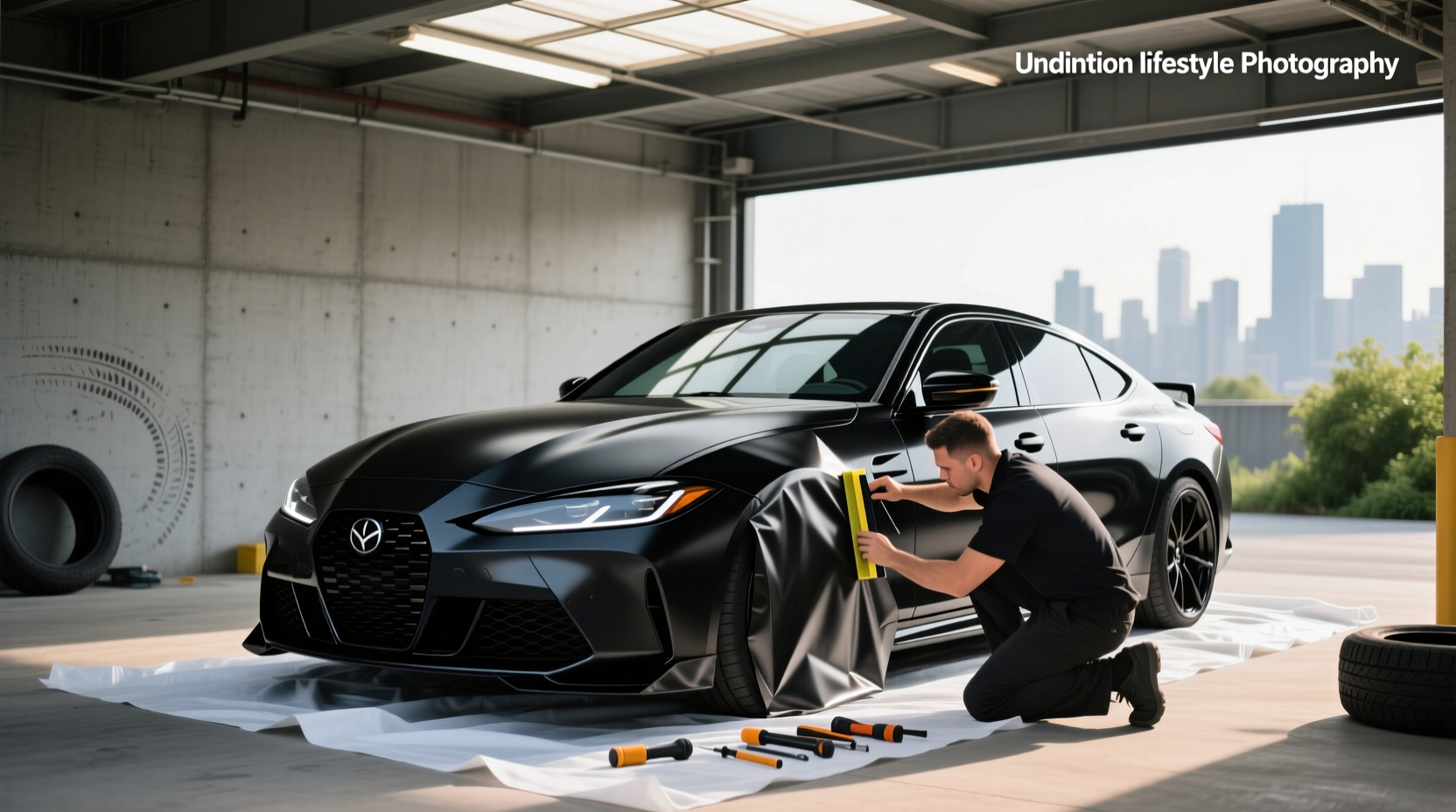
When searching for an efficient way to wrap a vehicle without the complexity of measuring and cutting vinyl by hand, many DIYers and professionals turn to pre cut car wrap kits. These custom-shaped kits offer panel-specific pieces designed to fit exact car models, reducing material waste and installation time. But are they truly easier than using standard rolls? And what should you consider before buying one? This guide answers those questions, exploring the pros and cons of pre-cut wraps, compatibility with different vehicles, material quality variations, and real-world performance based on installer feedback.
Understanding Pre-Cut Car Wraps: What They Are and Who They’re For
A pre cut car wrap is a set of die-cut vinyl pieces manufactured to match specific panels of a particular vehicle model—such as hood, roof, fenders, doors, and bumpers. Unlike traditional roll-based wrapping, where installers measure, cut, and stretch film directly on the car, pre-cut kits come with all necessary parts already shaped using CAD (computer-aided design) data from OEM body dimensions.
These kits are primarily marketed toward beginners or detailers looking to save time. However, they also appeal to experienced wrappers who want consistent results across multiple installations of the same model. The concept promises faster application, reduced risk of human error in layout, and less reliance on advanced tucking or stretching techniques.
Despite these advantages, pre-cut wraps aren't universally ideal. Their effectiveness depends heavily on manufacturing accuracy, vehicle condition, and installer skill level. A warped panel or minor aftermarket modification can render a pre-cut piece unusable. Additionally, some materials—especially high-stretch or cast vinyls—may lose conformability when pre-trimmed due to edge hardening during storage.
How Pre-Cut Wraps Are Made: Precision vs. Real-World Fit
The production process starts with precise 3D scanning of factory-standard vehicles. Manufacturers use this data to create digital templates that guide laser or knife cutting machines. Once cut, each piece is labeled and packaged according to its location on the car.
However, not all manufacturers maintain the same level of tolerance. Some budget brands rely on generic patterns reused across similar models, leading to misalignment on certain curves or seams. Higher-end suppliers invest in model-specific tooling and update designs regularly to account for annual facelifts or trim changes.
One common issue reported by users involves discrepancies between advertised fitment and actual coverage. For example, a pre-cut door skin might fall short near the mirror base or fail to extend fully into the window channel. This forces installers to either stretch the remaining film—an unreliable method—or patch gaps with additional material.
To minimize such issues, it’s crucial to verify whether the kit was developed for your exact year, make, and model. Even within the same generation, subtle differences exist between sedan and coupe variants, or between base trims and performance editions like a Mustang GT versus EcoBoost.
Benefits of Using Pre-Cut Wraps
- ⏱️ Time Efficiency: Installation times can be reduced by up to 40% compared to rolling out and trimming each section manually.
- 🧼 Less Waste: Since cuts follow exact contours, there's minimal excess material, making them more economical for small shops or individuals buying limited quantities.
- 🔧 Simpler Learning Curve: Beginners benefit from having clear placement guides and fewer decisions about seam positioning or overlap zones.
- 📦 Easier Storage: Pre-cut sheets take up less space than full rolls and don’t require specialized racks or climate-controlled environments.
For mobile detailers or home garages lacking professional equipment, pre-cut wraps reduce dependency on heat guns, squeegees, and precision knives. Many kits include alignment stickers or QR codes linking to video tutorials, further simplifying the process.
Limits and Drawbacks of Pre-Cut Solutions
While convenient, pre-cut wraps have notable limitations:
1. Inflexibility with Modified Vehicles
If your car has non-OEM body kits, widened fenders, or repaired panels, pre-cut pieces may not align properly. Aftermarket bumpers often differ slightly in curvature or mounting points, causing visible mismatches at edges.
2. Limited Repair Options
Because each piece is individually cut, repairing a damaged section requires ordering a replacement part or improvising with leftover scraps. With roll material, you can simply cover damage with a new patch.
3. Material Performance Concerns
Some adhesive vinyls degrade along cut edges over time, especially if stored improperly. Exposure to UV light or humidity before installation can cause curling or reduced tackiness, affecting adhesion during application.
4. Availability Constraints
Not every vehicle model has a pre-cut option available. Niche, older, or region-specific cars are often excluded from catalog offerings. Even popular models may only have kits for major markets like North America or Europe.
Comparison: Pre-Cut vs. Roll Wraps
| Feature | Pre-Cut Wrap | Roll Wrap |
|---|---|---|
| Installation Speed | ⭐ Fast (less trimming) | 🐢 Slower (requires measuring/cutting) |
| Skill Level Required | Beginner-friendly | Intermediate to expert |
| Customization Flexibility | Low (fixed shapes) | High (full control over seams/placement) |
| Cost per Vehicle | Moderate to high | Variable (bulk discounts possible) |
| Waste Reduction | ✅ High efficiency | ❌ More off-cuts |
| Compatibility with Repairs | Limited | Full flexibility |
| Storage Needs | Minimal | Requires dedicated space |
Material Quality Matters: Not All Pre-Cuts Are Equal
The durability and finish of a pre cut car wrap depend largely on the underlying vinyl type. Most kits use one of three categories:
PVC Monomeric (Entry-Level)
Common in low-cost kits, monomeric PVC is rigid and prone to shrinking over time. It lacks UV resistance and typically lasts 1–2 years. Best suited for temporary promotions or test drives.
PVC Polymeric (Mid-Tier)
Polymeric films offer better dimensional stability and weather resistance. They handle moderate curves well and last 3–5 years. Many reputable pre-cut brands use polymeric base material.
Cast Vinyl (Premium)
Used in high-performance wraps, cast vinyl conforms tightly to compound curves and resists cracking. While rarely offered in pre-cut form due to cost, some specialty suppliers provide cast pre-cuts for luxury or exotic vehicles.
Adhesive quality also varies. Air-release channels help prevent bubbles, while repositionable adhesives allow minor adjustments during placement. Always check whether the adhesive system supports wet or dry application methods depending on your preference.
Finding Reliable Pre-Cut Wrap Suppliers
With numerous vendors offering pre-cut solutions online, identifying trustworthy sources requires research. Look for companies that:
- Provide detailed fitment charts specifying exact years/models covered
- Offer sample swatches for texture and color verification
- Disclose material specifications (e.g., thickness, elongation rate, warranty)
- Maintain active customer support channels
- Have verifiable user reviews discussing real installation experiences
Brands like Ravoony appear frequently in search results and social media discussions. User feedback indicates mixed performance: some praise the wide color selection and global shipping, while others note challenges with chrome finishes discoloring under heat or matte surfaces being difficult to smooth completely1. Such insights highlight the importance of reviewing independent installer testimonials before purchasing.
Installation Tips for Success with Pre-Cut Wraps
Even with precise pieces, proper technique ensures long-term results:
- Clean Thoroughly: Use degreasers to remove wax, oils, and contaminants. Any residue compromises adhesion.
- Dry Environment: Avoid humidity above 60% or temperatures below 50°F (10°C), which hinder bonding.
- Alignment First: Position each piece without pressing down initially. Adjust until perfectly aligned, then gradually squeegee outward.
- Heat Application: Use a heat gun sparingly to relax tension on tight radii, but avoid overheating sensitive films like chromes or holographics.
- Seam Management: Overlapping edges should be minimized. When unavoidable, use a blade to cold-cut through both layers for a clean join.
Always follow the manufacturer’s recommended cure time—typically 24 to 72 hours—before exposing the vehicle to rain or car washes.
Cost Considerations: Is a Pre-Cut Wrap Worth It?
Pre-cut kits generally cost more per square foot than bulk rolls. A full-car pre-cut package ranges from $300 to $800+, depending on brand, finish, and vehicle size. In contrast, a 60-inch x 50-foot roll of mid-grade polymeric vinyl costs around $200–$400 and can wrap multiple average-sized sedans.
The value proposition lies in labor savings. If you charge for services or value your time highly, the speed advantage may justify the premium. For personal projects done slowly over weekends, roll material could be more economical despite longer install times.
Common Misconceptions About Pre-Cut Wraps
Several myths persist in the wrapping community:
Myth: "Pre-cut means no trimming needed"
Reality: Minor adjustments are almost always required. Factory tolerances vary, and paint repairs or dents affect surface geometry.
Myth: "All pre-cut kits fit perfectly"
Reality: Fit accuracy depends on the supplier’s data source and update frequency. Older databases may not reflect recent design changes.
Myth: "Beginners can’t mess up a pre-cut wrap"
Reality: Poor cleaning, misalignment, or improper squeegeeing still lead to bubbles, lifting, or creases—even with perfect pieces.
Regional Differences in Availability and Use
In North America and Western Europe, pre-cut wraps are widely available through online retailers and distribution networks. In contrast, markets like Southeast Asia, South America, or Eastern Europe see limited access due to lower demand and logistical barriers.
Additionally, local climates influence material choices. Tropical regions favor UV-resistant, anti-fungal coated films, while colder areas need flexible adhesives that perform in sub-zero conditions. Buyers in these regions must confirm compatibility before ordering internationally.
Future Trends in Digital Cutting and Customization
Advancements in AI-driven pattern recognition and automated cutting systems are improving pre-cut accuracy. Some platforms now allow users to upload VIN numbers or select trims via interactive menus, ensuring correct fitment.
Emerging on-demand manufacturing lets customers order single-panel replacements instead of full kits, reducing waste and cost. Integration with augmented reality (AR) apps may soon enable virtual previews of wraps before purchase.
Final Recommendations Before Buying
Before investing in a pre cut car wrap, ask yourself:
- Is my vehicle stock, or does it have modifications?
- Do I have the tools and environment for proper installation?
- Am I willing to accept potential returns or delays if fitment is off?
- Have I checked recent reviews from installers with similar experience levels?
If you're wrapping a common model like a Ford F-150, Tesla Model 3, or Toyota Camry, pre-cut options are likely accurate and worth considering. For rare, modified, or classic cars, sticking with roll material offers greater adaptability.
Frequently Asked Questions
- Can I reuse a pre-cut wrap if I make a mistake during installation?
- No, once the adhesive contacts the surface—even partially—it loses tackiness and cannot be reapplied cleanly. Always handle pieces carefully and position them correctly the first time.
- Do pre-cut wraps work on curved surfaces like spoilers or mirrors?
- Yes, but only if the original design includes those components. Many kits exclude small parts, requiring separate purchases or manual cutting from leftover material.
- How do I know if a pre-cut kit fits my exact car model?
- Check the product listing for year, make, model, body style, and trim level. Contact the seller directly if information is unclear or missing.
- Are pre-cut wraps more expensive than traditional rolls?
- Yes, typically by 20–50%. You're paying for labor, precision engineering, and packaging. Evaluate whether time savings offset the price difference.
- Can I mix pre-cut pieces with roll material?
- Yes, many professionals do this when replacing damaged sections or adding accents. Ensure both materials come from the same batch to avoid shade mismatches.





 浙公网安备
33010002000092号
浙公网安备
33010002000092号 浙B2-20120091-4