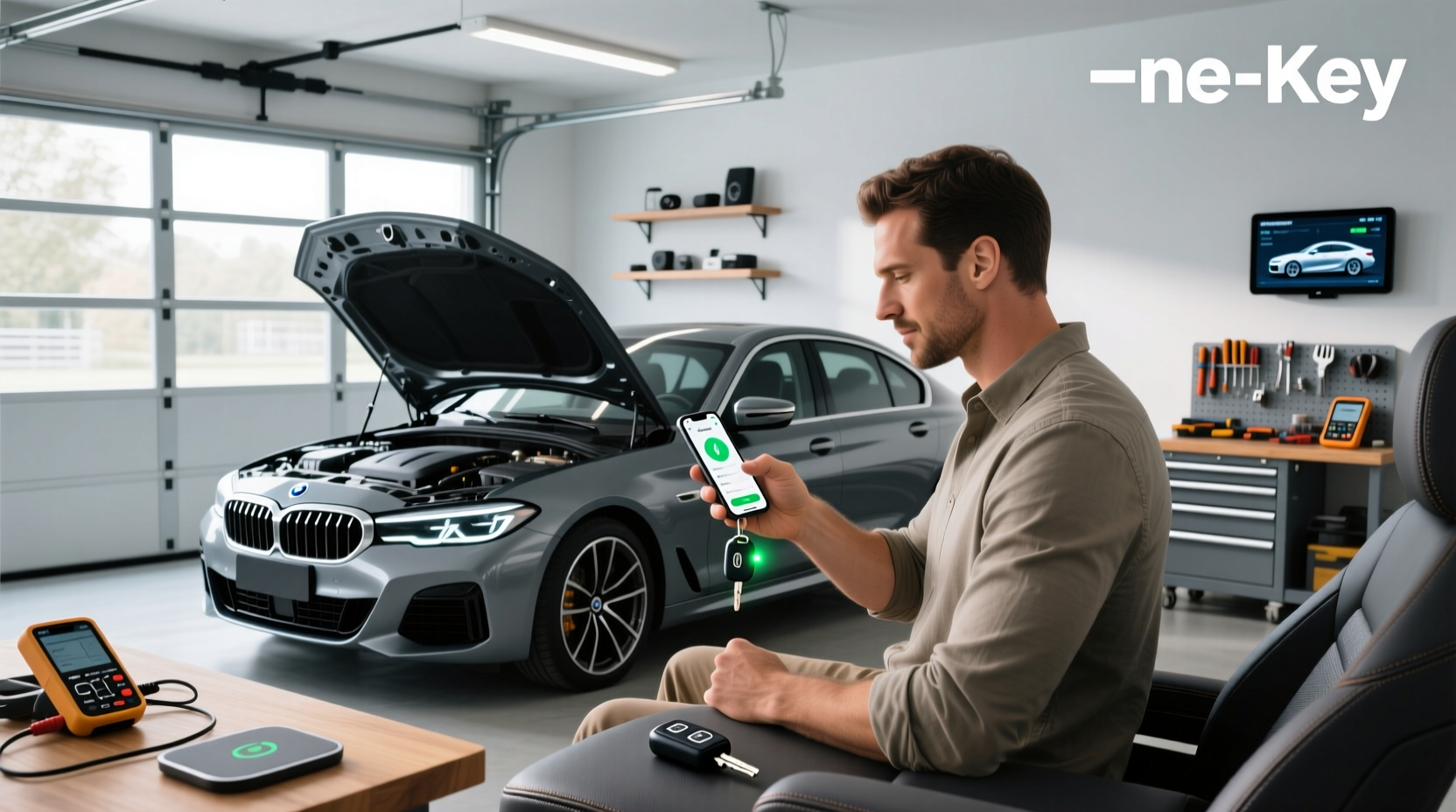
If you're wondering how to program a car key with only one key, the good news is that it’s often possible—depending on your vehicle’s make, model, and year. Many modern cars allow adding a new transponder key or programming a key fob using just one existing programmed key, without requiring a full dealer visit. This process typically involves placing the vehicle into programming mode by cycling the ignition or using specific button sequences inside the cabin. However, success depends on whether your car’s ECU supports single-key programming and if the correct procedure is followed precisely ⚙️.
Understanding Car Key Programming Basics
Before diving into the step-by-step guide, it's essential to understand what car key programming actually means and why having only one key complicates things. Most vehicles manufactured after the mid-1990s use transponder keys—keys embedded with a microchip that communicates with the car’s Engine Control Unit (ECU) 🌐. Without this authentication, the engine won’t start, even if the physical cut matches.
Programming a new key means registering its unique chip ID into the car’s immobilizer system. Traditionally, manufacturers required two already-programmed keys to add a third—one to start the car, and another as a reference for programming mode. But many models now support single-key programming, especially from the early 2000s onward ✅.
This shift was driven by consumer demand: losing one key shouldn’t mean being locked out of your own vehicle. Still, not all makes and models support this feature. For example, some Honda, Toyota, and Ford models allow single-key entry programming, while certain BMWs or older Volkswagens may require two keys or professional tools 🔍.
Can You Program a Car Key Yourself?
Yes—in many cases, you can program a car key yourself if your vehicle supports it and you follow the correct procedure. DIY programming avoids costly dealership fees, which can range from $150 to over $400 per key depending on brand and location ⏱️.
However, self-programming has limitations:
- Only works for certain vehicle years and brands
- May not work for smart keys or push-to-start systems without additional tools
- Requires precise timing and sequence execution
- Fails if the battery is low or interference exists in the wireless signal
It’s also important to distinguish between programming a transponder ignition key and a remote key fob. While both involve electronic components, they’re often programmed differently. Some vehicles let you sync the remote via door lock buttons, but the ignition key must be recognized by the ECU before the car will start.
Tools and Materials Needed
To successfully program a car key with only one existing key, gather these items first:
| Item | Purpose | Notes |
|---|---|---|
| One working programmed key | To initiate programming mode | Must start the car and turn ignition ON/OFF correctly |
| New blank transponder key | To be programmed | Chip type must match OEM specification (e.g., 12, 46, 47, 8A) |
| Key cutter (optional) | To cut the new key to match ignition | Can be done at hardware store or locksmith |
| OBD2 key programmer tool (advanced) | Bypass single-key limits or program complex keys | Required for some German or luxury brands |
| Fresh batteries (for fobs and car) | Ensure reliable communication | Weak battery = failed sync |
Having the right blank key is crucial. Using an incorrect chip type—even if the blade fits—will result in failure. Check your owner’s manual or consult a locksmith to verify compatibility. After cutting, the key still needs programming; cutting alone doesn’t activate the chip.
Step-by-Step Guide: How to Program a Car Key with Only One Key
The exact steps vary widely by manufacturer, but here’s a generalized method used by many domestic and Asian vehicles (like Honda, Toyota, Nissan, Ford):
- Insert the working key into the ignition and turn it to the “ON” position (do not start the engine).
- Wait 10–15 seconds to allow the immobilizer system to recognize the key.
- Turn the key back to “OFF” and remove it.
- Repeat steps 1–3 two more times (three cycles total), ending with the key removed.
- Within 5 seconds, insert the new unprogrammed key and turn it to “ON”.
- Wait 10 seconds. If successful, the security light should stop flashing or go off.
- Turn to OFF, then try starting the car with the new key.
This sequence places the ECU into learning mode using the single valid key as authorization. It’s sometimes called the “ignition cycle method” and works on many models including:
- Honda Civic (2006–2015)
- Toyota Camry (2007–2011)
- Ford Focus (2008–2014)
- Nissan Altima (2007–2012)
For key fobs (remote locks), the process differs slightly:
- Sit in the driver’s seat with doors closed.
- Insert the working key and turn ignition to “ON”.
- Press and hold the “unlock” button on the door panel for 2–5 seconds.
- Release, then press and hold both “unlock” and “lock” simultaneously for 5 seconds.
- You may hear a chime or see flashers blink—indicating programming mode.
- Press the “lock” button on the new fob within 30 seconds.
- Test operation.
Always refer to your vehicle-specific service manual or trusted database like Carkeyhelper 1 for accurate instructions. Generic guides can lead to errors due to subtle differences between trims and model years.
When You Need Professional Help
Not all vehicles support single-key programming. In such cases, you’ll need external help from a locksmith or dealer. Signs you need professional assistance include:
- Your car doesn’t enter programming mode after multiple attempts
- You own a luxury brand (e.g., Mercedes-Benz, Audi, Land Rover)
- The vehicle uses rolling-code encryption or encrypted TPMS
- You’ve lost all keys (no working key available)
- Your car has a push-button start without a traditional ignition slot
Professionals use advanced OBD2 tools like Autel IM608 or Xhorse Condor DX-2 to directly interface with the ECU, read immobilizer data, and program new keys—even with no existing key present 🔧. These tools cost hundreds to thousands of dollars but are standard among automotive locksmiths.
Mobile locksmiths often charge $80–$180 for key programming, significantly less than dealerships. They can usually complete the job in under 30 minutes onsite 📍. Verify credentials and ensure they carry insurance and proper diagnostic equipment.
Avoiding Common Mistakes
Even experienced DIYers fail when programming a car key with only one key due to avoidable errors:
- Miscounting ignition cycles: Missing one ON/OFF cycle breaks the sequence.
- Exceeding time limits: Delaying insertion of the new key past 5–10 seconds resets the system.
- Using incompatible blanks: A mismatched transponder chip won’t register.
- Low car battery: Voltage drops disrupt ECU communication.
- Interference from other electronics: Phones, radios, or signal jammers nearby can interfere.
To improve success rates:
- Perform the procedure in a quiet, distraction-free environment
- Use a fully charged car battery
- Keep spare keys stored safely elsewhere
- Write down each step beforehand
- Have a second person assist with timing if needed
Cost Comparison: DIY vs. Locksmith vs. Dealer
Understanding costs helps decide whether to attempt self-programming:
| Option | Avg. Cost (USD) | Time Required | Success Rate |
|---|---|---|---|
| DIY (with one key) | $20–$50 (key only) | 15–30 min | Varies by model |
| Auto locksmith (mobile) | $80–$180 | 20–40 min | High |
| Dealership | $150–$400+ | 1–3 hours | Very high |
While DIY saves money, it carries risk of bricking the immobilizer or locking yourself out temporarily. Dealerships offer warranty-backed service but at premium prices. Mobile locksmiths strike a balance—offering fast, affordable, and reliable solutions for most drivers ✈️.
Regional and Model-Specific Variations
Car key programming procedures aren’t universal. Differences exist based on:
- Region (U.S. vs. European vs. Asian market vehicles)
- Trim level (base vs. luxury trims with added security)
- Production date (mid-year updates may change protocols)
- Aftermarket modifications (alarm systems, remote starters)
For instance, European vehicles like Volkswagen or Peugeot often require two keys or specialized software unless using a diagnostic scan tool. Meanwhile, many U.S.-market Fords and Chevys support single-key programming across multiple generations.
Always confirm your VIN-specific requirements. Free VIN lookup tools provided by parts retailers or forums can reveal compatible key types and programming modes.
Future Trends in Key Programming
As vehicles become more connected, traditional metal keys are giving way to digital alternatives. Apple CarKey, Android Auto, and NFC-based entry systems allow smartphones to act as primary keys ✨. These systems rely on secure element chips and biometric authentication rather than transponders.
However, fallback mechanisms remain critical. If your phone dies or gets stolen, you still need a physical backup key. And yes—even those digital keys often require at least one functioning key or admin account to enroll a new device.
Eventually, cloud-based key management may eliminate the need for physical programming altogether. But for now, knowing how to add a key with limited access remains a valuable skill.
Frequently Asked Questions
- Can I program a car key myself with only one key?
- Yes, many vehicles allow self-programming using a single working key through ignition cycling or onboard menus. Success depends on make, model, and year.
- What if I lose my only car key?
- If you have no working key, you cannot use single-key programming. A locksmith or dealer must generate a new key using OBD2 tools and your VIN.
- Do I need special tools to program a transponder key?
- For basic models, no. But newer or luxury cars may require an OBD2 programmer. Always check compatibility before purchasing tools.
- Why isn’t my new key working after programming?
- Common causes include incorrect chip type, incomplete procedure, low battery, or ECU timeout. Reattempt carefully or seek professional help.
- Is it legal to program my own car key?
- Yes, programming your own key is legal as long as you own the vehicle and aren’t bypassing anti-theft systems illegally.





 浙公网安备
33010002000092号
浙公网安备
33010002000092号 浙B2-20120091-4