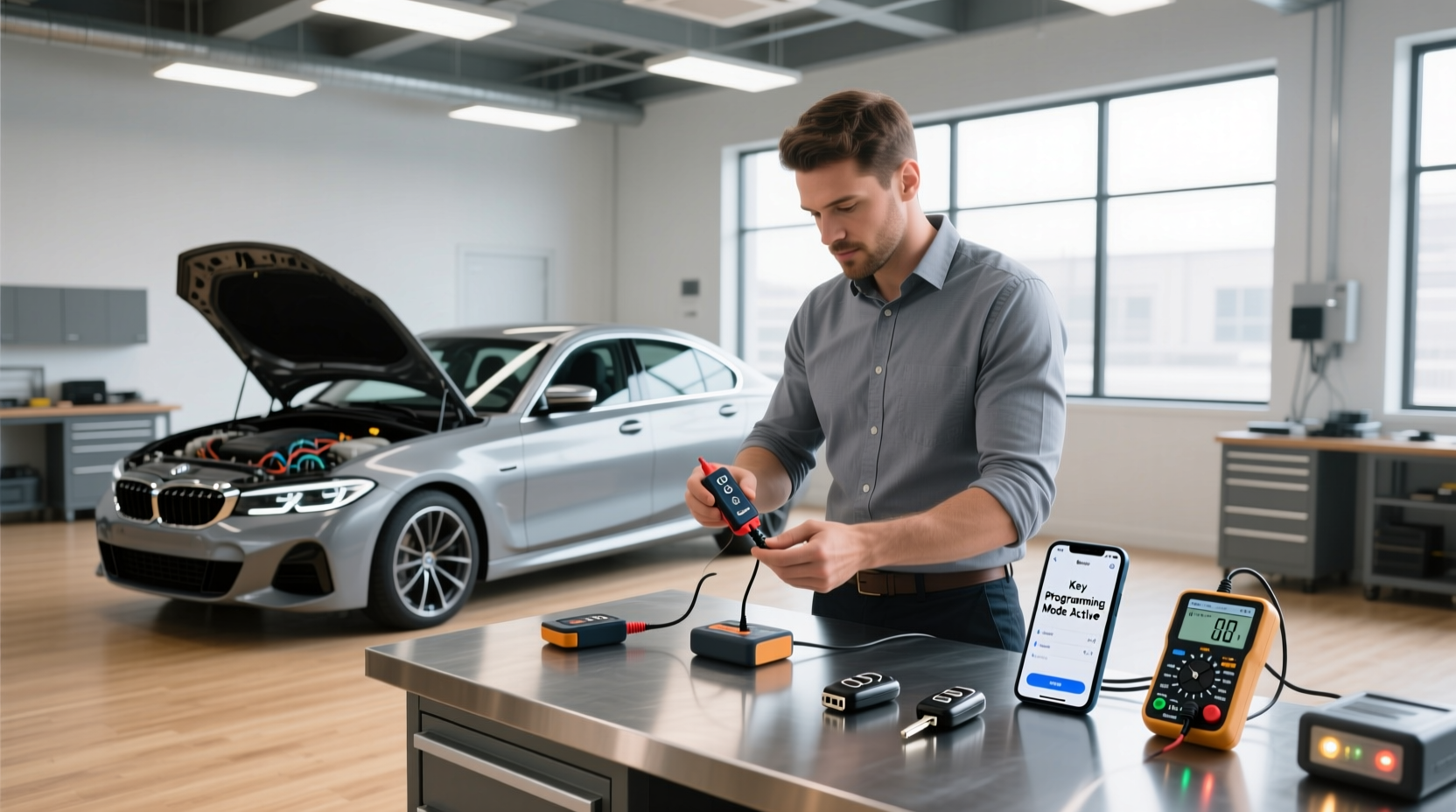
If you’ve lost your car key and don’t have a spare, you might be wondering: how to program a car key without the original? The short answer is—yes, it’s possible in many cases, but the method depends on your vehicle’s make, model, year, and whether it uses transponder chips or smart key technology. While some older vehicles allow self-programming with simple ignition cycling techniques, newer models often require specialized equipment or dealer access. This comprehensive guide breaks down every realistic option, including DIY programming tricks, aftermarket tools like OBD2 key programmers, dealership solutions, and locksmith services—all while helping you avoid common pitfalls and unnecessary costs.
Why You Might Need to Program a Key Without the Original
Losing your only car key—or having it stop working unexpectedly—is more common than you think. Whether due to misplacement, water damage, battery failure, or theft, the absence of an original functioning key complicates replacement. In such scenarios, users often search for ways to bypass traditional requirements, hoping for a low-cost or self-service fix. However, modern automotive security systems are designed to prevent unauthorized duplication, which means certain procedures can't be skipped safely or legally.
The core challenge lies in the embedded transponder chip found in most keys since the mid-1990s. This microchip communicates with the car’s immobilizer system to verify authenticity before allowing the engine to start. Without a recognized key, the car won’t start—even if the physical cut matches. Therefore, programming isn’t just about mechanical fit; it's about electronic authentication.
Can You Really Program a Car Key Without the Original?
The answer varies significantly based on several factors:
- Vehicle Age: Pre-1995 cars typically lack transponder systems, making key replacement purely mechanical.
- Make and Model: Brands like Honda, Toyota, and Ford have different protocols—even within the same model line across years. \li> Key Type: Standard metal key vs. remote fob vs. push-button smart key affects complexity.
- Availability of ECU Access: Some programming requires connection to the Onboard Diagnostics (OBD2) port.
In general, you cannot fully program a new transponder key without at least one working key present for most vehicles manufactured before 2010. But post-2010 models, especially those supporting OBD2-based key learning modes, may allow full reprogramming even without any existing keys—provided you have the correct software and hardware.
Different Types of Car Keys and Their Programming Requirements
Understanding your key type is essential before attempting any programming. Here’s a breakdown:
| Key Type | Description | Programming Needed? | Can Be Programmed Without Original? |
|---|---|---|---|
| Basic Metal Key | No electronics; used in older vehicles | No | Yes – duplicate via locksmith |
| Transponder Key | Chip inside head sends ID signal | Yes | Sometimes – depends on year/model |
| Remote Key Fob | Includes lock/unlock buttons + transponder | Yes | Rarely without tool |
| Smart Key / Push-to-Start | Proximity sensing, no insertion needed | Yes – high security | Only with advanced tools or dealer |
DIY Methods: When Self-Programming Is Possible
Some manufacturers provide built-in programming modes that allow owners to add new keys without visiting a dealer. These usually require at least one working key to initiate the process. However, there are rare exceptions where you can program a key from scratch.
Honda (Pre-2013): Manual Ignition Method
Certain Honda models (e.g., Civic, Accord) up to 2012 support a procedure known as the ‘two-key method’, which normally requires two valid keys. But if none exist, some third-party tools (like Autel IM608) can simulate this process via OBD2 interface.
Ford Passive Anti-Theft System (PATS)
Ford vehicles from the early 2000s onward use PATS. Normally, you need one working key to enter programming mode. However, tools like FORScan software connected via OBD2 adapter can sometimes reset the ECU and enable new key programming—even without originals—though success varies by model.
Toyota/Lexus: Requires Dealer Tool or TIS Techstream
Most Toyota and Lexus vehicles after 2005 require factory-level diagnostics (Techstream) or dealer access. There is no user-accessible method to program a new key without at least one working key unless using professional-grade tools.
Using Aftermarket Tools: OBD2 Key Programmers
For tech-savvy users, devices like Autel MaxiIM IM608, Xhorse Condor XC-Mini, or Lonsdor K518ISE offer robust key programming capabilities. These tools connect to the OBD2 port under the dashboard and interact directly with the vehicle’s ECU.
⚙️ What You’ll Need:
- OBD2 key programming tool (ranging from $300–$2,000)
- Blank transponder key (correct part number)
- Vehicle identification number (VIN)
- Security PIN or immo data (if required)
✅ Steps (General Workflow):
- Connect the programmer to the OBD2 port.
- Select vehicle make, model, year.
- Choose “Add New Key” or “All Keys Lost” mode.
- Insert blank key into ignition or place near antenna.
- Follow on-screen prompts to write chip data.
- Test the newly programmed key.
❗ Note: Not all vehicles support the “All Keys Lost” function. For example, many BMWs and Mercedes require dealer-level access or online account verification through manufacturer portals (e.g., BMW ISTA, MB Star C4).
Dealership Option: Most Reliable but Costly
Going to the dealership ensures compatibility and proper coding, especially for luxury or recent-model vehicles. They can generate new keys using your VIN and proof of ownership, even if no original exists.
📍 What to Bring:
- Vehicle title or registration
- Government-issued ID
- VIN number
💰 Cost Range: $200–$600+ depending on brand and key type. Luxury brands like Land Rover or Porsche may exceed $700.
⏱️ Time Required: 30 minutes to 2 hours, depending on key availability and backend server sync.
The advantage? Full warranty, correct firmware updates, and integration with other systems (e.g., remote start, alarm). The downside? High cost and potential wait time for key shipment.
Professional Locksmith Services: Balanced Alternative
Mobile auto locksmiths equipped with advanced tools can often perform the same functions as dealerships—at lower prices. Many use Xhorse or Autel systems and carry a wide range of blank keys.
🔧 Benefits:
- On-site service (no towing needed)
- Faster than ordering from dealer
- Competitive pricing ($150–$400 average)
🔍 How to Choose a Reputable Locksmith:
- Check reviews on Google or BBB
- Ask if they own OEM-equivalent tools
- Verify they offer a guarantee on work
- Avoid extremely low quotes—they may cut corners
Be cautious: Some unlicensed technicians may program a key temporarily, only for it to fail days later due to improper synchronization with the immobilizer.
Common Misconceptions About Key Programming
Several myths persist around key programming. Let’s clarify them:
❌ Myth: Any Blank Key Can Be Programmed to Any Car
Reality: Blank keys are vehicle-specific. A Toyota G-type transponder won’t work in a Honda H77. Using the wrong blank leads to failure or ECU errors.
❌ Myth: Online Tutorials Work for All Cars
Reality: YouTube videos showing “easy hacks” often apply to specific model years. What works on a 2005 Ford Focus may not work on a 2008 Fusion due to ECU revisions.
❌ Myth: You Can Clone a Key Without Any Tools
Reality: Cloning requires reading the original chip’s code. If no original exists, cloning is impossible. True replacement involves generating a new secure code accepted by the ECU.
Regional Differences in Key Programming Availability
Programming rules and tool access vary globally:
- North America: Greater availability of aftermarket tools; federal right-to-repair momentum increasing technician access.
- Europe: Stricter regulations; some manufacturers restrict key coding to authorized centers only.
- Australia/New Zealand: Similar to U.S., but import delays can affect key supply.
- Asia: Local markets see higher use of generic programmers, though reliability varies.
Always confirm local compliance when purchasing tools or hiring services.
Cost Comparison: DIY vs. Locksmith vs. Dealer
| Method | Average Cost | Time Required | Success Rate | Best For |
|---|---|---|---|---|
| DIY with OBD2 Tool | $300–$800 (tool + key) | 30–60 min | High (if compatible) | Multiple vehicles, tech users |
| Auto Locksmith | $150–$400 | 45–90 min | Very High | Single emergency fix |
| Car Dealership | $250–$700+ | 1–3 hours | Very High | Luxury/newer models |
| Basic Duplicate (No Chip) | $20–$60 | 15 min | N/A | Older non-transponder cars |
Tips to Avoid Costly Mistakes
Before proceeding, consider these practical tips:
- 📌 Identify your exact key type first. Use your VIN to look it up online or consult a locksmith.
- 🛒 Buy blanks from reputable suppliers. Cheap clones may have unstable chips.
- 🌐 Check if your car supports ‘All Keys Lost’ mode. Search “[Your Make] [Model] all keys lost OBD2” to find community reports.
- ❗ Don’t attempt programming if the battery is low. Weak voltage can corrupt ECU memory.
- 📋 Keep proof of ownership handy. Needed for dealer and some locksmith verifications.
When You Shouldn’t Attempt DIY Programming
While saving money is appealing, some situations demand professional help:
- Your car has a rolling code immobilizer (common in European cars).
- You’re dealing with a hybrid or electric vehicle (e.g., Tesla, Prius), where key systems integrate deeply with battery management.
- The vehicle has been in an accident or had electrical repairs—ECU may need recalibration.
- You’ve already tried and failed once—multiple failed attempts can lock the system.
In these cases, improper handling could result in immobilization, requiring expensive resets.
Future Trends: Digital Keys and Smartphone Integration
Newer vehicles increasingly support digital keys via smartphone apps (Apple Wallet, Android Auto). These can be reset remotely through manufacturer accounts—even without a physical key. For example:
- BMW Digital Key: Can be reissued via MyBMW app after verifying identity.
- Hyundai Bluelink: Allows virtual key sharing and remote deactivation.
- Genesis Connected Services: Supports keyless access recovery via app.
As connectivity improves, future key loss scenarios may become easier to resolve—but also raise cybersecurity concerns.
Conclusion: Your Best Path Forward
So, how to program a car key without the original? It’s feasible in many cases, but not universally. Older cars with basic transponders may allow workaround methods, while modern vehicles often require professional tools or dealer intervention. The safest and most reliable route is either a qualified locksmith or dealership, especially if you lack technical experience. DIY options exist but come with risks and upfront investment.
Ultimately, success depends on your vehicle’s specific requirements, available tools, and willingness to troubleshoot. Always verify compatibility before purchasing equipment or committing to a method.
Frequently Asked Questions
- Can I program a car key myself without any special tools?
- No, not for vehicles with transponder chips. Mechanical duplication doesn’t require tools, but electronic programming does. Only very old cars (pre-1995) can be handled without electronic tools.
- Is it legal to program a car key without the original?
- Yes, as long as you are the verified owner of the vehicle. Unauthorized key programming for someone else’s car is illegal in most jurisdictions.
- What happens if I try to program a key and it fails?
- Multiple failed attempts can trigger a security lockout, preventing further tries for 30–60 minutes. In severe cases, the ECU may need to be reset or replaced.
- Do I need the VIN to program a new car key?
- Yes, the VIN is often required to identify the correct key type, immobilizer system, and security protocols. Dealers and locksmiths will ask for it.
- Can a locksmith make a new key if I have no originals?
- Yes, most mobile auto locksmiths can generate a new key using OBD2 tools and blank keys, even with no originals present—provided the vehicle supports ‘all keys lost’ programming.





 浙公网安备
33010002000092号
浙公网安备
33010002000092号 浙B2-20120091-4