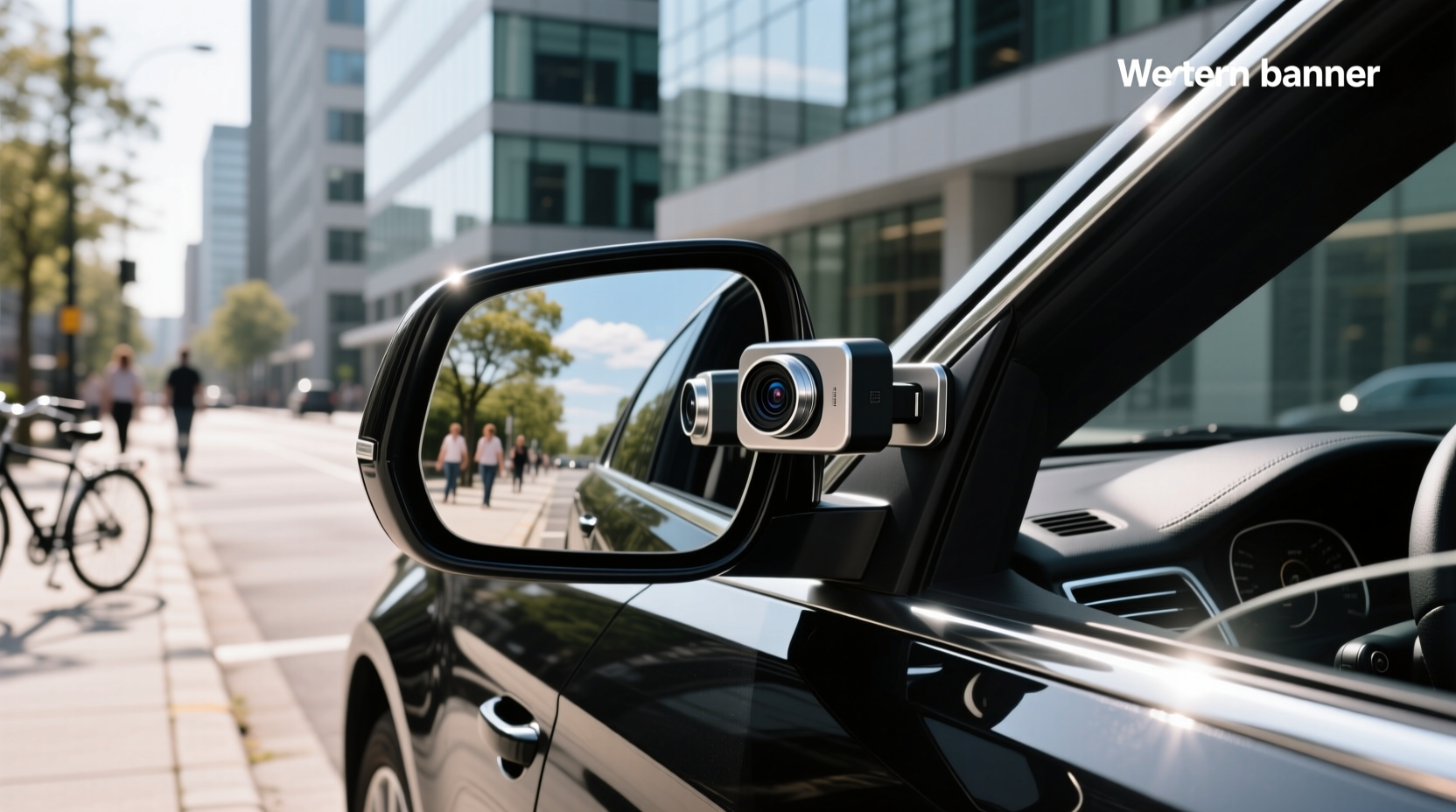
🚗 A side view mirror camera is increasingly replacing traditional exterior mirrors in modern vehicles, offering drivers improved visibility, reduced blind spots, and enhanced aerodynamics. These systems use small cameras mounted on the sides of the vehicle to transmit real-time video feeds to an interior display—often integrated into the rearview mirror or dashboard screen. As automakers adopt digital mirror technology, understanding how these systems work, their benefits, limitations, and legal status becomes essential for both new car buyers and aftermarket upgraders.
Why Are Side View Mirror Cameras Gaining Popularity?
The shift from physical mirrors to digital side view mirror cameras stems from advancements in automotive safety tech and design efficiency. Traditional mirrors have long been prone to vibration, limited field of view, and obstruction due to weather or damage. In contrast, camera-based systems provide a clearer, wider-angle image that can adapt to lighting conditions and eliminate blind zones—especially during lane changes or highway driving.
Automakers like Honda, Audi, and Lexus have introduced factory-installed camera mirror systems in select models, such as the Honda e:NS1, Audi e-tron, and Lexus ES. These OEM solutions are fully integrated with the vehicle’s electronics, ensuring seamless operation and compliance with regional safety standards.
How Do Side View Mirror Cameras Work?
⚙️ At its core, a side view mirror camera system consists of three main components:
- Cameras: Mounted near the door mirror area (or replacing the mirror housing), these capture live footage from the vehicle’s flanks.
- Wiring Harness: Transmits power and video signals from the cameras to the display unit.
- Display Screen: Located inside the cabin—typically on the rearview mirror or center console—this shows the camera feed in real time.
Many systems support features like automatic brightness adjustment, wide dynamic range (WDR) for high-contrast scenes, and night vision using infrared or low-light sensors. Some advanced models even integrate with turn signals, activating the corresponding side camera when the blinker is engaged—a feature known as blind spot monitoring activation.
Digital vs. Analog Systems
Not all side camera systems are created equal. There are two primary transmission types:
| Feature | Analog (AHD) | Digital (IP-Based) |
|---|---|---|
| Signal Quality | Up to 1080p, susceptible to interference | 1080p+, less signal loss over distance |
| Cable Type | Coaxial cable | Ethernet (CAT6/7) |
| Latency | Low (~50ms) | Very low (~30ms) |
| Compatibility | Wider with aftermarket kits | Limited to specific head units |
| Cost | Lower upfront cost | Higher initial investment |
For most consumers upgrading older vehicles, analog AHD (Advanced High Definition) systems remain the most accessible option due to plug-and-play compatibility and lower wiring complexity.
Benefits of Using Side View Mirror Cameras
✅ Improved Visibility: Cameras offer a wider field of view than flat glass mirrors—often exceeding 170° horizontally. This helps detect cyclists, pedestrians, and overtaking vehicles earlier.
📍 Reduced Blind Spots: Especially beneficial for SUVs, trucks, and vans with large rear quarters. When paired with turning signal activation, drivers get instant visual confirmation before changing lanes.
🔧 All-Weather Performance: Many side cameras come with IP68 waterproof ratings, heated lenses, and anti-fog coatings, maintaining clarity in rain, snow, or fog where mirrors may fail.
🏭 Aerodynamic Design: Removing bulky mirrors reduces wind resistance, which can slightly improve fuel efficiency and lower road noise at highway speeds.
⚡ Integration with Safety Systems: On factory-equipped vehicles, camera feeds often feed into blind spot detection, lane change assist, and parking guidance systems, creating a unified driver assistance platform.
Common Challenges and Limitations
Despite their advantages, side view mirror cameras aren’t without drawbacks:
Display Lag and Reliability Concerns
Some early digital mirror systems experienced noticeable latency between real-world movement and screen response. While modern processors have reduced this to under 50 milliseconds, any delay can affect spatial judgment—particularly during tight maneuvers or fast lane changes.
Additionally, reliance on electronic components introduces potential failure points: camera lens contamination, wiring issues, or display malfunctions can render the system unusable until repaired.
Legal and Regulatory Variability
❗ The legality of replacing physical side mirrors with cameras varies by country and state. In the United States, the National Highway Traffic Safety Administration (NHTSA) updated Federal Motor Vehicle Safety Standard (FMVSS) No. 111 in 2020 to allow camera-based systems as mirror replacements—but only if they meet strict performance criteria including durability, latency, and redundancy.
However, individual states may impose additional rules. For example, California requires at least one conventional exterior mirror on the driver’s side unless the vehicle was originally manufactured with camera-only systems1.
In Europe, UNECE Regulation 46 permits camera monitor systems (CMS) as mirror alternatives, provided they comply with ECE R158 standards covering image quality, reliability, and fail-safe mechanisms. Countries like Germany and France now allow CMS-equipped vehicles, but retrofits must pass technical inspections.
Aftermarket Installation Complexity
While plug-and-play mirror dashcams are available, adding standalone side cameras to a vehicle not designed for them often requires significant modification:
- Routing wires through doors and pillars without damaging seals
- Powering cameras reliably (often tied to ignition or accessory circuits)
- Mounting displays without obstructing the driver’s forward view
- Ensuring synchronization with existing infotainment or mirror units
Improper installation can lead to water ingress, electrical shorts, or vibration-induced image shake.
Types of Side View Mirror Camera Setups
There are several configurations available depending on your needs and vehicle type:
Mirror Dashcams with Integrated Side Feeds
🛒 These devices replace the interior rearview mirror with a smart display that shows front, rear, and optionally side camera views. They typically include built-in GPS, loop recording, and Wi-Fi connectivity. Brands like WOLFBOX and Rydeen offer models compatible with add-on side cameras.
They’re ideal for users who want a clean install without modifying factory screens. However, they usually require separate purchase and mounting of side cameras.
Standalone Blind Spot Cameras
🔧 Designed specifically to augment existing mirrors, these compact cameras mount near the side mirrors and send feeds to a secondary display or integrated screen. Often used in commercial fleets or large vehicles, they activate automatically when the turn signal engages.
They do not replace the mirror function but serve as supplemental tools—making them legal in more regions since the original mirrors remain intact.
Full Camera Monitor Systems (CMS)
🏭 Found in premium EVs and luxury sedans, full CMS setups remove external mirrors entirely. Instead, tiny pods house cameras that stream to high-resolution indoor monitors. These systems dynamically adjust zoom and brightness based on speed and ambient light.
Due to cost and integration requirements, full CMS is currently limited to OEM applications. Aftermarket versions exist but face regulatory hurdles in many markets.
Key Features to Evaluate Before Buying
If you're considering installing a side view mirror camera system, here are critical specifications to assess:
Resolution and Image Clarity
🔍 Look for at least 1080p resolution per camera. Higher-end systems offer 2K or 4K, though bandwidth and storage become limiting factors. Ensure the camera uses a CMOS sensor with WDR or HDR support to handle bright sunlight and dark shadows simultaneously.
Night Vision Capability
🌙 Low-light performance is crucial for nighttime driving. Check whether the camera includes infrared LEDs or Starvis/Starlight sensor technology, which enhances visibility in near-dark conditions without washing out images.
Waterproof and Dust Resistance
🌧️ Outdoor-mounted cameras should carry an IP67 or IP68 rating, meaning they’re sealed against dust and can withstand temporary submersion. This ensures longevity in harsh climates.
Field of View (FOV)
📍 A horizontal FOV of 150°–170° is optimal. Too narrow limits coverage; too wide may introduce fisheye distortion that distorts distance perception.
Latency and Frame Rate
⏱️ Aim for frame rates of 30fps or higher with end-to-end latency below 50ms. Any lag above this threshold increases risk during dynamic driving situations.
Power Source and Wiring
🔋 Determine whether the camera draws power continuously, only when the vehicle is running, or via a hardwired connection. Battery-powered options lack reliability, so wired setups are preferred.
Installation Tips and Best Practices
🛠️ Proper installation is key to both functionality and compliance. Follow these guidelines:
- Position cameras correctly: Mount them slightly forward-facing to cover the adjacent lane and blind zone behind the B-pillar.
- Avoid obstructions: Ensure door edges, handles, or trim don’t block the lens angle.
- Seal entry points: Use rubber grommets and silicone sealant when passing cables through sheet metal to prevent leaks.
- Test alignment: Adjust camera angles while viewing the live feed to optimize coverage.
- Check local laws: Confirm whether mirror removal is permitted and if redundant displays are required.
Are Side View Mirror Cameras Worth It?
👥 The value depends on your driving environment and vehicle type:
🚚 Large Vehicles: Trucks, RVs, and vans benefit significantly due to massive blind zones. Adding side cameras can prevent accidents and ease parking.
🏙️ Urban Drivers: In cities with heavy pedestrian and cyclist traffic, expanded visibility improves reaction time and situational awareness.
🛣️ Highway Commuters: Frequent lane changers gain confidence knowing they can visually confirm adjacent lanes instantly.
However, for compact cars driven primarily in open suburban areas, the return on investment may be marginal—especially if the cost exceeds $300 for parts and labor.
Future Trends and Industry Adoption
🌐 Automakers are gradually adopting camera mirror systems due to their role in enabling autonomous driving architectures. Tesla, though still using physical mirrors in most markets, has explored camera-only designs for future models. Similarly, Toyota and BMW are testing digital systems in concept vehicles.
As regulations harmonize globally and production costs decrease, expect broader availability of affordable, standardized CMS platforms within the next five years.
Common Misconceptions About Side View Mirror Cameras
❌ Myth: Cameras completely eliminate blind spots.
✅ Reality: While they reduce blind zones, no system offers perfect coverage. Driver scanning habits should still be maintained.
❌ Myth: All mirror dashcams support side camera inputs.
✅ Reality: Only certain models have auxiliary ports or wireless pairing capabilities. Always verify compatibility before purchasing add-ons.
❌ Myth: Digital mirrors are always better than glass.
✅ Reality: In rare cases of system failure (e.g., dead battery, software crash), physical mirrors provide fail-safe redundancy that cameras cannot match.





 浙公网安备
33010002000092号
浙公网安备
33010002000092号 浙B2-20120091-4