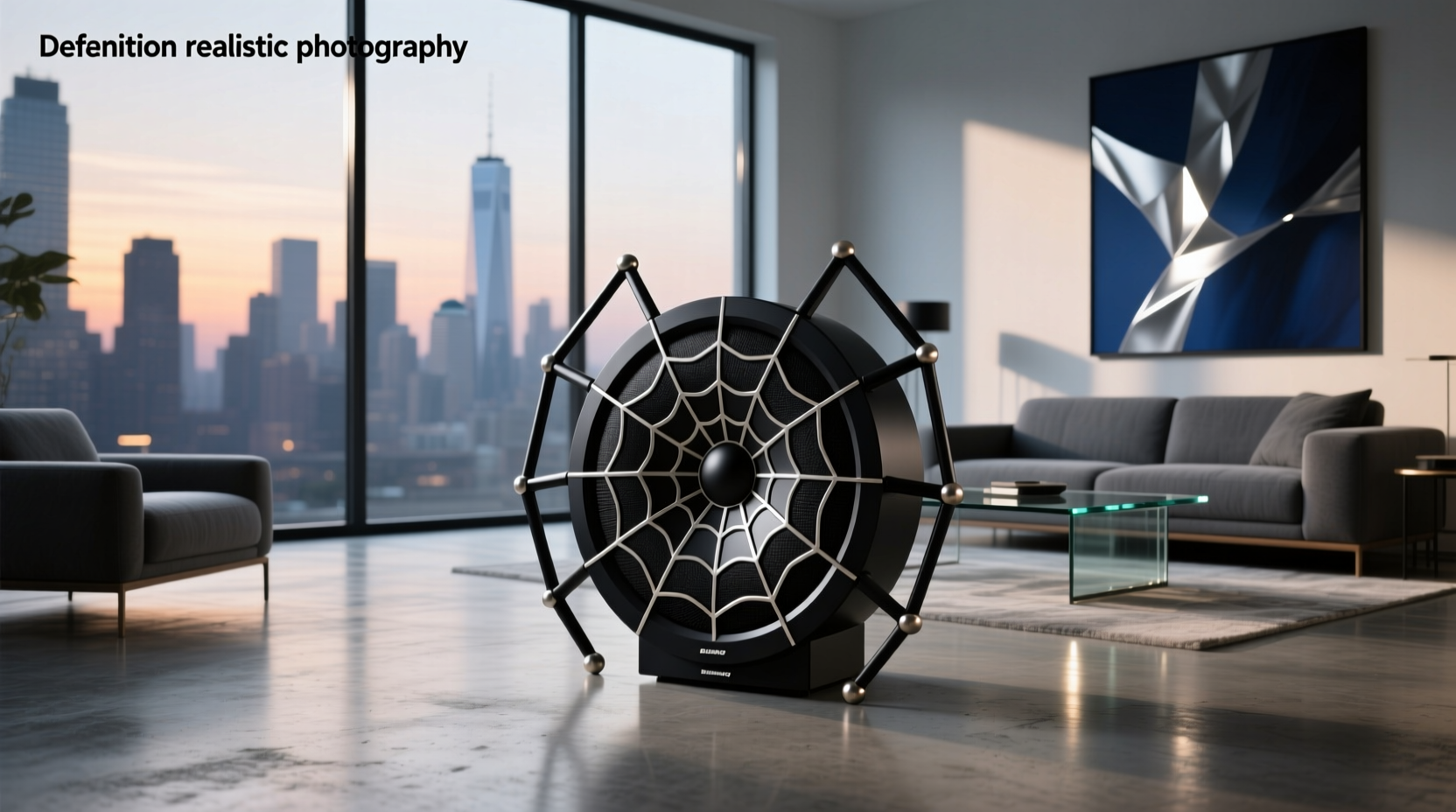
When searching for durable, high-performance car audio components, you may have come across the term spider subwoofer. But what exactly does that mean? A spider subwoofer isn’t a brand or model—it refers to the critical suspension component inside a subwoofer known as the spider, which plays a vital role in sound accuracy and speaker longevity. Understanding how this part works, when it fails, and how to choose replacements or upgrades can help you maintain optimal bass response in your vehicle’s audio system.
What Is a Spider in a Subwoofer?
The term “spider” might sound like a brand name—especially with companies using names like BlackSpider Audio or PSI Car Audio—but in technical terms, the spider is a mechanical part of a subwoofer’s internal structure ⚙️. Officially known as the flexure suspension, it's a round, corrugated piece made of fabric-like material positioned between the voice coil and the basket (frame) of the speaker.
This component serves two primary functions:
- Anchors the voice coil so it moves precisely back and forth without wobbling
- Provides restoring force to return the cone to its neutral position after movement
Think of it like a shock absorber for the speaker cone: too stiff, and the sound becomes harsh; too loose, and distortion increases due to uncontrolled motion.
Why the Spider Matters in Car Audio Performance
In demanding environments like car interiors, where vibrations, temperature changes, and high power inputs are common, the durability of the spider directly affects overall speaker reliability ✅. A well-designed spider ensures consistent performance over time, especially under heavy bass loads.
When people search for “spider subwoofer,” they’re often looking for either:
- Replacement parts for damaged speakers 🔧
- High-quality subwoofers with reinforced spiders for better durability
- Repair kits to restore old or blown units
Some manufacturers even highlight their custom-molded spiders as a selling point—for example, PSI Car Audio notes they use proprietary molds and tuned materials to enhance control and linearity1.
Common Signs of a Damaged Spider
A failing spider can severely degrade sound quality. Here are telltale signs your subwoofer’s spider may be compromised:
| Symptom | Likely Cause | Action Needed |
|---|---|---|
| Distorted or fuzzy bass at moderate volumes | Spider torn or deformed | Inspect and consider reconing |
| Reduced output or weak punch | Loss of centering force | Check alignment and suspension |
| Rattling or scraping noise during playback | Voice coil rubbing due to misalignment | Immediate inspection required |
| No movement despite signal input | Severely degraded or detached spider | Recon or replace unit |
If any of these symptoms appear, disconnect the subwoofer immediately to prevent further damage to the amplifier or other components.
Can You Replace Just the Spider?
Yes—many enthusiasts opt for a recone kit, which includes a new spider, surround, and sometimes voice coil. This process, called reconing, can extend the life of a high-end subwoofer that would otherwise cost hundreds to replace.
However, there are important considerations:
- Technical skill required: Replacing a spider demands precision tools and patience. Misalignment can ruin the speaker.
- Availability: Not all models have aftermarket recone kits. Brands like Skar Audio or JL Audio may offer OEM repair parts through authorized dealers.
- Cost vs. benefit: For budget subwoofers, replacement is often more economical than repair.
For instance, a standalone spider replacement for a JL Audio 10W1 costs around $3.002, but labor and tools could make DIY impractical unless you already have experience.
Differences Between Standard and Reinforced Spiders
Not all spiders are created equal. High-performance subwoofers often feature upgraded suspensions designed for greater excursion and thermal stability. Key differences include:
- Material composition: Poly-cotton blends, tinsel-treated fabrics, or multi-layer weaves improve tear resistance.
- Congruence design: The number and depth of folds affect compliance and damping characteristics.
- Adhesion quality: Poor glue joints lead to early failure, especially in humid climates.
Manufacturers like Sundown Audio or Rockford Fosgate engineer spiders specifically for long throw (high excursion) applications, ensuring stability even at extreme volumes.
How to Identify Your Subwoofer’s Spider Type
If you're shopping for a replacement or upgrade, identifying the correct spider size and shape is crucial. Follow these steps:
- Remove the subwoofer from the enclosure. Power off the system and disconnect wiring.
- Take off the grille and inspect the cone. Look for manufacturer labels or model numbers.
- Measure the diameter of the voice coil former (the tube attached to the cone).
- Note the mounting depth and frame style, especially if considering an adapter (e.g., 11″ spider adapter/spacer used in some builds2).
- Search by model number on forums like r/CarAV or manufacturer support sites.
Popular sizes include:
- 6.1" x 2" (common in 10-inch woofers)
- 7.4" x 2.38" (found in certain Skar models)
- Custom diameters for OEM or specialty drivers
Aftermarket vs. OEM Spiders: What’s Better?
OEM (original equipment manufacturer) spiders are built to match factory specifications. Aftermarket versions may offer improvements in durability or flexibility depending on the brand.
OEM Pros:
- Precise fit and performance matching
- Consistent with original tuning
- Often covered under warranty
Aftermarket Pros:
- Potential for enhanced materials (e.g., heat-resistant treatments)
- Available for discontinued models
- May allow customization (softer/stiffer response)
The best choice depends on your goals. If restoring factory fidelity, stick with OEM. For modified systems pushing higher power, a performance-grade aftermarket spider may be worth exploring.
Top Brands Using Advanced Spider Designs
While “Spider” appears in several brand names (e.g., Spider Audio & Accessories, BlackSpider Venomous), few actually manufacture subwoofers—they’re typically retailers or integrators 🌐. True innovation comes from engineering-focused brands:
- PSI Car Audio: Uses custom-shaped molds and composite blends for optimized linearity1.
- JL Audio: Known for patented spider geometries that reduce harmonic distortion.
- Sundown Audio: Offers frames and adapters compatible with various spider configurations for custom builds.
- Skar Audio: Sells individual replacement spiders (e.g., 7.4" x 2.38") for select models.
Be cautious of generic brands on marketplaces claiming “spider pattern” designs—that usually refers to cosmetic grill aesthetics, not internal mechanics.
DIY Repair Tips for Spider Replacement
If you decide to attempt a spider replacement, here are essential tips:
- Work in a clean environment: Dust particles can interfere with adhesion and cause buzzing.
- Use proper adhesive: Speaker-specific glues (like Goopy or Permatex Speaker Adhesive) cure flexible and resist vibration.
- Center the voice coil carefully: Use a centering tool or temporary shims to avoid binding.
- Let it dry fully: Rushing curing time leads to weak bonds and premature failure.
- Test gradually: Start with low-power signals before full-range testing.
Online tutorials and communities such as Reddit’s r/CarAV can provide guidance based on real-world experiences3.
When Should You Avoid Repairing the Spider?
Despite the appeal of saving money, some situations make replacement more practical than repair:
- Burnt or melted voice coil: Heat damage likely affected surrounding components.
- Cracked basket or warped frame: Structural issues can’t be fixed with a new spider alone.
- Outdated model with no reliable parts supply: Risk of repeated failures.
- Multiple failed attempts: Previous repairs may have weakened integrity.
In these cases, investing in a new subwoofer with modern materials and better efficiency is usually the smarter long-term decision.
Choosing a New Subwoofer with Durable Spiders
If you're upgrading rather than repairing, look for features that indicate robust spider design:
- Long linear excursion (Xmax): Requires strong, flexible spiders.
- High RMS power handling: Indicates engineered durability under load.
- Double-spider configurations: Some competition-grade subs use dual spiders for improved control.
- Manufacturer transparency: Brands that publish suspension specs show confidence in design.
Also consider enclosure type—sealed boxes put less stress on the spider compared to ported or bandpass designs, which increase excursion demands.
Frequently Asked Questions About Spider Subwoofers
- What causes a spider to fail in a subwoofer?
- Over-excursion (pushing beyond physical limits), aging materials, exposure to moisture, or manufacturing defects can all lead to spider degradation.
- Can I drive my car with a damaged spider?
- It’s not recommended. Continued use can damage the amplifier and produce distorted sound. Disconnect the speaker until repaired.
- Are all spider replacements the same size?
- No. Spiders vary by model and manufacturer. Always verify dimensions and compatibility before purchasing.
- Is a stiffer spider better for bass?
- Not necessarily. Stiffness must match the system design. Too stiff reduces sensitivity; too soft allows instability.
- Where can I buy genuine spider replacement parts?
- Authorized dealers, manufacturer websites, or specialized car audio shops often carry OEM or approved aftermarket kits.





 浙公网安备
33010002000092号
浙公网安备
33010002000092号 浙B2-20120091-4