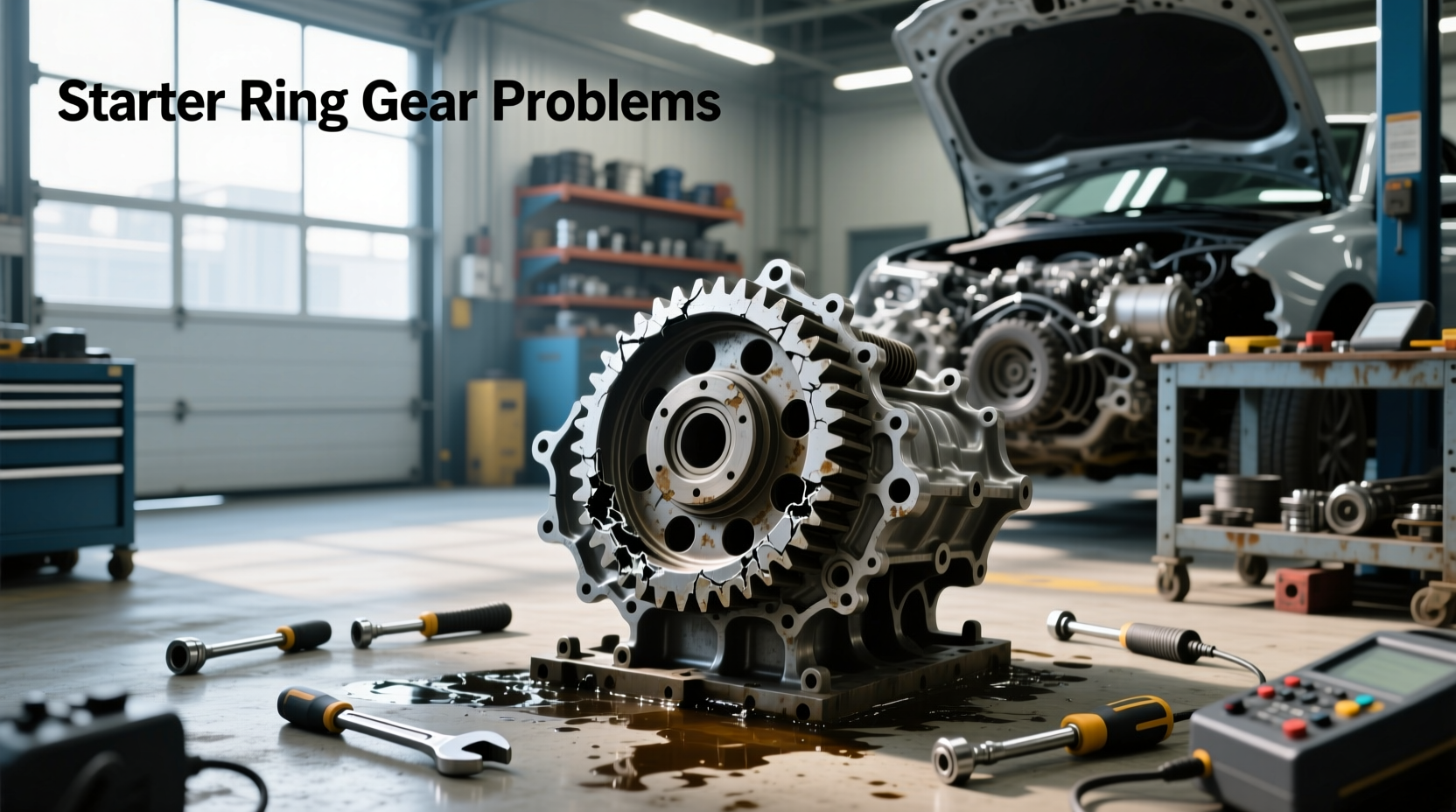
When your engine cranks slowly, makes grinding noises, or fails to start altogether, one often-overlooked culprit could be starter ring gear problems. This critical component connects the starter motor to the engine’s flywheel or flexplate, transferring torque to crank the engine. Over time, wear, misalignment, or improper installation can lead to damaged teeth, slipping gears, or complete failure to engage. Understanding how to identify, diagnose, and resolve these issues is essential for maintaining reliable vehicle operation—especially in high-torque or frequently started engines.
What Is a Starter Ring Gear and How Does It Work?
The starter ring gear is a hardened steel ring with precision-cut teeth that is press-fitted onto the outer edge of the engine’s flywheel (in manual transmissions) or flexplate (in automatics). When you turn the key or press the start button, the starter motor extends its pinion gear, which meshes with the ring gear to rotate the engine until ignition occurs ⚙️.
This brief but high-torque interaction happens every time the engine starts. Because of this repetitive stress, the ring gear must withstand significant mechanical load. Most ring gears have between 100 and 200 teeth, depending on engine size and manufacturer specifications. The material is typically medium carbon steel, heat-treated for durability 1.
Common Symptoms of a Failing Starter Ring Gear
Recognizing early signs of ring gear trouble can prevent costly repairs and unexpected breakdowns. Here are the most common symptoms drivers report:
- Grinding or clicking noise during startup: A loud metallic grinding sound when turning the key often indicates misaligned or broken teeth between the starter pinion and ring gear.
- Intermittent starting issues: If the engine starts sometimes but not others, it may be because the damaged section of the ring gear only engages when the flywheel stops in a certain position.
- Starter spins but engine doesn’t crank: This suggests the pinion gear isn’t engaging properly—either due to stripped teeth or incorrect clearance.
- Visible tooth damage upon inspection: Inspecting the ring gear through the starter mount hole or bellhousing can reveal chipped, worn, or missing teeth.
- Starter motor binding or jamming: In severe cases, damaged teeth can cause the starter drive to lock up momentarily, leading to electrical strain or gear damage.
Root Causes of Starter Ring Gear Damage
While normal wear occurs over tens of thousands of starts, premature failure usually stems from underlying mechanical or operational factors:
1. Misaligned Starter Motor
If the starter motor is not mounted flush or uses worn bushings, the pinion gear may not align correctly with the ring gear. Even slight misalignment causes uneven tooth contact, accelerating wear on one side 🔧.
2. Worn or Damaged Pinion Gear
The starter’s own pinion gear can wear out or break. A damaged pinion will chew into the ring gear over time, especially if not replaced promptly. Some modern starters use solenoid-driven Bendix drives that retract after engagement—if this mechanism fails, prolonged meshing increases wear.
3. Improper Starter Installation
Using incorrect shims or failing to torque mounting bolts properly alters the gear mesh depth. Too close, and the gears bind; too far, and they don’t engage fully. Always follow manufacturer-specified backlash measurements (typically 0.008–0.015 inches).
4. Engine Backfiring or Kickback
In older or poorly tuned engines, combustion can occur before top dead center, causing sudden reverse rotation. This “kickback” forces the ring gear backward while the starter is still engaged, leading to tooth shearing.
5. Use of High-Torque or Gear-Reduction Starters
Aftermarket high-performance starters generate more torque than stock units. Without upgrading the ring gear, this extra force can overwhelm weaker factory gears—especially in vintage vehicles designed for lower-output systems ✈️.
6. Poor Quality Replacement Parts
Cheaply made ring gears may use inferior steel or imprecise tooth profiles. These fail faster under stress and increase wear on the starter. Always verify material specs and compatibility before replacement.
How to Diagnose Starter Ring Gear Issues
Before replacing expensive components like the starter or flywheel, perform a systematic diagnosis:
- Listen carefully during startup: Note whether the noise is consistent or intermittent. Intermittent grinding suggests localized tooth damage.
- Inspect via starter removal: Remove the starter motor and visually examine the exposed portion of the ring gear. Rotate the engine manually using a socket on the crankshaft pulley to view the full circumference.
- Check for free play and alignment: With the starter out, inspect its pinion gear for wear. Ensure the starter mounting surface is clean and undamaged.
- Test starter operation off-engine: Bench-test the starter to confirm it extends and retracts smoothly without grinding.
- Measure gear mesh backlash: Use a feeler gauge to check clearance between pinion and ring gear when installed. Compare against OEM specifications.
| Symptom | Possible Cause | Diagnostic Step |
|---|---|---|
| Grinding noise | Misalignment, worn teeth | Inspect gear mesh, check starter mounting |
| Engine won't crank | Stripped ring gear section | Rotate flywheel, inspect all teeth |
| Starter spins freely | No engagement, broken teeth | Bench test starter, inspect pinion |
| Intermittent start | Flywheel stops at damaged spot | Mark position, restart multiple times |
Can You Replace the Ring Gear Without Removing the Transmission?
In most cases, no—replacing the starter ring gear requires access to the flywheel or flexplate, which means removing either the transmission (manual) or torque converter and bellhousing (automatic). This is a labor-intensive job that often takes 4–8 hours depending on the vehicle.
However, some exceptions exist:
- Vehicles with dual-mass flywheels may allow ring gear replacement if the unit is modular.
- Some diesel engines feature bolt-on ring gears instead of interference fits, simplifying replacement.
- Heavy-duty or industrial engines (e.g., Lycoming aircraft engines) sometimes permit partial disassembly for gear servicing without full transmission drop 2.
Always consult service manuals before assuming accessibility. Attempting repair without proper space risks damaging surrounding components.
Step-by-Step Guide to Replacing a Starter Ring Gear
Replacing the ring gear involves precise technique due to the interference fit (typically 0.002–0.004 inches tighter than the flywheel diameter). Here's how professionals do it:
Tools Needed:
- Flywheel puller and installer tools
- Heat gun or oxy-acetylene torch
- Freezer or dry ice (for shrink-fit installation)
- Hammer and punch (for removal)
- Torque wrench
- Engine rotation tool (breaker bar + socket)
Procedure:
- Disconnect battery and safely lift the vehicle.
- Remove transmission or bellhousing to expose the flywheel.
- Mark flywheel position relative to crankshaft for correct reinstallation (critical for balance).
- Remove old ring gear: Heat the ring evenly until it expands (~300°F), then tap it off with a brass hammer and punch.
- Clean flywheel surface thoroughly to remove burrs or debris.
- Cool new ring gear in freezer for 1–2 hours while heating the flywheel rim gently.
- Press new gear on quickly, aligning it straight to avoid binding.
- Allow to cool naturally—do not quench with water.
- Reinstall flywheel with proper torque sequence and lubricated bolts.
- Reassemble transmission and reconnect all linkages.
⚠️ Safety note: Never strike the flywheel directly during removal—it can crack. Use controlled heat and even pressure.
Can You Flip the Ring Gear to Extend Its Life?
In some older vehicles (like Model T Fords), owners have reported flipping the ring gear to use the less-worn side 3. While technically possible with symmetrically cut gears, this approach has limitations:
- Modern ring gears often have directional tooth profiles optimized for engagement speed.
- Flipping won’t help if both sides are equally worn.
- Repeated heating and cooling weakens the metal over time.
This method should only be considered as a temporary field fix in vintage applications where replacements are hard to find.
Preventative Maintenance Tips
To extend the life of your starter ring gear:
- Ensure proper starter alignment during any engine work.
- Avoid excessive cranking—limit start attempts to 10–15 seconds with 30-second pauses.
- Maintain healthy battery voltage (12.6V+ resting)—low voltage causes slow cranking and prolonged gear engagement.
- Replace worn starters promptly to prevent cascading damage.
- Use OEM-spec or upgraded ring gears when rebuilding engines.
Myths and Misconceptions About Ring Gears
Several myths persist in automotive circles:
❌ "Loud starter noise always means a bad starter"
Not true. While starters can fail, grinding is just as likely due to ring gear damage. Always inspect both components.
❌ "You need to replace the entire flywheel if the ring gear is bad"
False. Unless the flywheel is cracked or warped, the ring gear can be replaced independently.
❌ "Ring gears last the life of the vehicle"
While many do, frequent short trips, cold starts, or high-use applications (towing, delivery vans) accelerate wear.
When to Seek Professional Help
Due to the complexity and precision required, consider professional assistance if:
- You lack specialized tools (flywheel holder, torque wrench).
- The engine is interference-type (risk of valve damage during rotation).
- Transmission removal seems beyond your skill level.
- There’s evidence of deeper drivetrain issues (clutch wear, torque converter problems).
A certified technician can also perform dynamic testing and ensure proper flywheel balancing post-repair.
Final Thoughts
Starter ring gear problems may seem minor compared to engine or transmission failures, but they directly impact your ability to start the vehicle reliably. By understanding the symptoms, diagnosing accurately, and applying correct repair techniques, you can avoid unnecessary part replacements and downtime. Whether you're maintaining a daily driver or restoring a classic car, paying attention to this small but vital component pays off in long-term reliability.
Frequently Asked Questions
- What does a starter ring gear do?
- The starter ring gear is mounted on the flywheel or flexplate and engages with the starter motor’s pinion gear to crank the engine during startup.
- Can I drive with a bad starter ring gear?
- No—once the engine is running, the ring gear isn’t involved. However, if it prevents starting, the vehicle cannot be driven until repaired.
- How long does a starter ring gear last?
- Most last 100,000+ miles under normal conditions, but lifespan varies based on usage, climate, and maintenance.
- Is it possible to weld a broken ring gear tooth?
- Not recommended. Welding alters metallurgy and can lead to cracking. Replacement is safer and more reliable.
- Does a manual vs automatic transmission affect ring gear design?
- Yes. Manual transmissions use a flywheel-mounted ring gear, while automatics use a flexplate-mounted version, often with different tooth counts and diameters.





 浙公网安备
33010002000092号
浙公网安备
33010002000092号 浙B2-20120091-4