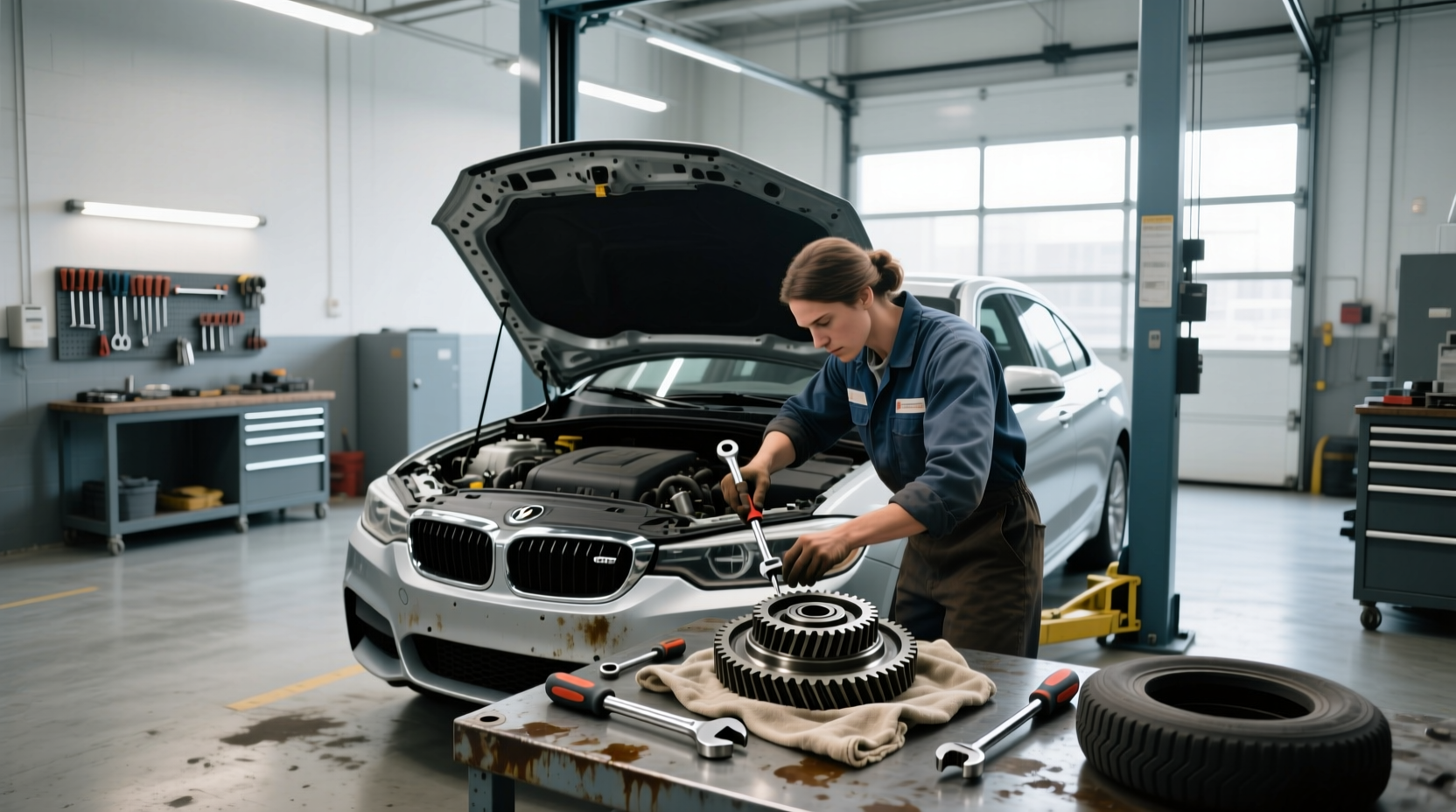
If your engine cranks slowly or makes a grinding noise when starting, you may be dealing with a failing starter ring gear. This crucial component connects the starter motor to the flywheel or flexplate, transferring torque to crank the engine. Over time, the teeth on the ring gear can wear down or break, leading to difficult or failed starts. In many cases, replacing the starter ring gear—rather than the entire flywheel—is a cost-effective repair that restores reliable engine ignition ⚙️.
What Is a Starter Ring Gear and Why Does It Matter?
The starter ring gear is a circular steel gear mounted on the outer edge of the flywheel (in manual transmission vehicles) or the torque converter's flexplate (in automatics). When you turn the key or press the start button, the starter motor engages its pinion gear with the ring gear’s teeth, spinning the engine until it fires up ✅.
This gear typically has between 100 and 200 teeth, depending on the engine size and manufacturer specifications. It's made from medium carbon steel for durability but remains vulnerable to wear due to repeated mechanical engagement 🔧.
Because it plays a critical role in engine startup, any damage—such as chipped, worn, or missing teeth—can prevent proper meshing with the starter motor. Ignoring early signs often leads to complete failure, leaving the vehicle unable to start at all.
Symptoms of a Bad Starter Ring Gear
Recognizing the warning signs early can save time and money. Here are common symptoms indicating potential issues with the starter ring gear:
- Grinding or clicking noises during startup: A loud metallic grinding sound usually means the starter pinion isn’t properly engaging with the ring gear teeth.
- Intermittent starting problems: The car starts fine one day and not the next, suggesting partial tooth wear where only certain positions on the ring gear still engage.
- Starter motor spins but engine doesn’t crank: This indicates slippage—likely because the pinion gear is spinning past damaged teeth without catching.
- Visible damage upon inspection: If the bellhousing or inspection cover allows visibility, broken or severely worn teeth may be directly observed.
These symptoms are often mistaken for a faulty starter motor. However, replacing the starter won’t fix the issue if the root cause lies in the ring gear itself ❗.
Can You Replace Just the Ring Gear?
Yes, in most cases, you can replace just the starter ring gear instead of the entire flywheel or flexplate. Since the ring gear is an interference-fit component pressed onto the flywheel, it can be removed and replaced independently 🛠️.
However, this requires specialized tools and techniques such as heating the new gear for expansion and freezing the flywheel for contraction to ensure a secure fit. Attempting removal or installation without proper methods risks damaging the flywheel surface or misalignment.
Some manufacturers design engines where access is extremely limited (e.g., transverse-mounted engines in compact cars), making full transmission removal necessary. In these scenarios, labor costs increase significantly, which affects whether replacement is more economical than rebuilding or replacing the whole assembly.
Tools and Materials Needed for Replacement
Before beginning the job, gather the following tools and supplies:
| Tool/Material | Purpose |
|---|---|
| Socket wrench set | To remove transmission bolts, engine mounts, etc. |
| Torque wrench | For reassembling components to factory specs |
| Flywheel holding tool | Prevents rotation while loosening crankshaft bolt |
| Ring gear installer/remover tools | Specialized pullers and presses for safe handling |
| Heat source (propane torch or induction heater) | To expand the new ring gear for installation |
| Cold bath (dry ice or freezer) | To shrink the flywheel hub for easier mounting |
| New starter ring gear | Must match OEM specs: tooth count, pitch, diameter |
| Safety gloves and goggles | Essential when working with heat and heavy parts |
Using incorrect tools—like hammers or improvised pry bars—can warp the flywheel or damage surrounding components. Always follow service manual guidelines for your specific make and model.
Step-by-Step Replacement Process
Replacing the starter ring gear involves several stages, including disassembly, gear removal, installation, and reassembly. Below is a general procedure applicable to most rear-wheel-drive vehicles with accessible bellhousings:
- Disconnect the battery: Always begin by disconnecting both terminals to prevent accidental short circuits ⚡.
- Remove the starter motor: Use a socket set to unbolt the starter from the transmission housing. Inspect the pinion gear for wear while it’s out.
- Support the engine: Install jack stands under the frame and use an engine hoist or support bar to stabilize the engine during transmission work.
- Drop the transmission or bellhousing: Depending on the vehicle, you may need to remove the entire transmission or just the bellhousing to access the flywheel.
- Remove the flywheel: Lock the flywheel using a holding tool, then loosen the crankshaft bolt and flywheel mounting bolts. Carefully pull the flywheel off the crankshaft flange.
- Remove the old ring gear: Use a hydraulic press or gear puller to drive the old gear off the flywheel. Avoid heating it excessively, as this can alter the metallurgy of the flywheel.
- Prepare the new ring gear: Heat the new ring gear evenly using a propane torch or induction heater until it expands enough to slide over the flywheel rim. At the same time, chill the flywheel in a freezer for 1–2 hours to contract the metal.
- Install the new gear: Slide the heated gear onto the cooled flywheel, ensuring correct orientation (some gears have chamfered edges that must face the starter side). Allow it to cool naturally—do not quench with water.
- Reinstall the flywheel: Align the flywheel with the crankshaft dowel pins, torque all bolts to specification, and reinstall the transmission or bellhousing.
- Reconnect and test: Reattach the starter, reconnect the battery, and perform a test start. Listen carefully for smooth engagement and absence of noise.
For front-wheel-drive or transverse-engine layouts, the process may require additional steps like subframe removal or air conditioning line disconnection. Always consult a repair manual specific to your vehicle.
Common Mistakes to Avoid
Even experienced mechanics can run into pitfalls during this repair. Here are frequent errors and how to avoid them:
- Installing the ring gear backward: Some gears have a beveled edge meant to guide the starter pinion. Installing it backwards causes poor meshing and rapid wear.
- Overheating the ring gear: Excessive heat can anneal the metal, reducing hardness and wear resistance. Heat only until expansion allows slipping over the flywheel (~300°F).
- Skipping flywheel resurfacing: If the flywheel surface is cracked, glazed, or warped, it should be machined before reinstallation. Otherwise, clutch slippage or vibration may occur later.
- Incorrect torque on flywheel bolts: Under-torqued bolts can loosen; over-torqued ones may strip threads or distort the crankshaft flange.
- Assuming the starter is fine: Even if the ring gear was the main culprit, inspect the starter pinion and solenoid for wear before reassembly.
When Should You Replace the Entire Flywheel?
While replacing just the ring gear is usually sufficient, there are situations where full flywheel replacement is recommended:
- Flywheel cracks or warping: Thermal stress from engine overheating or improper clamping can create structural flaws.
- Multiple ring gear replacements: Repeated heating and cooling cycles weaken the flywheel material over time.
- Upgrading to a lightweight performance flywheel: Enthusiasts often pair ring gear replacement with a switch to a lighter unit for faster rev response.
- Clutch job in progress: If the transmission is already out for a clutch change, replacing the flywheel while everything is accessible reduces future labor costs.
In diesel engines or high-torque applications, dual-mass flywheels (DMFs) are common. These cannot have their ring gears replaced separately and must be changed as a complete unit.
Cost Considerations: DIY vs Professional Service
The total cost of starter ring gear replacement varies widely based on vehicle type, labor rates, and parts availability:
| Component | DIY Cost Range | Professional Cost Range |
|---|---|---|
| New ring gear | $30–$150 | $30–$150 |
| Flywheel (if replaced) | $80–$400 | $80–$400 |
| Labor (6–10 hours) | $0 | $600–$1,200+ |
| Total Estimated Cost | $110–$550 | $700–$1,700+ |
For DIYers, the main investment is time and tool access. For others, especially those with complex engine layouts, professional service may be worth the premium. Independent shops often charge less than dealerships for the same work.
Choosing the Right Replacement Ring Gear
Not all starter ring gears are created equal. To ensure compatibility and longevity:
- Match OEM specifications: Verify tooth count, pitch (diametral or module), inner diameter, and thickness. A mismatch prevents proper engagement.
- Material quality: Look for gears made from case-hardened steel with precise tooth profiling. Avoid cheap imports with inconsistent heat treatment.
- New vs refurbished: While some vendors sell reconditioned gears, new units offer better reliability and warranty coverage.
- Brand reputation: Suppliers like ATP, Standard Motor Products, and OE Solutions are known for consistent quality across various vehicle platforms.
Aftermarket high-torque ring gears (e.g., 66-tooth conversions for older V-twins) exist for performance applications. These reduce starter strain and improve cold-start reliability in modified engines.
Preventive Maintenance Tips
While the starter ring gear typically lasts the life of the engine, certain practices extend its lifespan:
- Avoid prolonged cranking: Limit starter engagement to 10–15 seconds at a time to prevent overheating and excessive tooth wear.
- Maintain healthy batteries: Weak batteries cause slow cranking, increasing contact time between pinion and ring gear.
- Fix starter alignment issues promptly: Misaligned starters wear teeth unevenly. Check mounting bolts and bushings regularly.
- Use correct engine oil viscosity: Thick oil in cold weather increases cranking resistance, putting extra load on the gear train.
FAQs About Starter Ring Gear Replacement
- ❓ Can I drive with a bad starter ring gear?
- No. Once the gear fails completely, the engine won't crank. Continued attempts to start can damage the starter motor.
- ❓ How long does a starter ring gear last?
- Typically 100,000+ miles under normal conditions. Aggressive starting habits or poor maintenance shorten its life.
- ❓ Do automatic and manual transmissions use the same ring gear?
- No. Manual transmissions use a ring gear on the flywheel; automatics have it on the flexplate. They differ in diameter, tooth count, and mounting method.
- ❓ Can I replace the ring gear without removing the transmission?
- Rarely. Full access to the flywheel or flexplate almost always requires transmission removal.
- ❓ Is it possible to repair a few damaged teeth instead of replacing the whole gear?
- Not reliably. Welding or filing teeth leads to imbalance and further damage. Full replacement is the only durable solution.





 浙公网安备
33010002000092号
浙公网安备
33010002000092号 浙B2-20120091-4