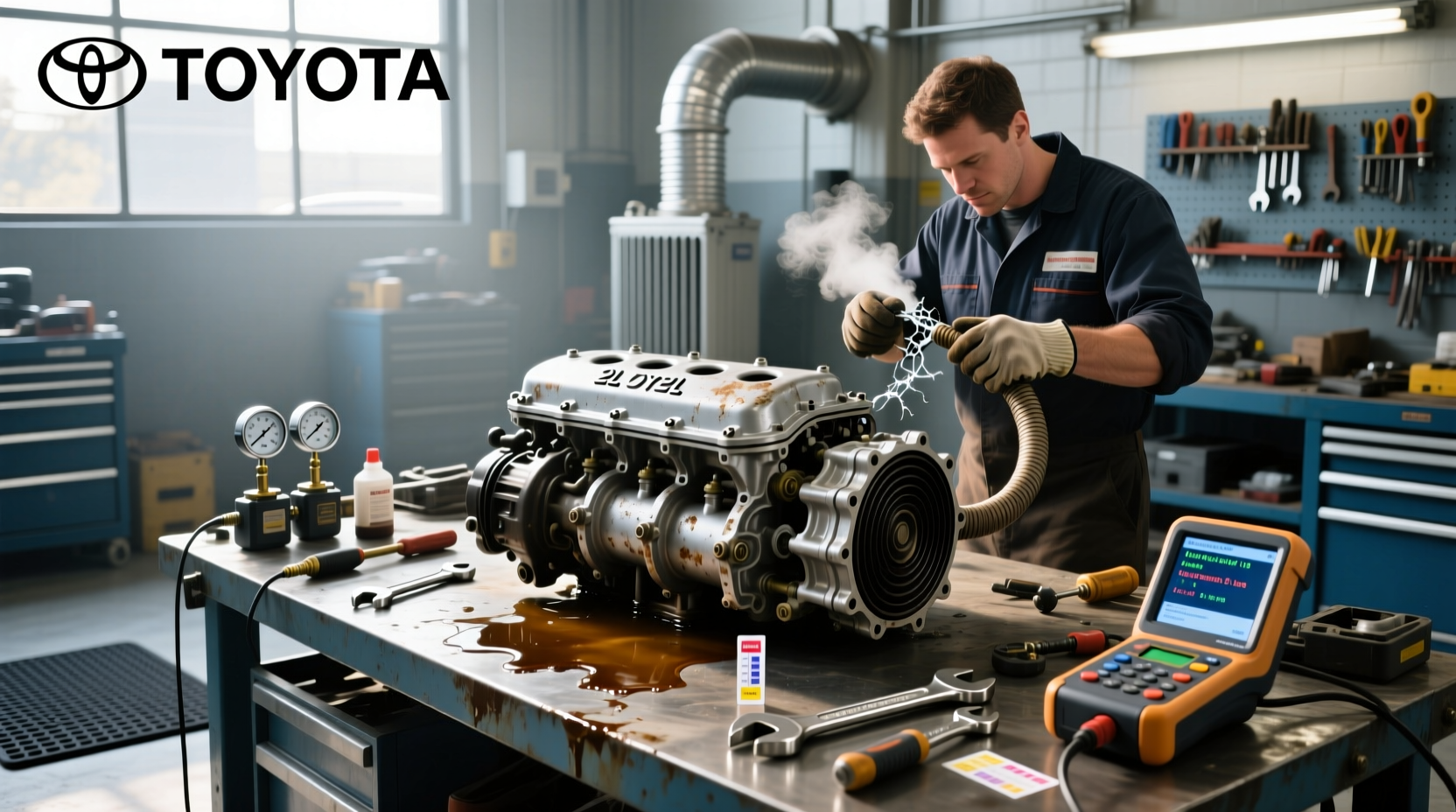
If you're experiencing issues with your Toyota 2L diesel engine—commonly found in models like the Hilux (1983–1997), Hiace (1985–2004), and early Land Cruiser variants—you're not alone. The Toyota 2L engine problems most frequently reported include hard starting, excessive smoke, loss of power, oil leaks, and head gasket failures. While the 2L is known for durability and simplicity, aging components, poor maintenance, and fuel quality can lead to recurring mechanical concerns. This guide breaks down every major issue, explains root causes, and provides actionable steps to diagnose, prevent, or repair these problems effectively.
Understanding the Toyota 2L Diesel Engine
The Toyota 2L is a 2.4-liter (2446 cc) inline-four naturally aspirated diesel engine introduced in the early 1980s. It was designed for reliability and ease of maintenance, powering utility vehicles such as the Toyota Hilux (LN106, LN130), Hiace (LH100/200), and 4Runner (N60). A later turbocharged version, the 2L-T, offered improved torque but shared many core components with the base model.
⚙️ Key Specifications:
- Displacement: 2446 cc
- Bore × Stroke: 92.0 mm × 92.0 mm
- Compression Ratio: ~22.4:1
- Aspiration: Naturally aspirated (2L), Turbocharged (2L-T)
- Fuel System: Mechanical diesel injection pump (Denso or Bosch)
- Valvetrain: SOHC, 8 valves
- Power Output: ~73–85 hp depending on variant
This engine lacks modern electronics, relying instead on robust mechanical systems—a trait that contributes to its longevity but also means wear becomes more apparent over time. Many 2L engines today have exceeded 300,000 km, making understanding common failure points essential for owners and mechanics alike.
Top 5 Toyota 2L Engine Problems & Symptoms
Despite its reputation for toughness, several recurring issues affect the 2L engine fleet-wide. Below are the most commonly reported problems, their symptoms, and underlying causes.
1. Hard Starting, Especially When Cold
🔧 Symptoms: Long cranking before ignition, white smoke on startup, failure to start in cold weather.
📌 Root Causes:
- Worn glow plug system: The 2L relies on glow plugs to preheat combustion chambers. Failed glow plugs, relays, or wiring prevent proper cylinder heating.
- Fuel injector issues: Clogged or leaking injectors fail to atomize diesel properly, leading to incomplete combustion.
- Air in fuel lines: Often due to porous hoses or loose connections, especially after filter changes.
- Weak battery or starter motor: Low cranking speed prevents compression heat buildup needed for ignition.
✅ Solution: Test glow plug resistance (should be 0.5–2 ohms each); replace if outside range. Inspect fuel cutoff solenoid operation. Bleed the fuel system thoroughly after maintenance. Use winter-grade diesel in cold climates.
2. Excessive Smoke (White, Blue, or Black)
🔧 Symptoms: Persistent smoke from exhaust under various conditions.
| Smoke Type | Likely Cause | Action Required |
|---|---|---|
| White (during warm-up) | Unburned fuel, cold engine | Normal if short-lived; investigate if prolonged |
| White (persistent) | Coolant burning in chamber (head gasket leak) | Check coolant level, test for hydrocarbons in coolant |
| Blue | Oil burning (worn valve guides, piston rings) | Perform compression test, inspect PCV system |
| Black | Rich mixture, clogged air filter, faulty injection pump | Clean air filter, check injection timing |
Regular inspection of the air filter, fuel injection pump calibration, and valve stem seals helps mitigate smoke-related issues.
3. Head Gasket Failure
❗ Symptoms: Overheating, coolant loss without visible leaks, milky oil residue, bubbling in radiator.
The 2L engine’s head gasket is prone to failure, particularly if the engine has been overheated even once. Unlike modern multi-layer steel gaskets, the 2L uses a composite design that degrades under thermal stress.
📌 Why it happens:
- Prolonged high-load driving (e.g., towing, off-roading)
- Inadequate cooling system maintenance
- Improper head bolt torque sequence during prior repairs
✅ Prevention & Repair: Always use OEM-spec head gasket. Torque head bolts in correct sequence (center-to-ends) to factory specs (typically 70 Nm + 90° turn). Flush cooling system annually; monitor thermostat function.
4. Oil Leaks from Valve Cover and Rear Main Seal
🔧 Symptoms: Oil stains on engine top, drips near transmission bellhousing.
Common leak points:
- Valve cover gasket: Dries out over time; easy fix with $10 gasket.
- Rear main seal: More labor-intensive; requires transmission removal.
- Oil cooler lines: Rubber hoses degrade; consider upgrading to braided stainless lines.
🧼 Maintenance Tip: Clean engine periodically to spot new leaks early. Use UV dye and black light for hard-to-find seepage.
5. Injection Pump Wear and Timing Drift
⚙️ Symptoms: Rough idle, misfiring, reduced fuel economy, difficulty accelerating.
The mechanical Denso or Bosch injection pump is durable but sensitive to contaminated fuel and infrequent servicing. Internal wear alters fuel delivery timing, causing inefficient combustion.
✅ Solution: Have the pump tested and recalibrated every 150,000 km. Replace fuel filters every 10,000–15,000 km. Use fuel additives containing cetane boosters and detergents to protect injectors and pump.
Lesser-Known Issues in High-Mileage 2L Engines
Beyond the top five, several subtle but impactful problems emerge in older units:
Timing Chain Stretch
While the 2L uses a timing chain (not belt), it can stretch over 200,000+ km, especially if oil changes were irregular. A stretched chain may cause valve timing inaccuracies, leading to poor performance or valve-piston contact.
🔍 Diagnosis: Listen for rattling at startup. Check timing marks with crankshaft at TDC. If cam sprocket mark lags significantly, replacement is advised.
Water Pump Failure
The water pump is driven by the timing chain and often overlooked until failure. Coolant leaks from the weep hole or bearing noise indicate imminent breakdown.
📌 Pro Tip: Replace water pump when doing timing work—it shares the same access path and costs little extra in labor.
Cracked Cylinder Head (Rare but Serious)
Thermal shock from sudden cooling (e.g., hosing down a hot engine) can crack the aluminum head. Symptoms mimic head gasket failure but require machining or replacement.
🛠️ Verification: Pressure test the head or use dye penetrant inspection. Some shops offer re-welding services, though success varies.
Regional Variations and Fuel Quality Impact
📍 The severity of Toyota 2L engine problems often depends on geography and operating conditions:
- Tropical climates: High humidity accelerates rust on fuel lines and electrical connectors.
- Dusty environments: Poor air filtration leads to accelerated cylinder wear.
- Low-quality diesel markets: Sulfur-rich or water-contaminated fuel damages injection pumps and nozzles.
🌍 Owners in Africa, Southeast Asia, and South America often report earlier injector and pump failures due to inconsistent fuel standards. Using a dual-stage fuel filtration system can help extend component life.
How to Diagnose 2L Engine Problems: Step-by-Step Guide
Before replacing parts, follow this diagnostic workflow:
- Observe symptoms: Note when issue occurs (cold/hot, idle/load).
- Inspect fluid levels and condition: Check oil for milkiness, coolant for oil contamination.
- Test glow plug circuit: Use multimeter to verify voltage and resistance.
- Bleed fuel system: Remove air locks using manual primer pump.
- Perform compression test: Healthy 2L should read 300–400 psi across all cylinders (minimum 250 psi, max 20% variation).
- Check injection timing: Align crank pulley to TDC mark, verify camshaft sprocket alignment.
- Scan for external leaks: Use flashlight and mirror to inspect rear main seal, oil cooler lines.
⏱️ Most tests can be done with basic tools. For injection pump analysis, consult a diesel specialist with bench-testing equipment.
Preventive Maintenance Checklist for the 2L Engine
Regular upkeep is the best defense against major failures. Follow this schedule:
| Interval | Maintenance Task | Notes |
|---|---|---|
| Every 5,000 km | Oil & filter change | Use 15W-40 diesel-rated oil |
| Every 10,000 km | Fuel filter replacement | Bleed system after change |
| Every 20,000 km | Air filter cleaning/replacement | Critical in dusty areas |
| Every 30,000 km | Coolant flush | Use Toyota Long Life coolant |
| Every 150,000 km | Injection pump service | Professional recalibration recommended |
| Every 200,000 km | Timing chain inspection | Replace if visibly loose or noisy |
When to Rebuild vs. Replace the 2L Engine
🛒 Facing a major failure? Consider these factors:
- Rebuild if: Block is sound, mileage under 400,000 km, budget allows $1,500–$3,000 USD in labor and parts.
- Replace with used engine if: Cracked block, severe cylinder scoring, or local labor costs are prohibitive.
- Upgrade options: Some owners swap to the 2L-T (turbo) or 3L (improved 2.8L) for better performance.
📦 Sources for replacement engines include Japanese exporters (high-mileage but well-maintained), South African rebuilders, and Australian remanufacturers. Verify engine history and warranty terms before purchase.
Debunking Common Myths About the 2L Engine
❌ Myth 1: “The 2L never fails.”
While durable, no engine lasts forever. Neglect leads to avoidable breakdowns.
❌ Myth 2: “Any diesel fuel works fine.”
Low-cetane or dirty fuel accelerates injector wear and reduces efficiency.
❌ Myth 3: “No need for coolant flushes.”
Old coolant loses corrosion inhibitors, risking heater core and radiator damage.
Conclusion: Managing Toyota 2L Engine Reliability
The Toyota 2L engine remains a benchmark in mechanical simplicity and ruggedness. However, common Toyota 2L engine problems like glow plug failure, head gasket leaks, and injection pump wear are real challenges for long-term owners. By understanding symptoms, performing regular maintenance, and addressing issues early, you can keep your 2L-powered vehicle running reliably for hundreds of thousands of kilometers. Focus on fuel quality, timely servicing, and proactive diagnostics to avoid costly repairs down the road.
Frequently Asked Questions
Q: Can I use biodiesel in my Toyota 2L engine?
A: Short-term use of low-concentration biodiesel (B20 or less) is generally safe, but pure biodiesel (B100) can degrade rubber fuel lines and seals over time. Monitor for leaks and consider upgrading hoses if running higher blends.
Q: How do I know if my 2L engine needs a new head gasket?
A: Look for overheating, coolant loss without external leaks, white exhaust smoke, or bubbles in the radiator. A block test (checking for combustion gases in coolant) confirms the diagnosis.
Q: Is the Toyota 2L engine reliable?
A: Yes, when properly maintained. Many 2L engines exceed 300,000 km. However, they are not immune to issues like oil leaks, hard starting, and head gasket failure, especially beyond 200,000 km.
Q: What’s the difference between the 2L and 2L-T engines?
A: The 2L-T is a turbocharged version of the 2L, producing more torque and horsepower. It shares the same block but has a stronger crankshaft, different pistons, and a turbocharger. The 2L-T is more complex and prone to turbo and intercooler issues.
Q: Where can I find a replacement 2L engine?
A: Used 2L engines are available from Japan, South Africa, and Australia through exporters like Alibaba.com or local suppliers. Ensure the engine comes with a warranty and service history if possible.





 浙公网安备
33010002000092号
浙公网安备
33010002000092号 浙B2-20120091-4