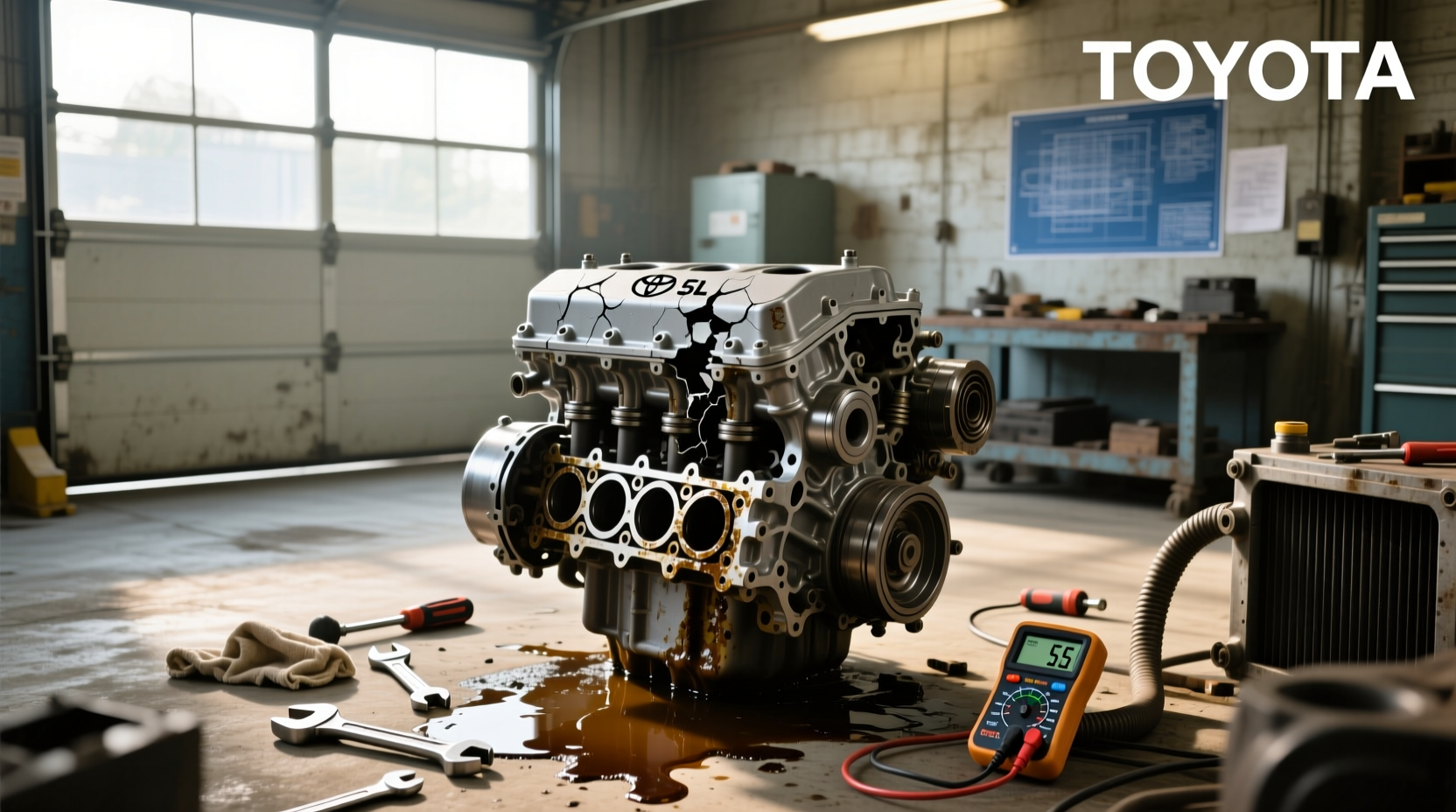
If you own or are considering a vehicle with a Toyota 5L engine, understanding its common problems is essential for long-term reliability. This naturally aspirated 3.0L diesel engine, used primarily in the Toyota Hilux (1988–2004), Hiace van, and Land Cruiser models, is known for durability but not immune to issues. The most frequently reported Toyota 5L engine problems include head gasket failure, oil leaks, overheating, timing chain wear, and cold-start difficulties—especially in older or high-mileage units. Addressing these early can prevent costly repairs and extend engine life.
Understanding the Toyota 5L Engine: Design and Applications
The Toyota 5L engine is a 2.982-liter inline-four diesel engine introduced in the late 1980s as an evolution of the earlier 2L and 3L engines. It features indirect injection, a cast-iron block, aluminum cylinder head, and a mechanical fuel injection pump—design choices that enhance longevity and ease of repair in remote or resource-limited settings 1.
This engine was commonly installed in:
- Toyota Hilux (LN106, LN130, LN167 series)
- Toyota Hiace (LH120, LH130 vans)
- Toyota Land Cruiser (Prado 90 series in select markets)
Its peak output ranges between 85–92 horsepower and 180–200 Nm of torque, prioritizing low-end torque and fuel efficiency over performance. While not turbocharged like the later 5L-E variant, the standard 5L remains popular in regions where simplicity and serviceability outweigh power demands.
Top 5 Toyota 5L Engine Problems and Symptoms
Despite its rugged design, age and usage patterns have revealed several recurring weaknesses. Below are the most common Toyota 5L engine problems, their symptoms, root causes, and recommended actions.
1. Head Gasket Failure ⚠️
Symptoms: White smoke from exhaust, coolant loss without visible leaks, milky oil residue under the oil cap, engine overheating.
The 5L engine’s cylinder head is prone to warping due to uneven cooling or repeated thermal stress, especially if the cooling system is neglected. When the head gasket fails, combustion gases enter the coolant passages, leading to pressure buildup and potential engine damage.
Why it happens:
- Prolonged overheating from clogged radiators or faulty thermostats
- Improper head bolt torque during prior repairs
- Natural aging in engines exceeding 200,000 km
Solution: Replace the head gasket and inspect the cylinder head for flatness. Resurfacing may be necessary. Always use new head bolts (torque-to-yield type) and follow factory tightening sequences.
2. Oil Leaks from Valve Cover and Rear Main Seal 🔧
Symptoms: Oil stains on the engine block, dripping near the firewall or transmission bellhousing, low oil levels between changes.
Oil leaks are among the most frequently reported issues with the Toyota 5L engine. The valve cover gasket hardens over time, while the rear main seal degrades due to heat and mileage.
Prevention tips:
- Inspect gaskets every 60,000 km
- Use OEM-spec rubber gaskets instead of cheap aftermarket versions
- Check PCV system function—clogging increases crankcase pressure and accelerates leaks
3. Overheating Due to Cooling System Degradation 🌡️
Symptoms: Temperature gauge rising into red zone, steam from radiator, reduced power.
The 5L relies on a conventional cooling system that includes a thermostat, water pump, radiator, and hoses. In tropical or dusty environments, sediment buildup and fan clutch failure are common.
Root causes:
- Clogged radiator fins from mud or debris
- Failing water pump impeller (common after 150,000 km)
- Stuck-closed thermostat
- Air pockets trapped after coolant refill
Maintenance advice: Flush the cooling system every 40,000 km and replace the thermostat every 80,000 km. Use only Toyota-approved coolant to avoid internal corrosion.
4. Timing Chain Wear and Slack ⚙️
Symptoms: Rattling noise at startup (especially cold), check engine light, misfires.
Unlike interference engines with belts, the 5L uses a timing chain. While designed to last the engine’s lifetime, tensioners can wear out, causing slack and potential valve-piston contact.
When to act: If rattling persists beyond a few seconds after startup, inspect the chain tensioner and guides. Replacement is labor-intensive but prevents catastrophic engine failure.
5. Cold Start Difficulties in Cold Climates ❄️
Symptoms: Extended cranking, white smoke that clears after warm-up, failure to start below 10°C.
The mechanical injection pump and lack of glow plug relay upgrades in early models make cold starts challenging. Glow plugs degrade over time, reducing pre-heating efficiency.
Solutions:
- Test glow plug resistance annually; replace if any read above 1 ohm
- Use winter-grade diesel (low sulfur, anti-gel additives)
- Install an electric fuel heater in extreme climates
Is the Toyota 5L Engine Reliable? Real-World Longevity Insights
Yes, the Toyota 5L engine is generally reliable when maintained properly. Many examples exceed 300,000 km with only routine servicing. However, reliability depends heavily on usage conditions and maintenance history.
Factors influencing lifespan:
- Driving environment: Dusty or off-road conditions accelerate air filter and oil contamination.
- Oil change frequency: Intervals beyond 5,000 km increase sludge buildup and bearing wear.
- Fuel quality: Poor diesel with high water content damages injection pumps.
- Load carrying: Continuous heavy towing strains the cooling system and increases thermal stress.
In fleet operations across Africa, Australia, and Southeast Asia, well-maintained 5L-powered Hilux trucks often reach 400,000+ km before major overhaul.
How to Inspect a Used Toyota 5L Engine Before Purchase
Whether buying a complete engine for sale on eBay, Alibaba, or from a Japanese dismantler, inspection is critical. Here’s a checklist:
| Inspection Point | What to Look For | Risk Level |
|---|---|---|
| Compression Test | All cylinders within 20% of each other; minimum 300 psi | High |
| Oil Condition | No milky residue (indicates coolant leak) | High |
| Coolant System | No bubbles in radiator when running (sign of head leak) | Medium |
| Exhaust Smoke | Blue = oil burn; Black = rich fuel; White = coolant | High |
| Mounting & Accessories | Missing parts? Cracks in block? | Low |
For engines sourced from Japan (e.g., via japanese-engineparts.com), verify rust levels and service records. Japanese domestic market (JDM) engines typically have lower mileage but may lack cold-weather modifications.
Aftermarket Upgrades and Modifications
While the stock 5L is modest in output, some owners seek improvements:
- Glow Plug Relay Upgrade: Faster heating and improved cold starts.
- Intercooler Kit (for 5L-E): Reduces intake temps on turbocharged variants.
- Performance Injectors: Increase fuel atomization but require pump recalibration.
- Electric Cooling Fan: Replaces unreliable thermal clutch fans.
⚠️ Caution: Aggressive tuning or forced induction on non-turbo 5L engines can lead to cracked blocks or head warping due to increased compression ratios.
Common Misconceptions About the 5L Engine
Several myths persist about this engine:
- Myth: "The 5L is bulletproof and never needs maintenance."
Reality: No engine is maintenance-free. Ignoring oil changes or coolant flushes leads to premature failure. - Myth: "All 5L engines are the same."
Reality: Differences exist between 5L (naturally aspirated), 5L-E (turbo), and 5L-HTE (high-pressure turbo). Parts are not always interchangeable. - Myth: "You can swap in a 1KZ-TE easily."
Reality: While popular, the 1KZ-TE swap requires custom mounts, wiring, and transmission alignment—costly and complex.
Cost of Repairs vs. Engine Replacement
When facing major issues like head gasket failure or internal wear, consider cost-effectiveness:
- Head Gasket Repair: $600–$1,200 (labor-intensive)
- Complete Engine Swap: $1,500–$5,500 (used JDM or refurbished)
- New Long Block: ~$4,650 AUD (via Crate Engines Australia)
In many cases, replacing the entire engine is more economical than extensive repairs, especially if sourcing from Alibaba.com or specialized importers offering tested units with warranties.
Regional Differences and Fuel Quality Impact
The 5L engine performs differently based on geography:
- Tropical Regions: Cooling system maintenance is critical. Dust filters help protect air intakes.
- Cold Climates: Pre-heating systems and winter diesel are mandatory.
- Areas with Low-Quality Diesel: Install dual-stage fuel filtration (pre-filter + secondary) to protect the injection pump.
Fuel sulfur content above 500 ppm accelerates injector wear and increases emissions. In Europe and Japan, ultra-low sulfur diesel (<10 ppm) extends component life significantly.
Maintenance Schedule for Maximum Reliability ✅
Follow this schedule to avoid common Toyota 5L engine problems:
| Mileage (km) | Service Task |
|---|---|
| 5,000 | Engine oil & filter change |
| 20,000 | Air filter cleaning/replacement |
| 40,000 | Cooling system flush, thermostat replacement |
| 60,000 | Valve clearance check, fuel filter replacement |
| 80,000 | Glow plug inspection, timing cover inspection |
| 100,000 | Differential and transmission fluid change |
Using high-quality 15W-40 diesel oil and OEM filters improves longevity. Avoid extended idling, which promotes carbon buildup.
Frequently Asked Questions (FAQs)
- Can I rebuild a Toyota 5L engine myself?
- Yes, with proper tools and a service manual. The design is straightforward, but tasks like head resurfacing require professional equipment.
- What’s the difference between 5L and 5L-E engines?
- The 5L is naturally aspirated; the 5L-E adds a turbocharger and intercooler for increased power and efficiency.
- How much does a used Toyota 5L engine cost?
- Prices range from $1,500 to $5,500 USD depending on condition, location, and whether it includes accessories.
- Does the Toyota 5L engine have a timing belt or chain?
- It uses a timing chain, which typically lasts longer than a belt but can develop slack over time.
- Is the Toyota 5L engine good for off-roading?
- Yes, its low-end torque and mechanical simplicity make it ideal for rugged use, provided cooling and air filtration are maintained.





 浙公网安备
33010002000092号
浙公网安备
33010002000092号 浙B2-20120091-4