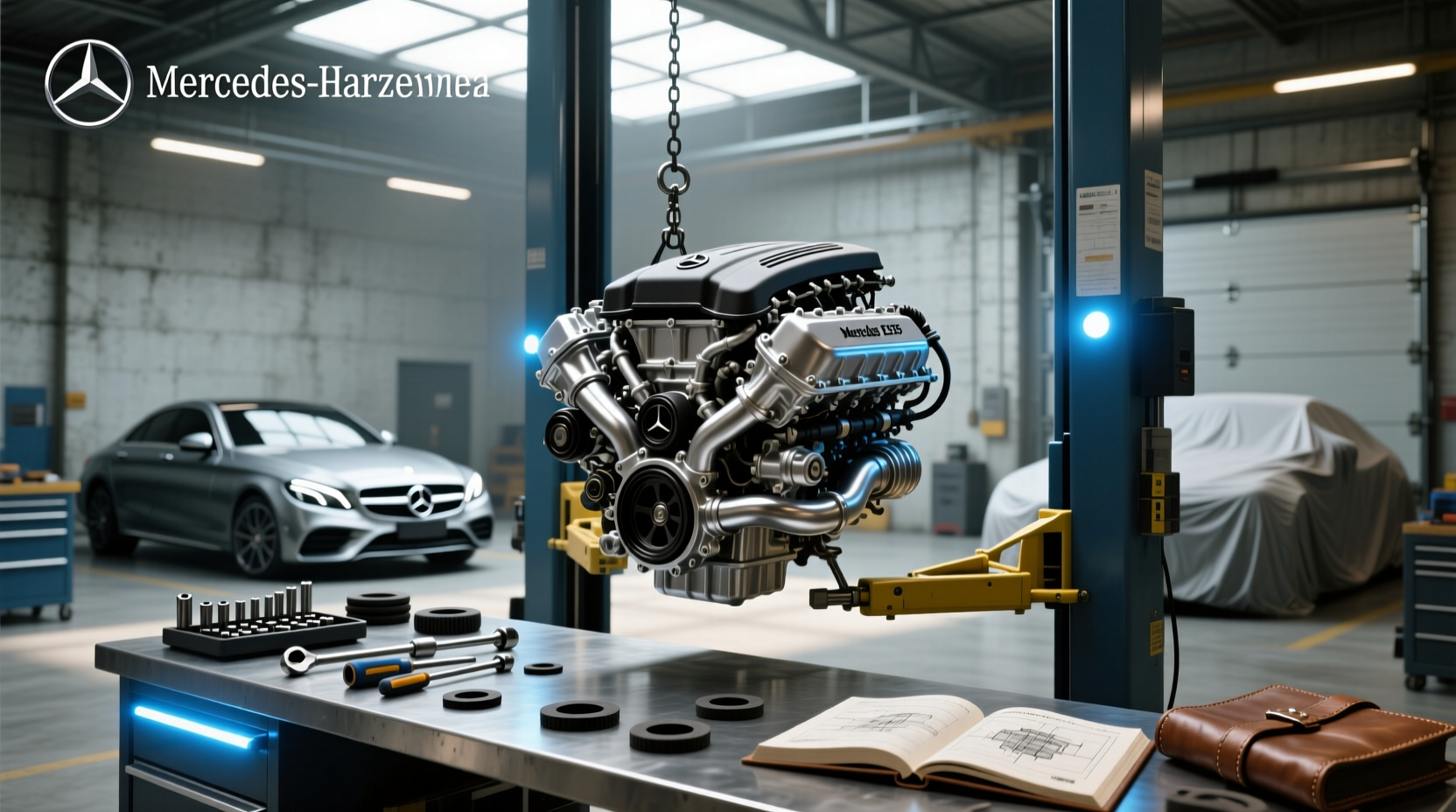
The Mercedes-Benz W212 E350 is powered by a 3.5L V6 engine (M276), delivering 268–302 horsepower depending on model year and tuning. This naturally aspirated V6 was praised for smooth performance and refinement but has known concerns like intake manifold actuator failure and timing chain wear over time. Understanding the w212 e350 engine specifications, long-term reliability, and key maintenance intervals can help buyers and owners avoid costly repairs and maximize ownership value.
Understanding the W212 E350 Engine: What You Need to Know
The Mercedes-Benz W212 generation of the E-Class, produced from 2009 to 2016, offered a wide range of engines across petrol, diesel, and AMG variants. Among these, the E350 became one of the most popular non-AMG trims, largely due to its balance of power, comfort, and relative efficiency. At the heart of this model lies the M276 3.5L V6 engine — a workhorse that defined driving dynamics for many luxury sedan buyers during its production run.
This article dives deep into the specifics of the W212 E350 engine, covering technical details, performance metrics, common issues, maintenance best practices, and how it compares to other engine options in the W212 lineup. Whether you're considering buying a used W212 or already own one, understanding the realities of this engine will empower better decisions and long-term satisfaction.
W212 E350 Engine Specifications and Technical Details
The E350 designation in the W212 series refers specifically to models equipped with the M276 DE35 LA 3.5L V6 engine. This naturally aspirated, direct-injection V6 was introduced as part of Mercedes' shift toward more efficient yet powerful engine designs.
| Specification | Detail |
|---|---|
| Engine Code | M276 DE35 LA |
| Displacement | 3,498 cc (3.5L) |
| Cylinder Configuration | 60° V6 |
| Valvetrain | DOHC, 24-valve with variable valve timing |
| Aspiration | Naturally Aspirated |
| Fuel System | Direct Injection (BlueDIRECT) |
| Horsepower (Pre-Facelift) | 268 hp @ 6,500 rpm |
| Horsepower (Facelift 2013+) | 302 hp @ 6,500 rpm |
| Torque | 258 lb-ft (pre-facelift), 273 lb-ft (facelift) |
| Transmission | 7G-TRONIC PLUS automatic |
| Drive Type | RWD or 4MATIC AWD |
The M276 engine replaced the older M272 V6 and brought several improvements, including spray-guided direct injection, improved thermal management, and reduced internal friction. The facelift model (2013–2016) received updated engine mapping and minor hardware tweaks that increased output from 268 hp to 302 hp, making it significantly more competitive in its class.
Performance and Driving Experience
⚙️ One of the defining characteristics of the W212 E350 is its refined driving experience. The 3.5L V6 provides linear power delivery without the turbo lag associated with forced induction engines. Acceleration from 0–60 mph takes approximately 6.2 seconds for pre-facelift RWD models and improves to around 5.7 seconds after the 2013 update1.
While not as fast as the twin-turbo V6 or V8 variants, the E350 strikes a sweet spot between responsiveness and fuel economy. Drivers often praise the engine’s smoothness, quiet operation at cruising speeds, and strong mid-range torque — ideal for highway merging and relaxed touring.
✅ Real-world feedback suggests that the combination of the 7-speed 7G-TRONIC PLUS transmission and adaptive suspension (if equipped) enhances ride quality and gearshift logic. However, some users note that aggressive throttle inputs can cause noticeable gear hunting in stop-and-go traffic.
Common W212 E350 Engine Problems and Reliability Concerns
Despite overall solid engineering, the M276 engine has developed a reputation for certain recurring mechanical issues. Being aware of these helps prospective buyers evaluate vehicle history and current owners plan preventive maintenance.
🔧 Intake Manifold Actuator Failure
One of the most frequently reported problems involves the plastic intake manifold swirl flaps and their actuators. Over time, the plastic arms connecting the flap rods can crack or break due to heat cycling and material fatigue.
Symptoms include:
- Check Engine Light (CEL) with codes P2004, P2006, P2009
- Rough idle or hesitation under light load
- Reduced low-end torque
🛠️ Fix: Replacement actuators are available in reinforced metal versions. Some owners opt to delete the flaps entirely using aftermarket kits, though this may affect emissions compliance in regulated regions.
⚙️ Timing Chain and Tensioner Wear
Unlike some earlier Mercedes V6 engines (e.g., M272), the M276 uses a timing chain rather than a belt. While chains are designed to last the life of the engine, premature wear has been observed in some cases, particularly when oil changes are delayed or incorrect oil viscosity is used.
Warning signs:
- Grinding or rattling noise on cold start-up
- Loss of compression or misfires if chain jumps
🛠️ Prevention: Use only OEM-specified motor oil (typically 0W-40 or 5W-40 MB-Approval 229.51). Follow strict 10,000-mile oil change intervals. Consider replacing tensioners and guides proactively at 100,000 miles, especially if any noise is present.
🧼 Direct Injection Carbon Build-Up
Because fuel is injected directly into the combustion chamber (not the intake port), there's no cleaning effect on intake valves. This leads to carbon deposits building up over time, especially in city-driven vehicles.
Effects:
- Reduced airflow and poor idle quality
- Poor fuel economy
- Increased emissions
🛠️ Solution: Periodic walnut blasting of intake valves every 60,000–80,000 miles is recommended. Some use specialized intake cleaners, but physical cleaning remains the most effective method.
🌡️ Coolant System and Thermostat Issues
The electric thermostat and water pump system used in the M276 can fail, leading to overheating or inefficient warm-up cycles.
Key components prone to failure:
- Electric coolant pump (prone to bearing wear)
- Thermostat assembly (stuck open/closed)
- Radiator fan module
🛠️ Tip: Monitor coolant temperature gauge behavior. If the engine takes unusually long to warm up or runs hot under load, have the system scanned for fault codes.
How the E350 Compares to Other W212 Engines
When evaluating the W212 platform, buyers often compare the E350 against other engine choices. Each option serves different priorities — performance, efficiency, or longevity.
| Model | Engine | Horsepower | Pros | Cons |
|---|---|---|---|---|
| E350 | M276 3.5L V6 | 268–302 hp | Smooth, reliable, good balance | Intake actuator issues, DI carbon build-up |
| E250 / C250 | M274 2.0L Turbo I4 | 201–211 hp | Better fuel economy, lower tax cost | Less refinement, turbo lag |
| E220d / E350d | OM651 / OM642 Diesel | 170–265 hp | High torque, excellent fuel economy | DPF issues, higher repair costs |
| E400 (Twin-Turbo V6) | M276 3.0L Biturbo | 329–333 hp | Strong acceleration, modern tech | More complex, higher ownership cost |
| E63 AMG | M156/M157 6.2L or 5.5L V8 | 451–577 hp | Track-capable performance | High fuel consumption, expensive maintenance |
📌 Verdict: The E350 offers a compelling middle ground. It lacks the complexity of turbocharged engines and avoids the high running costs of AMG models, while still providing ample power for daily use.
Maintenance Tips to Extend W212 E350 Engine Life
Proper upkeep is crucial to ensuring long-term reliability. Here are essential maintenance steps every owner should follow:
✅ Oil Changes: Frequency and Specification
Use only Mercedes-approved engine oils meeting MB 229.51 standard. These full-synthetic formulations protect against sludge, reduce wear, and maintain optimal viscosity under high temperatures.
🗓️ Recommended interval: Every 10,000 miles or 12 months, whichever comes first. More frequent changes (7,500 miles) are advised for severe driving conditions (stop-and-go, short trips, towing).
🔧 Air and Cabin Filters
Replace engine air filter every 30,000 miles. A clogged filter reduces efficiency and increases strain on the intake system. Cabin filters should be changed annually to maintain HVAC performance.
🧽 Fuel System Cleaning
Due to direct injection, use high-detergent gasoline (Top Tier) and consider professional fuel injector cleaning every 60,000 miles. Additives alone are insufficient for removing heavy deposits.
🌡️ Coolant Flush
Coolant should be replaced every 6–8 years or 90,000 miles. Old coolant loses pH stability and can corrode aluminum components in the engine block and radiator.
🔋 Battery and Electrical System
The W212 relies heavily on electronics. Replace the battery before it fails (typically 6–8 years) to prevent voltage drops that can corrupt control modules. Always register a new battery via diagnostic tool.
Buying a Used W212 E350: What to Look For
If you're shopping for a used W212 E350, thorough inspection is critical. Here’s a checklist to guide your evaluation:
🔍 Pre-Purchase Inspection Checklist
- Verify service history — look for consistent oil changes and major component replacements
- Scan for stored fault codes (especially P2004/P2006 related to intake flaps)
- Listen for timing chain rattle on cold start
- Check for coolant leaks around thermostat housing and water pump
- Inspect spark plugs for wear (replace every 60,000 miles)
- Test drive for smooth shifting and absence of hesitation
📊 Vehicle History Report
Obtain a VIN-based report to check for accidents, title issues, and odometer discrepancies. Also verify whether the car was dealer-maintained or privately serviced.
📍 Regional Considerations
In colder climates, ensure the heating system works properly and check for rust on undercarriage components. In salt-heavy areas, inspect suspension arms and brake lines for corrosion.
Is the W212 E350 Reliable Long-Term?
Overall, the W212 E350 is considered one of the more dependable non-turbo Mercedes sedans of its era. With proper care, many examples exceed 150,000 miles without major engine overhauls.
❗ However, reliability hinges heavily on maintenance discipline. Neglecting oil changes or ignoring early warning signs (like CELs) dramatically increases the risk of expensive repairs.
👥 Owner forums such as Reddit’s r/mercedes_benz show mixed sentiment — some report trouble-free ownership, while others recount costly intake or timing chain repairs. The difference often comes down to maintenance habits and pre-purchase vetting.
📈 According to industry data, the W212 scores above average for predicted reliability among 2010–2016 luxury sedans, particularly when compared to contemporaries from BMW and Audi2.
Frequently Asked Questions (FAQ)
- ❓ What year did the W212 E350 get the upgraded 302 hp engine?
- The facelift model introduced in 2013 (for the 2014 model year) upgraded the M276 V6 to 302 horsepower through revised engine tuning and intake optimization.
- ❓ How much does it cost to fix intake actuators on a W212 E350?
- Replacement parts range from $200–$500 per side, with labor adding $600–$1,200 depending on shop rates. Using reinforced metal actuators reduces recurrence risk.
- ❓ Can I tow with a W212 E350?
- Yes, but only within limits. The E350 has a maximum towing capacity of around 3,500 lbs when properly equipped. Avoid sustained heavy towing, especially in hot weather, to prevent transmission and engine stress.
- ❓ Is the M276 engine interference or non-interference?
- The M276 is an interference engine. If the timing chain fails and jumps, piston-to-valve contact is likely, resulting in severe internal damage.
- ❓ Are W212 E350 engines good on fuel?
- Real-world fuel economy averages 18–20 mpg city and 27–29 mpg highway. Efficiency drops in city driving due to weight and transmission programming.





 浙公网安备
33010002000092号
浙公网安备
33010002000092号 浙B2-20120091-4