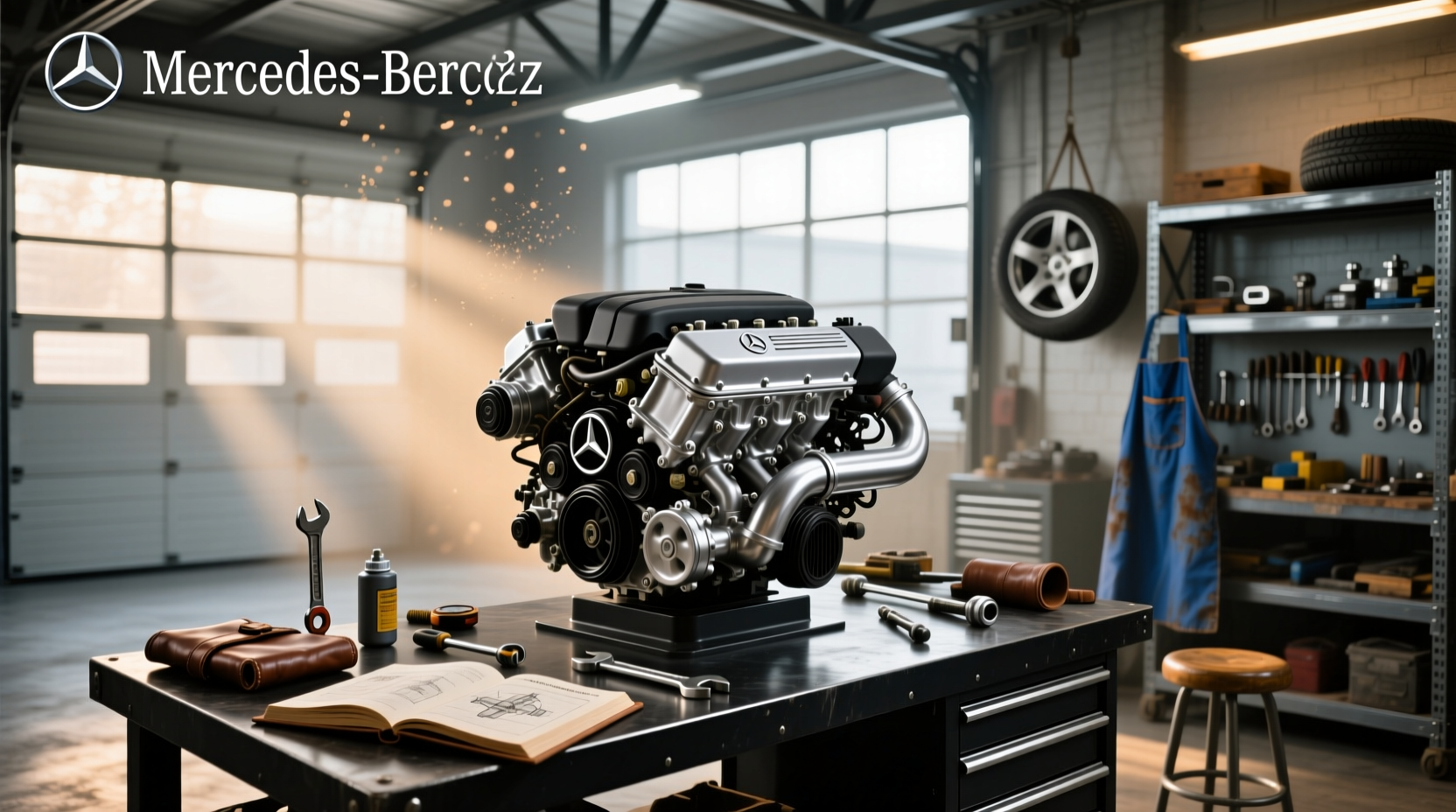
If you're researching the W211 E320 engine, you're likely considering buying or maintaining a mid-2000s Mercedes-Benz E-Class. The answer to what engine is in a W211 E320 depends on model year and market: early models (2003–2005) used the 3.2L V6 M112 gasoline engine or the 3.2L OM648 inline-6 turbo-diesel, while post-facelift models (2006–2009) transitioned to the 3.5L M272 V6 (gasoline) and 3.0L OM642 V6 diesel. Both powertrains offer solid performance and longevity when properly maintained, but each comes with known wear points that buyers must inspect closely.
Understanding the W211 E320 Engine Lineup by Year and Fuel Type
The Mercedes-Benz W211-generation E320 was produced from 2002 to 2009 and offered different engines depending on fuel type, region, and model year. Unlike some car lines where "E320" indicates a single engine, this designation covers multiple powertrains across gasoline and diesel variants. Knowing which engine your W211 has is critical for assessing reliability, sourcing parts, and estimating ownership costs.
Gasoline Engines: M112 (2003–2005) and M272 (2006–2009)
The gasoline-powered W211 E320 came with two primary engines over its production run:
- M112 3.2L V6 (2003–2005): This naturally aspirated V6 produces around 218–221 horsepower and 229–232 lb-ft of torque. It's part of Mercedes' long-running M112 engine family known for smoothness and durability. Found in pre-facelift W211 sedans and wagons, it pairs with a 5-speed automatic transmission (5G-Tronic).
- M272 3.5L V6 (2006–2009): Introduced with the 2006 facelift, this updated V6 delivers approximately 268 horsepower and 258 lb-ft of torque. It features variable valve timing and improved efficiency over the older M112. This engine uses a 7-speed automatic (7G-Tronic), offering smoother shifts and better fuel economy.
Both engines are generally reliable if serviced regularly, though they differ in design complexity and potential failure points.
Diesel Engines: OM648 (2003–2005) and OM642 (2006–2009)
Diesel versions of the E320 were especially popular in Europe and other markets favoring fuel efficiency and torque. These models carried the CDI (Common Rail Direct Injection) badge:
- OM648 3.2L Inline-6 Turbo Diesel (2003–2005): Producing about 201 hp and 369 lb-ft of torque, this straight-six diesel is renowned for robust low-end power and excellent highway cruising. It’s often praised for its mechanical simplicity compared to later diesels.
- OM642 3.0L V6 Turbo Diesel (2006–2009): Replacing the inline-six, this compact V6 diesel offers similar output (~208–211 hp, ~388 lb-ft) but with reduced weight and space requirements. It introduced piezoelectric injectors and advanced emissions controls, making it more complex to maintain.
Diesel engines typically achieve higher mileage than their gasoline counterparts, provided oil changes and fuel system maintenance are strictly followed.
Engine Specifications Comparison Table
| Engine | Type | Displacement | Horsepower | Torque | Transmission | Years |
|---|---|---|---|---|---|---|
| M112 | V6 Gasoline | 3.2L | 218–221 hp | 229–232 lb-ft | 5G-Tronic (5-speed) | 2003–2005 |
| M272 | V6 Gasoline | 3.5L | 268 hp | 258 lb-ft | 7G-Tronic (7-speed) | 2006–2009 |
| OM648 | I6 Diesel (CDI) | 3.2L | 201 hp | 369 lb-ft | 5G-Tronic | 2003–2005 |
| OM642 | V6 Diesel (CDI) | 3.0L | 208–211 hp | 388 lb-ft | 7G-Tronic | 2006–2009 |
Reliability Overview: Are W211 E320 Engines Good?
✅ Yes — both gasoline and diesel W211 E320 engines can be highly reliable, particularly when maintained properly. However, reliability isn't guaranteed — it depends heavily on service history, driving conditions, and attention to known weak points.
Gasoline Engine Reliability (M112 & M272)
The M112 3.2L V6 is widely regarded as one of the most dependable Mercedes gasoline engines of its era. With regular oil changes and cooling system care, many have surpassed 250,000 miles without major repairs 1. The M272 3.5L V6 brings more power but introduces additional complexity, including plastic intake manifold components and sensitivity to carbon buildup due to direct injection-like characteristics.
🔧 Common Issues with Gasoline Engines:
- Oil Cooler O-Ring Failure (M112): A well-known flaw. The rubber seals degrade over time, leading to coolant-oil mixing. If not caught early, this can cause overheating or engine damage.
- Intake Manifold Actuator Rods (M272): Plastic rods controlling variable intake geometry can snap, triggering check engine lights and reducing performance.
- Balance Shaft Seals (M272): Leaks here are costly to repair due to labor intensity.
- Crankcase Ventilation (PCV) System Clogging: Especially in stop-and-go driving, sludge buildup affects both engines.
Regular inspection and proactive replacement of these components during scheduled maintenance can prevent expensive breakdowns.
Diesel Engine Reliability (OM648 & OM642)
Diesel owners often report exceeding 300,000 miles with proper upkeep. The OM648 inline-six is mechanically simpler and less prone to electronic issues than the OM642 V6. That said, both require strict adherence to service intervals.
🔧 Common Diesel-Specific Problems:
- Fuel Injector Seal Degradation (OM648): Copper washers sealing injectors can fail, allowing combustion gases into the coolant system. Symptoms include bubbling in the expansion tank and white smoke at startup.
- Piezoelectric Injector Failures (OM642): More expensive and complex than solenoid types, failures lead to misfires and rough running.
- EGR Valve and DPF Clogging (OM642): In urban driving, soot accumulation reduces efficiency and may trigger limp mode.
- High-Pressure Fuel Pump Wear: Seen in high-mileage examples, especially if low-quality fuel was used.
Using premium diesel fuel, changing oil every 7,500 miles max, and ensuring full regeneration cycles occur helps extend diesel engine life significantly.
Performance and Driving Experience
⚡ Power Delivery: The M112 3.2L feels adequate but not sporty — acceleration from 0–60 mph takes around 7.5 seconds. The M272 improves this to about 6.5 seconds, giving a noticeably more responsive feel. Diesel models offer superior torque, making them ideal for towing or highway driving. The OM648 pulls strongly from low RPM, while the OM642 builds boost quickly thanks to modern turbo tuning.
⚙️ Transmission Behavior: Early 5G-Tronic units are durable but slower-shifting. The 7G-Tronic offers crisper responses and better fuel economy. However, both can develop hydraulic leaks or mechatronic unit issues after 150,000 miles.
✨ Ride Quality: All W211 E320 models provide a refined, quiet cabin and composed ride, especially with optional air suspension. Power delivery is smooth, with minimal vibration — a hallmark of Mercedes engineering.
Ownership Costs and Maintenance Tips
🛠️ Recommended Maintenance Schedule:
- Oil change: Every 7,500 miles (diesel), 10,000 miles (gasoline) — use OEM-spec fluid (e.g., MB 229.5 for diesel, 229.51/229.31 for gas).
- Coolant flush: Every 4 years or 60,000 miles.
- Transmission service: Every 60,000–80,000 miles; includes filter and fluid.
- Spark plugs (gasoline): Replace at 60,000 miles.
- Fuel filter (diesel): Replace every 60,000 miles.
- Air filter, cabin filter: Every 30,000 miles.
🛒 Parts Availability: Most engine components remain available through OEM dealers, independent suppliers, and remanufacturers. Used and rebuilt engines can be found online for $1,000–$2,500 depending on condition and seller 2.
📌 Tips for Buyers:
- Always request service records — gaps indicate potential deferred maintenance.
- Inspect for oil/coolant leaks around the engine block, valve cover, and oil cooler housing.
- Check for active fault codes using an OBD2 scanner compatible with Mercedes systems.
- Test drive to assess transmission smoothness and listen for unusual noises.
- Verify if major services (timing chain guides, water pump, auxiliary drives) have been performed.
Which W211 E320 Engine Should You Choose?
When deciding between gasoline and diesel, consider your driving habits and location:
📍 Choose Gasoline (M112/M272) if:
- You live in a cold climate (diesels struggle with cold starts).
- You drive fewer than 10,000 miles per year.
- You prefer simpler diagnostics and lower upfront purchase cost.
🌍 Choose Diesel (OM648/OM642) if:
- You do frequent highway driving (fuel economy advantage).
- You plan to keep the car beyond 150,000 miles.
- You can commit to disciplined maintenance and quality fuel.
❗ Red Flags to Avoid:
- No recent compression test or leak-down results.
- Signs of rod knock, excessive blow-by, or milky oil (indicating internal failure).
- Unrepaired SBC brake system (on pre-2006 models) — unrelated to engine but critical safety issue.
- Vague ownership history or missing documentation.
Aftermarket Support and Upgrades
While stock engines are durable, some owners seek modest performance gains:
- Remapping (Diesel): OM642 models can gain 30–50 hp with ECU tuning, improving responsiveness without compromising reliability if done conservatively.
- Exhaust Upgrades: Cat-back systems enhance sound and flow slightly.
- Intake Improvements: High-flow filters or cold-air kits offer minor benefits.
- Cooling Enhancements: Upgraded oil coolers or electric fans help under heavy load.
However, aggressive modifications increase stress on aging components and may void any remaining warranties on used parts.
Longevity: How Many Miles Can a W211 E320 Engine Last?
📊 Real-world data from owner forums and repair shops suggests:
- M112 Gasoline: 200,000–275,000 miles with proper care.
- M272 Gasoline: 180,000–250,000 miles; earlier failures possible if neglected.
- OM648 Diesel: 300,000+ miles common; some exceed 400,000.
- OM642 Diesel: 250,000–350,000 miles; electronics and emissions systems become limiting factors.
🛑 Engine Replacement Cost: Expect $4,000–$7,000 for a professional swap using a remanufactured long-block, including labor. DIY installers may reduce this by half.
Frequently Asked Questions (FAQ)
- ❓ What engine is in a 2004 Mercedes E320?
- The 2004 Mercedes E320 W211 came with either the 3.2L M112 V6 gasoline engine or the 3.2L OM648 inline-6 turbo-diesel, depending on trim and market. No V8 or four-cylinder option was available for the E320 in that year.
- ❓ Is the Mercedes E320 a reliable car?
- Yes, the E320 can be very reliable, especially diesel models with full service histories. However, neglect leads to expensive repairs. Key systems like the SBC brakes (pre-2006), air suspension, and engine seals require attention.
- ❓ How much horsepower does a W211 E320 have?
- Gasoline models produce 218–268 hp depending on engine (3.2L vs 3.5L). Diesel versions make 201–211 hp but deliver far higher torque — up to 388 lb-ft — for strong pulling power.
- ❓ What are the worst years for the W211 E-Class?
- Early 2003–2005 models had more unresolved issues like failing SBC brakes and early air suspension components. Later 2006–2009 models are generally preferred due to improved electronics and the 7G-Tronic transmission.
- ❓ Can I still buy a complete W211 E320 engine?
- Yes, used, rebuilt, and remanufactured engines are available from specialty suppliers and online marketplaces. Prices range from $800 for a core used unit to $2,500+ for a fully tested long-block with warranty.





 浙公网安备
33010002000092号
浙公网安备
33010002000092号 浙B2-20120091-4