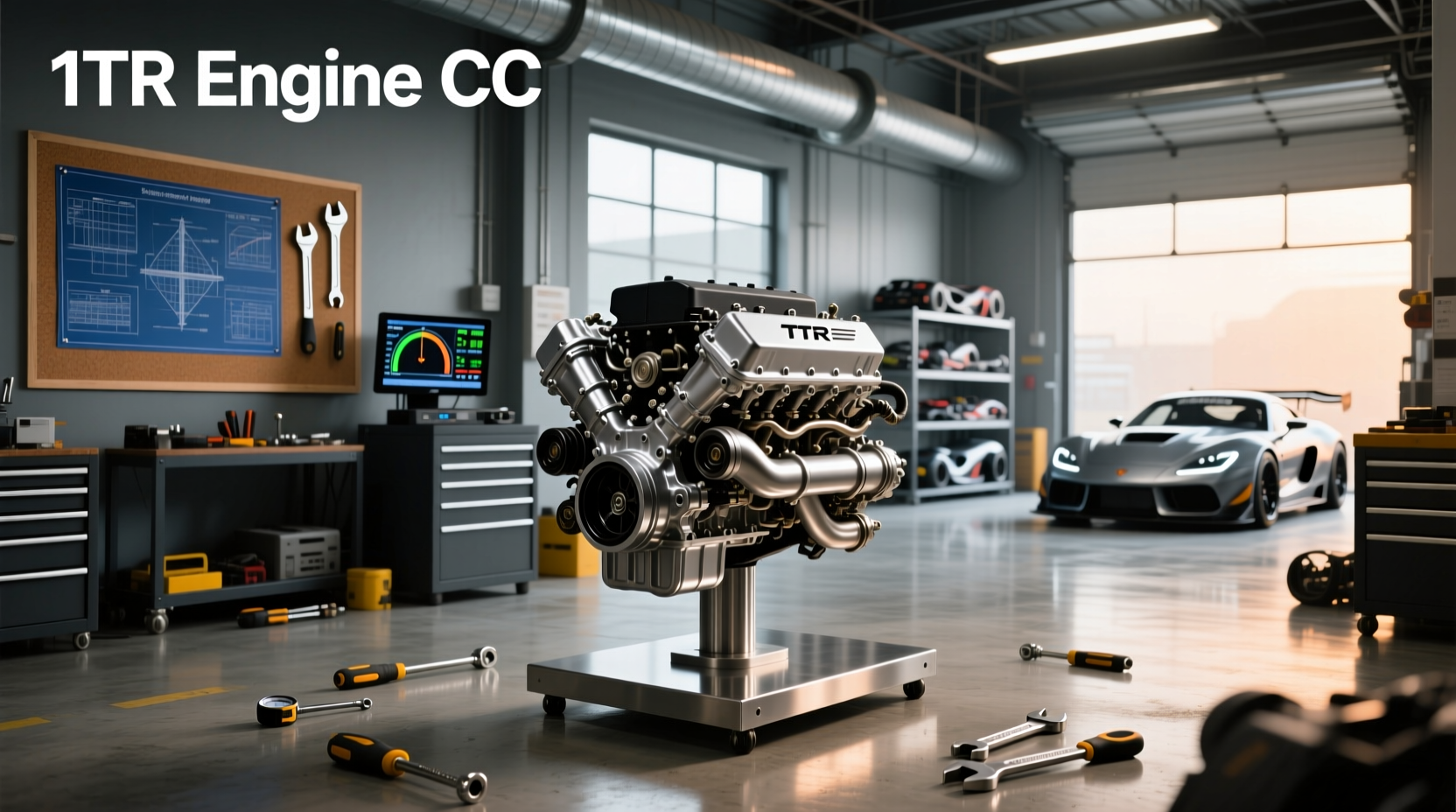
The Toyota 1TR engine displacement is 1,998 cc, or 2.0 liters, making it a compact inline-4 gasoline engine widely used in models like the Toyota Innova, Hiace, Hilux, and Fortuner from 2004 to 2017. This 1tr engine cc figure refers to the total volume swept by all four cylinders during one combustion cycle, indicating its capacity for air-fuel mixture intake and power output potential. Designed with DOHC, 16-valve architecture, and VVT-i (Variable Valve Timing-intelligent), the 1TR-FE delivers reliable performance and fuel efficiency in light commercial and passenger vehicles, especially in emerging markets where durability and serviceability are critical.
Understanding Engine Displacement: Why 1,998 cc Matters
Engine displacement—measured in cubic centimeters (cc) or liters—is a fundamental specification that influences power, torque, fuel economy, and emissions. In the case of the Toyota 1TR engine cc value of 1,998 cc, this places it just under the 2.0L threshold commonly used for tax and regulatory classifications in many countries. The precise bore and stroke dimensions determine this number: the 1TR-FE has a cylinder bore of 86 mm and a piston stroke of 86 mm, resulting in a near-square design that balances responsiveness and mechanical efficiency 1.
This configuration allows the engine to operate smoothly across a broad RPM range while maintaining structural integrity under continuous load—a key requirement for fleet operators and rural transport users who rely on these vehicles daily. Because displacement directly affects taxation, insurance costs, and import duties in various regions, knowing the exact 1tr-fe engine displacement in cc helps buyers make informed decisions when comparing alternatives such as the 2.7L 2TR-FE or diesel-powered variants like the 1KD-FTV.
Technical Specifications of the 1TR-FE Engine
Beyond displacement, several technical features define the behavior and reliability of the 1TR-FE engine. Below is a detailed breakdown:
| Specification | Detail |
|---|---|
| Engine Code | 1TR-FE |
| Configuration | Inline-4, DOHC, 16-valve |
| Displacement | 1,998 cc (2.0 L) |
| Bore × Stroke | 86.0 mm × 86.0 mm |
| Compression Ratio | 9.6:1 |
| Valvetrain | VVT-i (intake side only) |
| Fuel System | Multi-point fuel injection (MPFI) |
| Cooling System | Water-cooled |
| Cylinder Block Material | Cast iron |
| Cylinder Head Material | Aluminum alloy |
| Max Power Output | 134–137 hp @ 5,600 rpm |
| Max Torque | 18.5–19.0 kg·m @ 4,000 rpm (~181 Nm) |
| Oiling System | Wet sump |
| Ignition System | Electronic distributorless (wasted spark) |
⚙️ These specifications highlight an engine designed for balance between urban drivability and highway stability. The use of a cast-iron block ensures longevity and heat resistance, particularly important in high-ambient-temperature environments, while the aluminum head reduces overall weight and improves thermal dissipation.
Common Applications: Which Vehicles Use the 1TR Engine?
The 1TR-FE engine was introduced in July 2003 as part of Toyota’s TR engine family, aimed at replacing older units like the R-series and early K-engines in body-on-frame platforms. It became standard in several popular global models:
- Toyota Innova (AN40/AN50): 2004–2015 model years, primarily in Southeast Asia and India 🌍
- Toyota Hiace (H200): 2004–2019 vans and minibuses used for passenger and cargo transport ✅
- Toyota Hilux (AN10/AN25/AN30): Base petrol variant in select markets (e.g., Middle East, Africa, Caribbean) 🔧
- Toyota Fortuner (AN10): Early first-generation models before switching to larger engines ⚡
- Toyota Land Cruiser Prado (J90/J120): Limited availability in certain export trims 📍
- Toyota Toyoace: Light-duty truck applications in Japan and neighboring regions 🚚
🛒 While newer versions have shifted toward the more powerful 2TR-FE (2.7L), the original 1TR remains prevalent in used vehicle markets due to its proven track record and ease of maintenance. Knowing which vehicles carry the 1tr engine 1998cc helps buyers source compatible parts and assess long-term ownership costs accurately.
Performance and Real-World Driving Experience
With approximately 134–137 horsepower and around 181 Nm of torque, the 1TR-FE provides adequate acceleration for unloaded vehicles but can feel strained when carrying heavy loads or climbing steep inclines. Its peak torque arrives at 4,000 rpm, meaning drivers often need to keep the engine revving higher than ideal for optimal responsiveness.
✨ However, the engine's strength lies in consistency rather than outright performance. Owners report average fuel consumption between 9–12 km/L (8–10 L/100km) depending on driving conditions, making it reasonably efficient for a naturally aspirated petrol unit. In city traffic, expect closer to 8–9 km/L; on highways, it can reach up to 13 km/L with careful throttle management.
Compared to turbo-diesel counterparts like the 2.5L 2KD-FTV, the 1TR-FE lacks low-end grunt but offers smoother idle quality, reduced noise, and lower maintenance complexity—important factors for taxi services and small business operators.
Reliability and Known Issues of the 1TR-FE
❓ One of the most frequently asked questions about the 1TR engine is whether it's reliable. Overall, yes—the 1TR-FE is considered durable with proper care, often lasting beyond 200,000 km if serviced regularly. However, some recurring issues should be monitored:
Timing Chain Wear (Not Belt)
Unlike many modern engines that use rubber timing belts, the 1TR-FE uses a metal timing chain. While designed to last the life of the engine, premature stretching or tensioner failure has been reported, especially in engines subjected to extended oil change intervals. Symptoms include rattling noises at startup or irregular valve timing errors.
Oil Leaks Around Valve Cover Gasket
A common aging issue involves seepage from the valve cover gasket, typically appearing after 100,000 km. Though not immediately serious, persistent leaks can lead to sludge buildup and spark plug contamination. Replacement is straightforward and inexpensive.
Throttle Body Carbon Buildup
Due to the MPFI system and recirculated crankcase gases, carbon deposits accumulate on the throttle body over time, leading to rough idling or stalling. Cleaning every 60,000–80,000 km prevents drivability issues.
Coolant Mixing with Oil (Head Gasket Failure)
In rare cases, head gasket degradation occurs due to overheating or coolant neglect. This results in white exhaust smoke, bubbling in the radiator, or milky residue under the oil cap. Immediate attention is required to prevent engine damage.
🔧 Regular maintenance—especially timely oil changes, coolant flushes, and air filter replacements—is crucial to maximizing lifespan. Using high-quality motor oil meeting API SL or SM standards helps reduce wear on internal components.
Comparison: 1TR vs. 2TR-FE Engines
As Toyota phased out the 1TR-FE in favor of the 2TR-FE, understanding the differences becomes essential for replacement planning or upgrades.
| Feature | 1TR-FE (2.0L) | 2TR-FE (2.7L) |
|---|---|---|
| Displacement | 1,998 cc | 2,693 cc |
| Bore × Stroke | 86.0 × 86.0 mm | 95.0 × 95.0 mm |
| Horsepower | 134–137 hp | 158–160 hp |
| Torque | ~181 Nm | ~241 Nm |
| Fuel Efficiency | Moderate | Slightly lower |
| Vehicle Fitment | Innova, early Hiace/Hilux | Newer Hiace, Fortuner, Tacoma |
| Aftermarket Support | Widely available | Even broader support |
⚡ The 2TR-FE offers significantly improved pulling power and better hill-climbing ability thanks to increased displacement and longer stroke. However, it consumes more fuel and may require transmission recalibration when swapped into a vehicle originally equipped with the 1TR.
Aftermarket and Replacement Options
🛠️ For owners needing engine replacements, several options exist:
- New OEM Engines: Rarely sold new by dealerships; usually sourced through authorized rebuilders.
- Reconditioned Units: Professionally rebuilt with updated seals, bearings, and tested performance. Often come with warranties.
- JDM Used Engines: Imported from Japan, typically low-mileage and well-maintained. Must verify compatibility with local emissions systems.
- Long Block Assemblies: Include short block with heads installed but exclude ancillaries like alternator or intake manifold.
📌 When purchasing, always confirm the engine code (e.g., 1TR-FE vs. 1TR-FPE), year of manufacture, and accessory configuration. Mismatched ECUs or throttle bodies can cause installation complications.
Maintenance Tips to Extend 1TR Engine Life
To get the most out of your 1TR-FE, follow these best practices:
- Change Oil Every 5,000–7,500 km: Use 5W-30 or 10W-30 API SM-grade oil depending on climate.
- Inspect Timing Chain Tensioner: Listen for metallic ticking sounds during cold starts.
- Clean Throttle Body Annually: Prevents idle fluctuations and hesitation.
- Replace Spark Plugs Every 40,000 km: Iridium-tipped plugs improve ignition efficiency.
- Flush Cooling System Every 60,000 km: Prevents corrosion and maintains thermostat function.
- Check PCV Valve Function: Ensures proper crankcase ventilation and reduces oil contamination.
🧼 Performing these checks proactively avoids costly repairs down the line and keeps the engine running cleanly and efficiently.
Regional Variations and Emissions Compliance
The 1TR-FE was adapted for different emission standards worldwide. For example:
- In India, later models met Bharat Stage III/IV norms with minor ECU tuning.
- In ASEAN countries, evaporative emissions controls were added to comply with regional regulations.
- In GCC markets, higher heat tolerance materials were used in cooling and intake systems.
🌐 Buyers importing vehicles or engines should verify local compliance requirements, as non-certified units may fail inspection or registration.
Conclusion: Is the 1TR-FE Still a Viable Choice?
Despite being succeeded by larger engines, the Toyota 1TR-FE with its 1,998 cc displacement remains a solid choice for those prioritizing affordability, simplicity, and widespread parts availability. While not the most powerful or fuel-efficient option today, its robust construction and predictable behavior make it a dependable workhorse in diverse operating conditions.
If you're evaluating a used vehicle with this engine, focus on service history, signs of oil leaks, and smoothness of operation. With regular upkeep, a 1TR-powered vehicle can deliver years of trouble-free service.
Frequently Asked Questions (FAQs)
- What is the exact displacement of the 1TR engine in cubic centimeters?
- The Toyota 1TR-FE engine has a displacement of exactly 1,998 cc, commonly rounded to 2.0 liters.
- How much horsepower does the 1TR engine produce?
- It produces between 134 and 137 horsepower at 5,600 rpm, depending on the model year and market.
- Is the 1TR engine reliable for high-mileage use?
- Yes, with proper maintenance, the 1TR-FE can reliably exceed 200,000 kilometers, though timing chain and gasket inspections are recommended past 150,000 km.
- Can I replace a 1TR engine with a 2TR-FE?
- Yes, the 2TR-FE is a common upgrade offering more torque and power, but requires modifications to mounts, wiring, and sometimes the ECU.
- Does the 1TR engine use a timing belt or chain?
- The 1TR-FE uses a timing chain, not a belt, which is designed for longer service life but can still stretch or fail if oil changes are neglected.





 浙公网安备
33010002000092号
浙公网安备
33010002000092号 浙B2-20120091-4