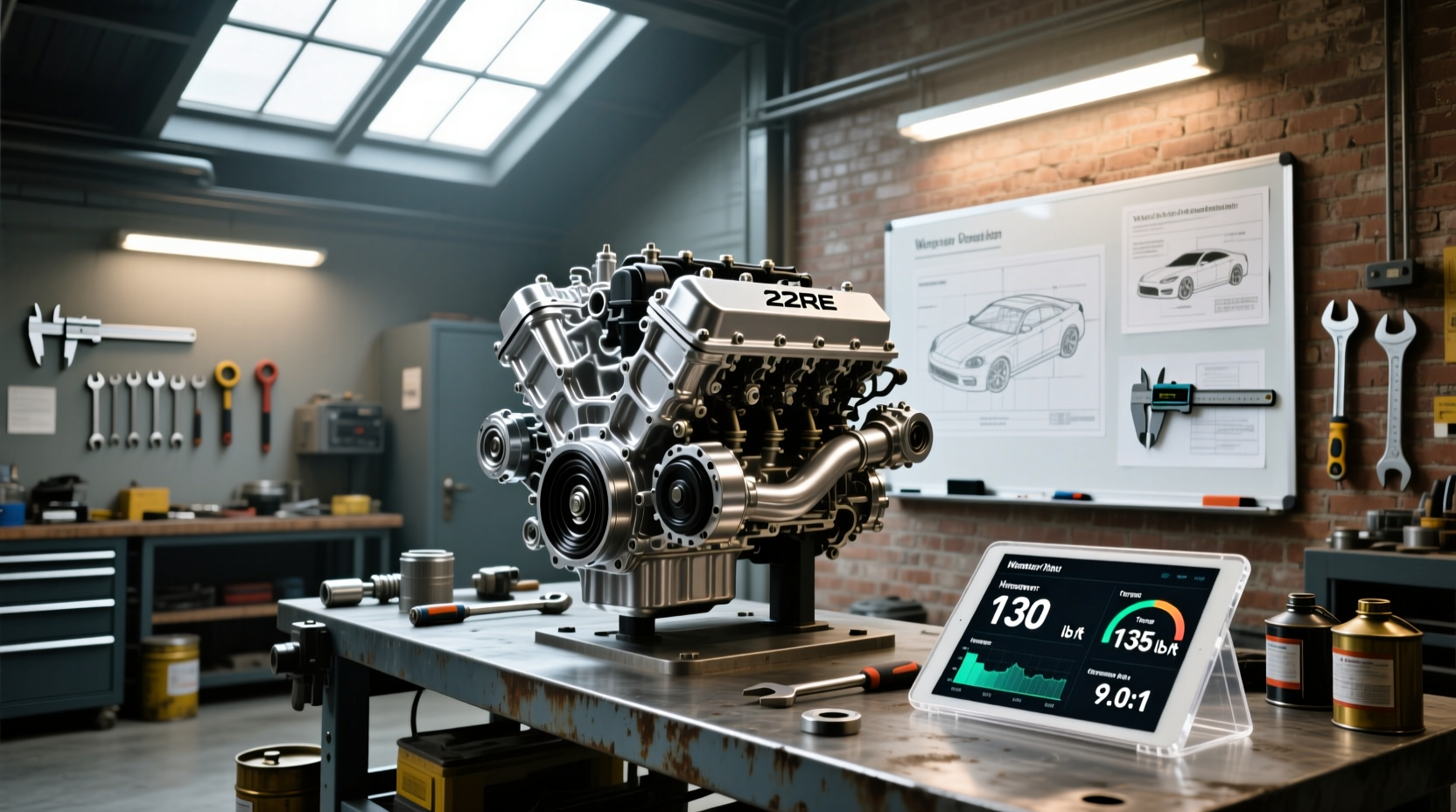
The Toyota 22RE engine, a 2.4L inline-four powerplant produced from 1985 to 1995, is renowned for its durability, simplicity, and off-road capability. Commonly found in Toyota Pickup trucks and 4Runners of that era, the 22RE delivers around 112–116 horsepower and 135–140 lb-ft of torque, prioritizing low-end grunt over high-revving performance ⚙️. Despite modest factory output, its reputation for longevity—often exceeding 300,000 miles with basic maintenance—makes it a favorite among DIY mechanics and off-road enthusiasts seeking reliable, easy-to-repair engines ✅.
What Is the 22RE Engine?
🔧 The 22RE is part of Toyota’s R-series family of inline-four engines, succeeding the carbureted 22R with electronic fuel injection (EFI), denoted by the “E” in 22RE. Introduced in 1985, this naturally aspirated 2.4-liter engine was designed for rugged utility rather than speed or efficiency. It powered key models like the Toyota Pickup (later called the Hilux in many markets), the 4Runner (first and second generations), and select SUVs and vans globally 🌐.
This engine uses an iron block with an aluminum head, SOHC configuration, and 8 valves (2 per cylinder). Its design philosophy reflects classic Toyota engineering: prioritize mechanical robustness, serviceability, and real-world reliability over peak performance metrics ⚙️. As a result, the 22RE became one of the most dependable four-cylinder engines of its time, especially valued in regions with poor fuel quality or limited access to advanced repair facilities.
Key 22RE Engine Specifications
Below is a comprehensive breakdown of the factory-specified technical data for the 22RE engine across its production run (1985–1995):
| Specification | Value |
|---|---|
| Engine Type | Inline-4, naturally aspirated |
| Displacement | 2.4 L (2366 cc) |
| Bore × Stroke | 92.0 mm × 89.5 mm |
| Compression Ratio | 9.0:1 |
| Valvetrain | SOHC, 2 valves per cylinder (8-valve total) |
| Fuel System | Electronic Fuel Injection (EFI) |
| Horsepower (Net) | 112–116 hp @ 4,800 rpm |
| Torque | 135–140 lb-ft @ 2,800 rpm |
| Redline | 5,200 rpm |
| Oil Capacity | 4.8 quarts (with filter) |
| Cooling System | Liquid-cooled |
| Ignition System | Distributor-based |
| Firing Order | 1-3-4-2 |
These specifications highlight the engine’s focus on low-to-mid range torque delivery, making it ideal for towing, climbing, and crawling in off-road conditions where throttle response matters more than top-end power ⚡. While modern engines surpass the 22RE in nearly every measurable category, few match its mechanical transparency and ease of field repair.
Which Vehicles Had the 22RE Engine?
🚗 The 22RE engine was standard equipment in several iconic Toyota platforms during the late 1980s and early 1990s:
- Toyota Pickup / Truck (1985–1995)
- Toyota 4Runner (1985–1995, first and second generation)
- Toyota Hilux (Global Markets)
- Toyota Extra Cab (Select trims)
- Some recreational vehicles and motorhomes (as a donor engine)
In North America, the 22RE replaced the carbureted 22R in 1985 as emissions regulations tightened and EFI systems became mainstream. Outside North America, some markets continued using the 22R longer due to cost and infrastructure considerations. The transition marked a shift toward cleaner combustion and better cold-start performance without sacrificing reliability—a rare balance at the time.
Why Is the 22RE Considered So Reliable?
✅ The enduring reputation of the 22RE stems from multiple interlocking factors rooted in design, materials, and user experience:
Simple Mechanical Design
Unlike modern engines packed with sensors, variable valve timing, and turbochargers, the 22RE has minimal electronics. There’s no VVT-i, no direct injection, no timing belt (it uses a durable chain), and no complex ECU dependencies. This simplicity means fewer failure points and easier diagnosis when problems arise 🔧.
Durable Internal Components
The cast-iron block provides excellent rigidity and heat dissipation, while the forged steel crankshaft and connecting rods are built to handle stress over decades of use. Even the oil pump and water pump designs are straightforward and long-lasting when maintained properly.
Forgiving Tolerances
Toyota engineered the 22RE with conservative clearances and robust lubrication paths. This allows the engine to tolerate occasional delays in oil changes or minor overheating events—common in work trucks and trail rigs—without catastrophic damage.
Widespread Knowledge Base
Due to its long production run and popularity, countless forums, repair manuals, YouTube tutorials, and aftermarket support exist for the 22RE. Finding replacement parts—from head gaskets to camshafts—is still relatively easy, even decades after discontinuation 🛠️.
Common 22RE Engine Problems and How to Address Them
No engine is immune to wear, and the 22RE has a few known weak spots. Understanding these helps owners avoid major failures and extend engine life:
Timing Chain Guide Wear (Critical Issue)
📌 One of the most frequent—and potentially devastating—issues is degradation of the plastic timing chain guides. Over time, especially beyond 150,000 miles, these nylon-based guides crack and collapse, leading to slack in the chain. If unchecked, this can cause the chain to jump teeth or break, resulting in valve-to-piston contact and severe internal damage ❗.
Solution: Proactively replace the timing chain, tensioner, and both upper and lower guides during major servicing. Aftermarket metal-reinforced guides are available for increased longevity.
Intake Manifold Gasket Leaks
📍 Vacuum leaks from a deteriorated intake manifold gasket can cause rough idle, poor fuel economy, and check engine lights. These gaskets tend to harden and shrink over time.
Solution: Replace with updated OEM-style rubber gaskets or silicone-based alternatives during tune-ups.
Thermostat and Coolant Sensor Failures
🌡️ The thermostat housing integrates the coolant temperature sensor, which feeds data to the ECU for fuel mixture control. When the thermostat sticks open or closed, or the sensor fails, drivability suffers.
Solution: Use OEM-quality thermostats and inspect the sensor connector regularly for corrosion.
Carburetor vs. EFI Confusion
🔍 Some users confuse the 22R (carbureted) with the 22RE (fuel-injected). While they share core architecture, their fuel delivery, tuning, and maintenance differ significantly. Swapping between them requires attention to wiring, sensors, and ECU compatibility.
Performance Potential of the 22RE
While stock output is modest (~116 hp), the 22RE responds well to affordable upgrades that improve breathing and efficiency:
- Exhaust Upgrade: Replacing the restrictive stock exhaust manifold and muffler with a free-flowing header and cat-back system can add 10–15 hp and improve throttle response ⚡.
- Intake Modifications: A cold air intake or high-flow air filter enhances airflow into the engine, supporting other modifications.
- Camshaft Swap: Performance cams (e.g., RV272 profile) increase valve duration and lift, shifting power higher in the rev range.
- Porting and Polishing: Smoothing the intake and exhaust ports reduces turbulence and improves flow.
- Ignition Upgrades: Electronic ignition kits eliminate distributor wear and provide more consistent spark.
With moderate tuning, realistic outputs of 130–140 hp are achievable without compromising reliability ✨. However, aggressive builds require upgraded cooling, fuel delivery, and careful tuning to prevent detonation.
Fuel Economy and Real-World Efficiency
⛽ Factory-rated fuel economy for 22RE-powered vehicles ranges from 18–22 mpg combined, depending on transmission, gearing, and driving style. In practice, older trucks with lifted suspensions, large tires, or worn components often see 15–18 mpg.
While not efficient by today’s standards, the 22RE runs reliably on regular unleaded gasoline and tolerates ethanol blends up to E10 without modification. Its mechanical simplicity also means fewer emissions-related repairs compared to OBD-II-era engines.
Maintenance Tips for Longevity
To keep a 22RE running strong past 200,000+ miles, follow these best practices:
- Regular Oil Changes: Use quality 10W-30 or 10W-40 detergent oil every 3,000–5,000 miles, especially under heavy load or hot climates.
- Cooling System Care: Flush coolant every 2 years and inspect hoses, radiator, and water pump for leaks.
- Air Filter Inspection: Clean or replace monthly in dusty environments.
- Timing Chain Monitoring: Listen for rattling noises at startup—a sign of chain slap due to worn guides.
- Spark Plugs & Wires: Replace every 30,000 miles with correct NGK or Denso plugs (e.g., FR7D).
Preventive maintenance is far cheaper than engine replacement, and most tasks can be done at home with basic tools 🧰.
Rebuild vs. Replacement: What Owners Should Know
🛒 As original 22RE engines age, many owners face decisions about rebuilding versus swapping in a remanufactured unit. Both options have pros and cons:
Rebuilding: Offers full control over component quality and allows inspection of internal wear. Ideal for those who want to upgrade pistons, bearings, or camshafts simultaneously. Requires mechanical skill or shop labor costs.
Remanufactured Engines: Pre-tested, balanced units from reputable suppliers offer plug-and-play convenience. Prices typically range from $2,800 to $5,700 depending on warranty and build level 1. Ensure the supplier includes updated timing components and metal guides.
Junkyard Pulls: Used engines may seem economical but carry unknown histories. Always verify compression, oil pressure, and absence of overheating signs before installation.
Aftermarket Support and Parts Availability
🛠️ Despite being out of production for nearly 30 years, the 22RE enjoys strong aftermarket support. Key components like head gaskets, water pumps, camshafts, and sensors remain widely available through specialty shops and online retailers. Companies like LC Engineering and Yota1 Performance continue to develop performance parts tailored to this platform.
When sourcing parts, prioritize OEM-equivalent quality over budget options—especially for critical items like timing sets and head gaskets. Inferior materials fail prematurely and risk collateral damage.
Is the 22RE Still a Good Choice Today?
👥 For certain users, absolutely. If you value mechanical independence, low operating costs, and proven durability over comfort, power, or fuel economy, the 22RE remains a compelling option. It's particularly suited for:
- Off-road trail rigs
- Work trucks in remote areas
- Classic vehicle restorations
- DIY learning projects
However, if daily driving comfort, emissions compliance, or high-speed highway performance are priorities, newer engines (like the 2GR-FE or turbo-diesel options) may be better choices.
Frequently Asked Questions (FAQs)
- ❓ What is the horsepower of a 22RE engine?
- The Toyota 22RE produces between 112 and 116 horsepower at 4,800 rpm, with torque peaking around 135–140 lb-ft at 2,800 rpm.
- ❓ How long do 22RE engines last?
- With proper maintenance, many 22RE engines exceed 300,000 miles. Cases of engines lasting over 400,000 miles are documented in owner communities.
- ❓ Is the 22RE a 2.4 liter engine?
- Yes, the 22RE has a displacement of 2.4 liters (2,366 cc), achieved via a bore of 92.0 mm and stroke of 89.5 mm.
- ❓ What’s the difference between the 22R and 22RE?
- The 22R is carbureted and was used until 1984; the 22RE features electronic fuel injection and was introduced in 1985 for improved emissions and driveability.
- ❓ Can you turbocharge a 22RE engine?
- Yes, though it requires significant modifications including strengthened internals, upgraded fuel system, intercooler, and custom tuning to manage heat and detonation risks.





 浙公网安备
33010002000092号
浙公网安备
33010002000092号 浙B2-20120091-4