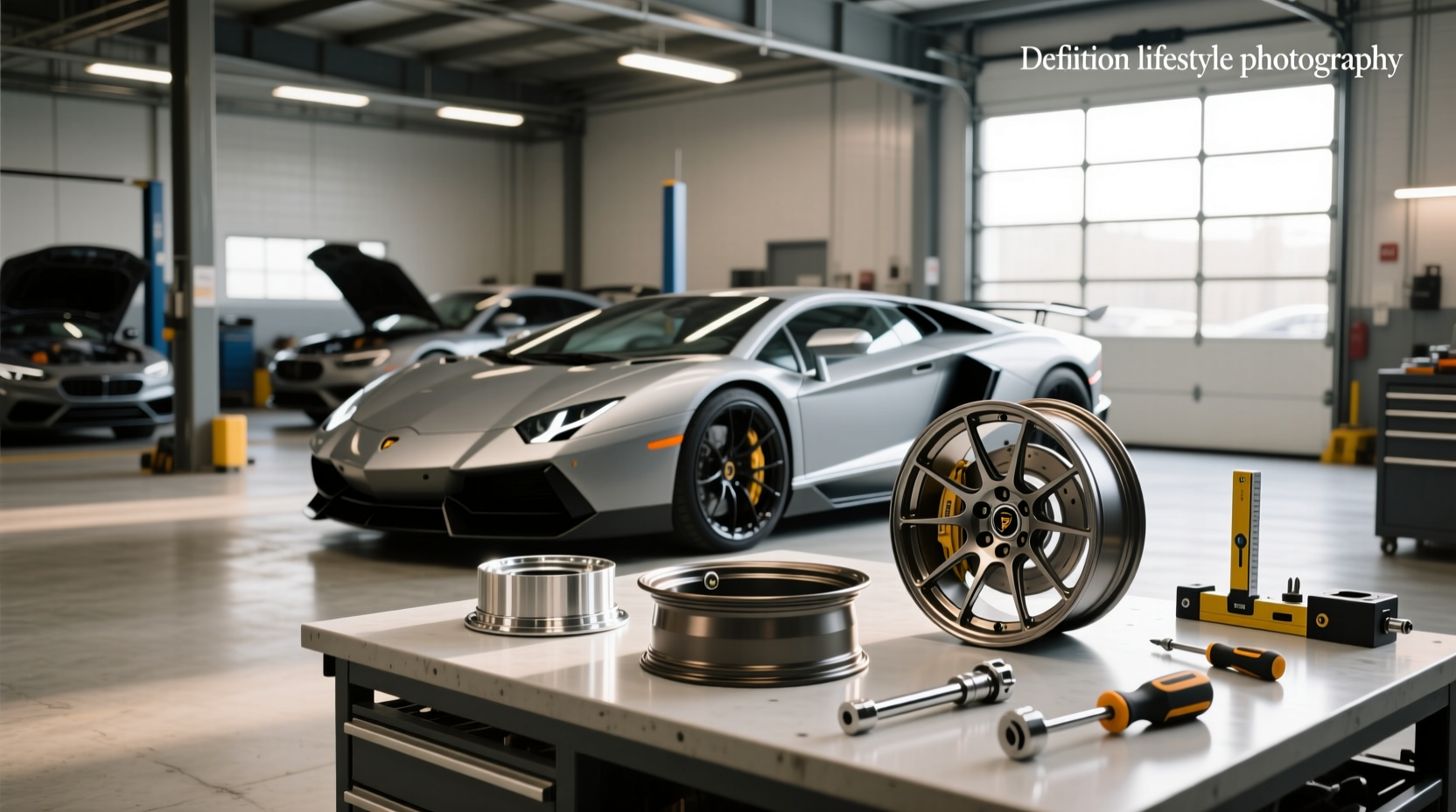
🔧 A 3-piece wheel conversion allows drivers to upgrade their vehicle’s wheels by replacing factory single-piece rims with custom multi-piece designs made of three components: center, outer lip, and barrel. This process is popular among enthusiasts seeking deeper concavity, unique finishes, or improved repairability for high-performance or show vehicles. Unlike one-piece wheels forged from a single alloy block, 3-piece wheels are assembled using bolts or seals, enabling modular customization and easier damage repair—especially valuable in motorsports or aggressive fitment builds1. But is this conversion right for your car? Understanding the structural design, cost implications, fitment requirements, and maintenance needs is essential before making the switch.
Understanding 3-Piece Wheels: Structure and Design
A true 3-piece wheel consists of three distinct parts manufactured separately and then joined together:
- Center section: The hub-mounted core that contains the bolt pattern, offset, and valve stem hole.
- Barrel: The middle cylindrical part connecting the center to the outer lip, determining width and inner profile.
- Outer lip (or rim flange): The visible edge that defines depth and concave styling.
These components are typically secured using aerospace-grade fasteners or sealed with O-rings and螺纹锁固剂 (thread locker), creating a durable yet serviceable assembly ⚙️. Most 3-piece wheels are forged from aluminum alloy, offering strength-to-weight advantages over cast alternatives. Because each component can be replaced independently, minor curb damage doesn’t require scrapping the entire wheel—a major benefit for daily-driven luxury or modified cars.
Why Consider a 3-Piece Wheel Conversion?
Drivers pursue a 3-piece wheel conversion for several practical and aesthetic reasons:
✅ Enhanced Customization Options
Unlike factory wheels limited to fixed widths and offsets, 3-piece systems allow mixing and matching components. You can adjust backspacing, width, and concavity without ordering entirely new sets. For example, widening a barrel adds an aggressive stance while maintaining OEM-like ride quality. Some manufacturers even offer dual-tone finishes—matte black centers with polished lips—for standout visual appeal ✨.
✅ Repairability and Longevity
If you've ever scraped a curb on expensive rims, you know replacement costs add up quickly. With 3-piece wheels, only the damaged part (e.g., bent outer lip) needs replacement. This modularity extends lifespan and reduces long-term ownership costs, especially for low-profile or deep-dish setups common in VIP-style builds or track-focused coupes.
✅ Weight Reduction and Performance Gains
Forged 3-piece wheels are often lighter than comparable cast one-piece units, reducing unsprung mass. Lower rotational weight improves acceleration, braking, and suspension responsiveness. While not all 3-piece wheels are lightweight (some prioritize durability over minimalism), premium brands like HRE and Forgeline engineer them specifically for performance applications2.
✅ Fitment Flexibility for Modified Vehicles
Widened fenders, lowered suspensions, or widebody kits demand non-standard wheel dimensions. A 3-piece conversion supports extreme negative offsets and wider tread widths without compromising structural integrity. Enthusiasts building stance cars or time-attack machines frequently use these wheels to achieve flush fender alignments.
Common Misconceptions About 3-Piece Conversions
Despite their popularity, several myths persist:
❌ 'All Multi-Piece Wheels Are Heavier'
This isn't universally true. While basic multi-piece designs may weigh more due to added hardware and joints, high-end forged versions match or beat monoblock weights. Always compare specs per model rather than assuming construction type dictates weight.
❌ 'They Leak Air Constantly'
Poorly maintained or improperly assembled 3-piece wheels can develop leaks at the seam between sections. However, when installed correctly with proper sealants and torque procedures, they maintain pressure as reliably as one-piece rims. Regular inspection and re-torquing after initial miles prevent issues.
❌ 'Only for Show Cars or Race Use'
While favored in both arenas, many owners run 3-piece wheels daily. Brands design them for street durability, provided load ratings exceed vehicle requirements. Just avoid ultra-light race-only variants if commuting regularly.
Key Factors Before Starting a 3-Piece Conversion
Before purchasing or installing, evaluate these critical aspects:
📌 Vehicle Compatibility and Bolt Pattern Matching
Ensure the center section matches your vehicle’s bolt pattern (e.g., 5x114.3 for many Hondas, 5x120 for BMWs). Mismatched patterns risk unsafe mounting. Adapters exist but introduce stress points—direct-fit centers are preferred. Also verify hub bore diameter; most 3-piece wheels come with interchangeable hub rings for precise centering.
📌 Load Rating and Safety Standards
Check the wheel’s load rating against your vehicle’s GVWR (Gross Vehicle Weight Rating). High-performance sedans or SUVs need higher capacity than compact sports cars. Look for JWL/VIA certification (Japan Wheel Standard) or similar regional approvals indicating rigorous testing.
📌 Width, Offset, and Tire Clearance
A 3-piece conversion enables wider setups, but clearance matters. Measure fender-to-suspension gaps and consider camber adjustments. An aggressive -20mm offset might look great but rub during turns unless fenders are rolled or suspension geometry modified. Use digital fitment tools or consult fitment databases to simulate changes before buying.
📌 Finish and Maintenance Requirements
Some finishes—like bare machined aluminum or polished lips—are prone to corrosion and require frequent cleaning. Powder-coated or clear-coated options reduce upkeep. If driving in snowy climates with road salt, opt for sealed and coated assemblies to prevent moisture ingress between layers.
| Feature | One-Piece Wheel | Three-Piece Wheel |
|---|---|---|
| Construction | Single forged or cast unit | Center + Barrel + Outer Lip |
| Customization | Limited to stock sizes | Adjustable width/offset |
| Repairability | Full replacement needed | Individual part replacement |
| Weight | Varies (forged = light) | Forged: competitive; Cast: heavier |
| Cost | $500–$1,500/set | $2,000–$6,000+/set |
| Maintenance | Low | Moderate (seal checks) |
How to Choose the Right 3-Piece Wheel Setup
Selecting the ideal configuration involves balancing form, function, and budget:
🔍 Define Your Goal: Style, Performance, or Both?
Determine whether you're prioritizing aesthetics (deep dish, staggered setup), track performance (lightweight, heat dissipation), or all-season reliability. Deep concave wheels enhance appearance but increase weight and complexity. Lightweight racing versions sacrifice some impact resistance.
🛒 Research Reputable Manufacturers
Not all 3-piece wheels are created equal. Established brands like HRE, Forgeline, VR Wheels, and Work Meister invest in engineering and materials testing. Avoid no-name imports lacking certifications. Read owner forums and real-world reviews focusing on longevity and customer support.
📍 Verify Fitment Experts' Input
Many vendors offer fitment guidance. Reach out before ordering—provide your make, model, year, suspension type, and tire size. Some shops provide mock-up services or CAD-based previews to confirm clearances.
🚚 Consider Shipping and Assembly Logistics
Due to size and fragility, shipping costs can be high. Factor in delivery time and insurance. Some companies ship pre-assembled; others send components disassembled for final tuning at install shops. Ensure your installer has experience with multi-piece torque sequences and sealing methods.
Potential Drawbacks and Limitations
No solution is perfect. Be aware of these downsides:
❗ Higher Upfront Cost
A full set of forged 3-piece wheels typically starts around $2,000 and exceeds $5,000 for premium models. This price reflects labor-intensive manufacturing, small-batch production, and specialized tooling. Budget accordingly—or consider refurbished or used sets from trusted sources.
❗ Increased Maintenance Needs
Periodic bolt re-torquing (every 1,000–2,000 miles initially) prevents loosening. Seals degrade over time, especially in wet environments. Inspect annually for micro-cracks or corrosion along joint lines. Improper storage or impacts can compromise integrity faster than monoblocks.
❗ Limited Availability for Certain Sizes
While diameters from 17” to 24” are available, uncommon combinations (e.g., 23” x 14” with +5 offset) may require custom orders with long lead times. Check inventory levels and production timelines early.
Installation Best Practices
Proper installation ensures safety and performance:
- Use a certified shop: Technicians should understand torque specs for TTY bolts and correct lubrication practices.
- Torque in stages: Follow manufacturer guidelines—often 70% first, then full spec after rotation.
- Break-in procedure: Drive cautiously for the first 100 miles, then re-check fastener tightness.
- Balance carefully: Internal/external balancing accounts for slight asymmetries in multi-piece builds.
Regional and Climate Considerations
In regions with harsh winters or salty roads, extra precautions help:
- Apply protective coatings to vulnerable edges.
- Wash wheels frequently to remove corrosive agents.
- Avoid potholes and curbs aggressively to protect lip integrity.
- Store spare sets indoors in dry conditions if seasonally swapping tires.
When NOT to Do a 3-Piece Conversion
Despite benefits, certain situations make this upgrade impractical:
- You drive a daily commuter focused on economy: The investment rarely pays off in utility.
- Your vehicle has strict warranty or insurance terms: Modifications may void coverage.
- You lack access to experienced installers: Incorrect assembly risks failure.
- Budget is tight: Unexpected repairs or replacements strain finances.
Frequently Asked Questions (FAQ)
- ❓ What does a three-piece wheel mean?
- A three-piece wheel is constructed from three separate components—the center, barrel, and outer lip—that are bolted or sealed together. This design allows for greater customization, easier repairs, and unique styling compared to one-piece wheels.
- ❓ Why are 3-piece wheels so expensive?
- They involve complex forging, machining, and assembly processes. Each component is precision-made, and labor costs are higher due to manual assembly and quality control. Limited production runs also contribute to pricing.
- ❓ Can I convert my current wheels into 3-piece style?
- No, a conversion requires replacing your existing wheels entirely with purpose-built 3-piece units. You cannot retrofit a one-piece wheel into a multi-piece system.
- ❓ Are 3-piece wheels safe for everyday driving?
- Yes, when properly manufactured, installed, and maintained. High-quality forged 3-piece wheels meet or exceed safety standards for street use. Regular inspections ensure ongoing integrity.
- ❓ Do CCW or other brands make 3-piece wheels?
- Yes, several reputable brands including CCW (Complete Custom Wheels), HRE, Forgeline, Work, and VR Wheels produce 3-piece forged wheels in various sizes and finishes.





 浙公网安备
33010002000092号
浙公网安备
33010002000092号 浙B2-20120091-4