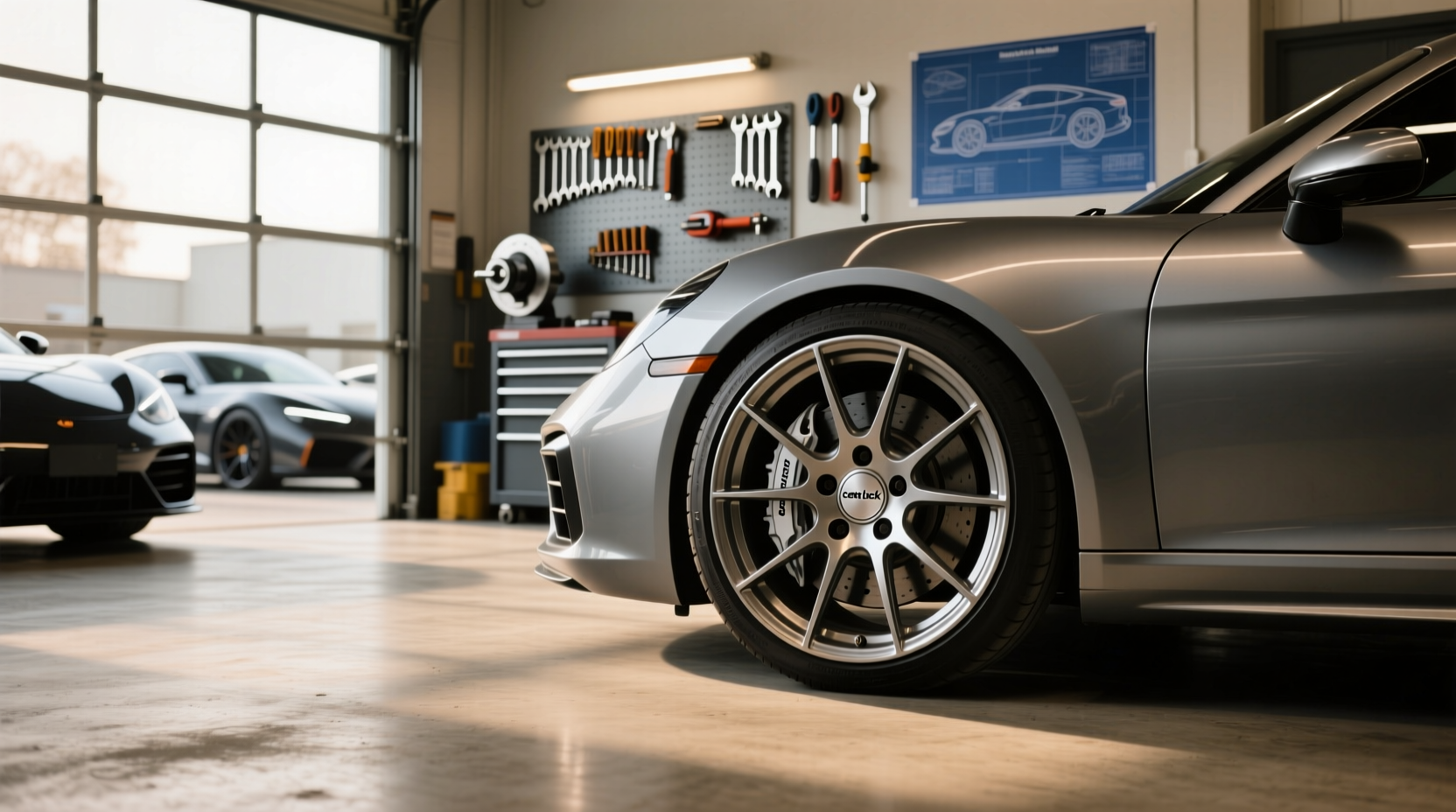
Converting your vehicle to a center lock wheels conversion system is a growing trend among performance enthusiasts, track-day drivers, and owners of high-end European cars like Porsches, Ferraris, and certain BMWs. Unlike traditional multi-lug wheel systems (such as 4-, 5-, or 6-lug patterns), center lock wheels use a single large locking hub nut in the center of the wheel, tightened with a specialized socket and torque wrench—or often an impact gun on race cars. This design allows for faster wheel changes during pit stops, which is why it's standard in motorsports and factory-fitted on many supercars 1. However, converting from a conventional bolt pattern to a center lock setup involves more than just swapping wheels—it requires precise engineering, compatible hubs, proper torque procedures, and awareness of legal and safety implications.
What Is a Center Lock Wheel System?
A center lock wheel attaches to the vehicle’s hub using one central fastener—typically a large splined or hexagonal nut—instead of multiple lug nuts arranged around the hub. When you perform a center lock wheels conversion, you're replacing not only the wheels but also modifying or replacing critical components such as the hub assembly, brake rotors (if they’re hub-centric), and sometimes even the axle or spindle.
This system is most commonly found on:
- Porsche GT models (e.g., 911 GT3, GT2 RS)
- Ferrari sports cars
- Lamborghini Huracán and Aventador variants
- Formula 1 and endurance racing vehicles
- Certain high-performance BMW M models with optional upgrades
The primary advantage? ⏱️ Speed. In professional racing, every second counts. Pit crews can remove and install all four wheels in under 10 seconds because there's only one fastener per wheel to loosen and tighten. But does this benefit translate to street use? That depends on your goals—and we’ll explore that shortly.
Why Consider a Center Lock Wheels Conversion?
There are several reasons drivers consider this upgrade:
⚡ Faster Wheel Changes
As mentioned, the main reason for center lock adoption in motorsports is speed. For track-day enthusiasts who frequently rotate tires or swap between dry and wet setups, reducing change time improves efficiency and convenience.
✨ Enhanced Aesthetic Appeal
Many modern performance wheels designed with center locks have a cleaner, more aggressive look. The absence of visible lug nuts gives the wheel a minimalist, race-inspired appearance that appeals to visual customization seekers.
🔧 Reduced Risk of Lug Nut Theft
Since center lock systems require a special tool (a spline drive or keyed socket), unauthorized removal becomes significantly harder. While not foolproof, this adds a layer of security against wheel theft.
⚙️ Improved Load Distribution
With a single central point securing the wheel, forces are distributed symmetrically across the hub. Some engineers argue this reduces stress concentrations compared to multi-lug systems where uneven tightening can lead to warping or fatigue over time.
Is a Center Lock Conversion Right for Your Vehicle?
Not all vehicles are suitable candidates for a center lock wheels conversion. Before proceeding, evaluate these key factors:
🛒 Compatibility with Your Axle and Hub Design
The conversion typically requires either:
- OEM-style replacement hubs designed for center lock mounting
- Aftermarket hub kits engineered specifically for your make/model
These kits usually include new wheel bearings, flanges, and mounting surfaces. They must match your vehicle’s bolt pattern, hub bore diameter, and ABS tone ring configuration (if applicable).
📍 Brake and Suspension Clearance
Center lock hubs are generally larger in diameter than standard hubs. This means they may interfere with aftermarket brake calipers, especially big brake kits (BBKs). Measure clearance carefully before installation.
🏭 OEM vs. Aftermarket Solutions
Some manufacturers offer official retrofit kits—for example, Porsche offers center lock conversion options for certain classic models through its Classic division. These are expensive but certified for safety and durability.
Aftermarket solutions exist from companies specializing in motorsport components, but quality varies widely. Look for kits made from forged aluminum or chromoly steel, with ISO or TÜV certification if available.
👥 Legal and Safety Implications
In some regions, modifying the wheel attachment system may affect vehicle homologation or insurance coverage. Always check local regulations before making irreversible modifications.
Step-by-Step: How to Perform a Center Lock Wheels Conversion
If you’ve decided to move forward, here’s a general outline of the process:
📋 Step 1: Research and Source Compatible Components
Start by identifying whether conversion kits are available for your specific vehicle. Popular platforms like forums (e.g., r/Porsche on Reddit), enthusiast clubs, and specialist shops can help determine feasibility.
You’ll need:
- Center lock hub kit (front and rear, if desired)
- Matching center lock wheels (correct offset, width, diameter)
- Specialized center lock nuts (splined or conical seat type)
- Torque specifications and tools
🔧 Step 2: Prepare Your Workspace and Tools
This job requires precision. You'll need:
- Lift or jack stands
- Impact wrench or pneumatic gun (for initial loosening)
- Digital torque wrench (capable of high torque values, often 400–800 Nm)
- Center lock socket (common sizes: 41mm, 46mm, 55mm spline)
- Bearing press (if installing new hubs)
- Clean workspace and anti-seize compound
🚚 Step 3: Remove Existing Wheels and Hubs
Safely lift the vehicle and remove the wheels. Then disassemble the brake caliper, rotor, and knuckle to access the hub assembly. Depending on your car, this may involve removing CV joints or half-shafts.
🏭 Step 4: Install New Center Lock Hubs
Press out the old hub and press in the new one using proper alignment tools. Reassemble suspension components, ensuring all fasteners are torqued to spec. Pay attention to ABS sensor gaps and rotor runout.
✅ Step 5: Mount and Torque Center Lock Wheels
Once hubs are installed, mount the new center lock wheels. Use the correct lubricant (usually molybdenum disulfide grease) on the threads and under the nut face. Tighten the center nut to the manufacturer’s recommended torque using a calibrated tool.
⚠️ Never use an impact wrench alone to final-tighten a center lock nut—this risks over-torquing and damaging the hub or spindle.
Common Challenges and Mistakes to Avoid
Even experienced mechanics can run into issues during a center lock wheels conversion. Here are frequent problems and how to avoid them:
❗ Incorrect Torque Application
Under-torquing leads to wheel detachment; over-torquing damages threads or distorts the hub. Always follow OEM or kit manufacturer specs precisely. Many Porsche center lock nuts require 450–550 Nm (330–400 lb-ft).
🔍 Misalignment or Runout
Poorly pressed hubs can cause vibration at speed. After installation, check lateral runout with a dial indicator. Acceptable tolerance is typically less than 0.05 mm.
🌐 Incompatible Wheel Offset or Width
Center lock wheels aren’t just about the fastener—they must also fit within fender clearances and maintain proper suspension geometry. Verify ET (offset), rim width, and tire size compatibility before ordering.
🧰 Missing Special Tools
Without the right socket and torque equipment, you cannot safely install or remove center lock wheels. These tools aren’t universal—some brands use proprietary spline patterns. Buy or rent the correct ones beforehand.
Cost Breakdown: What Does a Conversion Typically Cost?
Expect significant investment. Prices vary based on brand, vehicle, and labor:
| Component | Average Cost (USD) | Notes |
|---|---|---|
| Front Hub Kit | $800–$1,500 | Includes bearings, flange, hardware |
| Rear Hub Kit | $700–$1,300 | May differ due to drivetrain layout |
| Set of 4 Center Lock Wheels | $2,500–$6,000+ | Depends on brand, material, finish |
| Special Socket Tool | $120–$250 | One-time purchase |
| Labor (Full Conversion) | $1,000–$2,000 | Professional shop rate |
| Total Estimated Cost | $5,120–$11,050+ | Varies by region and complexity |
This doesn’t include potential costs for upgraded brakes, alignment services, or tire mounting.
Can You Reverse the Conversion?
In most cases, yes—but it depends on how the original hubs were removed. If they were pressed out without damage, you might be able to reinstall them. However, many modern hubs are sealed units, and once removed, replacements may be needed. Keep old parts in case you want to revert to stock.
Myths and Misconceptions About Center Lock Systems
Let’s clarify some common misunderstandings:
❌ Myth: Center Locks Are Safer Than Lug Nuts
Reality: Both systems are safe when properly maintained. Center locks aren’t inherently safer—they simply serve a different purpose. Improper torque application poses equal risk regardless of system type.
❌ Myth: Any Wheel Can Be Converted With an Adapter
Reality: There are no reliable bolt-on adapters that convert a 5-lug hub to a true center lock system. Some vendors sell “fake” center lock covers that mimic the look but don’t function mechanically. True conversion requires structural changes to the hub.
❌ Myth: Center Locks Improve Performance
Reality: They don’t enhance grip, handling, or acceleration. Any perceived improvement comes from reduced unsprung weight (if lighter wheels are used), not the fastening method itself.
Alternatives to Full Conversion
If a full center lock wheels conversion seems excessive, consider these alternatives:
🎨 Cosmetic Center Lock Covers
Available from brands like Ronal Wheels, these simulate the center lock appearance without changing the underlying lug system. Ideal for show cars or budget builds 2.
🔒 Locking Lug Nuts
For added security, high-quality locking lugs offer similar protection against theft without requiring mechanical modification.
🔄 Lightweight Forged Wheels
Instead of focusing on fasteners, upgrading to lightweight multi-lug forged wheels reduces rotational mass and improves responsiveness—often more impactful than switching to center locks.
Maintenance Tips for Center Lock Wheels
Once converted, ongoing care is essential:
- Check center nut torque after first 50 miles and annually thereafter
- Inspect hub and nut for cracks, corrosion, or thread wear
- Use correct lubricant on threads—never dry tighten
- Store spare socket tool securely; losing it means being unable to remove wheels
- Avoid water exposure to the center cavity after off-road or track use to prevent debris buildup
Final Thoughts: Is a Center Lock Conversion Worth It?
A center lock wheels conversion makes sense primarily for dedicated track vehicles or collectors seeking authenticity in restomods. For daily drivers, the cost, complexity, and limited practical benefits rarely justify the effort. Additionally, roadside flat tire changes become much harder without access to the proper tools.
Before committing, ask yourself:
- Do I regularly participate in track events where quick swaps matter?
- Am I prepared to invest $5,000+ for functional and aesthetic gains?
- Can I access proper torque tools and service support locally?
- Will this affect resale value or insurance terms?
If your answer is mostly “yes,” then proceed with thorough research and professional guidance. Otherwise, enjoy the performance and style benefits of high-quality multi-lug wheels instead.
Frequently Asked Questions (FAQs)
- Can I convert my regular car to center lock wheels?
- Yes, but only with a compatible hub conversion kit. It’s not a simple bolt-on upgrade and requires mechanical work on the axle assembly.
- Are center lock wheels stronger than lug nut wheels?
- No, strength depends on materials and engineering, not the fastening method. Both systems are robust when correctly implemented.
- What tools do I need to remove center lock wheels?
- You’ll need a center lock socket (e.g., 41mm or 46mm spline) and a high-torque capable wrench or air gun. Never rely solely on an impact tool for final tightening.
- Why don’t all performance cars use center lock wheels?
- Because they add cost, complexity, and require specialized tools. For street use, traditional lug systems are simpler, cheaper, and easier to maintain.
- Can I tow a trailer with center lock wheels?
- Yes, provided the wheels and hubs are rated for the load. The attachment method doesn’t limit towing capacity as long as torque specs are followed.





 浙公网安备
33010002000092号
浙公网安备
33010002000092号 浙B2-20120091-4