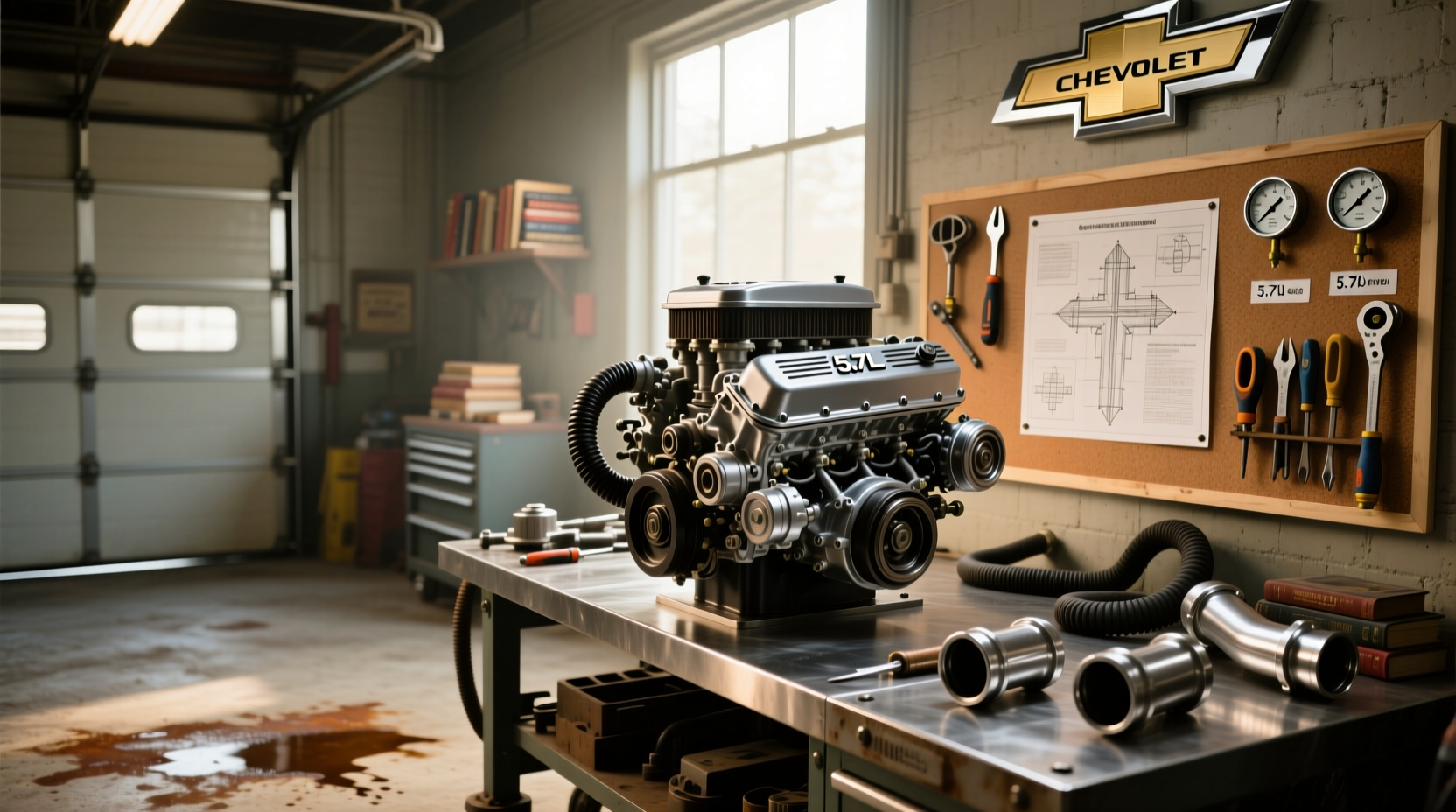
When searching for 5.7 Chevy engine specs, many users are actually looking for detailed technical data on General Motors\u2019 legendary small-block V8 engines, particularly the 350 cubic inch (5.7L) variants that powered countless trucks, muscle cars, and performance builds from the late 1960s through the early 2000s. While the term \u201C5.7L\u201D is often associated with Dodge\u2019s HEMI V8, Chevrolet\u2019s 5.7-liter (350ci) small-block is one of the most iconic and widely used engines in American automotive history. This guide breaks down displacement, power output, applications, reliability, and key differences between generations to help you understand exactly what defines a 5.7 Chevy engine and how it compares across decades of production.
Understanding the 5.7-Liter Chevrolet Small-Block Engine
The 5.7-liter designation refers to an engine displacement of approximately 5,733 cubic centimeters, which equates to 350 cubic inches\u2014a number deeply embedded in American car culture. Known officially as the Chevrolet small-block 350, this engine belongs to GM\u2019s first- and second-generation small-block family 1. First introduced in 1967, it evolved from earlier 283 and 327 engines but quickly became the go-to V8 for everything from police cruisers to hot rods due to its balance of power, durability, and aftermarket support.
Unlike modern metric-based naming conventions, American automakers traditionally used cubic inches (cid) rather than liters. So while today\u2019s buyers might search for \u201C5.7 Chevy engine specs,\u201D they\u2019re typically referring to the classic 350ci engine. It\u2019s important to distinguish this from Chrysler\u2019s 5.7L HEMI, which shares the same liter size but differs significantly in design, architecture, and application.
Key Technical Specifications by Generation
The 5.7L Chevy engine wasn\u2019t a single fixed design; instead, it spanned multiple generations and configurations over more than four decades. Below is a breakdown of major versions and their core specifications:
| Generation | Years Produced | Horsepower Range | Torque (lb-ft) | Primary Applications | Fuel System |
|---|---|---|---|---|---|
| SB1 (Gen I) | 1967\u20131995 | 145\u2013300 | 295\u2013380 | Camaro, Corvette, C/K Trucks, Suburbans | Carburetor / TBI |
| Vortec L31 | 1996\u20132002 | 255\u2013270 | 330\u2013385 | Tahoe, Silverado, Express Van | Sequential Fuel Injection |
| LS1 (Gen III) | 1997\u20132004 | 305\u2013345 | 335\u2013350 | Camaro, Corvette, GTO | Port Fuel Injection |
| LO5 / LG4 | 1987\u20131995 | 190\u2013210 | 285\u2013300 | Full-size trucks, vans | TBI |
As shown above, horsepower varied widely depending on model year, tuning, and vehicle type. For example, a base-model 1990 C1500 pickup might have only 190 hp, while a high-output version in a Camaro Z28 could produce up to 305 hp. The transition from carburetion to fuel injection improved efficiency and emissions without sacrificing much performance.
Displacement and Bore/Stroke Details
All 5.7L Chevy engines share the same fundamental displacement: 350 cubic inches (5,733 cc). This comes from a standard bore of 4.00 inches and stroke of 3.48 inches. These dimensions made the engine highly adaptable for stroker kits, where increasing the stroke can push displacement beyond 383 or even 400 cubic inches for higher torque output.
The consistent external dimensions across generations also made the small-block 350 one of the most popular swap candidates in custom and restoration projects. Its compact size allows it to fit into a wide range of vehicles, from classic Fords to Jeeps and even imports with proper fabrication.
Differences Between 5.7L Chevy and 5.7L HEMI Engines
A common point of confusion arises when users search for \u201C5.7 Chevy engine specs\u201D but end up comparing them with Dodge\u2019s 5.7L HEMI. Despite sharing the same displacement, these engines are fundamentally different in design and engineering philosophy.
- Architecture: The Chevy 350 uses a traditional pushrod (overhead valve) design with two valves per cylinder, while the modern HEMI uses overhead camshafts (in some versions) and a hemispherical combustion chamber allowing better airflow.
- Power Output: Late-model HEMIs (e.g., 2003\u20132023 Ram trucks) produce around 395 hp and 410 lb-ft of torque 2, whereas most factory 5.7L Chevys max out near 345 hp unless modified.
- Technology: The HEMI features variable valve timing (VVT) and Multi-Displacement System (MDS), which shuts off cylinders under light load for fuel savings. The classic Chevy 350 lacks such tech unless upgraded aftermarket.
- Applications: The HEMI was primarily used in Ram trucks and Chrysler muscle cars post-2003, while the Chevy 350 appeared in everything from Corvettes to school buses.
This distinction matters because someone researching \u201C5.7 Chevy engine for sale\u201D may unknowingly look at HEMI crate engines if they don\u2019t verify the manufacturer. Always confirm whether the engine is a GM small-block or a Chrysler HEMI before purchasing.
Common Applications and Vehicle Compatibility
The 5.7L Chevy engine was used across a broad spectrum of vehicles. Knowing which models came with it helps buyers identify compatible donor engines or plan swaps effectively.
Trucks and SUVs
From 1987 to 2002, the 5.7L V8 was standard in many GM trucks and large SUVs:
- Chevrolet C/K Series (1987\u20131998)
- GMC Sierra (1988\u20131998)
- Chevrolet Tahoe & GMC Yukon (1995\u20132000)
- Chevrolet Suburban & GMC Yukon XL (1992\u20132000)
- Chevrolet Silverado 1500 (1999\u20132002, as Vortec 5700 L31)
The Vortec 5700 (L31) variant, introduced in 1996, featured redesigned cylinder heads, sequential fuel injection, and improved cooling, making it more reliable and efficient than earlier TBI (Throttle Body Injection) versions like the LO5.
Performance Cars
In performance applications, the 5.7L Chevy engine delivered stronger outputs:
- Chevrolet Camaro Z28 (1987\u20131992): 275\u2013305 hp
- Chevrolet Corvette (C3 & C4): Up to 300 hp in L98 tune
- Pontiac Firebird Trans Am (GM platform): Shared engine options
These models often had upgraded intake manifolds, exhaust systems, and tuning to extract more power. Enthusiasts still prize these engines for resto-mod builds due to OEM+ reliability and parts availability.
Crate Engines and Aftermarket Availability
Even though GM no longer installs the original 350ci in new vehicles, the 5.7L Chevy engine remains widely available as a crate motor. Companies like Chevrolet Performance, Summit Racing, and BluePrint Engines offer rebuilt, remanufactured, and high-performance versions.
Popular crate engine types include:
- Stock Replacement (e.g., LO5 or L31): Designed for easy installation in older trucks; ~250 hp, durable internals.
- Stroker Builds (e.g., 383ci): Based on the 5.7L block but with increased stroke for more displacement and torque.
- Performance Packages: Aluminum heads, roller cams, and carburetors pushing 400+ hp.
Prices vary significantly based on configuration. A basic service replacement engine starts around $4,000, while fully dressed performance builds can exceed $7,000 3. When shopping, ensure compatibility with your transmission, accessories, and wiring harness\u2014especially for electronic fuel-injected models.
Reliability and Common Issues
The 5.7L Chevy engine is generally considered robust, especially in truck applications where it was built for long-term durability. However, certain issues arise depending on age, maintenance, and usage patterns.
Known Weaknesses by Model Year
- Pre-1996 TBI Engines: Prone to carbon buildup on throttle bodies and injectors. Regular cleaning and fuel system maintenance are essential.
- Vortec 5700 (L31): Intake manifold gasket failures were common after 150,000 miles, leading to coolant leaks and overheating.
- Timing Chain Wear: Older models with nylon-coated timing gears can suffer premature wear, especially if oil changes are neglected.
- Overheating Risks: In high-load conditions (towing, hot climates), ensure radiator and thermostat function properly. Some owners upgrade to aluminum radiators for better cooling.
With regular oil changes, coolant flushes, and attention to spark plugs and wires, many 5.7L Chevy engines last well beyond 200,000 miles. Proper warm-up routines and avoiding short trips help extend engine life.
Performance Upgrades and Tuning Potential
One reason the 5.7L Chevy engine remains so popular is its vast aftermarket support. Even modest upgrades can yield noticeable gains in power and responsiveness.
Recommended Modifications
- Exhaust Manifolds/Header Swap: Replacing restrictive stock manifolds with headers improves flow and adds 15\u201325 hp.
- Performance Intake Manifold: Dual-plane intakes enhance mid-range torque, ideal for daily drivers.
- Camshaft Upgrade: A mild hydraulic roller cam increases idle smoothness and top-end power.
- Carburetor to EFI Conversion: Modern fuel injection kits improve drivability, fuel economy, and emissions compliance.
- Ignition System: Upgrading to an HEI distributor or aftermarket CD ignition ensures strong spark under all conditions.
For forced induction, turbocharging or supercharging the 5.7L is feasible with proper internal upgrades (forged pistons, stronger rods). However, stock cast pistons limit boost levels to about 6\u20138 psi without risk of detonation.
Fuel Compatibility and Emissions Considerations
Most 5.7L Chevy engines run on regular unleaded gasoline (87 octane), though high-compression or modified versions may require premium fuel (91+ octane) to prevent knocking. Carbureted engines are less sensitive to ethanol blends, but fuel-injected models should avoid E85 unless converted with compatible components.
Emissions regulations vary by state, especially in California (CARB). If installing a crate engine in a newer vehicle or doing a swap, verify that the engine meets local requirements. Some remanufactured engines come with CARB executive orders for legal use in regulated areas.
How to Verify Authenticity and Condition When Buying
Given the popularity of the 5.7L Chevy engine, counterfeit or misrepresented units occasionally appear in the market. Follow these steps to verify authenticity:
- Check the VIN and Engine Block Number: Located on the passenger side front of the block, this code identifies the manufacturing plant, date, and intended vehicle.
- Look for Casting Marks: Genuine GM blocks have specific casting numbers (e.g., 14093637 for L31). Cross-reference with online databases.
- Inspect for Aftermarket Parts: While not inherently bad, excessive non-OEM components may indicate prior failure or poor maintenance.
- Request a Compression Test: Balanced readings across all cylinders (within 10%) suggest healthy internals.
- Ask for Service Records: Especially important for low-mileage claims or \u201Crebuilt\u201D labels.
Buying from reputable suppliers or certified rebuilders reduces risk. Avoid deals that seem too good to be true\u2014a complete long-block should cost no less than $2,500 if newly rebuilt.
Conclusion: Is the 5.7 Chevy Engine Right for You?
The 5.7L Chevrolet engine remains a solid choice for restorations, truck repairs, and performance builds. Its combination of proven reliability, widespread parts availability, and tuning flexibility makes it a top pick among mechanics and enthusiasts alike. While it doesn\u2019t match the advanced technology of modern engines like the HEMI or LS series, its simplicity and ruggedness are advantages in many scenarios.
If you\u2019re sourcing a replacement engine, upgrading an old truck, or planning a swap, understanding the exact specs, generation differences, and potential pitfalls will save time and money. Always confirm whether you need a carbureted, TBI, or fuel-injected version based on your vehicle\u2019s original setup. And remember: the term \u201C5.7 Chevy engine\u201D refers specifically to GM\u2019s 350ci small-block\u2014not the Dodge HEMI, despite shared displacement.
Frequently Asked Questions
- ❓ Is a 5.7L engine the same as a 350?
- Yes, a 5.7L engine is equivalent to 350 cubic inches. The terms are used interchangeably, with \u201C350\u201D being the traditional American designation and \u201C5.7L\u201D the metric conversion.
- ❓ How much horsepower does a stock 5.7 Chevy engine produce?
- Depending on the model year and configuration, a stock 5.7L Chevy engine produces between 190 and 345 horsepower. Later Vortec and LS1 versions are on the higher end of that range.
- ❓ Can I swap a 5.7 Chevy engine into a non-GM vehicle?
- Yes, the small-block Chevy is one of the most common engine swaps due to its compact size and abundant aftermarket support. Mounts, wiring, and transmission adapters are widely available.
- ❓ What\u2019s the difference between a 5.7L Chevy and a 5.7L HEMI?
- The Chevy 5.7L is a pushrod V8 with two valves per cylinder, while the HEMI uses a hemispherical combustion chamber and modern features like variable valve timing. They differ in architecture, performance, and application.
- ❓ Are 5.7L Chevy engines reliable?
- Yes, when properly maintained, 5.7L Chevy engines are highly reliable and can exceed 200,000 miles. Regular oil changes and cooling system maintenance are key to longevity.





 浙公网安备
33010002000092号
浙公网安备
33010002000092号 浙B2-20120091-4