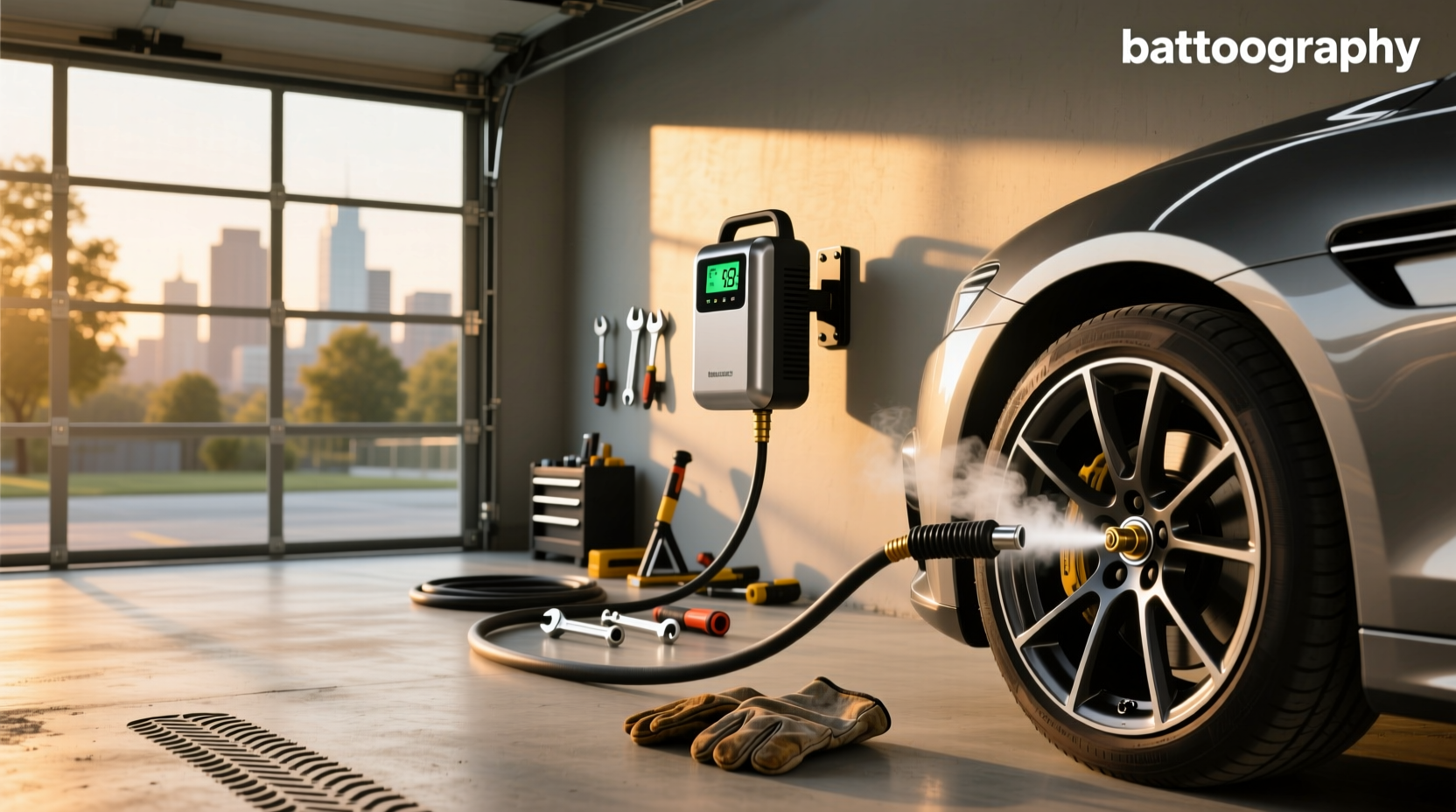
Keeping your vehicle's tyres properly inflated is essential for safety, fuel efficiency, and tire longevity. An automatic tyre inflator simplifies this task by automatically stopping inflation when the desired pressure is reached—eliminating guesswork and reducing overinflation risks. Whether you're a daily commuter, frequent road-tripper, or manage a fleet of commercial vehicles, understanding how these devices work, where they excel, and what to watch for can save time, money, and prevent roadside emergencies. This guide explores everything you need to know about automatic tyre inflators, including types, functionality, limitations, and real-world applications across passenger and heavy-duty vehicles.
How Automatic Tyre Inflators Work: The Core Mechanism ⚙️
An automatic tyre inflator operates on a simple yet effective principle: it uses a built-in pressure sensor and control system to monitor air output in real time. When connected to a tyre valve via a hose, the device begins pumping air from a compressor or external source. As pressure builds inside the tyre, the sensor continuously reads the PSI (pounds per square inch) or kPa (kilopascals). Once the preset pressure level is achieved, the unit automatically shuts off—either cutting power to the motor or closing an internal valve.
This automation removes the need for manual monitoring with a separate gauge, which is especially useful for drivers who frequently check tyre pressure or operate in environments where consistent inflation is critical. Some models allow users to set custom pressure thresholds using digital displays, while others come pre-calibrated for standard vehicle types like sedans, SUVs, or light trucks.
The technology behind automatic shut-off varies. Lower-cost models may rely on mechanical pressure switches that respond to airflow resistance, whereas higher-end units use electronic sensors paired with microcontrollers for greater accuracy. While both achieve similar results, electronic systems typically offer tighter tolerances—often within ±1 PSI—making them preferable for precision applications such as performance driving or commercial fleets.
Types of Automatic Tyre Inflators ✅
Not all automatic inflators are created equal. They fall into several categories based on design, power source, and intended use. Understanding these distinctions helps match the right tool to your needs.
1. Portable 12V Electric Inflators ⚡
These compact units plug into a vehicle’s 12-volt socket (commonly known as the cigarette lighter port) and are powered directly by the car’s electrical system. Most modern versions include automatic shutoff, digital gauges, LED lights, and multiple nozzle attachments for bikes, sports equipment, and inflatable toys.
They’re ideal for personal vehicle owners who want convenience without carrying bulky equipment. However, their effectiveness depends on engine runtime; prolonged use without the engine running can drain the battery. Additionally, while many claim to reach up to 150 PSI, actual performance may vary depending on ambient temperature and initial tyre pressure.
2. Cordless Battery-Powered Units 🔋
Battery-operated inflators offer greater flexibility since they don’t require being tethered to a power outlet. Typically using lithium-ion batteries, these tools can deliver enough power to inflate a flat passenger car tyre from 0 to 32 PSI in under 5 minutes. Many feature USB charging ports, making them dual-purpose emergency tools.
While convenient, cordless models often have lower maximum pressures than 12V versions—usually capping out around 120–130 PSI—limiting their suitability for larger vehicles like trucks or trailers. Also, battery life diminishes over time, so long-term reliability should be considered if used infrequently but expected to perform during emergencies.
3. Integrated Central Tire Inflation Systems (CTIS) 🚗
Found primarily in military vehicles, off-road SUVs, and some commercial trucks, CTIS allows drivers to adjust tyre pressure on the go via a dashboard-mounted control panel. These systems connect to each wheel through hoses routed along the chassis and are controlled by solenoid valves linked to an onboard air compressor.
CTIS provides true automation: drivers select terrain modes (e.g., highway, sand, mud), and the system adjusts pressure accordingly. Though highly advanced, CTIS is expensive to install and maintain, generally reserved for specialized operations rather than everyday consumer use.
4. Trailer and Commercial Vehicle Systems 🚚
For large fleets, continuous tyre maintenance is crucial. Systems like the Meritor Tire Inflation System (MTIS™)1 are mounted on trailers and automatically detect underinflation, then inject air as needed during transit. These are not handheld tools but engineered solutions designed to reduce downtime and improve fuel economy across long-haul logistics networks.
Such systems address a major industry challenge: up to 90% of trailer tyres run underinflated at any given time, leading to increased rolling resistance and premature wear. By maintaining optimal pressure levels autonomously, MTIS and similar technologies help extend tyre life by up to 30%, according to manufacturer data.
Key Benefits of Using an Automatic Tyre Inflator ✨
- Improved Safety: Properly inflated tyres provide better handling, shorter braking distances, and reduced risk of blowouts.
- Fuel Efficiency Gains: Underinflated tyres increase rolling resistance, which can reduce fuel economy by up to 3%. Maintaining correct pressure helps maximize mileage.
- Extended Tyre Life: Even pressure distribution reduces uneven tread wear, potentially doubling tyre lifespan over time.
- Time Savings: No need to repeatedly stop and check pressure manually—automatic cutoff streamlines the process.
- User-Friendly Operation: Digital interfaces and auto-shutoff make these tools accessible even for novice users.
Limits and Common Misconceptions ❗
Despite their advantages, automatic tyre inflators aren't universal solutions. Several misconceptions persist:
Myth: All Automatic Inflators Can Handle Any Vehicle Type
In reality, most portable models are designed for passenger cars, SUVs, and motorcycles. They typically max out at 150 PSI, which may suffice for light trucks but falls short for heavy-duty applications like buses, container trucks, or agricultural machinery requiring 100+ psi dual-wheel setups. Attempting to inflate oversized tyres with undersized pumps leads to overheating, slow fill rates, or complete failure.
Myth: Built-In Gauges Are Always Accurate
Digital readouts improve usability, but calibration drifts over time—especially after drops or exposure to moisture. Independent testing shows discrepancies of ±5 PSI in budget models. For critical applications, cross-check readings with a standalone calibrated gauge periodically.
Myth: You Only Need One Tool for All Inflation Tasks
No single inflator fits every scenario. A compact 12V pump works well for routine top-offs but lacks the duty cycle for repeated flat repairs. Conversely, industrial-grade compressors are too large for storage in a glove compartment. Matching tool capability to usage pattern ensures reliability when needed most.
Choosing the Right Model: What to Look For 🔍
Selecting an appropriate automatic tyre inflator involves evaluating several technical and practical factors:
Pressure Range and Flow Rate
Check the maximum PSI rating and airflow capacity (measured in liters per minute or CFM). Passenger vehicles usually require 30–35 PSI, so a 150 PSI max provides ample headroom. However, flow rate determines speed: units below 20 L/min will take significantly longer to fill larger volumes, increasing strain on the motor.
Power Source Compatibility
12V models must draw sufficient current to operate efficiently. Older vehicles with degraded wiring or weak alternators may struggle to supply steady voltage, causing the pump to stall. Consider models with low-voltage protection to avoid damaging your car’s battery.
Durability and Build Quality
Rubberized housings, reinforced hoses, and sealed motors resist damage from dust, water, and vibration. Workshop-grade units often feature metal connectors instead of plastic fittings, improving longevity under frequent use.
Additional Features
LED work lights aid nighttime use; preset memory functions let you store preferred pressures; automatic restart after power interruption enhances reliability during extended sessions. While not essential, these extras enhance user experience in specific conditions.
Practical Use Cases and Scenarios 📍
Different driving habits and environments influence whether an automatic inflator adds meaningful value:
Everyday Commuters
Urban drivers benefit from quick weekly checks. An automatic inflator eliminates the hassle of juggling a separate gauge and foot pump. Set it and forget it—pressurize all four tyres in under 10 minutes with minimal effort.
Off-Road Enthusiasts
When traversing sand or mud, lowering tyre pressure improves traction. With a CTIS or high-capacity portable inflator, restoring normal pressure before returning to pavement becomes fast and precise—critical for safety and compliance.
Fleet Managers
For companies operating delivery vans or service trucks, automated inflation systems integrated into maintenance routines reduce unscheduled downtime. Mobile technicians can verify and correct pressure during pre-shift inspections, ensuring consistency across dozens of vehicles.
Long-Distance Travelers
Road trippers face fluctuating temperatures that affect tyre pressure. Cold mornings followed by hot afternoons cause significant expansion and contraction. Carrying an automatic inflator enables rapid adjustments at rest stops, minimizing stress on tyres over thousands of miles.
Regional Differences and Availability 🌍
Product availability and standards vary globally. In South Africa, for example, suppliers like Adendorff Machinery Mart and Start My Car offer robust 12V inflators suited for rugged conditions and mixed vehicle fleets2. Meanwhile, European markets emphasize energy efficiency and noise reduction, influencing product design.
Voltage standards also matter: while most vehicles use 12V systems, larger trucks often operate on 24V circuits. Ensure compatibility before purchasing, especially when sourcing equipment internationally.
Maintenance and Long-Term Reliability 🧰
To keep an automatic inflator functioning optimally:
- Store in a dry place away from extreme heat or cold.
- Clean nozzle threads regularly to prevent debris buildup.
- Run the unit briefly every few months to lubricate internal components.
- Replace cracked hoses or damaged O-rings promptly.
Overheating is a common cause of failure. Most units include thermal protection that cuts power temporarily after sustained operation. Allow cooling periods between inflations, particularly when working on multiple tyres.
When NOT to Rely on an Automatic Inflator ⚠️
Certain situations demand professional intervention:
- Severe Leaks or Punctures: If air escapes faster than the pump can supply it, locate and repair the leak first.
- Near-Zero Pressure: Inflating a completely flat tyre requires high volume and sustained output—many portables lack the capacity.
- Commercial Tires with Dual Wheels: Tight spaces make access difficult, and pressure requirements often exceed portable pump limits.
- Emergency Blowouts on Highways: Prioritize moving to a safe location and calling roadside assistance.
Conclusion: Is an Automatic Tyre Inflator Worth It?
An automatic tyre inflator is a valuable addition to any driver’s toolkit—particularly those seeking convenience, improved safety, and long-term cost savings through better tyre care. While not a replacement for regular maintenance or professional service, it empowers proactive management of one of the most overlooked aspects of vehicle health.
Before buying, assess your typical driving conditions, vehicle type, and inflation frequency. Choose a model with adequate pressure range, durable construction, and reliable auto-shutoff functionality. And remember: no tool compensates for neglect. Regular checks, proper storage, and realistic expectations ensure your automatic inflator remains a dependable ally on the road.
Frequently Asked Questions (FAQs)
- Can I use an automatic tyre inflator on motorcycle tyres?
- Yes, most automatic inflators work on motorcycle tyres as long as the required pressure (typically 30–40 PSI) falls within the device’s range. Use a needle adapter if inflating sports balls or small chambers.
- Do automatic tyre inflators work on truck trailers?
- Most portable models do not generate enough pressure or airflow for large trailer tyres. Dedicated systems like MTIS are designed for this purpose, while workshop compressors are needed for manual inflation.
- How accurate are the built-in pressure sensors?
- Accuracy varies by model. Mid-range digital units are typically within ±3 PSI under normal conditions. For best results, calibrate against a trusted gauge every few months.
- Why does my inflator stop before reaching the target pressure?
- This can happen due to low battery voltage, restricted airflow from a kinked hose, or sensor miscalibration. Check connections, ensure the engine is running (for 12V models), and clean the valve stem.
- Are there automatic inflators for bicycles?
- Some mini pumps marketed for bikes include basic auto-shutoff features, though true automatic regulation is rare due to low-pressure requirements (under 100 PSI). Floor pumps with gauges remain more practical for cyclists.





 浙公网安备
33010002000092号
浙公网安备
33010002000092号 浙B2-20120091-4