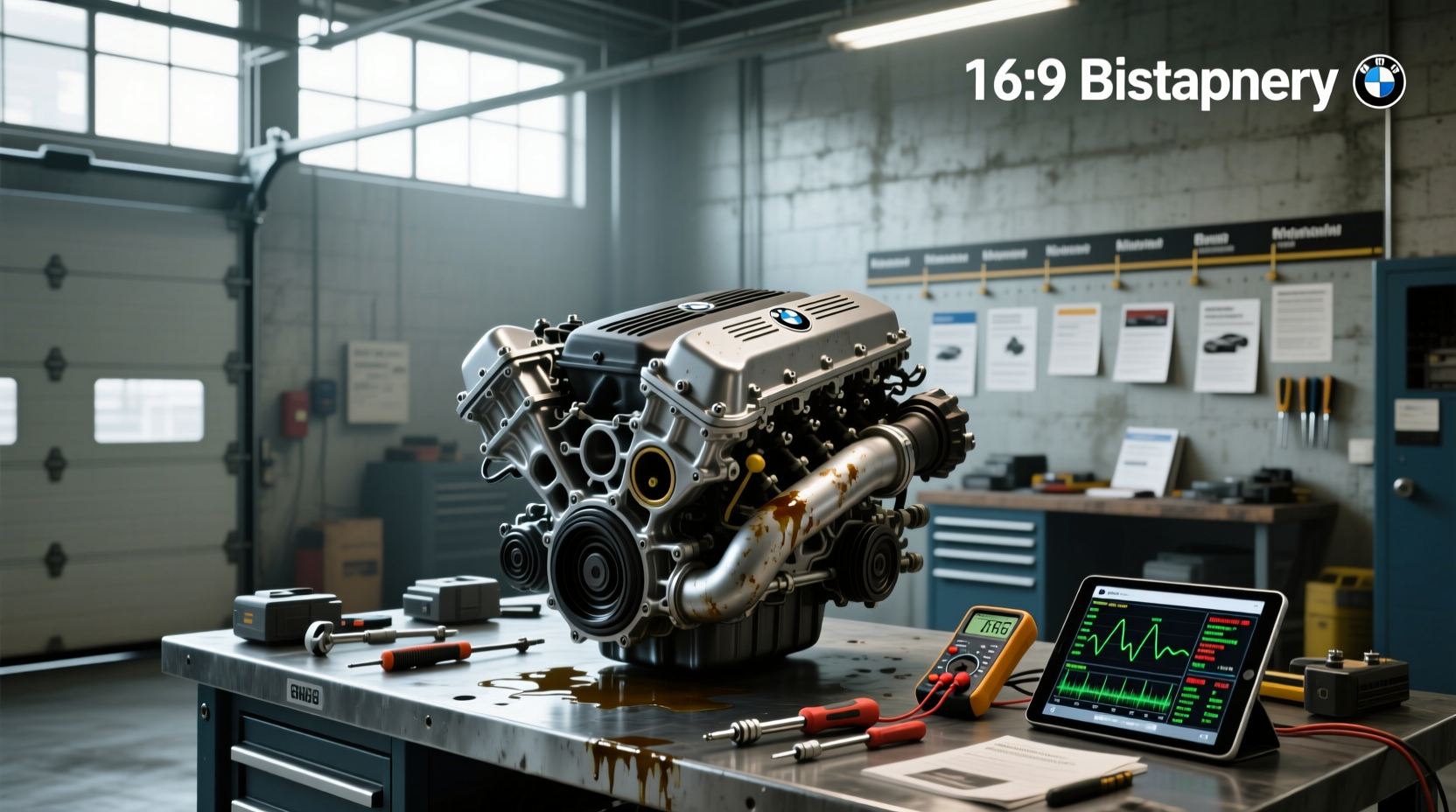
🔧 The BMW B58 engine is widely regarded as one of the most reliable and high-performing inline-six engines in modern BMWs, powering models like the 340i, X3 M40i, and M340i since 2016. While it’s praised for its smooth power delivery and tuner-friendly design, owners often search for answers regarding potential BMW B58 engine problems. This comprehensive guide breaks down real-world issues reported by drivers, explains their causes, and offers practical solutions backed by technical data and service experience. Whether you're considering buying a used G20 3 Series or maintaining a 2023 X4 M40i, understanding common failure points—like water pump leaks, VANOS solenoid faults, or HPFP wear—is crucial for long-term ownership satisfaction.
Understanding the BMW B58 Engine: Design and Evolution
The B58 is part of BMW’s modular engine family, introduced in 2015 as a successor to the N55 1. It features an all-aluminum construction, a closed-deck cylinder block for increased strength, and a single twin-scroll turbocharger setup. With displacements centered around 3.0 liters (B58B30), this engine produces between 322 and 382 horsepower depending on tuning and model application.
⚙️ Key engineering improvements over the N55 include:
- Forged steel crankshaft and connecting rods
- Integrated exhaust manifold within the cylinder head for faster warm-up
- Double VANOS variable valve timing on both intake and exhaust
- High-pressure fuel pump (HPFP) with improved durability
- Electric water pump to reduce parasitic loss
These upgrades contribute to better thermal efficiency, reduced emissions, and enhanced performance. However, despite its robust foundation, certain components have shown tendencies toward premature wear under specific conditions.
Common BMW B58 Engine Problems: Symptoms, Causes, and Solutions
While the B58 is generally reliable when properly maintained, several recurring issues have emerged across forums, dealership records, and independent repair shops. Below is a detailed breakdown of each problem, including diagnostic clues and recommended actions.
1. Electric Water Pump Failure 🌡️
📍 Symptoms: Overheating at idle, coolant temperature fluctuations, warning lights (check engine, overheating), loss of cabin heat.
The B58 uses an electric water pump instead of a belt-driven unit. While this improves efficiency, the pump contains plastic impellers that can degrade over time. Failures typically occur between 60,000 and 90,000 miles, especially in hot climates or vehicles used for frequent short trips where coolant doesn’t reach optimal operating temperature consistently.
✅ Solution: Replace the electric water pump preemptively during major service intervals. Use OEM or upgraded aftermarket units with metal impellers. Monitor coolant flow via OBD2 scanner if symptoms arise.
2. High-Pressure Fuel Pump (HPFP) Wear ⚠️
📍 Symptoms: Rough idle, misfires under load, hesitation during acceleration, fuel pressure codes (e.g., P0087).
The Bosch-developed HPFP supplies fuel at pressures up to 2,000 bar for direct injection. On early B58 variants (pre-2020), internal wear due to inadequate lubrication or low-quality fuel has led to premature failure. Unlike the N54, which had widespread HPFP issues, the B58’s version is more durable—but not immune.
✅ Solution: Maintain fuel quality; use TOP TIER detergent gasoline. Consider replacing the HPFP before 100,000 miles if driving aggressively or tuning the engine. Upgraded kits with reinforced plungers are available from specialty suppliers.
3. VANOS Solenoid Malfunctions 🔧
📍 Symptoms: Reduced low-end torque, poor cold start behavior, check engine light with codes P0011/P0021, audible ticking noise.
VANOS adjusts camshaft timing for efficiency and responsiveness. The solenoids controlling oil flow can become clogged with sludge if oil changes are delayed or substandard oil is used. Even though the B58 has improved oil filtration over previous generations, neglected maintenance remains a leading cause of VANOS issues.
✅ Solution: Change oil every 7,500–10,000 miles using LL-01 or LL-17 FE specification oil. Clean or replace solenoids if performance declines. Some tuners recommend disabling VANOS for track-only builds, but this harms daily drivability.
4. Timing Chain Tensioner and Guide Wear ⚙️
📍 Symptoms: Rattling noise on cold startup, timing chain slack detected via scan tool, potential jump in severe cases.
Despite BMW’s claims of a “lifetime” timing chain system, some B58 engines have experienced tensioner wear, particularly in high-mileage applications. The issue appears less frequent than in older BMW engines like the N47 diesel, but isolated reports exist, especially after 120,000 miles.
✅ Solution: Inspect tensioner operation during major services. Avoid extended oil change intervals. If rattling persists beyond 30 seconds after startup, further inspection with a bore scope may be warranted.
5. Coolant Flange and Thermostat Housing Leaks 💧
📍 Symptoms: Coolant puddles under engine, sweet smell from hood, minor drops in coolant level without visible external leak.
Made of composite material, the coolant flange connects multiple hoses near the thermostat housing. Thermal cycling can lead to micro-cracks, causing slow seepage. Often mistaken for water pump leaks, these require disassembly to confirm.
✅ Solution: Replace with updated metal-reinforced flange during water pump service. Always inspect during cooling system maintenance.
6. Oil Consumption in Modified or Track-Driven Vehicles 🏁
📍 Symptoms: Dropping oil levels between changes, blue-tinted exhaust smoke under hard acceleration.
Stock B58 engines rarely consume oil excessively. However, modified versions—especially those with higher boost or aggressive cam profiles—can experience increased piston ring blow-by. This is exacerbated by sustained high RPMs common in track use.
✅ Solution: Monitor oil levels monthly if tuned. Install an oil catch can to reduce carbon buildup. For heavily modified engines, consider forged pistons and upgraded rings.
Model-Year Variations and Known Updates
Broadly speaking, the B58 has evolved through several iterations:
- B58B30A – Found in 2016–2019 models (F30 340i, G01 X3 M40i)
- B58B30B – Introduced in 2020 with mild updates to intake and ECU mapping (G20 M340i)
- B58TU (Technical Update) – Released around 2022, featuring revised turbocharger, improved cooling, and lower emissions
🏭 Notably, BMW issued technical service bulletins (TSBs) related to water pump revisions and updated coolant hose routing in later models. Owners of pre-2020 vehicles should verify whether factory updates were applied during routine servicing.
Maintenance Tips to Prevent B58 Engine Issues
Preventive care is the best defense against avoidable failures. Follow these guidelines to maximize longevity:
🧼 1. Stick to Recommended Oil Change Intervals
Use BMW-approved LL-01 or LL-17 FE 0W-30 or 5W-30 synthetic oil. Change every 7,500–10,000 miles, or more frequently if driven in stop-and-go traffic or extreme temperatures.
🔧 2. Replace Components Proactively
Consider bundling replacements:
- Water pump + thermostat + coolant flange (around 80,000–100,000 miles)
- Fuel filter (if equipped) and HPFP inspection (after 100,000 miles)
- VANOS solenoids cleaning/replacement (with valve cover gasket job)
🔍 3. Use Quality Fuel and Additives
TOP TIER gasoline helps keep injectors clean. Periodic use of fuel system cleaners (e.g., Chevron Techron) can prevent carbon buildup, especially on intake valves affected by lean-running conditions.
📊 4. Monitor with OBD2 Tools
Devices like OBDeleven or BMW INPA allow deeper diagnostics than generic scanners. Check live data for:
- Fuel trims (STFT/LTFT)
- Coolant flow rate
- Boost pressure consistency
- Timing chain tension readings
Performance Potential and Tuning Considerations
⚡ The B58 is highly responsive to tuning. Stock versions produce 326–382 hp, but stage 1 ECU tunes can safely push outputs to 400–450 hp. With supporting mods (intercooler, exhaust, intake), 500+ wheel horsepower is achievable.
However, modifications increase stress on stock components:
- Higher boost raises load on HPFP and turbo
- Elevated temps challenge cooling system limits
- Aggressive timing increases risk of knock if fuel quality drops
📌 Enthusiasts should balance performance goals with component upgrades. A well-tuned B58 can exceed 200,000 miles, but pushing limits without reinforcement risks early failure.
Reliability Compared to Other BMW Engines
When evaluating the B58, it helps to compare it to other contemporary powertrains:
| Engine | Horsepower Range | Known Issues | Longevity Estimate |
|---|---|---|---|
| B58 | 322–382 hp | Water pump, HPFP wear | 150,000+ miles (well-maintained) |
| N55 | 300–335 hp | HPFP, oil leaks, turbo actuator | 120,000–150,000 miles |
| S58 | 473–503 hp | Limited real-world data, high-stress design | Early signs positive, long-term TBD |
| B48 (4-cylinder) | 248–269 hp | Carbon buildup, wastegate rattle | 100,000–130,000 miles |
👥 Overall, the B58 strikes a strong balance between performance and dependability, outperforming the N55 in both refinement and durability.
Buying a Used BMW with the B58 Engine: What to Check
If purchasing a pre-owned vehicle like a 2019 X3 M40i or 2021 430i Gran Coupe, perform these checks:
📋 Pre-Purchase Inspection Checklist
- Review service history for oil changes and major repairs
- Scan for stored codes (even if no CEL is lit)
- Inspect underhood for coolant stains near water pump
- Test drive for smooth idle and absence of rattles
- Check for oil consumption (ask seller for logs)
- Verify software updates were installed (check ISTA)
📍 Tip: Request a compression test and leak-down test if over 80,000 miles. These reveal internal engine health beyond surface-level diagnostics.
Myths vs. Reality: Debunking Misconceptions About the B58
Several myths circulate online. Let’s clarify:
❌ Myth: The B58 is just a rebranded N55
✅ Reality: While based on the same architecture, the B58 has a closed-deck block, stronger internals, and redesigned heads. It’s a meaningful evolution, not a simple refresh.
❌ Myth: All B58s will blow up after 100k miles
✅ Reality: No credible evidence supports this. Most failures stem from deferred maintenance, not inherent design flaws.
❌ Myth: You need to replace the timing chain at 60k miles
✅ Reality: There's no recall or mandatory replacement interval. Only replace if diagnostics show excessive play or noise.
Final Verdict: Is the BMW B58 a Reliable Engine?
✅ Yes—the BMW B58 engine is among the most dependable inline-six engines BMW has produced in the past decade. Its blend of power, efficiency, and relative mechanical simplicity makes it a solid choice for daily drivers and enthusiasts alike. While no engine is perfect, documented problems are relatively few and often tied to maintenance neglect rather than systemic defects.
📌 To summarize: maintain proper oil changes, address cooling system components proactively, and monitor for early signs of wear. With responsible ownership, a B58-powered BMW can deliver over 150,000 miles of trouble-free driving.
Frequently Asked Questions (FAQs)
❓ Can I tow with a BMW equipped with the B58 engine?
Yes, many B58-powered SUVs like the X3 and X5 are rated for towing (typically 3,500–4,800 lbs). Ensure the cooling system is in good condition and avoid prolonged heavy loads without adequate rest periods.
❓ Does the B58 require premium fuel?
BMW recommends premium unleaded (91 octane or higher). Using regular fuel may trigger knock sensors and reduce performance, though occasional use won’t cause damage.
❓ How much does it cost to replace a B58 water pump?
Labor-intensive due to location. Expect $800–$1,400 total, including OEM part and coolant refill. DIYers can save significantly with proper tools.
❓ Are tuned B58 engines reliable?
Well-executed tunes (stage 1–2) on stock hardware are generally safe. Beyond that, supporting mods (intercooler, fuel system) become necessary to maintain reliability.
❓ Which BMW models have the B58 engine?
Includes 3 Series (G20 M340i), 4 Series (G22), 5 Series (G30 540i), 7 Series (G11 740i), X3 (G01 M40i), X4 (G02), X5 (G05), X6 (G06), Z4 (G29), and select Alpina models.





 浙公网安备
33010002000092号
浙公网安备
33010002000092号 浙B2-20120091-4