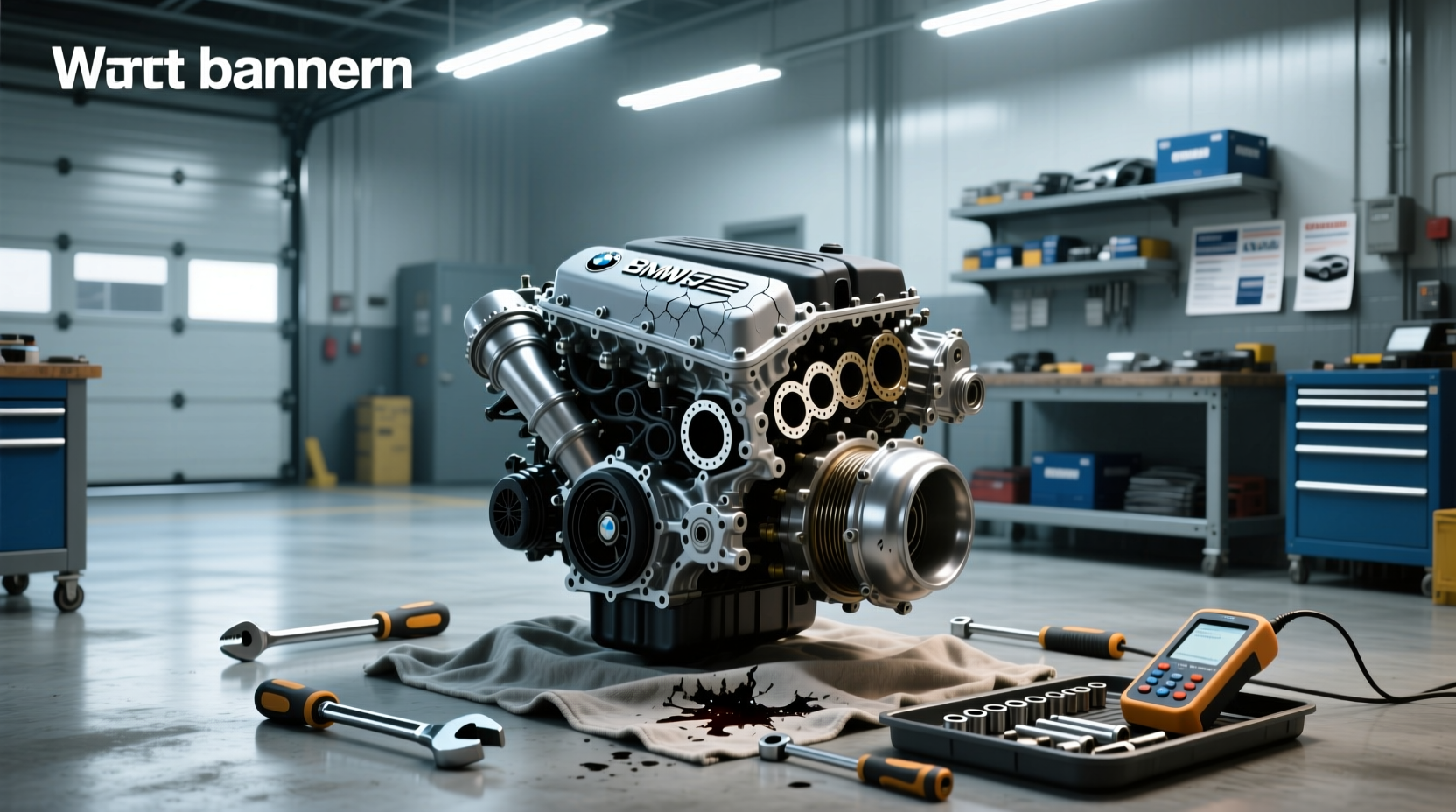
If you're researching common BMW N57 engine problems, you're likely considering buying a used BMW with this diesel powerplant or already own one showing signs of wear. The N57, produced from 2008 to 2018, powered many popular BMW models including the 330d, 530d, X5 35d, and 730d. While generally robust and efficient, certain issues like timing chain wear, EGR system clogging, DPF failures, and high-pressure fuel pump degradation are well-documented across owner forums and repair networks 1. Understanding these failure points early can save thousands in repairs and help determine if maintenance is overdue or if a pre-purchase inspection is critical.
What Is the BMW N57 Engine?
The BMW N57 is a 3.0-liter inline-six turbocharged diesel engine made primarily from aluminum, contributing to weight savings while maintaining structural integrity. It replaced the older M57 engine and was itself succeeded by the B57 unit. Available in various outputs—from 218 to 381 horsepower depending on tune—the N57 uses Bosch piezo-electric fuel injectors and variable geometry turbochargers (single or twin depending on model) under BMW’s TwinPower Turbo branding 2. This design aimed at improving efficiency, responsiveness, and emissions compliance during its production run.
Models equipped with the N57 include:
- BMW 3 Series (F30, E90): 330d, 335d
- BMW 5 Series (F10, F07): 530d, 535d
- BMW 7 Series (F01, F02): 730d, 740d
- BMW X3 (F25), X4 (F26), X5 (F15), X6 (F16)
Different variants exist—N57D30A, N57D30B, N57D30C—each with slight internal updates over time. For example, later models received revised timing chain guides and improved oil pumps to address early weaknesses.
Are BMW N57 Engines Reliable? Longevity Overview
✅ Yes, the N57 is generally reliable when properly maintained—but not without known weak points. Many engines reach 200,000+ miles with no major mechanical failure, especially those driven regularly on highways where soot buildup is minimized and thermal cycles allow proper regeneration of emission systems.
However, reliability heavily depends on usage patterns and service history. A city-driven N57 with infrequent oil changes will face more issues than a highway-commuter model serviced every 10,000 miles. Key factors affecting lifespan include:
- Oil change frequency and quality (BMW LL-04 spec required)
- Driving style: short trips worsen DPF and EGR clogging
- Use of aftermarket tuning (increases stress on turbo, fuel system)
- Climate: cold regions increase glow plug and battery strain
With disciplined maintenance, expect 150,000–250,000 miles before major interventions. Some owners report exceeding 300,000 miles, though this is exceptional rather than typical.
Top 6 Common BMW N57 Engine Problems Explained
1. Timing Chain and Guides Wear ⚙️
📍Symptoms: Rattling noise on cold start, check engine light, misfires
🔧Issue: The N57 uses a single-row timing chain with plastic guide rails that degrade over time. Unlike some BMW gasoline engines, it doesn’t use a dual-row chain, making it more vulnerable to stretch and failure if neglected.
The factory-recommended replacement interval is often considered too long (around 120,000+ miles). Independent mechanics frequently advise replacing the chain, tensioner, and guides between 80,000–100,000 miles as preventive maintenance, especially if there's any rattling at startup.
❗Risk: If the chain skips teeth or breaks, it can cause catastrophic valve-to-piston contact due to interference design. Repair costs typically range from $2,500–$4,000 USD depending on labor rates.
2. High-Pressure Fuel Pump (HPFP) Failure ⚡
📍Symptoms: Hard starting, loss of power, stalling, fuel pressure warnings
🔧Issue: The HPFP operates at extreme pressures (up to 2,000 bar) to feed the common rail system. Over time, internal wear reduces output, leading to lean conditions and cylinder cutouts.
This problem becomes more common after 120,000 miles. Using low-quality diesel or contaminated fuel accelerates wear. Replacing the HPFP requires specialized tools and recalibration via ISTA software.
✅Solution: Replace with OEM or reputable aftermarket unit; ensure fuel filters are changed per schedule (every 30,000–40,000 miles).
3. EGR System Clogging 🧼
📍Symptoms: Reduced performance, black smoke, rough idle, increased fuel consumption
🔧Issue: The Exhaust Gas Recirculation (EGR) valve and cooler recirculate exhaust gases to lower NOx emissions. In diesel engines, this leads to carbon buildup, especially in stop-and-go driving.
Clogged EGR passages restrict airflow and cause incorrect mixture ratios. Some owners opt for EGR deletes, but this violates emissions regulations in most countries and may fail inspection.
✅Maintenance Tip: Clean EGR valve and intake manifold every 60,000–80,000 miles. Use only OEM-spec coolants to avoid internal corrosion in the EGR cooler.
4. Diesel Particulate Filter (DPF) Blockage 🌍
📍Symptoms: Regeneration warnings, reduced power mode ('limp home'), excessive soot smell
🔧Issue: The DPF traps soot particles from exhaust. It must periodically burn them off through active regeneration, which requires sustained highway speeds.
Cities drivers rarely achieve the conditions needed for full regeneration, causing DPF saturation. Once blocked beyond cleaning capacity, replacement costs exceed $3,000.
✅Prevention: Take the vehicle on a 20–30 minute highway drive monthly to trigger passive regeneration. Avoid short trips exclusively. Consider professional backflush cleaning around 100,000 miles.
5. Crankshaft Pulley (Damper) Separation ❗
📍Symptoms: Wobbling crank pulley, squeaking noises, serpentine belt misalignment
🔧Issue: The rubber-bonded harmonic balancer can delaminate over time, causing the outer ring to shift. This affects belt alignment and can damage the alternator, AC compressor, or water pump.
While not always an engine-killer, it’s a warning sign of aging components. Replacement involves removing the main belt and using a puller tool. Recommended around 120,000 miles or if visual wobble is detected.
6. Glow Plug Failures ⏱️
📍Symptoms: Hard cold starts, white smoke on ignition, glow plug warning light
🔧Issue: Diesel engines rely on glow plugs for cold starts. The N57 uses six individually monitored plugs. One failing plug triggers a dashboard warning and increases strain on others.
Failure usually occurs after 100,000 miles. Modern diagnostics make identification easy. Replacement should be done as a set using OEM-grade plugs to prevent uneven heating.
How to Buy a Used BMW with N57 Engine: What to Check
Purchasing a used diesel BMW can offer excellent value—but skipping due diligence risks costly surprises. Here’s a checklist before buying:
1. Review Full Service History ✅
Look for consistent oil changes using BMW LL-04 specification oil. Older ACEA B4 or non-compliant oils accelerate wear. Missing records should raise red flags.
2. Inspect for Known Problem Signs 🔍
- Start the engine cold: listen for timing chain rattle
- Check under hood for oil leaks (valve cover gasket, oil filter housing)
- Scan for stored codes—even if no warning lights are on
- Examine the crankshaft pulley for wobble
- Verify recent DPF regeneration status via OBD2 scanner
3. Ask About Modifications 📋
Aftermarket tuning (e.g., remapping) increases torque and stress on the turbo, fuel system, and transmission. While some tuned N57s remain reliable, aggressive tunes shorten component life. Request dyno sheets and tuning logs if available.
4. Evaluate Driving Patterns 🚗
A car used mostly for short commutes is higher risk than one used for mixed or highway driving. Long-distance drivers tend to have fewer DPF and EGR issues.
N57 vs M57: Which Is More Reliable?
Many buyers compare the newer N57 to the older M57 (produced 1998–2008). While both are inline-six diesels, they differ significantly:
| Feature | N57 | M57 |
|---|---|---|
| Production Years | 2008–2018 | 1998–2008 |
| Block Material | Aluminum | Cast Iron |
| Fuel System | Common Rail (2000 bar) | Common Rail (1600 bar) |
| Turbo Type | Variable Geometry | Fixed Geometry (early), VGT (late) |
| Timing Chain | Single Row | Dual Row |
| Emissions Equipment | DPF, EGR, SCR | Limited (pre-Euro 5) |
| Maintenance Complexity | Higher | Lower |
The M57 benefits from simpler emissions tech and a stronger cast-iron block, making it more durable under hard use. However, the N57 offers better fuel economy, refinement, and power density. Neither is universally superior—choice depends on priorities: simplicity (M57) vs efficiency and tech (N57).
Maintenance Schedule Recommendations
To maximize N57 engine life, follow these enhanced intervals beyond factory specs:
- Engine Oil & Filter: Every 7,500–10,000 miles or annually (use BMW LL-04)
- Fuel Filter: Every 30,000–40,000 miles
- Timing Chain Inspection: At 80,000 miles; replace by 100,000 if worn
- EGR/Intake Cleaning: Every 60,000–80,000 miles
- DPF Health Check: At 80,000+ miles via backpressure test
- Glow Plugs: Replace as a set at 100,000 miles or when first fails
- Coolant: Replace every 4 years (prevent EGR cooler corrosion)
Using high-quality diesel (preferably premium-grade with detergents) also helps protect injectors and reduce deposits.
Can You Improve N57 Reliability After Purchase?
Yes—many proactive steps can extend life and prevent expensive failures:
- Install an oil temperature gauge to monitor thermal stress during spirited driving
- Upgrade crankcase ventilation (CCV) system if prone to sludge
- Use fuel additives periodically to clean injectors (e.g., Liqui Moly Diesel Purge)
- Keep software updated—some ISTA updates improve injection timing and regeneration logic
- Avoid idling for long periods, which promotes DPF loading
When Did BMW Stop Using the N57 Engine?
🏭 BMW phased out the N57 engine in 2018, replacing it with the updated B57 engine. The B57 retains the 3.0L inline-six layout but features improvements such as:
- Reinforced block and crankshaft
- Dual-stage turbocharging
- Better timing chain design (reduced failure risk)
- Improved emissions control integration
So while the N57 remains common in the used market, post-2018 models carry the B57, which addresses several N57 shortcomings.
Conclusion: Should You Buy a Car with an N57 Engine?
The BMW N57 engine is a capable and efficient diesel platform that delivers strong performance and good fuel economy. However, it comes with predictable wear items that require attention. It's not a 'set-and-forget' engine, especially beyond 100,000 miles.
✅ Buy if:
- You understand the maintenance needs
- The car has full service history
- It’s been driven predominantly on highways
- No major components have failed or been replaced poorly
❌ Walk away if:
- There’s timing chain noise or known DPF issues
- Service records are incomplete
- The vehicle has been chipped aggressively without supporting mods
- It’s been used only for short urban trips with high mileage
With informed ownership, the N57 can provide years of reliable service. But ignorance of its weaknesses leads to frustration and high repair bills.
Frequently Asked Questions
- How many miles can a BMW N57 engine last?
- A well-maintained N57 engine can reliably reach 150,000 to 250,000 miles. Some exceed 300,000 miles with strict adherence to oil changes, timely timing chain replacement, and avoidance of short-trip driving that stresses the DPF system.
- Is the BMW N57 better than the M57?
- The N57 offers better fuel efficiency, smoother operation, and modern emissions controls compared to the older M57. However, the M57 has a more robust cast-iron block and simpler design, making it less prone to certain electronic and emissions-related issues. Preference depends on whether you prioritize technology (N57) or mechanical simplicity (M57).
- What are the signs of a failing timing chain on the N57?
- Early signs include a metallic rattling noise upon cold start that disappears after a few seconds. As it worsens, the noise lasts longer, and you may see check engine lights related to camshaft timing. Ignoring it risks engine destruction due to valve/piston collision.
- Can DPF problems be avoided on the N57?
- Yes, DPF issues can largely be prevented by regular highway driving (20+ minutes above 50 mph) to enable passive regeneration. Avoiding frequent short trips, using quality diesel, and following maintenance schedules help keep the DPF functioning properly.
- Should I replace the timing chain on my N57 preventively?
- Yes, most specialists recommend replacing the timing chain, guides, and tensioner between 80,000 and 100,000 miles—even if no symptoms appear. Waiting until failure risks catastrophic engine damage and much higher repair costs.





 浙公网安备
33010002000092号
浙公网安备
33010002000092号 浙B2-20120091-4