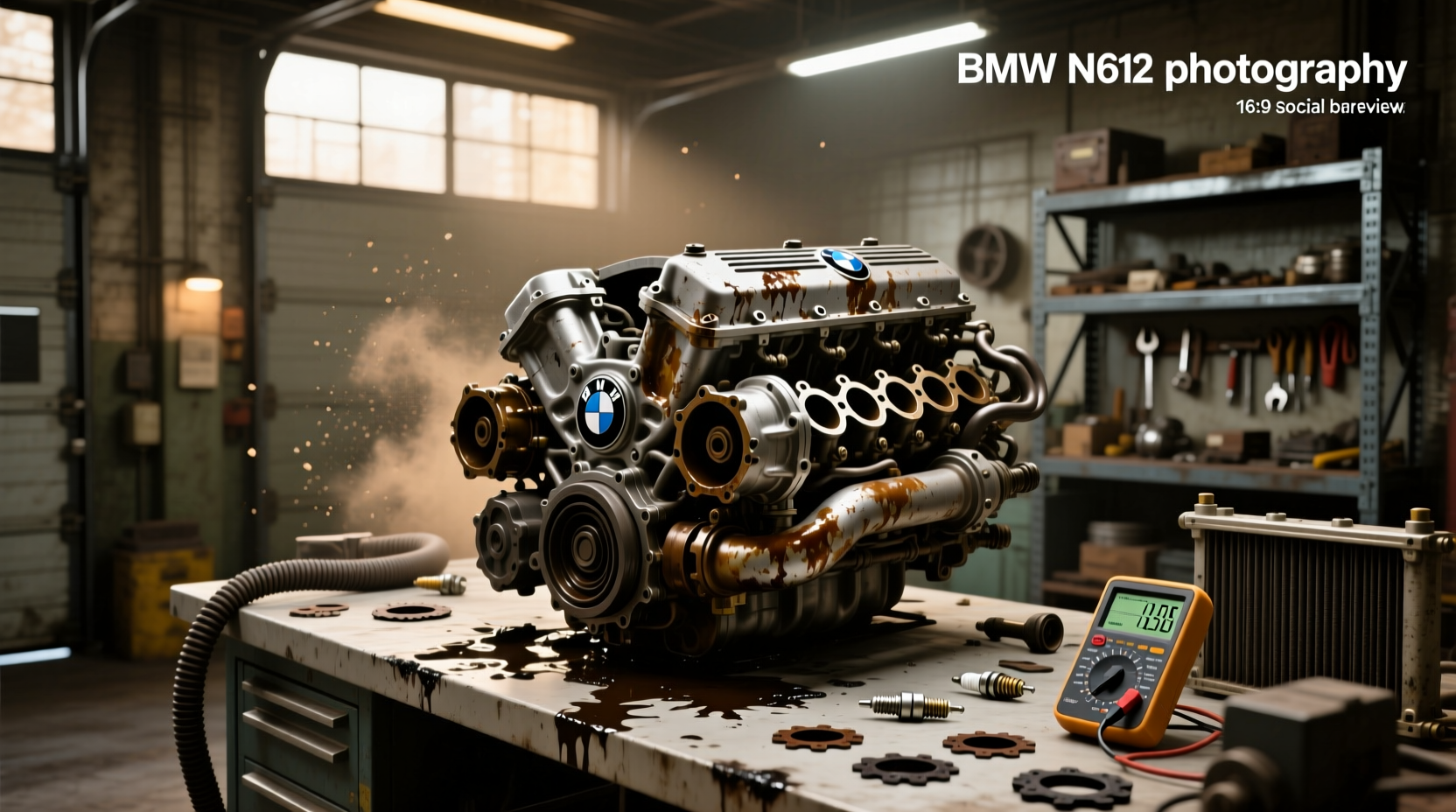
If you're considering buying a used BMW with the N62 V8 engine—such as a 2004–2010 550i, 650i, or 750i—it's essential to understand the common BMW N62 problems that owners face after 100,000 miles. While the N62 delivers smooth power and refined performance, it’s known for several costly mechanical issues, particularly related to its Valvetronic system, cooling components, and oil leaks. This comprehensive guide breaks down every major failure point, explains how to diagnose them, and provides practical steps to avoid expensive repairs—helping you make an informed decision before purchasing or maintaining an N62-equipped vehicle.
Understanding the BMW N62 Engine: Design and Applications
The BMW N62 is a naturally aspirated 4.4L or 4.8L V8 engine produced from 2001 to 2010 1. It powered several high-end BMW models during the E60, E63, E64, and E65 generations, including:
- BMW 5 Series (E60) 545i / 550i
- BMW 6 Series (E63/E64) 645Ci / 650i
- BMW 7 Series (E65/E66) 745i / 750i / 750Li
- BMW X5 (E70) xDrive48i (late models)
⚙️ The N62 was groundbreaking in its time, being the first production engine to feature Valvetronic III—BMW’s variable valve lift system—and a continuously variable-length intake manifold. These technologies improved throttle response and low-end torque but introduced new complexity and long-term reliability concerns.
Are BMW N62 Engines Reliable? Separating Myths from Reality
❗ The short answer: the N62 can be reliable if properly maintained, but it requires more attention than older BMW engines like the M62 or M54. Many owners report reaching 150,000–200,000 miles with careful upkeep, while others experience major failures before 100,000 miles due to neglected service or poor repair history.
📌 Key factors influencing N62 reliability include:
- Maintenance frequency: Regular fluid changes and inspections are critical.
- Climate and driving conditions: Frequent short trips accelerate wear on electronics and cooling systems.
- Previous ownership behavior: Modified tunes, skipped services, or improper repairs increase risk.
- Model year variations: Early N62B44 (4.4L) units have different weak points than later N62B48 (4.8L) versions.
While some online forums label the N62 as “unreliable,” this often stems from anecdotal experiences with poorly maintained examples. With proactive care, many of the common issues can be anticipated and prevented.
Top 7 BMW N62 Engine Problems Explained
1. Valvetronic System Failures (Eccentric Shaft Sensor & Motor)
🔧 The most notorious issue affecting the N62 is failure within the Valvetronic system, which controls intake valve lift without a traditional throttle body. Over time, carbon buildup, wear on the eccentric shaft, and motor degradation lead to misfires, rough idle, and engine warnings.
⚠️ Symptoms:
- Check Engine Light (P1519, P1523 common codes)
- Engine hesitation or stumbling under light load
- Loud ticking noise near the valve cover
- Reduced fuel economy and power loss
🛠️ Solutions:
- Replace eccentric shaft sensor (less expensive fix)
- Inspect and replace Valvetronic motor if binding occurs
- In severe cases, replace entire eccentric shaft assembly (~$1,500–$2,500 parts + labor)
- Use OEM-quality replacements; aftermarket motors often fail prematurely
🔍 Pro Tip: If your N62 has over 100,000 miles, consider preemptively replacing the Valvetronic components during major service intervals.
2. DISA Valve Malfunction
⚙️ The Diverter Valve (DISA) regulates airflow between short and long intake runners. On the N62, the plastic flap inside the DISA unit can crack or break off, especially in hotter climates or under sustained high RPM use.
⚠️ Symptoms:
- Whistling or sucking noises from the intake
- Loss of mid-range power
- Check Engine Light with intake-related codes
- Pieces of plastic entering the intake tract (can cause engine damage)
🛠️ Solutions:
- Inspect DISA valve during routine maintenance
- Replace with updated metal-reinforced OEM version (part #11627553963)
- Cost: ~$150–$250 per side (intake manifold must be removed)
3. Cooling System Weaknesses: Water Pump, Thermostat, and Hose Leaks
🧼 The N62 uses a magnesium alloy lower intake manifold, which is prone to corrosion when coolant leaks occur. A failed water pump or thermostat housing can allow coolant to seep into sensitive areas, leading to electrical faults or internal engine damage.
⚠️ Symptoms:
- Coolant smell inside cabin or under hood
- Overheating, especially at idle
- White smoke from exhaust (coolant burning)
- Corrosion around thermostat housing or water pump
🛠️ Solutions:
- Replace water pump and thermostat every 80,000–100,000 miles
- Upgrade to metal thermostat housing (plastic originals fail frequently)
- Flush cooling system annually if driven in extreme temperatures
- Avoid mixing coolants—use only BMW-approved LL-04
4. Oil Leaks: Valve Cover Gaskets, Oil Filter Housing, and Rear Main Seal
🛒 Oil leaks are nearly universal on high-mileage N62 engines. The most common sources include:
- Valve cover gaskets (especially rear corners)
- Oil filter housing gasket
- Rear main seal
- Timing chain cover seals
⚠️ While not immediately dangerous, persistent leaks attract dirt, increase fire risk near hot exhaust components, and make diagnosis of other issues harder.
🛠️ Solutions:
- Replace valve cover gaskets every 100,000 miles
- Use OEM rubber gaskets—not silicone—as they last longer
- Inspect oil filter housing during oil changes
- Consider resealing timing covers if doing major front-end work
5. High Pressure Fuel Pump (HPFP) Wear
⚡ The N62 uses a mechanically driven high-pressure fuel pump to support direct injection-like efficiency. As mileage increases, the cam lobe driving the HPFP wears down, reducing fuel pressure.
⚠️ Symptoms:
- Hard starting, especially when hot
- Lean misfire codes (P0171, P0174)
- Stumbling during acceleration
- Fuel pressure below 60 bar (normal: 70–100 bar)
🛠️ Solutions:
- Test fuel pressure with a gauge adapter
- Replace HPFP if output is low (OEM recommended)
- In advanced cases, the cam follower may also need replacement
- Budget $800–$1,500 for full replacement with labor
6. Intake Manifold Cracking (Magnesium Alloy Degradation)
🏭 Due to the use of lightweight magnesium for the lower intake manifold, thermal cycling and coolant exposure can lead to cracking over time. Once cracked, coolant enters the intake ports or oil passages, causing catastrophic engine damage.
⚠️ Symptoms:
- Coolant traces in spark plug wells
- Oil contamination (milky residue on dipstick)
- Hydrolock risk if coolant enters cylinders
- Expensive engine rebuild required if ignored
🛠️ Solutions:
- Regularly inspect for coolant stains around intake bolts
- Replace with reinforced aluminum conversion manifold (aftermarket option)
- Ensure all cooling system components are functioning correctly to reduce stress
- Not economically viable to repair original magnesium manifold
7. Vanos Solenoid Clogging and Failure
⚙️ The N62 features dual VANOS (variable camshaft timing), which improves torque delivery across the rev range. However, solenoids can become clogged with sludge if oil changes are delayed.
⚠️ Symptoms:
- Delayed throttle response below 3,000 RPM
- Rough idle or stalling
- VANOS-related fault codes (e.g., P0011, P0021)
- Increased emissions
🛠️ Solutions:
- Replace VANOS solenoids every 100,000 miles (preventive)
- Clean filters inside solenoids during replacement
- Use high-detergent synthetic oil (BMW LL-01 or LL-04 approved)
- Avoid extended oil change intervals
How to Evaluate a Used BMW with the N62 Engine
📍 Before purchasing any E60 550i, E65 750i, or similar model with the N62, perform a thorough inspection focusing on these key areas:
Pre-Purchase Inspection Checklist
- OBD2 Scan for Stored Codes: Even if no warning lights are on, pull historical codes using a professional scanner (e.g., ISTA, Autel, Foxwell NT510).
- Compression and Leakdown Test: Ensures cylinder integrity—especially important if previous overheating occurred.
- Inspect Under Hood for Leaks: Look for oil residue, coolant stains, and brittle hoses.
- Start Cold and Hot: Check for hard starts, excessive cranking, or smoke.
- Listen for Ticking Noises: Could indicate Valvetronic wear.
- Review Service Records: Confirm timing chain, water pump, DISA, and Valvetronic maintenance.
- Test Drive for Smooth Power Delivery: Note hesitation, misfires, or rough shifts.
✅ Recommendation: Use an independent BMW specialist—not a general mechanic—for pre-purchase evaluation. They’ll know exactly where to look for early signs of N62 trouble.
Can You Still Buy a Reliable N62 BMW Today?
🛍️ Yes—but with caveats. The N62 is now over 15 years old, so availability of well-maintained examples is shrinking. However, prices have dropped significantly, making these luxury V8s accessible to enthusiasts on a budget.
📌 Consider these points before buying:
- Budget for Repairs: Set aside $3,000–$5,000 for deferred maintenance on higher-mileage cars.
- Avoid Modified Examples: Tuned N62s often suffer accelerated wear due to increased heat and stress.
- Check for Recalls: Some models had technical service bulletins (TSBs) related to ignition coils and fuel pumps.
- Verify Timing Chain Condition: Though generally robust, worn guides can cause rattling and eventual failure.
🚗 Models like the E60 550i offer excellent value today, combining comfort, performance, and relative rarity. Just ensure the car has been cared for—or plan to invest heavily upfront.
N62 vs N63: Which BMW V8 Is More Reliable?
📋 Many buyers wonder whether to choose the naturally aspirated N62 or the twin-turbo N63. Here's a quick comparison:
| Feature | N62 (Naturally Aspirated) | N63 (Twin-Turbo) |
|---|---|---|
| Production Years | 2001–2010 | 2008–present (updated versions) |
| Power Output | 325–360 hp | 400–600+ hp |
| Key Weaknesses | Valvetronic, DISA, coolant leaks | Turbo failures, high-pressure fuel system, rod bearings (early models) |
| Maintenance Cost | Moderate to high | High to very high |
| Fuel Efficiency | 15–20 mpg combined | 14–19 mpg combined |
| Driving Experience | Smooth, linear power delivery | Strong low-end torque, faster acceleration |
🔍 Bottom Line: The N62 offers simpler forced induction-free mechanics but suffers from electronic complexity. The N63 delivers more power but introduces turbo-related risks. For reliability-focused buyers, a well-maintained N62 may be easier and cheaper to maintain than an early N63.
How to Extend the Life of Your BMW N62 Engine
🧰 Preventative maintenance is the single best way to avoid major N62 problems. Follow this schedule to maximize longevity:
- Every 10,000 miles: Oil and filter change (BMW-approved full synthetic)
- Every 60,000 miles: Replace spark plugs, inspect DISA valves, clean throttle body
- Every 80,000–100,000 miles: Replace water pump, thermostat, Valvetronic sensors, VANOS solenoids
- Every 100,000 miles: Inspect high-pressure fuel pump, check for intake manifold cracks
- As needed: Address oil leaks promptly, especially around valve covers and filter housing
✨ Additional Tips:
- Use only OEM or high-quality aftermarket parts.
- Warm up the engine gently before aggressive driving.
- Avoid prolonged idling, which increases carbon buildup.
- Store the vehicle in a garage if possible to reduce thermal cycling.
Frequently Asked Questions About the BMW N62
What are the most common BMW N62 engine problems?
The top issues include Valvetronic eccentric shaft wear, DISA valve failure, coolant leaks from plastic components, oil leaks (valve covers, filter housing), high-pressure fuel pump degradation, magnesium intake manifold cracking, and VANOS solenoid clogging. Regular maintenance can mitigate many of these.
How much does it cost to fix a failing Valvetronic system on the N62?
Replacing the eccentric shaft assembly typically costs $1,500–$2,500 in parts and labor. Using OEM components is strongly advised, as aftermarket motors tend to fail within 1–2 years.
Is the BMW N62 better than the N63?
The N62 offers smoother, more predictable performance and avoids turbocharger complications. However, the N63 provides significantly more power and modern efficiency improvements in later versions. For reliability and lower repair frequency, a well-maintained N62 may be preferable to an early N63.
Can I still find replacement parts for the N62 engine?
Yes, most OEM parts remain available through BMW dealerships and authorized suppliers. Aftermarket options exist for items like DISA valves and water pumps, though quality varies. Some specialized components (e.g., Valvetronic motors) should be sourced from reputable vendors.
What model years should I avoid when buying an N62-powered BMW?
There isn't a single “bad” model year, but early N62B44 engines (2002–2005) have higher reports of DISA and Valvetronic issues. Later N62B48 engines (2006–2010) are slightly more refined but still require vigilant maintenance. Focus on service history rather than model year alone.





 浙公网安备
33010002000092号
浙公网安备
33010002000092号 浙B2-20120091-4