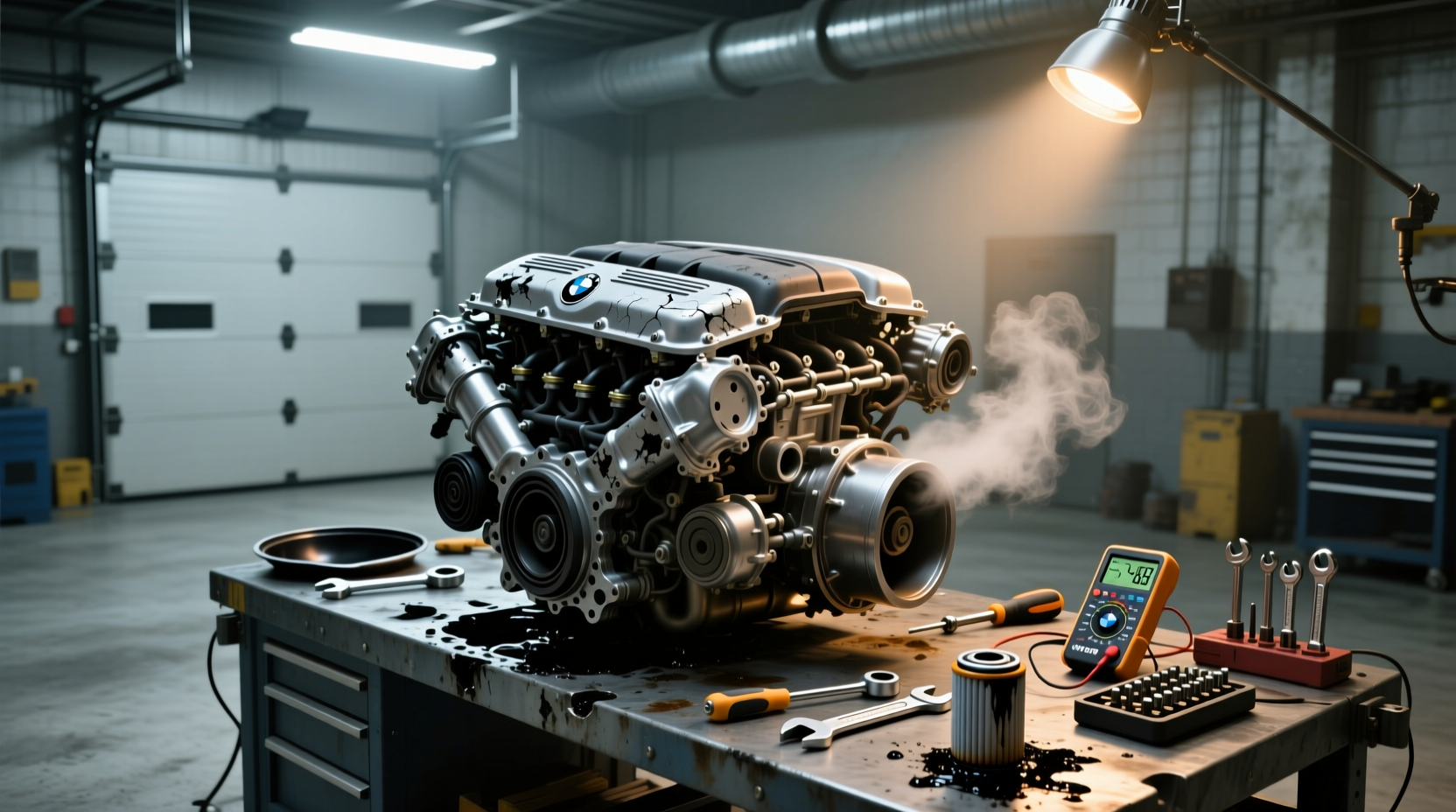
Owners searching for BMW N63 engine problems often face costly repairs and uncertain longevity—especially in models like the 550i, 650i, 750i, X5 xDrive50i, and X6 xDrive50i. The N63, a 4.4L twin-turbo V8 introduced in 2008, has earned a mixed reputation due to recurring mechanical issues despite its strong performance output. Common failure points include high-pressure fuel pumps, turbocharger failures, valve stem seals, and timing chain wear. Understanding these problems early can help avoid catastrophic engine damage and reduce long-term ownership costs.
Understanding the BMW N63 Engine: Design and Evolution
The BMW N63 engine was first launched in 2008 as part of BMW’s shift toward turbocharged powertrains. It replaced naturally aspirated engines like the N62, aiming to deliver higher torque and improved efficiency through forced induction. The N63 is a 4.4-liter V8 with twin turbochargers, direct fuel injection (DI), Valvetronic variable valve lift, and Double-VANOS variable cam timing. Initially praised for its smoothness and 400+ horsepower output, it powered premium models including:
- BMW 5 Series (F10) 550i
- 6 Series (F12/F13) 650i
- 7 Series (F01/F02) 750i
- X5 (E70/F15) xDrive50i
- X6 (E71/F16) xDrive50i
In 2012, BMW released the updated N63TU (Technical Update), which addressed several design flaws from the original N63. Changes included revised turbochargers, improved cooling systems, upgraded high-pressure fuel pumps, and redesigned cylinder heads. While the TU version is more reliable, both generations share core vulnerabilities that owners must monitor closely.
Top 7 BMW N63 Engine Problems and Symptoms
Despite engineering sophistication, the N63 platform suffers from several well-documented weaknesses. Below are the most common issues reported by mechanics and owners across forums, service centers, and rebuild shops.
1. High-Pressure Fuel Pump (HPFP) Failure ⚙️
The N63 uses a Bosch-developed high-pressure fuel pump to support direct injection. This component operates under extreme pressure (up to 2,900 psi) and is driven by the camshaft via a linkage system.
Symptoms:
- Hard starting or extended crank times
- Rough idle or misfires at low RPM
- Check Engine Light with codes P0087 (fuel rail pressure too low)
- Loss of power during acceleration
Failure typically occurs between 60,000–100,000 miles. Replacement cost ranges from $1,200 to $2,500 depending on labor rates and whether the intake manifold must be removed. Some owners report premature failure due to contaminated fuel or infrequent oil changes affecting camshaft lobes that drive the HPFP.
2. Turbocharger Failures 🔧
Twin turbochargers provide the N63’s signature thrust but are prone to bearing wear, oil coking, and wastegate actuator issues—especially in early models.
Symptoms:
- Whining or grinding noises from engine bay
- Excessive smoke (blue-gray) under acceleration
- Reduced boost pressure or lagging throttle response
- DTCs related to boost control (e.g., P0299, P004B)
Turbos on pre-TU engines (2008–2011) are particularly vulnerable due to undersized oil feed lines and inadequate cooling after shutdown. Many experts recommend installing an aftermarket oil cooler and using only OEM-spec 0W-40 or 5W-40 full synthetic oil. Replacing one turbo costs $2,000–$3,500; replacing both exceeds $5,000 if done at a dealership.
3. Valve Stem Seal Degradation 🌍
Valve stem seals prevent oil from entering the combustion chamber. On the N63, these rubber seals harden over time due to heat exposure, leading to oil consumption.
Symptoms:
- Blue-tinted exhaust smoke on cold start-up
- Dropping oil levels between changes (more than 1 quart per 1,000 miles)
- Fouled spark plugs
This issue becomes noticeable around 80,000+ miles. A complete valve stem seal replacement requires cylinder head removal, making it a $3,000–$5,000 job. Some rebuilt engines now use upgraded Viton seals to extend service life.
4. Timing Chain and Guide Wear ⏱️
The N63 uses a dual-row timing chain system, but plastic guides and tensioners degrade over time, especially under high heat and poor maintenance.
Symptoms:
- Rattling noise at startup (often mistaken for lifters)
- Check Engine Light with camshaft timing codes (P0011, P0021)
- Potential engine damage if chain jumps teeth
Timing chain kits should be inspected by 80,000 miles and replaced preventively by 100,000 miles. Kits cost $600–$1,000, but labor can exceed $3,000 due to complexity. The N63TU update includes metal-reinforced guides, reducing this risk significantly.
5. Water Pump and Coolant System Issues 💧
The electric water pump on the N63 is integrated into the cooling system and fails without warning.
Symptoms:
- Overheating, especially in stop-and-go traffic
- Coolant temperature fluctuations
- No flow detected during diagnostic scan
A failed pump leads to overheating, which may cause head gasket failure or warping. Replacement cost: $800–$1,500. Regular coolant flushes every 2 years help prevent corrosion and pump strain.
6. Oil Consumption and Leaks ✅
Many N63 engines consume oil at rates exceeding 1 quart per 1,500 miles, particularly beyond 75,000 miles. Causes include worn piston rings, PCV system faults, and degraded valve stem seals.
Common leak points:
- Valve cover gaskets ($300–$600 to replace)
- Oil filter housing gasket (common on F-series chassis)
- Rear main seal (expensive: $2,000+ due to transmission removal)
Regular oil level checks are essential. BMW does not consider oil consumption below 1 quart/1,200 miles a warranty issue, leaving owners responsible for top-offs.
7. Cylinder Head Cracking (Rare but Severe) ❗
In rare cases, thermal stress and poor cooling management have led to micro-cracks in aluminum cylinder heads, especially in early N63 engines.
Symptoms:
- Coolant loss with no visible leaks
- White smoke from exhaust
- Misfires or rough running
- Combustion gases detected in cooling system
This condition usually follows chronic overheating or aggressive tuning. Repair involves head replacement or professional welding, costing $4,000–$7,000. The N63TU revision improved head casting integrity and cooling channel design.
N63 vs. N63TU: What Changed?
Recognizing widespread reliability concerns, BMW issued a Technical Update (TU) in 2012. Key improvements include:
| Component | N63 (Pre-TU, 2008–2011) | N63TU (Post-2012) |
|---|---|---|
| Turbochargers | Smaller units, prone to oil coking | Larger, water-cooled turbos with better bearings |
| Fuel Pump Drive | Cam-driven, high failure rate | Reinforced drive mechanism |
| Timing Chain | Plastic guides, weak tensioners | Metal-reinforced guides, improved durability |
| Cylinder Heads | Prone to cracking under heat stress | Improved casting and cooling channels |
| Cooling System | Basic electric pump | Enhanced flow control and monitoring |
While the TU version is more robust, it’s not immune to problems. However, data from independent repair shops suggests that N63TU engines reach 120,000+ miles with proper care, whereas pre-TU units often require major intervention by 90,000 miles.
How Long Does the N63 Engine Last?
Lifespan varies widely based on maintenance, driving style, and model year. With diligent service history—including regular oil changes (every 5,000–7,500 miles), coolant flushes, and air filter replacements—many N63 engines last 100,000 to 150,000 miles. Aggressive driving, short trips, and delayed maintenance shorten life expectancy significantly.
Engines rebuilt or replaced with remanufactured units from reputable suppliers (such as Turner Motorsport or Miami Engines) can offer extended longevity, though they come at a cost: $4,000–$7,000 for a quality used or reman engine, plus installation.
Replacement Options: Used, Rebuilt, or Remanufactured?
When facing a blown N63, owners typically consider three paths:
Used Engines (OEM Pulls) 🚚
Available via eBay, salvage yards, or specialty importers (like NJ Global Auto Parts). Prices range from $2,500 to $4,500 for a low-mileage unit.
Pros:
- Lower upfront cost
- Genuine BMW components
Cons:
- Unknown maintenance history
- No warranty or short warranty (30–90 days)
- Risk of inheriting latent issues
Rebuilt Engines 🔧
Locally rebuilt by machine shops. Core engine is disassembled, worn parts replaced (rings, bearings, seals), and reassembled.
Pros:
- Tailored to specific needs
- Can upgrade weak components
Cons:
- Quality depends on technician skill
- May lack comprehensive testing
- Warranty varies (typically 1–2 years)
Remanufactured Engines ✨
Factory-level restoration performed by certified facilities. Includes new pistons, rods, seals, and updated parts where applicable.
Pros:
- Comprehensive inspection and testing
- Often includes updated N63TU components
- Better warranty (1–3 years)
Cons:
- Higher cost: $6,000–$10,000
- Longer wait time
Some dealers, like BMW of Stratham or BMW of Cincinnati, offer factory remanufactured N63 engines with nationwide warranties. These typically include a core exchange program and cost around $3,700–$4,500 plus a $2,400 core charge.
Cost Breakdown: What to Expect When Repairing an N63
Maintenance and repair costs for the N63 are above average. Here’s a realistic estimate of common services:
| Service | Avg. Part Cost | Avg. Labor Cost | Total Estimate |
|---|---|---|---|
| HPFP Replacement | $600–$900 | $600–$1,200 | $1,200–$2,100 |
| Single Turbo Replacement | $1,500–$2,500 | $500–$1,000 | $2,000–$3,500 |
| Valve Stem Seal Replacement | $400–$800 | $2,500–$4,000 | $3,000–$5,000 |
| Timing Chain Kit + Labor | $600–$1,000 | $2,500–$3,500 | $3,100–$4,500 |
| Engine Replacement (reman) | $4,000–$7,000 | $1,500–$2,500 | $5,500–$9,500 |
These figures assume work is done by an independent specialist. Dealerships may charge 20–40% more.
Preventive Maintenance Tips for N63 Owners
You can improve N63 reliability through disciplined upkeep:
- Change oil every 5,000–7,500 miles using BMW LL-04 approved 0W-40 or 5W-40 full synthetic.
- Inspect turbochargers annually for play or noise; ensure oil lines are clean.
- Replace the high-pressure fuel pump preemptively at 80,000 miles if you have a pre-TU engine.
- Flush coolant every 2 years to protect the water pump and prevent corrosion.
- Use a reliable scan tool to check for pending fault codes before symptoms appear.
- Let the engine idle for 30–60 seconds after hard driving to allow turbos to cool down.
Is the BMW N63 Engine Reliable? Final Verdict
The N63 is a powerful and refined engine, but its reliability record is inconsistent. Early versions (2008–2011) are notably problematic, while the N63TU (2012+) shows marked improvement. With proactive maintenance, many owners achieve 100,000+ miles without major repairs. However, unexpected failures—especially in turbos and fuel systems—can lead to six-figure vehicles becoming financially unviable to repair.
If considering a used BMW with an N63 engine, obtain a thorough pre-purchase inspection focusing on oil consumption, turbo health, and stored fault codes. For current owners, staying ahead of known weak points is key to avoiding expensive downtime.
Frequently Asked Questions (FAQs)
- What are the signs of a failing N63 engine?
- Common signs include blue exhaust smoke on startup, rough idling, loss of power, unusual noises (rattling, whining), frequent misfires, and illuminated Check Engine Light with fuel or boost-related codes.
- How much does it cost to replace a BMW N63 engine?
- A remanufactured N63 engine typically costs $4,000–$7,000, with installation adding $1,500–$2,500. Total cost ranges from $5,500 to $9,500 depending on supplier and labor rates.
- Can I rebuild my N63 instead of replacing it?
- Yes, rebuilding is possible and often more cost-effective than replacement. A full rebuild includes new pistons, rings, bearings, seals, and updated timing components. Choose a shop with proven N63 experience to ensure quality.
- Which BMW models have the N63 engine?
- The N63 was used in the 550i (F10), 650i (F12/F13), 750i (F01/F02), X5 xDrive50i (E70/F15), and X6 xDrive50i (E71/F16) from 2008 to 2017. Alpina models like the B7 also used tuned versions.
- Is the N63TU more reliable than the original N63?
- Yes, the N63TU (introduced in 2012) includes critical updates: improved turbos, stronger timing chains, better cooling, and reinforced fuel pump drive. It generally offers better durability and fewer major failures than the pre-TU version.




 浙公网安备
33010002000092号
浙公网安备
33010002000092号 浙B2-20120091-4