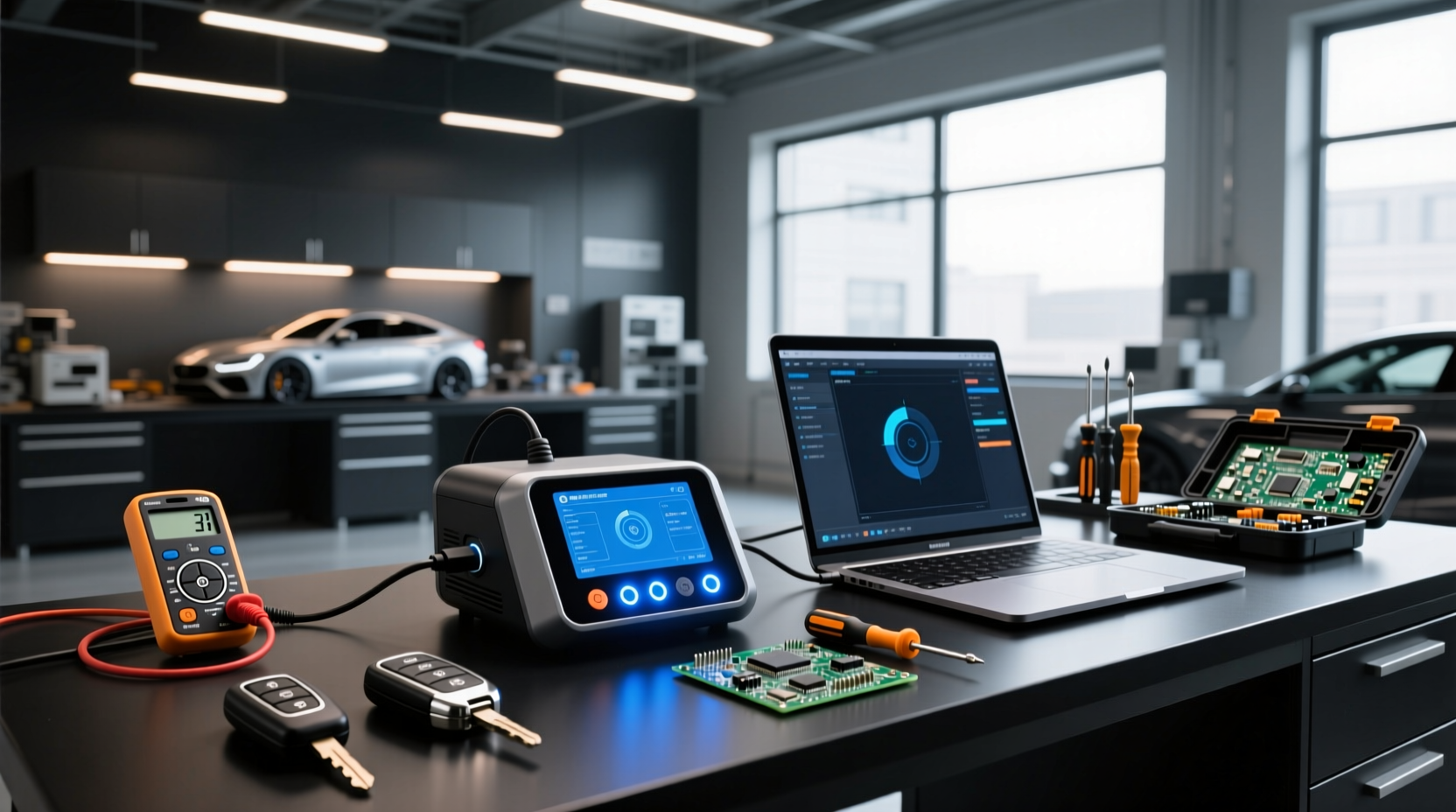
🔧 If you're searching for how to program a car key with an OBD2 device, you're not alone. Thousands of vehicle owners and technicians use car key programmers every year to replace lost keys, add spare fobs, or reset immobilizer systems without visiting dealerships. A reliable car key programmer can save time and money—especially when equipped with the right firmware, adapter kits, and protocol support for modern vehicles. But choosing the right tool depends on your vehicle make, required functions, and technical comfort level. This guide breaks down everything you need to know about car key programmers in 2025, including compatibility, top models, common pitfalls, and step-by-step usage tips.
What Is a Car Key Programmer?
A car key programmer is a diagnostic tool that communicates with a vehicle’s electronic control unit (ECU) and immobilizer system to register new keys or key fobs. Unlike basic remote coders, advanced programmers can read immobilizer data, generate transponder codes, and even simulate dealer-level access for high-security vehicles like BMW, Mercedes-Benz, and newer FCA (Stellantis) models.
These devices typically connect via the OBD2 port under the dashboard, though some require direct ECU or EEPROM chip reading using specialized adapters. Modern tools often support bidirectional communication, allowing users to activate components, reset modules, and perform key learning procedures that mimic dealership software.
How Does a Car Key Programmer Work?
The process varies by vehicle brand and security level, but most workflows follow these general steps:
- Vehicle Identification: The tool reads the VIN and determines supported protocols (e.g., CAN, K-Line, PWM).
- Immobilizer Data Retrieval: It accesses the immobilizer module to read existing key information and security algorithms.
- Key Simulation or Generation: For transponder keys, the programmer may generate a dealer key ID or clone an existing one.
- Registration: The new key is added to the vehicle’s authorized list through a secure handshake process.
- Testing: The user tests the key by starting the engine and verifying all functions.
Some high-end tools, such as those supporting VAG MQB platforms or Mercedes NEC keys, also require reading EEPROM dumps or synchronizing with online servers for cryptographic validation.
Types of Car Keys and Compatibility Challenges
Not all key programmers support every key type. Understanding your vehicle’s key technology is essential before purchasing a tool. Here are the main categories:
1. Standard Transponder Keys ⚙️
Used in vehicles from the late 1990s to mid-2000s, these keys contain a passive RFID chip that responds to the immobilizer. Programming often requires only the OBD2 port and a few ignition cycles. Most entry-level programmers handle this task easily.
2. Remote Key Fobs (RF) ✨
These include buttons for lock/unlock, trunk release, and panic alarms. They operate via radio frequency (usually 315MHz or 433MHz). While pairing the remote function is straightforward, registering the immobilizer portion still requires proper authentication through the ECU.
3. Smart Keys / Proximity Keys 🌐
Found in modern luxury and mainstream vehicles, smart keys enable push-button start and passive entry. These rely on low-frequency antennas around the cabin to detect the key’s presence. Programming them usually demands full immobilizer access and sometimes PIN code retrieval from manufacturer databases.
4. Encrypted High-Security Keys 🔍
Brands like BMW (CAS4/CAS4+), Mercedes (FBS3/FBS4), and Land Rover use rolling-code encryption and proprietary algorithms. These keys cannot be cloned without reading seed/key data from the ECU or gateway module. Tools must support JTAG, BDM, or MCU reading to extract necessary data.
| Key Type | Programming Difficulty | Required Tool Features | Common Vehicles |
|---|---|---|---|
| Transponder | Low | OBD2 interface, basic immobilizer support | Honda, Toyota, older Ford |
| Remote Fob | Medium | RF signal simulation, OBD2 + immobilizer | Chrysler, GM, Hyundai |
| Smart Key | High | PIN retrieval, CAN FD, bidirectional control | BMW, Audi, Lexus |
| Encrypted Key | Very High | EEPROM/BDM reading, server authentication | Mercedes, Porsche, Jaguar |
Top Car Key Programmers in 2025: Features Compared
Based on industry reviews and technician feedback, here are leading tools available in 2025 and their capabilities:
1. Xtool D7 Auto Scanner ⭐
This multi-brand diagnostic tool includes built-in key programming for over 20 manufacturers. It supports OBD2-based key addition, immobilizer resets, and PIN code calculation for select Asian and European models. Its Android-based interface allows app updates and cloud integration.
2. Autel MaxiIM IM608 II / MK808S 🛠️
One of the most versatile platforms, the Autel MK808S combines full diagnostics with advanced key programming. With the IM608 II module, it handles CAS4, FBS3, and VAG fourth-generation immobilizers. It requires occasional subscription renewals for new model support.
3. Launch X431 V+ Pro Elite 🚗
A professional-grade scanner popular in repair shops, this device offers extensive car key programming coverage, especially for Chinese and American vehicles. It supports J2534 pass-through programming and has strong immobilizer database integration.
4. Xhorse VVDI Key Tool Plus Pad 💼
Designed specifically for key programming, this tablet-style tool supports transponder cloning, smart key generation, and remote matching. It excels with VW, BMW, and Honda but requires separate purchase of authorization tokens for certain functions.
5. Foxwell NT530 PLUS for Benz 🧰
Tailored for Mercedes-Benz diagnostics and programming, this tool provides secure access to FBS3/FBS4 systems. It supports key addition, EIS/EZS reading, and infrared key simulation—all without third-party servers.
Can a Car Scanner Program a Key Fob? ❓
Yes—but only if the scanner has dedicated immobilizer programming functionality. Many generic OBD2 scanners can read check-engine lights or reset oil lights but lack the software to register new keys. Always verify that the product description explicitly states 'key programming' or 'immobilizer reset' for your specific vehicle make and model.
For example, a basic ELM327 Bluetooth adapter paired with free apps cannot program keys. However, professional tools like the Xtool KC100 or Vidant iSmart 800 Pro BT are designed specifically for this purpose and include guided workflows.
How Far Away Can Thieves Scan Car Keys? Security Risks Explained 🔒
Relay attacks allow thieves to amplify signals from nearby key fobs to unlock and start vehicles. These attacks typically work within 30–50 feet, meaning keys left near doors or windows are vulnerable. While this doesn’t involve key programmers directly, understanding signal exposure helps users protect against unauthorized access.
To reduce risk:
- Store keys in a Faraday pouch or metal container.
- Disable passive entry features via vehicle settings.
- Use secondary steering wheel locks for high-risk areas.
DIY vs Professional Programming: When to Do It Yourself
Many users consider DIY key programming to avoid dealership fees, which can exceed $300 per key. However, success depends on several factors:
✅ Situations Where DIY Works Well:
- You have at least one working key and want to add a spare.
- Your vehicle uses standard transponders (e.g., Toyota G chips, Honda H keys).
- The tool supports your exact model year and immobilizer version.
❗ Scenarios Requiring Professional Help:
- All keys are lost (‘all keys lost’ mode often requires ECU or cluster reading).
- Encryption keys require online authentication (e.g., BMW ISTA, Toyota Techstream).
- The vehicle has aftermarket alarms or modified wiring.
Mistakes during programming can lock out the immobilizer or brick modules, requiring expensive recovery procedures.
Step-by-Step: Programming a Chrysler Key Using Autel KM100 📍
As shown in real-world tutorials, here's how a typical procedure works using the Autel KM100:
- Turn the ignition to ON position (do not start).
- Connect the KM100 to the OBD2 port.
- Select “Immobilizer” > “Chrysler” > “Add Key”.
- Follow prompts to insert each existing key for 10 seconds.
- Insert the new unprogrammed key and confirm registration.
- Test the new key by attempting to start the engine.
This process assumes at least one working key exists. Without any keys, the technician must read the SKREEM module directly—a more complex procedure involving disassembly.
Preparing to Use a Car Key Programmer: What You Need
Before attempting key programming, gather the following:
- One working key (if adding a new one)
- Fully charged tool battery (interruptions can cause errors)
- Correct firmware version (check manufacturer update logs)
- Adapter cables (e.g., 38-pin for older Mercedes)
- Stable power source (use a memory saver if needed)
⚠️ Never disconnect the programmer mid-process. Sudden power loss can corrupt the immobilizer memory, rendering the vehicle unable to start until repaired.
Common Misconceptions About Car Key Programmers
Despite growing popularity, several myths persist:
❌ Myth 1: All OBD2 Devices Can Program Any Key
Reality: Only tools with immobilizer-specific software and hardware support can program keys. Generic scanners won’t work.
❌ Myth 2: Once Programmed, Keys Can’t Be Cloned
Reality: Simple transponders (e.g., 125kHz T5) can still be copied with basic readers. High-security keys are harder but not immune.
❌ Myth 3: Key Programmers Replace Locksmiths Entirely
Reality: Physical key cutting, door lock decoding, and emergency access still require mechanical expertise.
Regional Differences and Legal Considerations 🌍
In some countries, unrestricted key programming tools are regulated due to theft concerns. For instance:
- In the EU, tools must comply with GDPR and ePrivacy directives when storing vehicle data.
- In Australia, possession of certain cloning devices may require licensing.
- In the U.S., while legal for personal use, reselling programmed keys without proof of ownership could raise liability issues.
Always check local regulations before purchasing or using a key programmer commercially.
Future Trends: Digital Keys and Smartphone Integration 📱
Modern vehicles increasingly support digital keys via Apple Wallet or Google’s Digital Car Key. These allow phones or watches to act as authenticated keys. While convenient, they introduce new challenges:
- Battery dependency
- Compatibility with older programming tools
- Need for NFC or UWB support
Current car key programmers do not yet fully integrate with smartphone-based key systems, though some brands are developing hybrid solutions.
How to Choose the Right Car Key Programmer
Consider these criteria when evaluating options:
1. Vehicle Coverage 📊
Check the tool’s official vehicle list. Look for regular firmware updates and community forums confirming real-world performance.
2. Required Functions 📋
Do you need only key addition, or also PIN reading, EEPROM backup, and module cloning? Higher-end tools offer broader functionality.
3. Update Policy and Cost ⏱️
Some tools charge annual fees for updates. Others offer lifetime updates but may lag behind in new model support.
4. Build Quality and Support 📎
Look for rugged designs, responsive customer service, and availability of training videos or manuals.
5. Community and Third-Party Resources ✅
Tools with active user groups (e.g., Reddit, YouTube tutorials) provide troubleshooting help and workaround guides.
Tips for Successful Key Programming
- Always back up immobilizer data before making changes.
- Use a memory saver to maintain voltage during long procedures.
- Verify key chip type matches the vehicle requirement (e.g., 8A, ID46, ID48).
- Clear any existing DTCs related to the immobilizer before starting.
- Follow the exact sequence—deviations can trigger anti-theft lockdowns.
Conclusion: Is a Car Key Programmer Worth It?
For mechanics, locksmiths, or frequent DIYers, investing in a capable car key programmer makes sense. It reduces reliance on dealerships and increases service flexibility. However, casual users should weigh cost versus benefit—many one-time needs are better served by a local professional.
Regardless of your path, understanding how these tools work, their limitations, and security implications empowers smarter decisions. Whether you’re replacing a lost key or expanding your toolkit, knowledge remains the best key to success.
Frequently Asked Questions
Can I program a car key myself?
Yes, if you have the correct tool, at least one working key, and your vehicle supports OBD2 programming. Some high-security models require professional equipment.
What is the difference between a key programmer and a key cutter?
A key programmer registers the electronic transponder or smart chip, while a key cutter shapes the physical blade. Both are often needed for complete key replacement.
Do car key programmers work on all vehicles?
No. Compatibility depends on the tool’s software, firmware version, and the vehicle’s immobilizer system. Always verify support for your specific make, model, and year.
Can a car key scanner detect a key remotely?
No. Car key scanners read data from keys placed in proximity (via RFID or optical methods). They cannot locate or detect keys at a distance.
How much does it cost to program a car key?
Dealerships charge $150–$400 per key. DIY tools range from $300–$2,000 upfront but pay off over multiple uses.





 浙公网安备
33010002000092号
浙公网安备
33010002000092号 浙B2-20120091-4