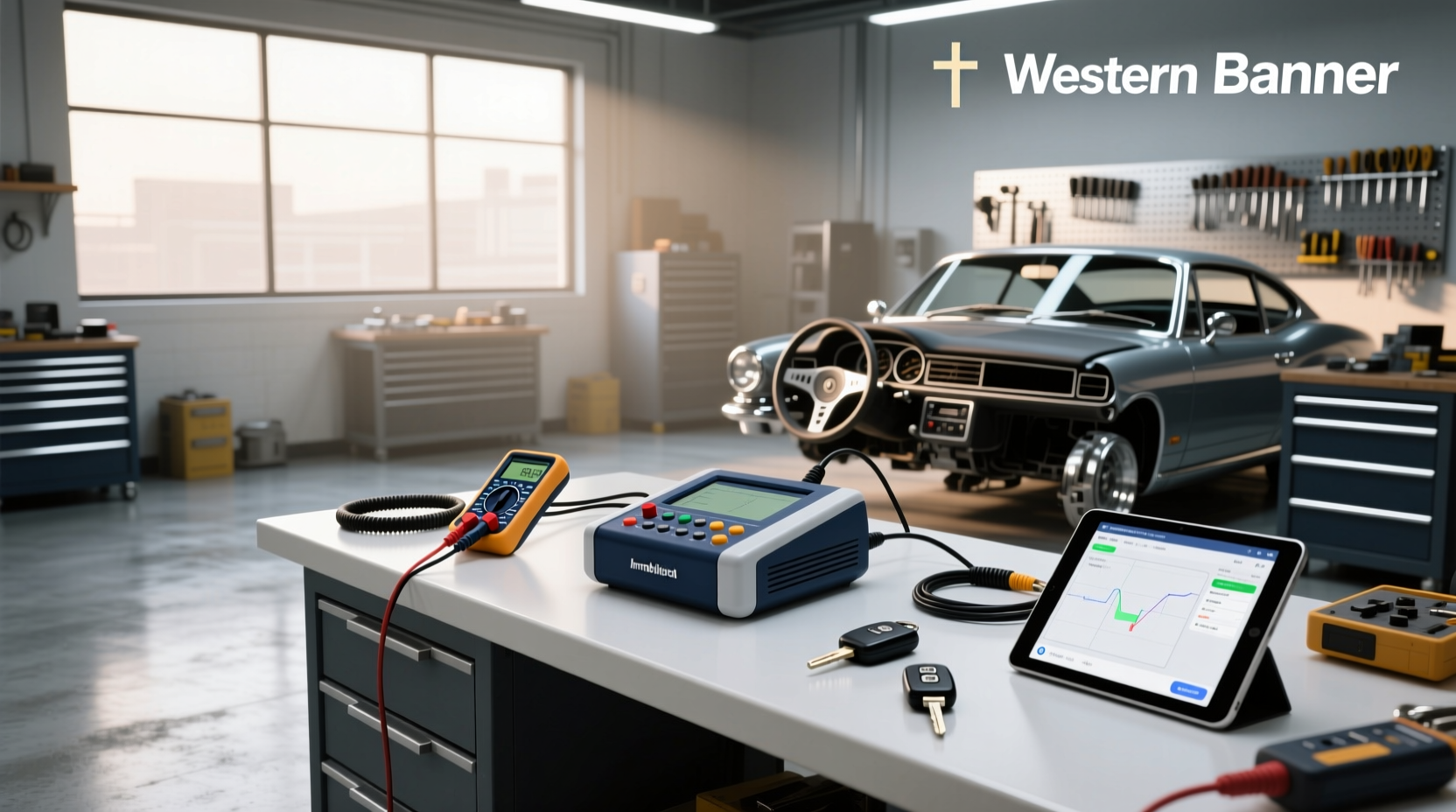
🔧 If you're facing a car that won’t start due to a lost key, swapped ECU, or immobilizer lockout, an immobilizer programming tool may be the critical solution. These devices allow mechanics and advanced DIYers to reprogram engine control units (ECUs), bypass security systems, or sync new transponder keys—without requiring original dealership codes. Whether you’re restoring a classic car, replacing a damaged ECU, or managing a key loss scenario, understanding how these tools function—and their limitations—is essential to avoid permanent immobilization.
What Is an Immobilizer Programming Tool?
An immobilizer programming tool is a specialized diagnostic device used to interface with a vehicle’s electronic control module (ECM) or ECU to configure, reset, or bypass the built-in anti-theft system. Modern vehicles use transponder-equipped keys that communicate with the immobilizer control unit. If the signal doesn’t match, the engine will not start—even if the mechanical key fits.
These tools vary from simple plug-in bypass modules to advanced handheld programmers capable of reading and writing firmware data. They are commonly used in three scenarios:
- Lost or damaged keys: Reprogramming new transponder keys when originals are unavailable.
- ECU replacement or swap: Syncing a new or used ECU with existing keys or creating a fresh key-ECU pairing.
- Vehicle restoration/modification: Installing non-OEM ECUs or converting cars with missing security components.
How Does a Car Immobilizer System Work?
To understand why programming tools are necessary, it helps to know how immobilizers operate. Since the late 1990s, most vehicles sold in Europe and North America have included factory-installed immobilizers as standard safety equipment. The system typically consists of:
| Component | Function |
|---|---|
| Transponder Key | Contains a microchip that emits a unique ID code when powered by the ignition coil. |
| Immobilizer Ring (Coil) | Located around the ignition cylinder; powers the chip and reads its response. |
| Immobilizer Control Unit | Verifies the key’s code against stored values in memory. |
| Engine Control Unit (ECU) | Receives confirmation from the immobilizer before allowing fuel injection and ignition. |
If any component fails or the key isn't recognized, the ECU denies startup—even if all mechanical parts turn correctly. This prevents hot-wiring but also complicates repairs when keys are lost or electronics fail.
Types of Immobilizer Programming Tools
Not all tools serve the same purpose. Choosing the right one depends on your vehicle make, model, year, and intended task.
1. Plug-and-Play Bypass Modules ✅
These are physical adapters made of oil-resistant ABS plastic or similar durable materials. They connect between the OBD-II port and the vehicle’s harness or directly into the immobilizer circuit.
- Use Case: Commonly used on Volkswagen Group TDI engines (e.g., Audi, VW) where users replace ECUs or install aftermarket tuning modules.
- Advantage: No coding required; simply install and power up.
- Limitation: Permanent bypass disables security features, which can affect insurance coverage or resale value.
2. OBD-II Based Diagnostic Programmers ⚙️
Devices like those found in professional scan tools (e.g., Autel, Launch, or generic Chinese clones) can access immobilizer menus through the OBD-II port.
- Use Case: Adding new keys, resetting immobilizer memory, or reading fault codes related to security systems.
- Requirement: Often requires authentication via PIN code, vehicle VIN, or secure login obtained from the manufacturer or third-party databases.
- Compatibility: Varies widely—some support only select brands (e.g., Toyota, Honda, Ford), while others offer broader coverage.
3. Chip Readers & Writers 🔍
Used primarily by locksmiths and repair shops, these tools read and clone transponder chips (e.g., Hitag2, Megamos, Texas Instruments). Some can generate blank keys with pre-programmed IDs.
- Best For: Replacing multiple lost keys or duplicating high-security smart keys.
- Skill Level: Requires technical knowledge of encryption protocols and frequency matching.
4. ECU Flashing Tools 🌐
Advanced tools like K-TAG or J-LINK allow direct reading/writing of ECU firmware. Used to modify or disable immobilizer routines inside the ECU itself.
- Risk: Incorrect flashing can brick the ECU permanently.
- Legal Note: Tampering with emissions-related software may violate regulations in certain regions (e.g., EPA rules in the U.S.).
When Do You Need an Immobilizer Programming Tool?
You might need such a tool in several real-world situations:
✅ Lost All Keys
If every original key is gone, the immobilizer has no valid codes to accept. A programming tool allows entry into the system to either add new keys or clear and reinitialize the security module.
✅ Swapped or Replaced ECU
Used ECUs pulled from junkyards often come paired to another vehicle. Without reprogramming, they won’t recognize your key. An immobilizer tool enables rematching the ECU to your current setup.
✅ Aftermarket ECU Installation
Performance builds sometimes use standalone ECUs (e.g., Haltech, MoTeC) that don’t natively support OEM immobilizers. In such cases, bypassing or disabling the system becomes necessary.
✅ Faulty Immobilizer Components
A failing antenna ring or corrupted immobilizer unit can prevent startup even with valid keys. Diagnosing and potentially bypassing the system helps isolate the issue.
Can You Program an Immobilizer at Home?
It depends on the vehicle and tool capability. Some models allow limited key programming via ignition cycling methods (e.g., inserting the key eight times within 10 seconds). However, this only works if at least one working key exists.
For full reinitialization—especially with no keys available—you typically need:
- Access to a compatible programming tool
- The correct procedure for your make/model
- Possible access to a PIN or crypto key (especially for BMW, Mercedes, or Land Rover)
⚠️ Important: Many modern vehicles (post-2018) implement rolling code encryption or require secure online authentication through dealer portals. Consumer-grade tools cannot always overcome these barriers.
Common Misconceptions About Immobilizer Bypass Tools
Despite growing availability of low-cost tools online, several myths persist:
❌ Myth 1: “Any Universal Tool Works on Every Car”
No single device supports all makes and models. Compatibility varies significantly across brands. For example, a tool designed for Toyota immobilizers may not work on a Peugeot or Fiat due to different encryption algorithms.
❌ Myth 2: “Bypassing the Immobilizer Always Fixes No-Start Issues”
While useful, immobilizer problems are just one potential cause of no-start conditions. Fuel pump failure, crank sensor faults, or battery issues must first be ruled out.
❌ Myth 3: “You Can Reset the Immobilizer Just by Disconnecting the Battery”
This does not reset the immobilizer memory. Unlike basic engine codes, immobilizer pairings are stored in non-volatile memory and survive power loss.
Where Is the Immobilizer Code Located?
The immobilizer code—also known as the PIN, crypto key, or master key code—is usually stored in one of several places:
- In the vehicle owner’s manual packet (often on a card)
- Embedded in the ECU or immobilizer unit memory
- Available through manufacturer dealer networks (with proof of ownership)
- Sometimes accessible via third-party decoding services (for a fee)
Without this code, many OEM systems will not allow new key programming—even with a professional scanner.
How to Choose the Right Immobilizer Programming Tool
Selecting the appropriate tool involves evaluating several factors:
📍 Vehicle Make and Model Compatibility
Check whether the tool explicitly lists support for your car. For instance, VAG-group vehicles (Volkswagen, Audi, Skoda, Seat) often require specific protocols like VAG-COM or ODIS compatibility.
⏱️ Task Complexity
Simple key addition? A basic OBD-II programmer may suffice. Full ECU rewrite? You’ll likely need a flasher tool and technical documentation.
🧰 Skill Level Required
Plug-in bypasses are beginner-friendly. Firmware editing demands experience with hex editors and risk awareness.
🌐 Software Updates and Support
Some tools rely on regularly updated databases. Ensure the manufacturer provides ongoing firmware updates to maintain compatibility with newer models.
❗ Legal and Insurance Implications
Permanently disabling an immobilizer may void theft protection clauses in insurance policies. Always check local laws before modifying factory security systems.
Alternatives to Using a Programming Tool
If DIY solutions seem too risky, consider these alternatives:
👥 Dealership Service
Dealerships can reprogram keys using proprietary software and verified credentials. While more expensive, this method ensures full compliance and proper coding.
👥 Certified Locksmith or Auto Electrician
Professional locksmiths often carry multi-brand programming tools and can extract immobilizer codes legally. This option balances cost and reliability.
🛒 Purchasing Pre-Paired Components
Some suppliers sell ECU-immobilizer-key sets already synchronized. This avoids programming altogether but limits flexibility.
Tips for Safe and Effective Use
Before using any immobilizer programming tool, follow these best practices:
- Backup ECU Data First: If possible, read and save the current firmware before making changes.
- Verify Power Supply: Low battery voltage during programming can corrupt memory and render the ECU unusable.
- Follow Instructions Precisely: Timing, sequence, and connection order matter significantly.
- Test Before Finalizing: Confirm the engine starts and runs before sealing connectors or reinstalling panels.
- Document Changes: Keep records of new key IDs, PINs, or modified settings for future reference.
Regional Differences and Regulations
Immobilizer requirements differ globally:
- European Union: Mandated since 1998 under UNECE Regulation 97.
- United States: Not federally required, but adopted voluntarily by automakers. Insurance discounts often incentivize installation.
- Australia: Mandatory for new vehicles since 2001.
Tools that function legally in one country may violate anti-circumvention laws in another (e.g., DMCA exemptions in the U.S. apply narrowly to repair).
Conclusion: Are Immobilizer Programming Tools Worth It?
An immobilizer programming tool can be invaluable for experienced users dealing with key loss, ECU swaps, or custom builds. However, success depends heavily on vehicle-specific knowledge, correct tool selection, and adherence to precise procedures.
For occasional use, professional assistance may be more reliable than investing in equipment. But for mechanics, restorers, or tuners working on multiple vehicles, owning a capable tool pays off over time.
Always prioritize safety, legality, and data backup when interacting with vehicle security systems. With the right approach, these tools unlock functionality—not just engines.
Frequently Asked Questions
- ❓ How do I unlock my immobilizer without a key?
- You can use an immobilizer programming tool to reinitialize the system or install a bypass module. However, this often requires access to the ECU or immobilizer unit and technical expertise. Some vehicles allow emergency override procedures via specific ignition cycles, but these usually require at least one working key.
- ❓ What is a K-Tuned immobilizer bypass?
- The term "K-Tuned" refers to aftermarket performance tuning companies offering bypass solutions for specific platforms, particularly Hondas. A K-Tuned-style bypass typically involves installing a hardware module that emulates a valid transponder signal, allowing engine startup without the OEM key recognition process.
- ❓ Where is the immobilizer code located in my car?
- The immobilizer code may be found in the owner’s manual packet, stored in the ECU or immobilizer unit, or obtainable through the dealership with proof of ownership. On some vehicles, it can be extracted using diagnostic tools with appropriate software.
- ❓ Can I reset a locked ECU using an OBD-II tool?
- Resetting an ECU related to immobilizer lockouts is possible only if the tool supports security access functions and you have the correct PIN or authentication token. Simply clearing error codes won’t解除 the immobilizer lock if the key-ECU handshake remains broken.
- ❓ Is it legal to bypass a car’s immobilizer?
- Bypassing an immobilizer for repair, restoration, or personal use on a vehicle you own is generally legal. However, using such tools to steal vehicles or circumvent security on someone else’s property is illegal. Additionally, disabling the system may impact insurance claims in case of theft.





 浙公网安备
33010002000092号
浙公网安备
33010002000092号 浙B2-20120091-4