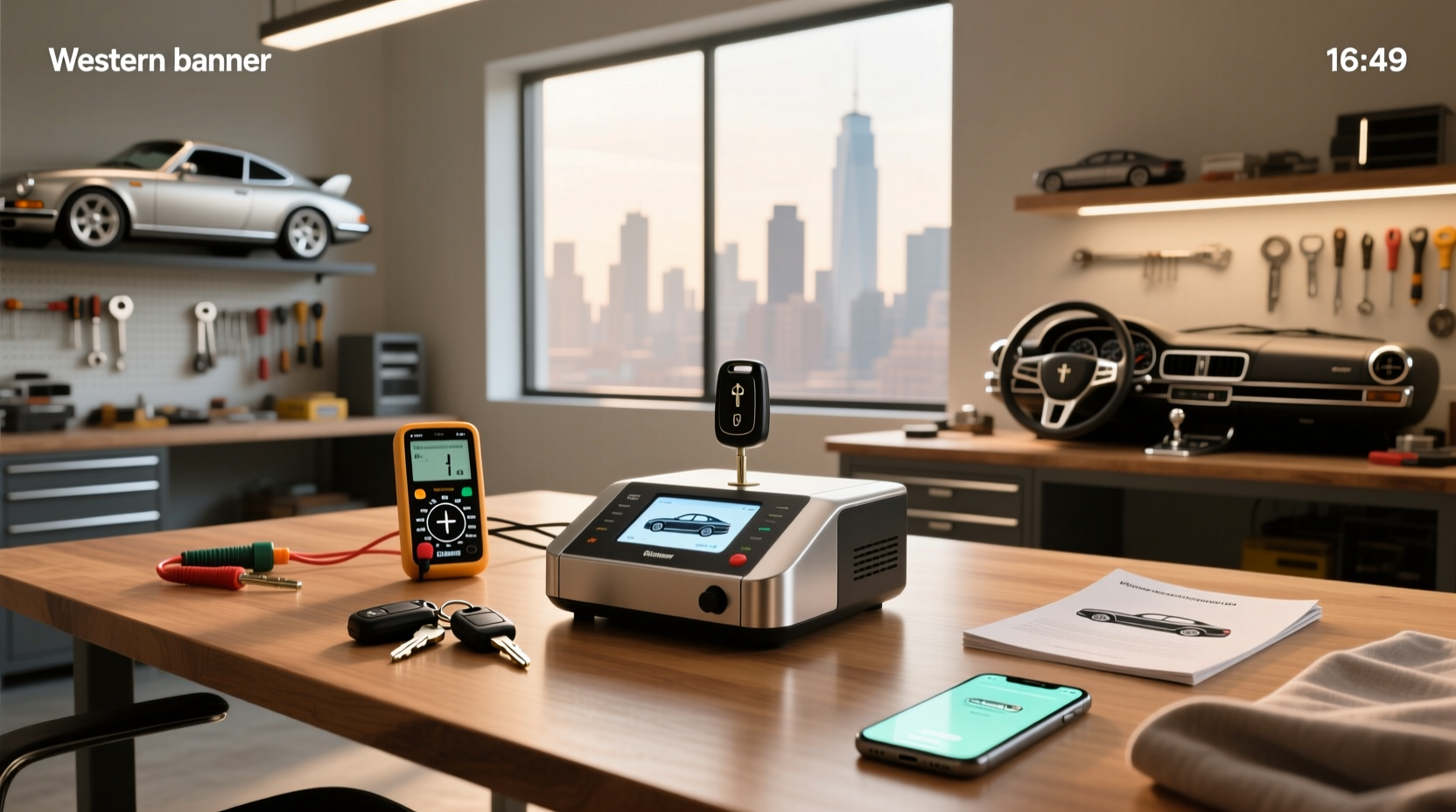
🛠️ If you're searching for a car key programming device, chances are you've lost a key, need a spare, or want to cut dealership costs. The good news: modern tools now allow owners and locksmiths to program keys for vehicles like BMW and Mini Cooper using OBDII-based devices—without needing the original key in many cases. Devices such as the Turbo Decoder, AK90+, ACDP, and Autohex II enable standalone key learning, emergency starts, and full EWS/CAS system access1. But choosing the right one depends on your vehicle model, technical skill, and intended use.
This guide breaks down everything you need to know about car key programming devices—what they do, which ones work for specific BMW generations (F-series, G-series), how much they cost, and whether DIY is worth it. We’ll cover compatibility, limitations, risks, and best practices so you can make an informed decision without overpaying or bricking your vehicle’s electronics.
What Is a Car Key Programming Device?
A car key programming device is a hardware tool that connects to your vehicle’s onboard diagnostics port (OBDII) or directly to control modules (like CAS, EWS, or BDC) to add, clone, or reset ignition keys. These tools communicate with the car’s immobilizer system to authenticate new keys, ensuring the engine will start only when the correct encrypted signal is received.
Unlike basic remote fob sync methods (e.g., pressing buttons inside the cabin), true key programming involves deep-level communication with security modules. This is essential when:
- You’ve lost all original keys 🔑
- You’re replacing a damaged key or ECU 🛠️
- You want to add a spare key without visiting a dealer 💡
- You’re working on a used car with unknown key history 🚗
For brands like BMW, where encryption evolves across model years, selecting the correct device matters. Using the wrong tool—or incorrect firmware—can lock you out of systems or require expensive bench programming to fix.
Common Types of Car Key Programming Devices
Not all programming tools are created equal. They vary by capability, connection method, supported models, and user expertise required. Below are the main categories relevant to European and luxury vehicles like BMW and Mini.
1. OBDII-Based Key Programmers ⚙️
These plug into the standard 16-pin OBDII port under the dashboard and interact with the car’s network via protocols like K-Line or CAN bus. Examples include:
- X-Horse Key Tool Plus: Supports BMW F/G-series, reads/writes CAS4/CAS4+ modules, performs key addition, and supports emergency start functions.
- MB Key Group OBDII Programmer: Designed specifically for BMW/Mini, allows adding PCF7936 transponder chips or original keys without requiring existing keys in some scenarios.
- Yanhua ACDP (Advanced Car Diagnostic Platform): Offers modular packages including BMW-specific licenses for key programming, ECU cloning, and BDC2 support.
✅ Pros: Non-invasive, relatively easy to use, no disassembly needed.
❌ Cons: May not work if all keys are lost (depending on model); limited access on newer G-series cars without additional modules.
2. Bench Programming Tools 🏭
Used when the ECU or key module must be removed from the vehicle and connected directly via chip clips or sockets. Common for:
- CAS (Central Access System) unit replacement
- Cloning EEPROMs from old to new modules
- Recovering VIN/key data after module swap
Tools like the AK90+ or Hextag (Autohex II) allow reading and writing of EWS/DME/CAS chips directly. This method bypasses in-vehicle restrictions but requires soldering skills and understanding of microcontrollers.
✅
❌
Cons: Risk of damaging sensitive components; requires technical knowledge and equipment.
3. Emergency Start & Standalone Decoders ✨
Devices like the Turbo Decoder v5.1 function as emergency start units. When no keys are available, they simulate a valid transponder signal to bypass the immobilizer temporarily. Some also offer permanent key learning if paired with blank transponders.
These are especially useful for roadside recovery or repair shops handling non-running vehicles. However, they don’t replace full programming—they enable starting so further diagnostics can proceed.
Which Devices Work With BMW Models?
BMW uses different immobilizer architectures across generations, making compatibility critical. Here's a breakdown by series:
| BMW Series | Key System | Supported Devices | Notes |
|---|---|---|---|
| E39, E46 | EWS3, DDE | AK90+, Hextag, older VVDI | Can often be programmed with basic tools; EEPROM cloning possible |
| F-Series (F30, F10, etc.) | CAS3+, CAS4, CAS4+ | X-Horse, Yanhua ACDP, MB Key Group | OBDII programming usually requires at least one working key |
| G-Series (G30, G01, etc.) | BDC2, FEM/BDC | ABRITES BN020, Yanhua ACDP + BDC2 license | Bench programming often required; OBDII access limited |
| Mini Cooper (R56, F56) | CAS3+/CAS4 | MB Key Group, X-Horse, AK90+ | Similar to F-series BMWs; shared platform components |
📌 Note: On G-series models, BMW significantly tightened security. Many OBDII tools cannot add keys unless a valid key is present. In these cases, bench programming the BDC (Body Domain Controller) becomes necessary—a process involving removal, desoldering, and direct chip reading.
Can You Program a BMW Key Yourself? 🤔
Yes—but with caveats. Whether DIY is feasible depends on three factors:
- Vehicle Generation: Older F-series (pre-2015) are more accessible than G-series (2018+).
- Tool Capability: Does it support your exact CAS version and have up-to-date firmware?
- Your Technical Skill: Are you comfortable with OBDII tools, transponder chips, or microcontroller work?
🔧 For example, programming a spare key on a 2014 BMW 3 Series (F30) using an X-Horse device may take 15 minutes with step-by-step video guidance2. But attempting the same on a 2020 5 Series (G30) without a working key could require dismantling the steering column to access the BDC module.
⚠️ Risks include:
- Bricking the CAS module due to incorrect write operations
- Triggering anti-theft locks that prevent future programming attempts
- Voiding warranty or affecting connected systems (e.g., iDrive, TPMS)
If you lack experience, consider hiring a mobile locksmith who owns professional-grade tools rather than buying a $600+ device for one-time use.
Cost Comparison: DIY vs Dealer vs Locksmith
Reprogramming a BMW key doesn’t have to cost $400+. Here’s how options compare:
| Option | Avg. Cost (USD) | Time Required | Success Rate | Best For |
|---|---|---|---|---|
| Dealership | $300–$600 | 1–2 hours | 99% | New owners, warranty concerns |
| Mobile Locksmith | $120–$250 | 30–60 min | 90% | Lost key emergencies |
| DIY with Tool | $80–$1,200 (tool cost) | 30 min–2 hrs | 60–80%* | Enthusiasts, multiple vehicles |
*Success rate varies widely based on model year and user skill. Used tools may lack updates or proper licensing.
🛒 While entry-level devices start around $80, reliable tools with consistent BMW support (like Yanhua ACDP or Hextag) range from $800–$1,500. Factor in ongoing firmware subscriptions or license fees (e.g., ABRITES charges €600 for BDC2 access).
Step-by-Step: How to Program a Key Using an OBDII Device
Here’s a general workflow for adding a key to a BMW F-series vehicle using a compatible OBDII programmer (e.g., X-Horse or MB Key Group):
- Prepare Equipment: Ensure you have the programming device, USB cable, power supply (if needed), and a blank transponder key (PCF7936 or OEM equivalent).
- Turn Off Ignition: Sit in the driver’s seat with doors closed. No keys in ignition.
- Connect the Device: Plug the OBDII adapter into the port (usually below steering column).
- Power On and Select Model: Launch software, choose “BMW,” then auto-detect or manually select chassis code (e.g., F30).
- Read System Info: Confirm current number of registered keys, VIN, and CAS version.
- Enter Programming Mode: Follow prompts to initiate key addition. You may need to insert an existing key and turn ignition ON.
- Add New Key: Place the blank transponder near the reader or insert into ignition. Confirm registration on screen.
- Test the Key: Remove OBDII tool, try starting the car with the new key.
⏱️ Total time: ~20 minutes. Success hinges on having at least one working key and matching firmware.
Limitations and Misconceptions ❗
Despite marketing claims, no single device works universally. Common misconceptions include:
- “One device programs all cars” – False. Encryption differs between brands, models, and even production batches.
- “You can program a key with no originals” – Only possible on select older models or with bench tools.
- “All OBDII tools are equal” – Firmware quality, update frequency, and customer support vary drastically.
- “Programming resets mileage or VIN” – While some advanced tools (like AK90+) can modify EWS data, this is illegal in most jurisdictions unless restoring factory settings after legitimate module replacement.
Always verify tool specifications against your vehicle’s exact model, year, and module type before purchase.
Regional and Legal Considerations 🌍
In some countries (e.g., Germany, Australia), regulations restrict access to key programming tools to licensed professionals. In the U.S., while legal to own, misuse (e.g., programming keys for stolen vehicles) carries criminal penalties.
Additionally, digital key systems (e.g., BMW Digital Key via smartphone) introduce new layers of authentication tied to cloud services and Apple/Google ecosystems. Physical key programmers typically do not interact with these—separate apps and NFC pairing are required.
Final Tips Before Buying a Car Key Programming Device
Before investing, ask yourself:
- Do I own multiple BMWs or plan to resell keys?
- Am I technically confident enough to recover from errors?
- Will I need bench programming capabilities?
- Does the tool receive regular firmware updates?
- Is there community or vendor support available?
✅ Recommended path:
- For occasional use: Hire a locksmith.
- For frequent work: Invest in Yanhua ACDP or Hextag with proper licenses.
- To test functionality: Rent or borrow first if possible.
Frequently Asked Questions
- Can I program a BMW key myself?
- Yes, if you have the right tool and at least one working key for F-series models. G-series often require bench programming. Success depends on technical skill and correct firmware.
- How much does it cost to reprogram a BMW key?
- Dealers charge $300–$600. Mobile locksmiths: $120–$250. DIY tool investment ranges from $80 to over $1,000 depending on capability.
- Can you program a key fob without going to the dealership?
- Yes. Independent locksmiths and DIY tools can program physical keys and remotes without dealer involvement, provided the correct equipment is used.
- What devices are compatible with the BMW digital key?
- The BMW Digital Key uses NFC in smartphones (iPhone, Samsung). It’s managed through the My BMW app and doesn’t require a programming device. Separate from physical key programming.
- Is it safe to use a car key programming device?
- When used correctly on supported models, yes. However, incorrect usage can disable immobilizer systems or corrupt ECU data, leading to costly repairs.




 浙公网安备
33010002000092号
浙公网安备
33010002000092号 浙B2-20120091-4