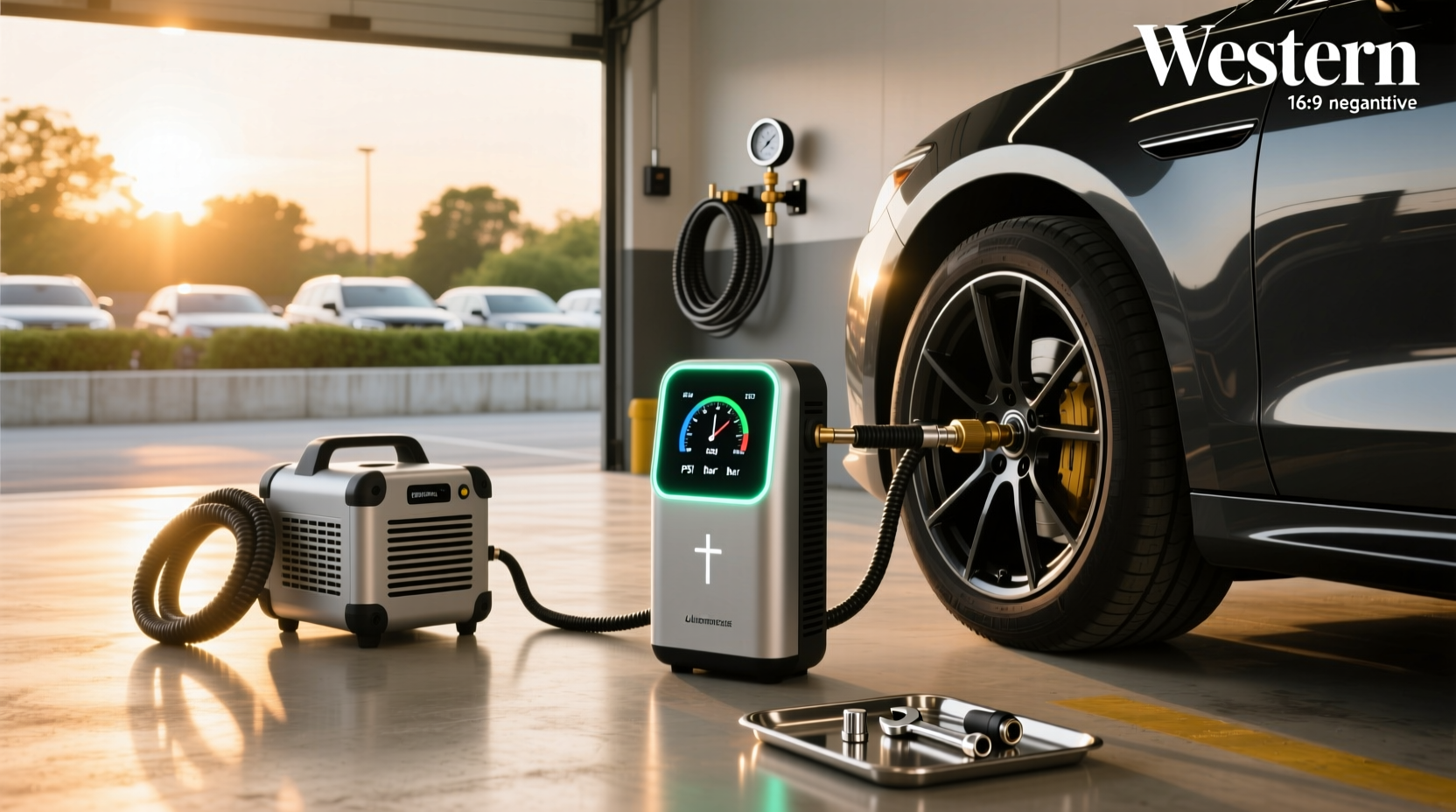
One of the most common yet overlooked vehicle maintenance tasks is maintaining proper tire pressure. A digital automatic tyre inflator offers a smart, efficient solution by automatically inflating tires to a pre-set pressure, eliminating guesswork and reducing the risk of under- or over-inflation. Whether you're a daily commuter, frequent road-tripper, or manage a fleet of vehicles, this technology can streamline tire care, enhance fuel efficiency, extend tire life, and improve driving safety ⚙️. Unlike traditional air compressors that require constant monitoring, digital automatic models use built-in sensors and microprocessors to stop inflation precisely at the desired PSI or BAR level ✅. This article explores how these devices work, their key features, ideal use cases, and what to consider before purchasing one based on voltage, portability, accuracy, and intended application.
How Digital Automatic Tyre Inflators Work
A digital automatic tyre inflator operates using a combination of an electric air compressor, pressure sensor, digital control panel, and automatic shutoff mechanism ⚡. When activated, the user inputs the desired tire pressure—usually in PSI or BAR—via buttons or a touchscreen interface. Once connected to the tire valve, the device begins pumping air. The internal pressure transducer continuously monitors the rising pressure and sends real-time data to the onboard processor. As the pressure approaches the target value, the inflator slows down airflow to avoid overshooting. Once the exact preset level is reached, the system automatically cuts off the motor, signaling completion with a beep or visual indicator ✨.
This closed-loop feedback system ensures high accuracy—typically within ±1 PSI—which is critical for optimal vehicle performance and safety. Some advanced models even allow deflation, enabling users to release excess pressure if a tire has been overinflated. These 'inflate/deflate' units are particularly useful for off-road drivers who adjust tire pressure for sand, mud, or rocky terrain and then reinflate for highway driving 🌐.
Types of Digital Automatic Tyre Inflators
Digital automatic tyre inflators come in several configurations, each suited to different needs and environments. Understanding these types helps match the right tool to your usage pattern.
1. Portable Cordless Models (Battery-Powered)
These handheld units run on rechargeable lithium-ion batteries (commonly 12V, 18V, or 20V) and offer maximum mobility ✈️. They’re ideal for personal vehicle owners, RV travelers, and outdoor enthusiasts. Because they don’t require a power outlet or vehicle cigarette lighter, they can be used anywhere—on highways, trails, or during roadside emergencies.
🔋 Battery life varies significantly between models. Entry-level units may inflate a single car tire from 25 to 32 PSI, while higher-capacity versions can handle multiple tires or larger wheels like SUVs and light trucks. Charging times typically range from 2 to 4 hours via USB-C or wall adapter.
⚠️ Limitations: Battery-powered inflators generally have lower airflow rates (measured in liters per minute or CFM) than plug-in models, meaning longer fill times. They also tend to heat up faster during extended use, triggering thermal protection shutdowns.
2. 12V Vehicle-Powered Inflators
These plug into a car’s 12V socket (cigarette lighter) and draw power directly from the vehicle’s electrical system 🔧. While not truly cordless, they offer consistent performance without worrying about battery charge levels.
🚗 Best for: Drivers who want reliable inflation after long trips, seasonal tire adjustments, or checking spare tires. Many include LED lights for nighttime use and dual nozzles for inflating sports equipment or air mattresses.
❗ Caution: Prolonged use can drain the car battery, especially if the engine is off. Always start the engine when inflating multiple tires or using the device for more than a few minutes.
3. AC-Powered Wall Units (110V–240V)
Designed for home garages or service stations, these inflators connect to standard household outlets (120V in North America, 220–240V elsewhere). They deliver higher airflow and continuous duty cycles, making them suitable for regular maintenance across multiple vehicles.
🏭 Often found in professional workshops or commercial fleets, some models feature pedestal mounting, rugged casings, and nitrogen compatibility. Their digital controls allow precise calibration and memory presets for different vehicle types.
4. Floor-Standing & Commercial-Grade Systems
Used in trucking depots, bus terminals, and industrial facilities, these heavy-duty inflators are mounted on stands or walls and support large tire volumes (e.g., tractor-trailers, construction equipment) 🏭. Built with durable materials and industrial-grade motors, they often include dual gauges, emergency stop buttons, and network connectivity for fleet management systems.
💼 Some advanced systems integrate with telematics platforms, logging inflation events and sending alerts when tire pressure falls below thresholds. These are not practical for individual consumers but represent the high end of automated tire maintenance.
Key Features to Evaluate
When comparing digital automatic tyre inflators, focus on functionality rather than marketing claims. Here are the most important technical and usability factors:
- Pressure Accuracy: Look for units specifying ±1 PSI tolerance. Cheaper models may drift over time or fail to compensate for temperature changes.
- Preset Functionality: True automatic inflators let you set a target pressure once and walk away. Avoid semi-automatic models that only beep at target but don’t stop pumping.
- Voltage & Power Source: Choose based on where and how you’ll use it—battery for portability, 12V for car use, AC for garage setups.
- Nozzle Compatibility: Should include Schrader valves (standard on cars) and ideally Presta (for bikes). Adapters for balls, inflatables, and shock pumps add versatility.
- Display Type: Backlit LCD screens improve readability in low light. Analog dials lack precision and automation capabilities.
- Duty Cycle: Indicates how long the motor can run before needing cooldown. Continuous duty is best for multiple tires; intermittent models need breaks every 5–10 minutes.
- Build Quality: Rubberized housings, metal connectors, and IP-rated enclosures resist drops, moisture, and dust.
- Auto Shut-Off Delay: Some units pause briefly before stopping to account for pressure equalization, improving accuracy.
Benefits Over Manual or Analog Inflators
Traditional tire pumps require constant attention—you must watch the gauge and manually disconnect when reaching the target. This leads to inconsistent results and potential overinflation. A digital automatic model removes human error and saves time ⏱️.
✅ Consistency: Every tire gets inflated to the exact same pressure, improving ride quality and wear patterns.
✅ Safety: Prevents over-pressurization, which can cause blowouts or damage valve stems.
✅ Fuel Efficiency: Properly inflated tires reduce rolling resistance, improving gas mileage by up to 3% according to the U.S. Department of Energy 1.
✅ Tire Longevity: Maintaining correct pressure prevents uneven tread wear, extending tire life by thousands of miles.
✅ User Convenience: Especially beneficial for those with limited strength or mobility who struggle with manual pumps.
Common Use Cases and Scenarios
Digital automatic inflators serve various practical purposes beyond routine car maintenance.
Roadside Emergencies
If you experience slow leaks or punctures, being able to safely reinflate a tire allows you to drive to the nearest repair shop instead of waiting for towing 🚚. Cordless models fit easily in glove compartments or trunks.
Seasonal Pressure Adjustments
Tire pressure drops about 1 PSI for every 10°F (5.6°C) decrease in temperature. During seasonal transitions—especially fall to winter—tires often fall below recommended levels. An automatic inflator simplifies monthly checks.
Off-Roading and Overlanding
Many off-road drivers practice 'airing down' to increase traction on soft surfaces. After returning to paved roads, they must reinflate tires to safe operating pressures. Devices with both inflate and deflate functions make this process seamless 🔍.
Fleet and Commercial Operations
For businesses managing delivery vans, taxis, or rental cars, automated inflators reduce labor costs and ensure compliance with maintenance schedules. Pedestal-mounted units in depots allow quick servicing without specialized training 👥.
Misconceptions and Limitations
Despite their advantages, digital automatic tyre inflators aren't universal solutions. Be aware of the following limitations:
- Not a Replacement for TPMS: While helpful, these devices don’t replace Tire Pressure Monitoring Systems (TPMS), which provide real-time alerts while driving.
- Fill Time Varies: Larger tires (e.g., pickup trucks, SUVs) take longer to inflate. A typical portable unit might need 5–7 minutes per tire starting from 20 PSI.
- Battery Drain Risk: Using 12V models with the engine off risks draining the battery, especially in older vehicles.
- Heat Build-Up: Compact motors generate heat. Most units have thermal cutoffs that temporarily disable operation until cooled.
- Accuracy Drift: Sensors can degrade over time or after exposure to moisture/dirt. Periodic recalibration may be needed.
Price Range and Value Considerations
Pricing for digital automatic tyre inflators varies widely based on power source, build quality, and automation level:
| Type | Typical Price Range | Ideal For |
|---|---|---|
| Basic Portable (Battery) | $50–$100 | Occasional personal use |
| Mid-Range Cordless (12V–20V) | $100–$200 | Regular vehicle owners, RVs, SUVs |
| AC-Powered Garage Units | $150–$350 | Home mechanics, multi-vehicle households |
| Commercial Standing Units | $400–$1,000+ | Fleets, workshops, industrial use |
You don’t need the most expensive model unless you operate in demanding conditions. For most consumers, a mid-range cordless or 12V unit offers the best balance of performance and value.
How to Choose the Right Model for Your Needs
Selecting the right inflator depends on answering three key questions:
- Where will you primarily use it? If mostly on the go, prioritize portability and battery life. If in a fixed location, AC-powered models are more cost-effective.
- What types of vehicles do you own? Cars and motorcycles need less airflow than trucks or trailers. Check maximum PSI output—most passenger tires require 32–35 PSI, but larger vehicles may need 50+ PSI.
- Do you need deflate functionality? Only relevant for off-roaders or those frequently adjusting pressure. Otherwise, inflate-only models suffice.
Also verify warranty terms, availability of replacement parts (like hoses and seals), and whether the manufacturer provides calibration services.
Maintenance Tips for Longevity
To keep your digital automatic tyre inflator working reliably:
- Store in a dry place away from extreme temperatures.
- Clean the air intake filter regularly to prevent clogging.
- Check hose connections for cracks or leaks.
- Recharge battery-powered units every 2–3 months if unused.
- Test accuracy periodically using a standalone pressure gauge.
Regional Differences and Voltage Compatibility
Voltage standards differ globally: 120V in North America, 230V in Europe, and 220V in Australia. Always confirm that AC-powered models match your local supply. Dual-voltage travel adapters won’t fix incompatible motor designs.
🔌 For international travelers, battery-powered inflators eliminate voltage concerns entirely. However, check airline regulations before packing lithium-ion batteries in carry-ons.
Conclusion
A digital automatic tyre inflator is a practical investment for anyone serious about vehicle safety, efficiency, and maintenance. By automating a simple but essential task, it reduces effort, improves consistency, and helps avoid costly repairs due to improper inflation. Whether you choose a compact cordless model or a stationary AC unit, the core benefit remains the same: accurate, hands-free inflation to factory-recommended pressures. Focus on verified performance metrics—not brand names or flashy features—and select a model aligned with your actual usage patterns.
Frequently Asked Questions
Can I leave a digital automatic tyre inflator unattended while it's running?
Yes, that’s the primary advantage—once set to a target pressure, it will automatically stop when reached. However, remain nearby initially to ensure proper hose connection and monitor for unusual noises or overheating.
Do digital automatic tyre inflators work with TPMS-equipped vehicles?
Yes, they are fully compatible. The inflator connects to the valve stem externally and does not interfere with the TPMS sensor inside the wheel.
Why does my inflator shut off before reaching the target pressure?
This usually indicates the motor is overheating. Allow the unit to cool for 10–15 minutes. It could also mean low battery (for cordless models) or insufficient current draw (for 12V units with weak car batteries).
Can I use a digital automatic inflator for bike tires?
Yes, provided it supports Presta valves or includes an adapter. Be cautious with high-pressure road bike tires (up to 120 PSI)—ensure the inflator’s maximum output exceeds your needs.
Are there any safety risks with automatic tyre inflators?
Minimal when used correctly. Never exceed the tire’s maximum pressure rating listed on the sidewall. Also, inspect hoses and connectors for wear to prevent sudden disconnections under pressure.





 浙公网安备
33010002000092号
浙公网安备
33010002000092号 浙B2-20120091-4