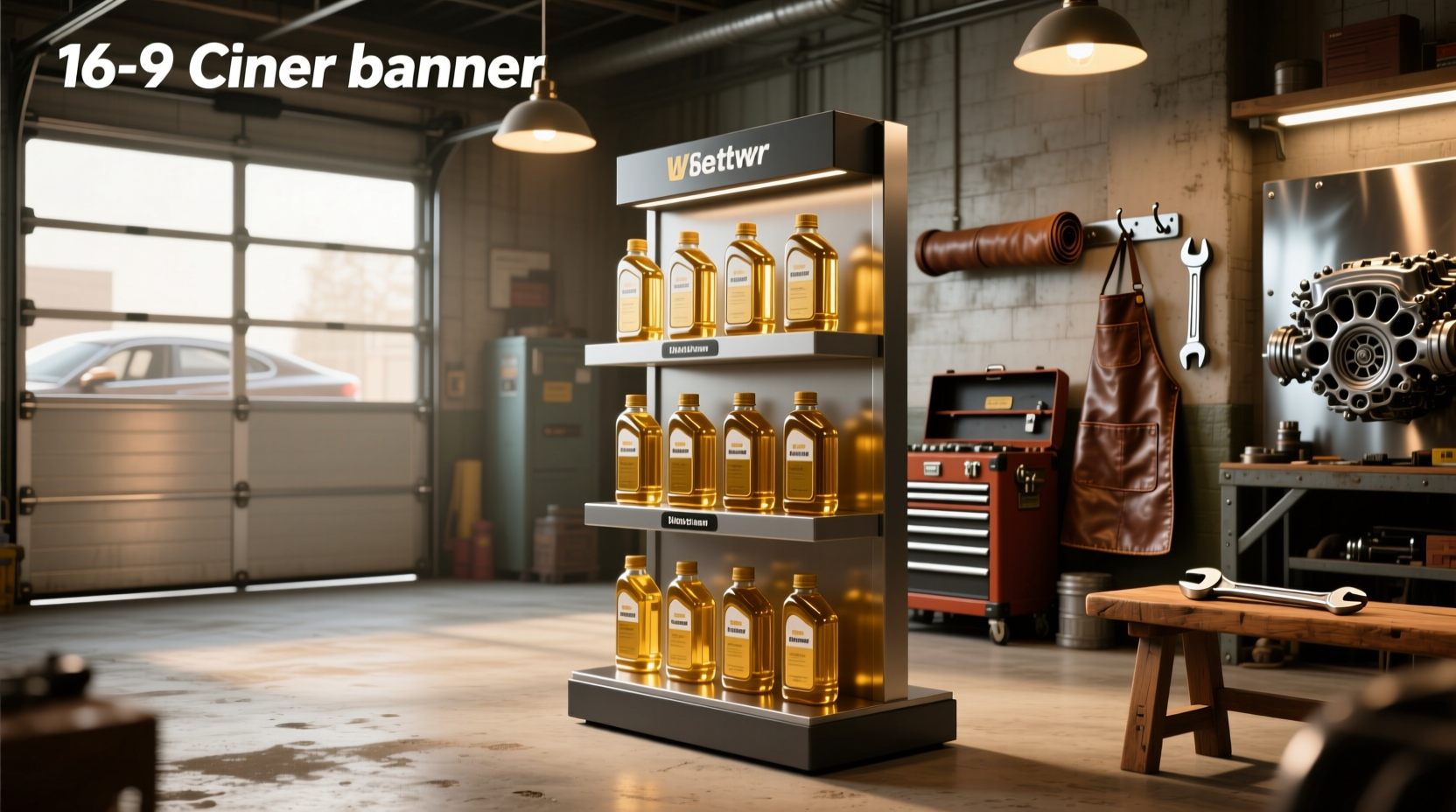
If you're managing a retail auto parts store, gas station, or 4S shop, selecting the right engine oil display rack can significantly improve product visibility, organization, and customer engagement. These specialized metal shelving units are designed to securely hold multiple brands and sizes of motor oil, often with double-sided access, high load capacity (up to 300L), and durable powder-coated finishes for long-term use in commercial environments 🏭. Whether you're sourcing from suppliers on B2B platforms like Alibaba.com or working with local fabricators, understanding the functional design, material quality, and space optimization features is essential for making a cost-effective investment that supports both inventory management and point-of-sale impact ✅.
What Is an Engine Oil Display Rack?
An engine oil display rack is a floor-standing retail fixture specifically engineered to organize and showcase various types of motor oil, transmission fluid, lubricants, and related automotive fluids. Unlike standard shelving, these racks are built to handle heavy containers—typically ranging from 1-quart bottles to 5-gallon pails—and are commonly found in auto service centers, convenience stores near repair shops, and dedicated automotive retailers 🛠️.
These displays are typically constructed from mild steel with a powder-coated finish to resist corrosion, leaks, and daily wear. Many models feature tiered shelves (commonly 3–4 levels), open sides for easy restocking, and branding panels for promotional messaging ✨. Some advanced versions include integrated drip trays or labeling systems to maintain cleanliness and aid customer navigation.
Key Features of Commercial Engine Oil Racks
When evaluating different motor engine oil rack display options, several structural and functional elements determine their suitability for your business setting:
- Material & Durability: Most racks use cold-rolled steel with a powder coating to prevent rust and chipping. This is crucial in environments where oil spills are common 🔧.
- Load Capacity: A typical unit supports between 200–300 liters of liquid weight. Always verify the manufacturer’s stated capacity against your expected inventory mix 📊.
- Dimensions & Footprint: Standard sizes range from 1500mm (L) × 600mm (W) to smaller compact units. Consider aisle clearance and ceiling height when planning placement 📍.
- Double-Sided Access: Ideal for central placement in high-traffic zones, allowing customers to browse from both sides without congestion ⚡.
- Modular Design: Some racks can be linked together to form continuous lines, useful for large retail floors or warehouse-style outlets 🌐.
- Custom Branding Options: Certain suppliers offer logo printing, color customization, or branded header cards to align with your store identity ✅.
Where Are Engine Oil Display Racks Used?
The primary use cases for car lubricant lube display units span across several commercial settings:
Auto Service Centers & Repair Shops
In workshops where technicians recommend specific oils during maintenance, having a branded display reinforces trust and simplifies upselling. For example, a NAPA-branded multi-brand engine oil display allows mechanics to point directly to recommended products while explaining benefits to customers 👥.
Gas Stations & Convenience Stores
Fuel stations with attached mini-marts often place oil racks near the entrance or checkout area. Their eye-level design encourages impulse purchases, especially when paired with seasonal promotions or cross-merchandising (e.g., placing oil filters nearby) 🛒.
Automotive Retailers & Supermarkets
Larger chains may deploy multiple racks to segment by viscosity (5W-30 vs 10W-40), synthetic vs conventional, or brand (Mobil, Castrol, Shell). Clear labeling and category separation help reduce customer confusion and improve decision speed ⏱️.
4S Dealerships (Sales, Service, Spare Parts, Survey)
In markets like China and India, 4S dealerships use OEM-specific oil displays to promote factory-recommended fluids. These often carry the automaker’s logo and are positioned within service waiting areas to influence owner behavior 🚗.
Benefits of Using a Dedicated Oil Display Rack
Switching from generic shelving to a purpose-built engine oil retail shelf unit offers measurable advantages:
| Benefit | Description |
|---|---|
| Improved Space Utilization | Vertical stacking maximizes storage in limited floor areas compared to flat pallets or boxes. |
| Enhanced Product Visibility | Clear sightlines allow customers to quickly compare brands, prices, and specifications. |
| Reduced Spill Risk | Drip trays and raised edges contain accidental leaks, improving safety and reducing cleanup time. |
| Easier Inventory Management | Structured layout enables faster stock checks and restocking cycles. |
| Professional Store Appearance | Neat, branded fixtures contribute to a more trustworthy shopping environment. |
How to Select the Right Engine Oil Display Rack
Choosing the best option involves balancing budget, space, and operational needs. Here’s a step-by-step guide:
Step 1: Assess Your Available Floor Space
Measure the intended location carefully. Ensure there's enough room for customer movement and that the rack doesn’t block emergency exits or fire extinguishers 🔍. If space is tight, consider narrow-profile or wall-mounted variants.
Step 2: Determine Expected Inventory Volume
Calculate how many SKUs and units you plan to display. High-turnover locations may need larger capacities (e.g., 250+ liters), while niche shops might opt for compact 100L models 📈.
Step 3: Evaluate Material Quality
Check whether the rack uses thick-gauge steel and a durable powder coat. Avoid painted finishes, which chip easily under repeated handling 🧰.
Step 4: Confirm Assembly Requirements
Some racks ship flat-packed and require tools and labor to assemble. Others come pre-welded but may incur higher shipping costs due to weight 🚚.
Step 5: Review Supplier Certifications
Look for CE certification or equivalent standards compliance, especially if importing from international manufacturers. This ensures structural integrity and safe load ratings ⚙️.
Common Misconceptions About Oil Display Racks
Despite their straightforward function, several myths persist:
- Misconception 1: Any Shelving Can Work as an Oil Rack
While possible, standard shelves aren't designed for oily residues or heavy fluid loads, increasing slip hazards and structural failure risk ❗. - Misconception 2: All Metal Racks Are Equally Durable
Not true—thin sheet metal deforms over time. Look for reinforced joints and cross-bracing for longevity 🔧. - Misconception 3: Displays Are Only for Big Brands
Even independent garages benefit from organized presentation, helping build credibility and streamline service recommendations 💬.
Regional Differences in Design and Usage
Design preferences vary by market:
In North America, large double-sided racks dominate auto parts stores like AutoZone or O'Reilly, emphasizing self-service access. In Europe, space-efficient single-tier or wall-mounted units are more common due to smaller retail footprints 🌍.
In India and Southeast Asia, multi-tier mobile carts are popular among roadside mechanics who lack permanent storefronts. These portable lubricant display and storage racks can be moved easily and serve both display and transport functions 🏍️.
Environmental and Safety Considerations
Used motor oil is classified as hazardous waste in many jurisdictions. While display racks themselves don’t store waste oil, proper containment during sale and transfer matters:
- Use racks with built-in drip trays to capture minor leaks during handling 🧼.
- Ensure secondary spill containment measures (e.g., absorbent pads) are available nearby.
- Train staff on basic spill response procedures to minimize environmental risks 🔗.
Cost vs. Long-Term Value
Pricing varies widely based on size, material, and origin. Basic models start around $80–$120 USD, while custom-heavy-duty versions exceed $300. While cheaper alternatives exist, particularly from online B2B marketplaces, prioritize long-term durability over initial savings ⏳.
A well-built heavy duty engine oil display rack can last 5–10 years with minimal maintenance, amortizing its cost over time. Conversely, a low-quality rack may warp, rust, or collapse—creating safety issues and requiring replacement sooner than expected 💸.
Trends Shaping Modern Oil Display Solutions
Several industry shifts are influencing new designs:
- Sustainability Focus: Recycled steel content and eco-friendly coatings are becoming selling points for environmentally conscious buyers 🌱.
- Digital Integration: Though still rare, some experimental displays incorporate QR codes linking to product details, videos, or warranty registration 📎.
- Modularity & Flexibility: Retailers increasingly prefer systems that adapt to changing inventory, such as adjustable shelf heights or interchangeable signage panels ✨.
Alternatives to Traditional Floor-Standing Racks
Depending on your setup, other solutions may better suit your needs:
- Wall-Mounted Shelves: Save floor space; ideal for small garages or convenience stores with limited square footage 📍.
- Countertop Displays: Compact units for checkouts, promoting top-up bottles or premium additives 🛍️.
- Mobile Carts: Wheeled bases allow repositioning for events, pop-up sales, or multi-location operations 🚚.
Maintenance Tips for Longevity
To extend the life of your metal engine oil display rack:
- Wipe down shelves weekly with degreaser to prevent buildup 🧼.
- Inspect weld points and fasteners monthly for signs of stress or corrosion 🔍.
- Rotate stock using FIFO (First In, First Out) to avoid expired products.
- Re-tighten bolts periodically, especially in high-vibration environments.
Procurement Options: Domestic vs. International Sourcing
You can source retail engine oil shelf units locally or internationally:
Local suppliers often charge more but offer quicker delivery, easier returns, and direct technical support. International platforms like Alibaba.com provide access to numerous manufacturers (e.g., Suzhou Jintu Metal Working Co., Limited) at competitive prices, though lead times and import logistics must be factored in 🌐.
When ordering overseas, request samples first, confirm material specs, and clarify packaging methods to avoid damage during transit 📦.
FAQs About Engine Oil Display Racks
- Can I customize the size and color of an engine oil display rack?
- Yes, many manufacturers offer customization in dimensions, load capacity, and powder-coat color (e.g., black, silver, red) to match brand guidelines or store aesthetics.
- Are engine oil display racks suitable for outdoor use?
- Most are designed for indoor environments. Extended outdoor exposure can accelerate rust unless specifically treated for weather resistance.
- Do these racks come with warranties?
- Reputable suppliers typically offer 1–2 year structural warranties covering manufacturing defects, but terms vary by vendor.
- How much weight can a standard oil display rack hold?
- Average capacity ranges from 200 to 300 liters of fluid, equivalent to roughly 450–700 lbs depending on container density and distribution.
- Can I add casters to make the rack mobile?
- Yes, many models support optional swivel casters for mobility, especially useful in dynamic retail or workshop layouts.





 浙公网安备
33010002000092号
浙公网安备
33010002000092号 浙B2-20120091-4