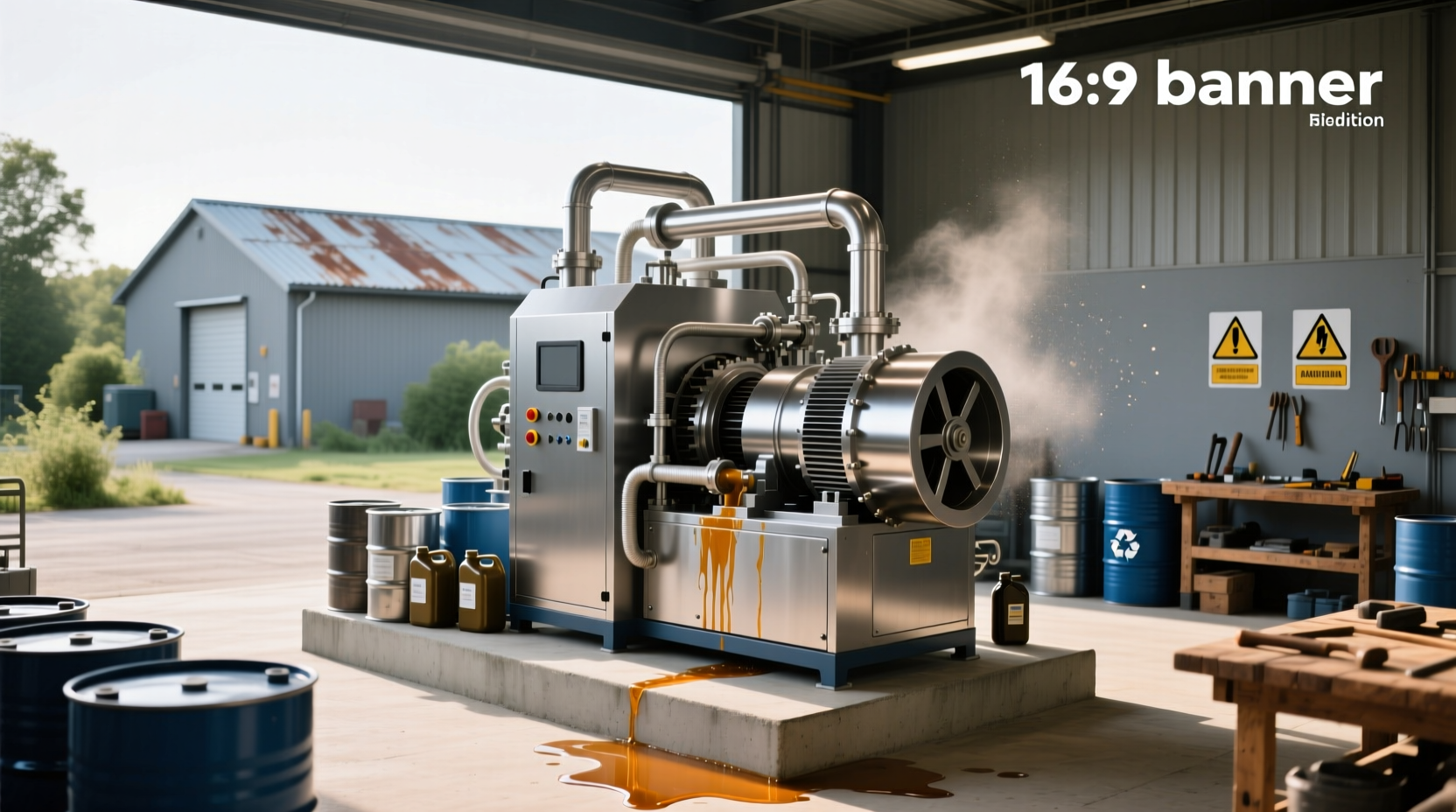
If you're searching for an engine oil recycling machine, you're likely looking to reuse waste motor oil safely, reduce environmental impact, or cut maintenance costs in a repair shop or fleet operation. These systems filter contaminants and moisture from used oil, restoring it to near-original condition for reuse in non-critical applications. While full chemical re-refining requires industrial plants, smaller-scale filtration units—often called oil purification or offline filtration systems—can extend oil life by up to 4x when properly matched to your needs ⚙️.
What Is an Engine Oil Recycling Machine?
An engine oil recycling machine is not typically a device that chemically reprocesses used oil into new base stock (a process requiring large-scale distillation and hydrotreating). Instead, most units marketed under this term are offline oil filtration or purification systems that remove particulates, soot, water, and sludge from used motor oil using mechanical, centrifugal, or adsorption-based methods ✅.
These machines circulate oil through filters, coalescers, vacuum chambers, or ultrasonic baths to clean it without dismantling the engine. They’re commonly used in automotive repair shops, transportation fleets, and industrial facilities aiming to reduce oil consumption and disposal costs 🌍.
How Do Oil Recycling Machines Work?
Different technologies offer varying levels of purification. Understanding these helps determine which system suits your application:
1. Centrifugal Separation ⚙️
Centrifuges spin used oil at high speeds, separating heavier contaminants like metal particles, carbon sludge, and water from the oil. This method doesn’t require consumable filters but may not remove fine particles below 5 microns unless combined with secondary filtration.
- Pros: Low operating cost, no filter replacements
- Cons: Higher initial investment; limited removal of dissolved contaminants
A DIY example involves modifying a high-speed juicer into a low-cost centrifuge—a concept explored in popular YouTube videos1. However, commercial units like those from Dieselcraft or PA Biodiesel Supply offer engineered durability and safety controls 🚚.
2. Multi-Stage Filtration Systems 🔧
These machines pump oil through progressively finer filters (e.g., 50μm → 10μm → 1μm), often including desiccant media to absorb water. Some integrate coalescing filters that merge tiny water droplets into larger ones for easier separation.
- Pros: Effective for particulate and free water removal; modular design
- Cons: Ongoing filter replacement costs; slower processing rates
Brands like Donaldson offer off-line filtration carts designed for hydraulic and lube oil systems, emphasizing portability and ease of integration2.
3. Vacuum Dehydration Units ✨
Vacuum-based purifiers heat oil slightly and expose it to a vacuum chamber where moisture evaporates due to lowered boiling points. This method excels at removing emulsified and dissolved water—common issues in engines with coolant leaks or condensation.
- Pros: Removes both free and dissolved water effectively
- Cons: Higher energy use; complex maintenance
Used in power generation and marine sectors, these are less common in small auto shops due to size and cost.
4. Ultrasonic Cleaning + Filtration 🧼
Ultrasonic tanks use high-frequency sound waves to agitate oil and dislodge deposits from components. While primarily used for cleaning parts rather than bulk oil recycling, some integrated systems combine ultrasonics with pumping and filtration for closed-loop cleaning.
- Pros: Excellent for degreasing engine components
- Cons: Not suitable for large-volume oil recycling
Units ranging from 15L benchtop models ($178) to 45L industrial versions ($520+) are available on platforms like Alibaba and eBay3.
Key Features to Consider When Buying
When evaluating an engine oil recycling machine, focus on performance metrics rather than marketing claims. Here’s what matters:
| Feature | Why It Matters | Ideal Range / Type |
|---|---|---|
| Flow Rate (L/min) | Determines processing speed for large volumes | 2–6.5 L/min for workshops |
| Filtration Efficiency | Ability to capture small particles | Beta ratio ≥1000 @ 5μm preferred |
| Water Removal Capacity | Critical if oil has moisture contamination | Coalescer or vacuum system |
| Portability | Important for multi-vehicle shops | Wheeled cart with hose reels |
| Maintenance Requirements | Affects long-term cost | Self-cleaning filters or low-waste designs |
Price Ranges and What You Get
Pricing varies widely based on technology, capacity, and build quality:
- Under $300: Basic extractor pumps or mini oil-water separators; limited recycling capability ⚠️
- $300–$800: Entry-level filtration units or ultrasonic cleaners; suitable for light-duty use
- $800–$2,000: Commercial-grade centrifuges or multi-stage filters; ideal for small garages
- Over $2,000: Industrial vacuum dehydrators or automated systems; used in fleets and manufacturing
Note: Many products listed on Alibaba.com under “engine oil recycling machine” are actually flushing machines that clean internal engine passages during oil changes—not true recyclers. Be cautious of misleading product titles 📌.
Common Misconceptions About Oil Recycling Machines ❗
Several myths persist about what these machines can do:
Myth 1: "It Makes Old Oil Like New"
No portable unit fully restores additive packages or removes all oxidation byproducts. Recycled oil should be used in less critical applications or blended with fresh oil.
Myth 2: "You’ll Never Change Oil Again"
Some marketers claim bypass filtration eliminates oil changes. In reality, while systems like the Clean Air Fleet CAF-15 can extend drain intervals up to 4x4, periodic lab analysis is still required to monitor oil health.
Myth 3: "All Machines Remove Dissolved Contaminants"
Most mechanical filters only remove insoluble particles. Removing acids, fuel dilution, or oxidized compounds requires chemical treatment unavailable in field-deployable units.
Practical Applications: Who Should Use One?
Not every user benefits equally from an oil recycling machine. Let’s examine real-world scenarios:
🔧 Independent Mechanics & Small Repair Shops
For shops changing oil regularly, even a basic filtration system reduces waste oil volume and disposal fees. A mid-range unit ($800–$1,500) pays for itself over 1–2 years depending on local regulations and oil prices.
🏭 Fleet Operators (Trucks, Buses, Construction Equipment)
Larger fleets benefit most due to high oil consumption. Installing centralized offline filtration allows continuous cleaning of oil between changes, improving engine longevity and reducing downtime.
🌱 DIY Enthusiasts & Off-Grid Users
Home users with multiple vehicles or diesel generators may find value in simple centrifuges or filter carts. However, unless generating >50 gallons/year of used oil, the ROI is often poor.
Environmental and Legal Considerations 🌐
Recycling oil on-site isn’t always legal. In the U.S., the EPA regulates used oil under 40 CFR Part 279. Key rules include:
- On-site processors must ensure recycled oil meets specifications for reuse
- Sludge and filter waste must be disposed of as hazardous material if contaminated
- Selling or transporting recycled oil may require permits
Always check state and local regulations before investing in equipment. Some jurisdictions classify any processed oil as “used” regardless of cleanliness.
How to Evaluate Performance Claims
Manufacturers often cite impressive specs like “filters down to 0.5 micron.” But without standardized testing, such numbers can be misleading. Ask for:
- Beta ratio ratings (e.g., β₁₀ = 100 means 99% efficiency at 10μm)
- Test reports showing ISO Cleanliness Codes before/after treatment
- Third-party validation from labs or industry bodies
If unavailable, treat performance claims skeptically.
Alternatives to Full-Scale Recycling Machines
If a dedicated machine isn’t justified, consider these lower-cost options:
Bypass Oil Filtration Systems ⚡
Installed permanently on the engine, these run a small stream of oil through a secondary ultra-fine filter (e.g., 2–3μm), continuously polishing the oil. Unlike batch-process recyclers, they work while the engine runs.
Popular brands include Pure Oil Technology and Filtration Solutions Inc., though availability may vary outside North America.
Used Oil Collection Partnerships 🤝
Many regions have licensed recyclers who pick up used oil for free or pay per gallon. This avoids liability and maintenance costs associated with on-site processing.
Final Recommendations: Should You Buy One?
The answer depends on three factors:
- Volume: Do you generate more than 100 gallons of used oil per year?
- Cost: Are disposal fees high (> $2/gallon) or hard to access?
- Application: Can you reuse cleaned oil in non-engine roles (hydraulics, gearboxes)?
If two or more apply, an engine oil recycling machine could be worthwhile. Otherwise, partnering with a certified recycler remains the simplest, safest choice.
Frequently Asked Questions
Here are answers to common follow-up questions:
Can I clean engine oil at home safely?
Yes, with proper ventilation, PPE, and containment. Avoid open heating; use only enclosed systems. Store waste sludge securely and dispose of it through hazardous waste programs.
Do oil flushing machines recycle oil?
No. Flushing machines clean internal engine passages using detergent-laden fluid but don’t purify the oil itself. The output is waste fluid requiring disposal.
What’s the difference between filtration and recycling?
Filtration removes solids and water; recycling implies restoring functional properties. Most 'recycling' machines are actually advanced filters.
How often should I maintain my oil recycler?
Check filters monthly. Replace them when pressure drop increases by 15 psi. Inspect seals and pumps annually. Follow manufacturer guidelines strictly.
Is recycled oil safe for modern engines?
Generally no. Additive depletion and unknown contamination make it risky. Use recycled oil only in older equipment, auxiliary systems, or as a blending component.





 浙公网安备
33010002000092号
浙公网安备
33010002000092号 浙B2-20120091-4