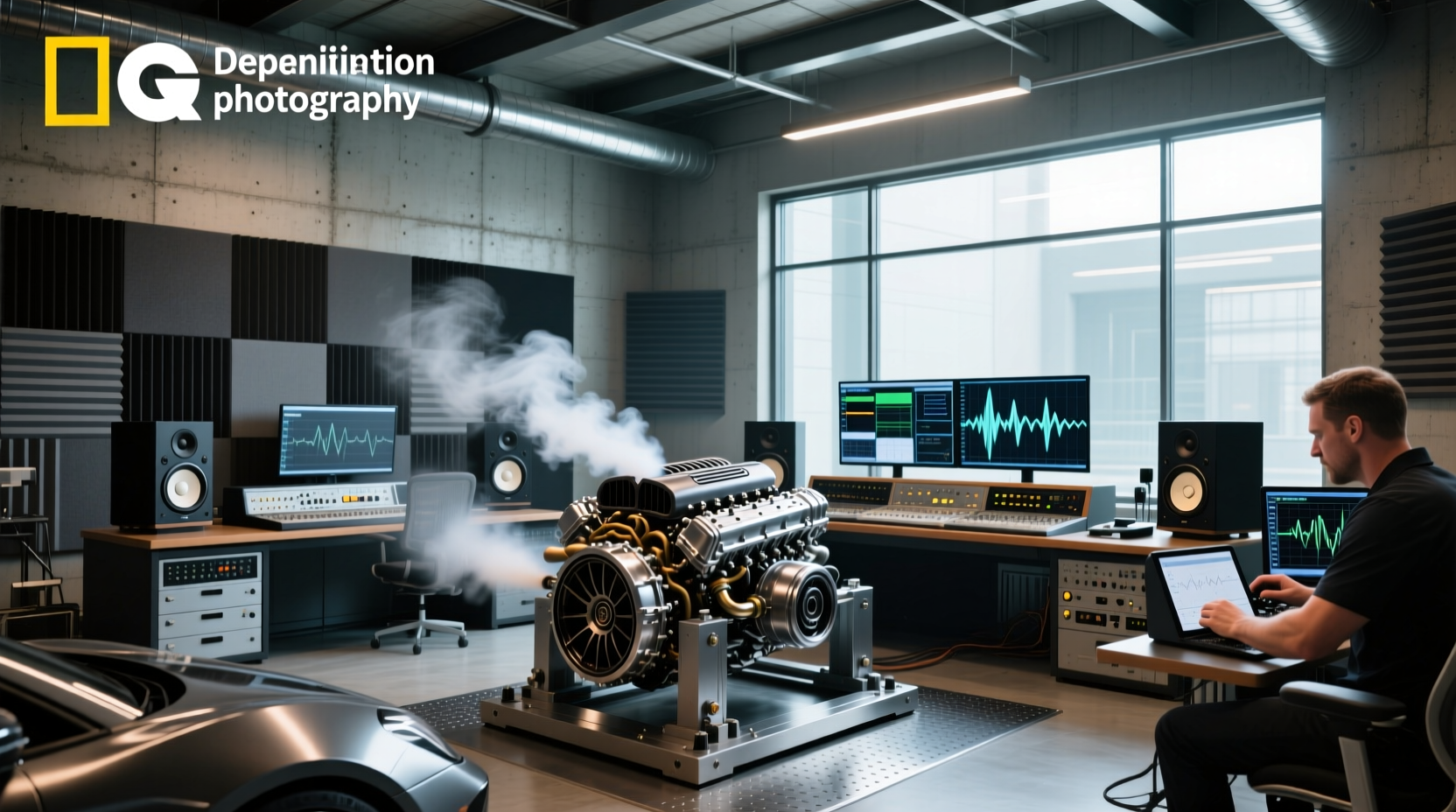
🚗 Engine sound enhancement (ESE), also known as active sound design (ASD) or fake engine noise, is a technology used by automakers to amplify or simulate engine sounds inside the cabin—especially in quieter modern vehicles like turbocharged models and electric cars. This system delivers a more engaging auditory experience by using digital amplification, resonant chambers, or speaker-based playback of pre-recorded or synthesized engine notes. As electric vehicles grow in popularity, technologies like Dodge’s Fratzonic Chambered Exhaust and BMW’s ASD have become key examples of how manufacturers preserve the emotional appeal of traditional combustion engines.
Why Do Modern Cars Use Engine Sound Enhancement?
🔍 The rise of engine sound enhancement stems from fundamental shifts in automotive engineering. Today’s vehicles are designed for efficiency, emissions compliance, and reduced noise, vibration, and harshness (NVH). Lightweight materials, advanced insulation, and turbocharging often muffle natural engine sounds. While this improves comfort, many drivers miss the visceral feedback of a powerful V8 or high-revving inline-six.
车企 began implementing ESE systems around the early 2010s, primarily in performance-oriented models. For example, the 2012 BMW M5 was among the first to use internal speakers to enhance exhaust tone during acceleration1. Since then, brands including Ford, Chevrolet, Subaru, and Genesis have adopted similar technologies across various trims.
The Psychology Behind Artificial Engine Noise
👥 Drivers associate certain engine sounds with power, responsiveness, and sportiness. A deep rumble suggests torque; a high-pitched scream implies speed. Automakers leverage these psychological cues to maintain brand identity—even when mechanical reality doesn’t match expectation.
For instance, an EV has no internal combustion engine, so there's no inherent roar. Yet, consumers expect excitement from performance EVs like the Dodge Charger Daytona. To bridge that gap, Dodge introduced the Fratzonic Chambered Exhaust, which generates artificial engine noise through external resonators and internal audio systems1.
How Does Engine Sound Enhancement Work?
⚙️ There are two primary methods used in engine sound enhancement: digital signal processing and physical resonance systems.
1. Digital Amplification via Audio System
✅ Most common in German and Japanese performance sedans, this method uses sensors connected to the engine control module (ECM) to capture real-time data such as RPM, throttle position, and gear selection. This data feeds into software that generates synthetic engine sounds or amplifies actual intake/exhaust noises captured by microphones.
These enhanced sounds are then played through the car’s stereo speakers—typically tuned to emphasize low-frequency bass tones during acceleration. In some cases, separate subwoofers are dedicated solely to reproducing engine harmonics.
📌 Example: The BMW M2 Competition uses Active Sound Design (ASD) to enrich its inline-six soundtrack. However, enthusiasts have discovered that the system can be disabled using an OBD2 dongle and third-party tuning tools—a popular modification among purists who prefer authentic mechanical noise1.
2. Mechanical Resonance Tubes & Fake Exhaust Systems
🔧 Some vehicles use physical components to channel sound into the cabin. Known as sound tubes or resonance pipes, these hollow hoses connect the intake manifold or firewall area directly to the passenger compartment. As the engine runs, pressure waves travel through the tube, creating a louder, more aggressive note.
This approach is simpler than digital systems but less flexible. It cannot adapt to different drive modes or simulate missing engine characteristics (e.g., making a four-cylinder sound like a V8).
🛒 Aftermarket versions of these devices—often called turbo whistles or exhaust blow-off valve simulators—are available for under $15. These clamp onto existing tailpipes and create a whistling or popping effect during deceleration, mimicking turbo spool-down.
| Method | How It Works | Pros | Cons |
|---|---|---|---|
| Digital Signal Processing | Uses ECU data to generate sound played through speakers | Customizable per drive mode, precise control | Can feel artificial, requires complex calibration |
| Mechanical Sound Tubes | Pipes direct engine noise into cabin acoustically | Natural amplification, no electronics needed | Limited tuning options, fixed frequency response |
| External Resonators (e.g., Fratzonic) | Chambers vibrate at specific frequencies to emit sound | Audible outside the vehicle, enhances realism | Added weight, potential durability concerns |
Active Sound Design vs. Active Noise Cancellation: Key Differences
❗ A common misconception is confusing engine sound enhancement with active noise cancellation (ANC). They serve opposite purposes:
- Engine Sound Enhancement: Adds desirable engine noise to improve driver engagement.
- Active Noise Cancellation: Reduces unwanted road, wind, or engine drone using inverse sound waves.
Some vehicles employ both systems simultaneously. For example, GM trucks like the Silverado may use ANC to quiet cabin vibrations while using ESE to boost V8-like growl through the speakers. Users have reported confusion over whether their truck’s loud exhaust note is real or simulated—especially in forums discussing the 2024–2025 model years1.
Are Fake Engine Sounds Deceptive?
📌 This question sparks debate among car enthusiasts and everyday drivers alike. Critics argue that piping artificial noise through speakers undermines authenticity. Supporters counter that ESE maintains emotional connection without sacrificing fuel economy or refinement.
In a 2021 article, The Washington Post criticized major automakers for relying on “fake” engine sounds, calling it a form of sensory deception2. However, others point out that even classic muscle cars used tuned exhaust manifolds and mufflers to shape sound artificially—so the practice isn’t entirely new.
🌐 Ultimately, transparency matters. If buyers understand that a vehicle uses synthetic sound enhancement—and still enjoy the result—it becomes a feature rather than a flaw.
Vehicles Known for Using Engine Sound Enhancement
📋 Below is a list of notable production vehicles confirmed or widely reported to use some form of ESE:
- Dodge Charger Daytona (EV) – Uses Fratzonic Chambered Exhaust to produce external and internal engine-like noise.
- BMW M3/M4/M2 – Equipped with ASD that plays amplified engine tones through cabin speakers.
- Ford Mustang EcoBoost – Utilizes sound augmentation to give the four-cylinder turbo a more aggressive character.
- Chevrolet Camaro LTG V6 – Includes active noise control that enhances intake resonance.
- Subaru WRX (VA chassis) – Features a symposer system that channels turbocharger and intake sounds into the cabin.
- Genesis G70 3.3T – Employs speaker-based sound enhancement in Sport+ mode.
- Toyota Tundra i-Force Max – Has been noted for playing synthetic exhaust notes through speakers, leading to user discussions about disabling it1.
📍 Not all trims include ESE. Often, only higher-performance variants or those with smaller engines receive the treatment. Always verify whether a specific trim includes sound enhancement before purchase.
Can You Disable Engine Sound Enhancement?
🔧 Yes, in many cases—but the process varies by manufacturer and model.
Some vehicles allow users to turn off ESE via infotainment settings. Others require deeper intervention:
- OBD2 Programming Tools: Devices like FORScan (for Ford) or BimmerGeeks’ coding software (for BMW) let users disable ASD modules.
- Aftermarket Tuners: Companies offering ECU remapping often include ESE deactivation as part of performance packages.
- Physical Disconnection: On models with sound tubes, removing the hose between the intake and firewall will eliminate amplified noise.
⚠️ Caution: Tampering with factory systems may void warranties or trigger error codes. Consult a qualified technician before attempting modifications.
Aftermarket Options for Simulating Engine Sounds
🛒 If your car lacks built-in ESE, several aftermarket solutions exist:
1. Turbo Whistle / Blow-Off Valve Simulators
🔧 These small aluminum devices attach to the exhaust tip and produce a high-pitched whistle during throttle lift-off. While not true engine simulation, they mimic the sound of turbo spooling down.
Available in multiple sizes (S to XL), they’re universal-fit and typically cost between $6–$12. Installation takes minutes and requires only a clamp.
2. Electronic Sound Generators
⚡ More advanced units connect to your OBD2 port and sync engine noise with RPM. Some play through Bluetooth speakers; others integrate with factory audio systems.
Examples include standalone modules marketed as “fake supercharger sound generators” or programmable DSP units that emulate V8, V10, or even Formula 1-style screams.
3. DIY Speaker-Based Systems
🛠️ Enthusiasts have created custom setups using waterproof speakers mounted near the rear bumper, wired to a Raspberry Pi or Arduino board programmed with engine sound libraries. These can be synchronized with vehicle speed sensors for realistic playback.
While effective, such projects require technical skill and may raise legal questions in regions regulating external noise emissions.
Legal and Environmental Considerations
🌍 Engine sound enhancement raises regulatory questions, particularly when noise is emitted externally.
In the U.S., the National Highway Traffic Safety Administration (NHTSA) mandates minimum sound levels for hybrid and electric vehicles under the Quiet Car Rule to protect pedestrians3. However, this applies only to low-speed operation (<30 km/h). High-speed artificial noise falls outside current regulations.
欧盟同样要求EV发出警告音(AVAS),但 does not prohibit additional performance-oriented sounds at higher speeds. Still, local municipalities may enforce noise ordinances affecting modified exhausts or external speakers.
🚚 Transport Canada and other agencies monitor vehicle noise during certification, but factory-installed ESE systems generally comply unless altered post-production.
Consumer Perception and Market Trends
📊 Public opinion on fake engine noise is divided. Reddit threads on r/electricvehicles and r/BMW show strong backlash from purists who view synthetic sound as gimmicky1. Others appreciate the added drama, especially in EVs where silence feels unnatural during spirited driving.
📈 Market research suggests younger buyers are more accepting of artificial sound integration, particularly if tied to customizable drive modes (e.g., “Sport,” “Track,” “Stealth”).
As automakers phase out internal combustion engines, expect ESE to evolve into full sound branding—where each EV model has a unique sonic signature, much like smartphone ringtones.
How to Identify If Your Car Uses Fake Engine Noise
🔍 Here are practical steps to determine whether your vehicle employs ESE:
- Compare Interior vs. Exterior Sound: Record engine noise from inside the cabin and outside the car. If the interior sounds significantly louder or richer, ESE is likely active.
- Check Drive Mode Effects: Switch between Comfort, Sport, and Track modes. If the exhaust note changes dramatically without mechanical valves opening, it’s probably speaker-generated.
- Inspect Under the Hood: Look for thin hoses running from the intake to the firewall—these indicate mechanical sound tubes.
- Review Owner’s Manual: Search for terms like “active sound design,” “engine sound enhancement,” or “cabin acoustics.”
- Use Diagnostic Tools: Scan your ECU with an OBD2 reader capable of accessing audio module status.
Future of Engine Sound Enhancement
✨ With the global shift toward electrification, engine sound enhancement won’t disappear—it will transform. Instead of masking weak engines, future systems will craft immersive audio experiences tailored to driver preferences.
Imagine selecting a “Classic Muscle Car” profile that emulates a 1969 Charger’s Hemi V8, or switching to a futuristic “Cyberpunk” mode with synthetic synthwave tones. Brands like Porsche already offer optional sound packages for the Taycan1.
🔋 As battery tech improves and motors become quieter, expect integrated audio systems to play a larger role in defining brand identity and driving emotion.
Conclusion: Is Engine Sound Enhancement Worth It?
🔚 Engine sound enhancement is neither inherently good nor bad—it depends on your priorities.
If you value authenticity and mechanical purity, ESE might feel dishonest. But if you enjoy a thrilling auditory experience without compromising comfort or efficiency, it can enhance daily driving enjoyment.
The key is awareness. Knowing how the system works, where it’s used, and how to modify or disable it puts you in control. Whether factory-equipped or aftermarket-added, engine sound enhancement reflects the evolving relationship between humans and machines—one note at a time.
Frequently Asked Questions
- What is engine sound enhancement?
- Engine sound enhancement (ESE) is a technology that amplifies or simulates engine noise inside the cabin using speakers, resonance tubes, or digital processing to create a more engaging driving experience.
- Do electric cars have fake engine sounds?
- Yes, many EVs use artificial sound generation for pedestrian safety at low speeds and driver engagement at higher speeds. Examples include the Dodge Charger Daytona and Porsche Taycan.
- Can I turn off fake engine noise in my car?
- In many vehicles, yes. Some offer menu options to disable ESE; others require OBD2 tools or physical disconnection of sound tubes.
- Is engine sound enhancement bad for my car?
- No, ESE systems are designed to operate safely within factory parameters. They do not affect engine performance or reliability.
- How can I tell if my car has active sound design?
- Compare interior and exterior engine noise, check for sound tubes under the hood, review your owner’s manual, or use diagnostic tools to scan for audio module activity.





 浙公网安备
33010002000092号
浙公网安备
33010002000092号 浙B2-20120091-4