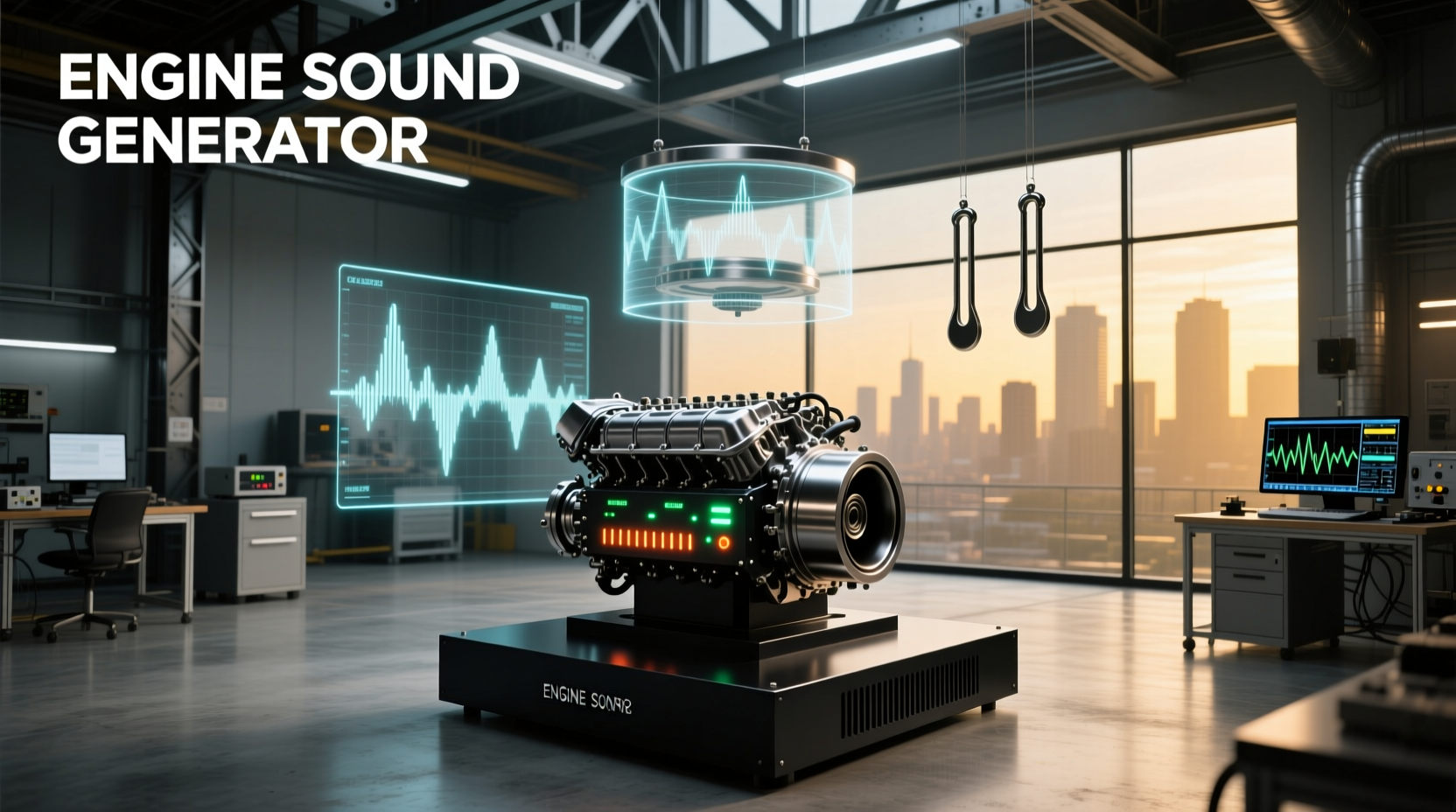
An engine sound generator is an electronic system designed to simulate or amplify real engine noise through a vehicle’s audio system, often used to enhance driving experience without modifying the exhaust. Also known as active sound systems or digital exhaust sound boosters, these devices use sensors to detect engine RPM, throttle position, and vehicle speed, then generate corresponding engine sounds that are played through built-in or factory speakers ✅. This technology allows drivers to enjoy deeper, sportier engine notes—like a V8 roar—even in quieter modern vehicles such as electric cars or turbocharged four-cylinder models ⚙️.
Understanding Engine Sound Generators
Modern automobiles, especially those with fuel-efficient engines or electric powertrains, often lack the natural engine growl associated with performance vehicles. Automakers began integrating synthetic engine sounds into cabin audio systems starting in the early 2010s, primarily to improve driver engagement 1. Today, aftermarket solutions like digital sound modules have made this technology accessible for a wide range of vehicles.
An engine sound generator typically consists of a control unit connected to the car’s OBD-II port or CAN bus network, one or more amplifiers, and speaker units—sometimes including vibration transducers mounted on interior panels to mimic physical resonance. The system captures real-time data from the engine management system and uses preloaded sound profiles (e.g., V6, V8, muscle car, futuristic EV tones) to produce realistic auditory feedback synchronized with driving conditions 🔧.
How Active Sound Systems Work
The core functionality of an engine sound generator relies on three main components: input signal acquisition, sound processing, and output delivery.
- Signal Acquisition: The device connects to the vehicle's onboard diagnostics system or ECU to receive live parameters such as engine RPM, load, gear state, and throttle input. Some advanced units also integrate GPS data for gear simulation in automatic transmissions.
- Digital Signal Processing: Using embedded software, the module processes incoming data and selects appropriate audio samples based on driving dynamics. For example, rapid acceleration triggers aggressive downshift pops and burbles, while cruising produces a low idle rumble.
- Audio Output: Processed sound is sent to internal or external amplifiers and played through dedicated speakers located in the cabin—often near footwells, rear shelves, or under seats. In high-end setups, tactile transducers convert audio signals into vibrations felt through seats or floorboards, enhancing realism ✨.
Unlike mechanical exhaust modifications—which require welding, resonator deletes, or valve-controlled tips—engine sound generators offer a non-invasive way to customize your car’s acoustic profile. They do not affect emissions, backpressure, or fuel economy since no physical changes are made to the exhaust system 🌐.
Common Use Cases and Driving Scenarios
Drivers install engine sound generators for various reasons, depending on vehicle type and personal preferences:
- Electric Vehicle Owners: EVs operate nearly silently, which can reduce driving excitement. A sound generator adds simulated motor whine or futuristic propulsion effects during acceleration, improving sensory feedback.
- Fuel-Efficient Compact Cars: Small-displacement turbo engines may feel disconnected acoustically. Adding a deep exhaust tone can make daily commutes more engaging. \li> Performance Enthusiasts: Even high-performance cars with mufflers tuned for compliance may benefit from enhanced cabin sound at lower RPMs where stock exhaust notes fall flat.
- Show & Custom Builds: Car show participants use sound generators to create dramatic startup sequences, rev-matching effects, or themed audio experiences (e.g., sci-fi spaceship startup).
These systems are particularly popular among owners of German luxury sedans (BMW, Mercedes-Benz, Audi), American trucks (Ford F-150, Ram), and Japanese performance models (Toyota Supra, Nissan Z) who seek a more immersive driving atmosphere without violating local noise ordinances 📍.
Key Features to Evaluate Before Buying
Not all engine sound generators are created equal. When comparing products, consider the following technical and practical aspects:
| Feature | Description | Why It Matters |
|---|---|---|
| Vehicle Compatibility | Supports OBD-II, CAN bus, or direct ECU integration | Ensures plug-and-play setup across brands like BMW, Ford, Tesla |
| Sound Profiles | Number and variety of preset engine sounds (V6, V8, EV modes) | Greater customization enhances user satisfaction |
| App Control | Bluetooth/Wi-Fi connectivity with smartphone app (iOS/Android) | Allows real-time adjustments and firmware updates |
| Installation Type | Plug-and-play vs. hardwired; speaker placement options | Affects ease of DIY installation and reversibility |
| Audio Quality | Bitrate of sound files, presence of sub-bass enhancement | Higher fidelity creates more convincing engine simulation |
| Customization Level | Ability to upload custom WAV/MP3 files or adjust pitch curves | Critical for unique builds or branding applications |
One notable trend is the rise of app-controlled modules that allow users to switch between sound modes on demand, schedule activation by time or location, or even sync engine notes with ambient lighting systems. However, overly complex interfaces can deter casual users, so balance between capability and usability is essential ⚡.
Pros and Cons of Using an Engine Sound Generator
Like any automotive accessory, engine sound generators come with trade-offs. Understanding both sides helps set realistic expectations.
Advantages
- No Permanent Modifications: Fully reversible installation preserves factory warranty and resale value.
- Legal Compliance: Since sound is contained within the cabin, it avoids exceeding external noise limits enforced in urban areas.
- Cross-Platform Support: Many systems work across gasoline, diesel, hybrid, and electric platforms.
- Cost-Effective: Significantly cheaper than full exhaust replacements or forced induction upgrades.
- Adjustable Experience: Drivers can tailor sound intensity based on mood, passenger comfort, or environment.
Limitations
- Perceived Artificiality: Purists argue synthesized sound lacks authenticity compared to true mechanical exhaust flow.
- Speaker Dependency: Poor speaker quality or placement results in tinny, unrealistic audio output.
- System Conflicts: May interfere with factory infotainment or active noise cancellation features in some luxury models.
- Limited Exterior Effect: Sound does not project outside the vehicle, so bystanders won’t hear it—a downside for show cars seeking attention.
- Firmware Bugs: Early-generation units occasionally suffer from latency, incorrect gear detection, or random shutdowns.
It's important to note that while cabin sound enrichment improves subjective driving enjoyment, it doesn't increase horsepower, torque, or mechanical responsiveness. Users should view these systems as sensory enhancements rather than performance upgrades ❗.
Installation Process and Technical Requirements
Most modern engine sound generators follow a standardized installation workflow:
- Power Source Connection: Tap into the fuse box or connect via OBD-II port for constant and switched 12V supply.
- Data Interface: Link to CAN bus lines or OBD-II interface to access engine parameters.
- Amplifier Wiring: Route power and ground wires to amplifier unit, ensuring proper gauge and fusing.
- Speaker Placement: Mount full-range or bass-enhanced speakers in optimal locations (under seats, behind trim panels).
- Module Configuration: Pair with smartphone app, select vehicle model, calibrate RPM scaling, and test sound profiles.
For DIY enthusiasts, basic installations take 2–4 hours using common tools. More complex setups involving hidden wiring, multiple speakers, or integration with factory amplifiers may require professional help 🧰. Always disconnect the battery before beginning electrical work to prevent short circuits.
Some systems require firmware calibration to match specific engine characteristics. For instance, a flat-plane crank V8 will have different firing intervals than a cross-plane design, affecting harmonics and overlap. Advanced units allow fine-tuning of harmonic content, overrun crackle frequency, and idle fluctuation for greater realism 🔍.
Myths and Misconceptions About Engine Sound Simulation
Several myths persist about active sound generation technology:
- Myth: Engine sound generators increase exhaust volume outside the car.
Reality: These systems only play sound inside the cabin unless paired with external speakers (which are rare and often illegal). - Myth: They trick engine tuning software or dyno readings.
Reality: No impact on ECU operation, sensor outputs, or performance metrics. - Myth: All synthetic engine sounds are fake recordings.
Reality: High-end systems use algorithmic synthesis based on actual engine physics, creating dynamic, responsive audio rather than looped clips. - Myth: Only applicable to sports cars.
Reality: Useful in SUVs, vans, and commercial vehicles for alerting pedestrians or improving driver awareness.
Another misconception is that automakers use these systems to hide poor engine design. In reality, many high-performance vehicles—including the Chevrolet Corvette and Porsche 911—use active sound enhancement to optimize cabin acoustics under different driving modes, proving its legitimacy in premium engineering contexts 🏭.
Regulatory and Safety Considerations
While internal sound enhancement is generally unrestricted, certain applications raise regulatory questions:
- In the European Union, UN Regulation No. 58 mandates minimum sound levels for electric and hybrid vehicles at low speeds to protect pedestrians. Aftermarket sound generators must comply if used externally.
- In the U.S., the National Highway Traffic Safety Administration (NHTSA) requires EVs to emit warning sounds below 30 km/h. Modifying or disabling factory pedestrian alert systems could violate FMVSS 141.
- Local noise ordinances typically regulate exterior sound only, so cabin-based systems remain unaffected. However, adding external speakers broadcasting engine noise may lead to citations in residential zones.
Before installing any system, verify whether it affects factory safety features such as pedestrian warning alerts or collision detection microphones. Tampering with federally mandated equipment may void warranties or fail vehicle inspections in regions like California (CARB compliance) or Germany (TÜV standards) 🚚.
Alternatives to Digital Sound Generators
If you're unsure whether an engine sound generator suits your needs, consider alternative approaches:
- Mechanical Exhaust Upgrades: Cat-back systems, axle-back mufflers, or resonated pipes physically alter exhaust tone. While louder and more authentic, they can be costly ($800–$3,000+) and may require welding.
- Valve-Controlled Exhausts: Electronically actuated flaps open under load to reduce backpressure and amplify sound. Controlled via buttons or driving mode selectors.
- Interior Audio Repurposing: Some tuners route amplified engine microphone inputs directly to factory head units using DSP processors—an intermediate solution blending real and augmented sound.
- No Modification: Accept factory sound tuning, focusing instead on suspension, brakes, or aerodynamics for improved driving dynamics.
The best choice depends on budget, legal constraints, desired realism, and willingness to modify the vehicle permanently. For temporary trials, renting a car with factory-installed active sound (e.g., BMW M Sport models) offers insight before investing in aftermarket gear ⏱️.
Future Trends in Vehicle Sound Design
As automakers shift toward electrification, sound design is becoming a critical part of brand identity. Companies like BMW, Audi, and Lotus now collaborate with composers to craft signature audio signatures for their EV lineups. Aftermarket engine sound generators are evolving to support over-the-air updates, AI-driven adaptive soundscapes, and integration with AR dashboards.
Emerging technologies include:
- Context-Aware Audio: Systems that adjust engine note based on GPS location (quieter in cities, louder on highways).
- Haptic Feedback Sync: Coordinating seat vibrations with sound pulses to simulate engine resonance.
- User-Created Sound Packs: Community-driven libraries of downloadable engine profiles shared via cloud platforms.
- Hybrid Acoustic Management: Blending real exhaust sound (via microphones) with synthetic layers for seamless augmentation.
As regulations adapt to new propulsion methods, expect smarter, safer, and more personalized sound solutions that balance driver engagement with environmental responsibility 🌍.
Frequently Asked Questions
- Can I install an engine sound generator myself?
- Yes, most plug-and-play systems can be installed by someone with basic knowledge of automotive electronics. You’ll need access to the fuse box, OBD-II port, and space for mounting speakers. If routing wires through dash panels or integrating with factory amplifiers, professional installation is recommended.
- Do engine sound generators work in electric cars?
- Yes, they are especially effective in EVs since there’s no engine noise to begin with. The system uses vehicle speed and accelerator input to simulate motor whine, combustion engine sounds, or custom audio effects inside the cabin.
- Will a sound generator void my car’s warranty?
- Generally no, if installed correctly and not interfering with factory systems. Since most units connect via OBD-II or auxiliary power without altering ECU programming, they are considered non-invasive. However, consult your dealer if under manufacturer recall or extended service plan.
- Are there any safety risks with these systems?
- When used properly, there are minimal risks. Avoid excessively loud volumes that could impair hearing or distract the driver. Also ensure wiring doesn’t obstruct airbag deployment paths or pedal operation.
- Can I turn off the engine sound generator when not needed?
- Yes, virtually all modern systems include manual override via dashboard switch, remote control, or smartphone app. Many allow scheduling (e.g., disabled at night) or geofencing to automatically mute in residential areas.





 浙公网安备
33010002000092号
浙公网安备
33010002000092号 浙B2-20120091-4