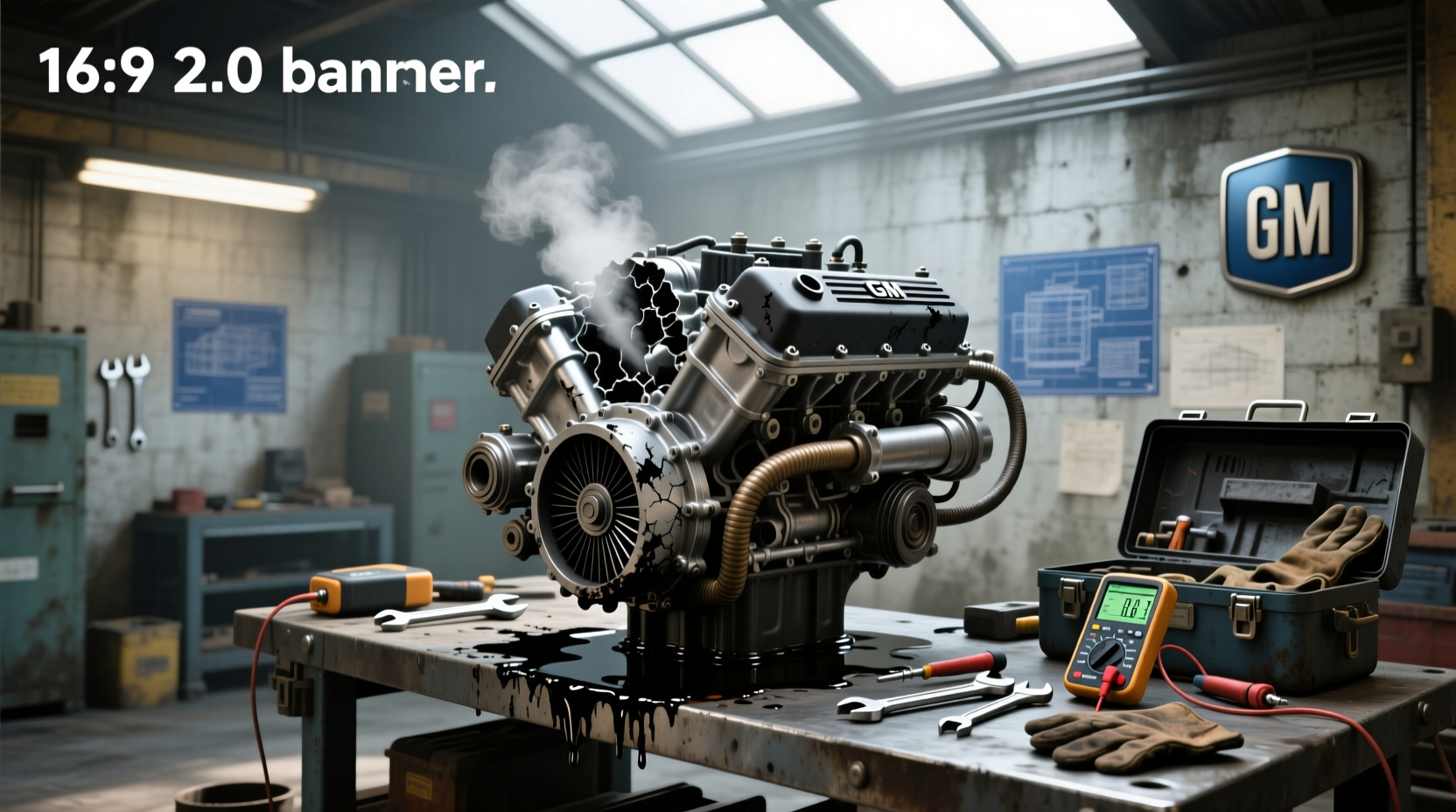
If you're searching for information on GM 2.0 turbo engine problems, you're likely experiencing performance concerns, hearing unusual noises, or considering a used vehicle with this powertrain. The truth is, while General Motors' 2.0L turbocharged Ecotec engines—particularly the LTG and LK9 variants—are generally reliable and deliver strong performance, they are not without known mechanical and design-related issues that can affect longevity and driving experience ✅. This article breaks down the most frequently reported problems, explains their root causes, outlines warning signs, and provides actionable advice for diagnosis, maintenance, and long-term ownership decisions.
Understanding the GM 2.0 Turbo Engine Lineup
The GM 2.0L turbocharged inline-four engine, part of the Ecotec family, has been widely used across multiple brands within the General Motors portfolio since its introduction in the early 2010s 🌐. Key variants include:
- LTG: Introduced around 2012–2013, found in Cadillac ATS, CTS, Chevrolet Camaro (2.0T), Malibu, and Buick Regal
- LK9: A more refined version with direct injection and variable valve timing, used in later models like the Chevrolet Equinox (2018+), Blazer, and Traverse
- LSY: A newer generation introduced from 2019 onward, featuring enhanced fuel efficiency and reduced emissions
These engines typically produce between 250–260 horsepower and 260–295 lb-ft of torque, making them competitive with other turbocharged four-cylinders in their class ⚡. However, despite solid performance metrics, certain model years and applications have shown recurring reliability trends.
Top 5 GM 2.0 Turbo Engine Problems
Based on owner reports, dealership service records, and independent mechanic diagnostics, five primary issues stand out when it comes to the GM 2.0L turbo engine.
1. Carbon Buildup on Intake Valves (Direct Injection Design Flaw)
⚙️ One of the most widespread complaints involves carbon accumulation on the back of intake valves—a direct consequence of using gasoline direct injection (GDI) without port fuel injection.
In traditional port-injected engines, fuel washes over the intake valves, helping keep them clean. In GDI systems, fuel is injected directly into the combustion chamber, bypassing the valves entirely. Over time, oil vapors from the crankcase ventilation system (PCV) mix with exhaust gases via the EGR system, leading to sticky deposits on valve surfaces.
Symptoms include:
- Rough idle or misfires at startup
- Reduced throttle response
- Check Engine Light (CEL) with codes like P0300 (random misfire)
- Decreased fuel economy
Solution: Regular intake valve cleaning (often requiring walnut blasting) every 60,000–100,000 miles is recommended. Some owners install aftermarket catch cans to reduce oil vapor entering the intake tract 🧼.
2. Timing Chain Tensioner Failure
🔧 A more serious issue affecting some early LTG engines involves premature wear or failure of the timing chain tensioner.
This component maintains proper tension on the timing chain, ensuring synchronization between the camshafts and crankshaft. If the tensioner fails, the chain can become loose, jump teeth, or even break—resulting in catastrophic engine damage due to valve-to-piston contact.
Common indicators:
- Loud ticking or rattling noise from the front of the engine, especially at startup
- Engine hesitation or stalling
- Check Engine Light with camshaft position sensor codes (e.g., P0016, P0017)
While not all LTG engines suffer from this, there have been documented cases—especially in 2013–2015 Cadillac ATS and Chevrolet Malibu models—where replacements were needed before 80,000 miles.
Maintenance tip: Use only GM-approved dexos1 motor oil and change it every 5,000–7,500 miles. Poor lubrication accelerates tensioner wear.
3. Oil Consumption and PCV System Issues
🏭 Some owners report excessive oil consumption—burning a quart every 1,500 to 2,000 miles—particularly in higher-mileage examples.
This is often linked to worn piston rings or valve seals, but the root cause may lie in an overactive Positive Crankcase Ventilation (PCV) system that pulls too much oil vapor into the intake manifold. In turbocharged engines, boosted conditions increase crankcase pressure, exacerbating the problem.
Signs of high oil consumption:
- Frequent need to top off engine oil
- Blue-tinted exhaust smoke under acceleration
- Carbon fouling on spark plugs
Preventive steps:
- Monitor oil levels monthly
- Inspect PCV valve operation during routine maintenance
- Consider switching to a slightly higher viscosity oil (e.g., 5W-30 instead of 5W-20) if approved by your vehicle’s manual
4. Turbocharger Actuator and Wastegate Failures
🛒 While the turbocharger itself is generally durable, the electronic actuator controlling boost pressure can fail prematurely.
The actuator adjusts the wastegate position to regulate turbo output. When it malfunctions, the engine may enter limp mode, produce less power, or surge unexpectedly.
Typical symptoms:
- Loss of power or inability to build boost
- Hesitation during acceleration
- DTCs such as P0299 (underboost) or P0244 (wastegate solenoid range/performance)
Replacement actuators are available separately from the full turbo unit, saving cost. However, labor access can be tight depending on the vehicle platform.
5. Coolant Leaks from Thermostat Housing or Water Pump
📍 In several applications, including the Chevrolet Equinox and GMC Terrain with the LK9 engine, coolant leaks develop from the thermostat housing gasket or electric water pump seal.
Because these components are located near the turbocharger and exhaust manifold, leaking coolant can lead to overheating or steam buildup under the hood.
Warning signs:
- Low coolant level without visible external leak
- Overheating gauge fluctuations
- White smoke from exhaust (if coolant enters combustion chamber)
Fixing this usually requires replacing the thermostat housing assembly and/or water pump, which involves moderate labor. Using OEM-grade parts improves longevity.
Are All GM 2.0 Turbo Engines Problematic?
No—not all GM 2.0L turbo engines are plagued by major issues. Many owners report trouble-free operation well beyond 150,000 miles with regular maintenance ✅.
The key differentiator is often the specific engine variant and production year:
- Early LTG engines (2013–2015): More prone to timing chain and carbon buildup issues
- LK9 (2018–2022): Improved design; fewer reports of critical failures, though oil consumption remains a concern in some units
- LSY (2019+): Features stop/start technology and improved thermal management; still relatively new, so long-term data is limited
Additionally, vehicles equipped with cylinder deactivation (like the LSY) may experience unique challenges related to oil control and lifter wear if oil changes are delayed.
How Long Should a GM 2.0 Turbo Engine Last?
With proper care, a GM 2.0L turbo engine should last between 150,000 and 200,000 miles ⏱️. Factors influencing lifespan include:
- Oil change frequency: Dexos1-certified oil changed every 5,000–7,500 miles is crucial
- Driving habits: Frequent short trips prevent the engine from reaching optimal operating temperature, increasing moisture and sludge buildup
- Turbo cooldown: Avoid shutting off the engine immediately after hard driving; allow 30–60 seconds of idle to let the turbo cool
- Air filter condition: A clogged air filter increases strain on the turbo and reduces efficiency
Engines used in hotter climates or subjected to towing/stressful loads may require earlier intervention.
How to Diagnose Potential GM 2.0 Turbo Engine Issues
If you suspect a problem, follow these diagnostic steps:
- Scan for trouble codes: Use an OBD2 scanner to check for stored DTCs (Diagnostic Trouble Codes). Even if the Check Engine Light isn’t on, pending codes may exist.
- Inspect under the hood: Look for oil residue, coolant leaks, or damaged hoses.
- Listen for abnormal noises: Ticking, knocking, or whining sounds warrant further investigation.
- Test drive with attention to performance: Note any hesitation, surging, or lack of power.
- Check oil and coolant levels: Low oil could indicate consumption; milky oil suggests coolant mixing (rare but serious).
For complex issues like carbon buildup or internal wear, a professional inspection—including borescope analysis or compression test—may be necessary 🔍.
Maintenance Tips to Prevent GM 2.0 Turbo Engine Problems
Proactive maintenance is the best defense against costly repairs:
- ✅ Change oil every 5,000–7,500 miles using dexos1-approved synthetic oil
- ✅ Replace air and cabin filters annually or per schedule
- ✅ Clean or replace the PCV valve every 60,000 miles
- ✅ Perform intake valve cleaning (walnut blasting) every 80,000–100,000 miles
- ✅ Inspect coolant system components during routine service
- ✅ Allow turbo cooldown after spirited driving
- ✅ Use high-quality fuel with detergent additives to minimize deposit formation
Buying a Used Car with a GM 2.0 Turbo Engine: What to Watch For
👥 If you're considering a pre-owned vehicle with this engine, conduct thorough due diligence:
- Review service history: Look for consistent oil changes and any past repairs related to the timing chain or turbo system.
- Check for recalls: Search the NHTSA database using the VIN to see if any engine-related campaigns apply.
- Look up common complaints: Forums like GM-Trucks.com, Cadillac Forums, or Reddit’s r/MechanicAdvice often contain real-world experiences.
- Have a pre-purchase inspection (PPI): A trusted mechanic should inspect for leaks, listen for noises, and scan for codes.
- Avoid engines with unknown history: JDM-style imports or rebuilt units without documentation carry higher risk.
Be cautious of deals that seem too good to be true—low mileage doesn't always mean low stress, especially if the previous owner didn't maintain proper warm-up or cooldown routines.
Comparison with Competing Turbocharged Four-Cylinder Engines
To put GM’s 2.0L turbo in context, here's how it compares to similar engines from other manufacturers:
| Engine | Common Issues | Expected Lifespan | Maintenance Notes |
|---|---|---|---|
| GM LTG/LK9 2.0T | Carbon buildup, timing chain tensioner, oil consumption | 150,000–200,000 mi | Frequent oil changes, walnut blasting recommended |
| Ford 2.0L EcoBoost | Carbon buildup, high-pressure fuel pump, cooling issues | 150,000–180,000 mi | Sensitive to oil quality, prone to overheating |
| VW EA888 Gen 3 | Timing chain stretch, oil consumption, turbo actuator | 160,000–200,000 mi | Known for durability with strict maintenance |
| Hyundai Theta II 2.0T | Engine seizure, rod bearing wear (recall affected) | Varies; some failed early | Check recall status; avoid non-replaced units |
While no modern turbocharged four-cylinder is immune to issues, the GM 2.0T ranks mid-tier in overall reliability—better than the problematic Hyundai Theta II but slightly behind the robust VW EA888 in terms of proven longevity.
When to Consider Replacing the Engine
If major internal damage occurs—such as from a failed timing chain or spun bearing—it may be more economical to replace the entire engine rather than rebuild it.
Options include:
- Used engine: Lower cost, but unknown history and limited warranty
- Rebuilt engine: Core engine restored to factory specs; moderate price
- Remanufactured engine: Fully disassembled, inspected, and rebuilt with new components; often comes with 1–3 year warranty ✈️
Websites like eBay, Powertrain Products, and JDM Racing Motors list complete assemblies, but verify compatibility (VIN-specific coding matters) and warranty terms before purchase 🚚.
Final Thoughts: Weighing the Pros and Cons
The GM 2.0L turbo engine offers a compelling blend of performance, efficiency, and compact packaging. However, awareness of its potential weaknesses allows owners to take preventive action and avoid expensive surprises.
Ultimately, whether you're maintaining your current vehicle or evaluating a used purchase, understanding the common GM 2.0 turbo engine problems empowers smarter decisions. Regular maintenance, attentive driving habits, and timely interventions make a significant difference in real-world reliability.
Frequently Asked Questions
- Can I prevent carbon buildup on my GM 2.0 turbo engine?
- Yes. Use high-detergent fuel, change oil regularly, and consider installing an oil catch can. Performing walnut blasting every 80,000–100,000 miles effectively removes existing deposits.
- How do I know if my timing chain tensioner is failing?
- Listen for a metallic ticking noise from the front of the engine, especially at cold startup. A technician can confirm with an OBD2 scan for camshaft timing codes or through physical inspection.
- Is the GM 2.0L turbo engine reliable after 100,000 miles?
- Many are, provided they’ve received regular maintenance. Watch for signs of oil consumption, coolant leaks, or reduced performance, which may signal emerging issues.
- Should I buy a used car with a GM 2.0 turbo engine?
- You can, but only after reviewing service records, checking for open recalls, and getting a pre-purchase inspection. Prioritize models with known maintenance history.
- What’s the average repair cost for a failed turbo actuator?
- Parts range from $200–$500, with labor adding $300–$700 depending on vehicle model. Total cost typically falls between $600 and $1,000.





 浙公网安备
33010002000092号
浙公网安备
33010002000092号 浙B2-20120091-4