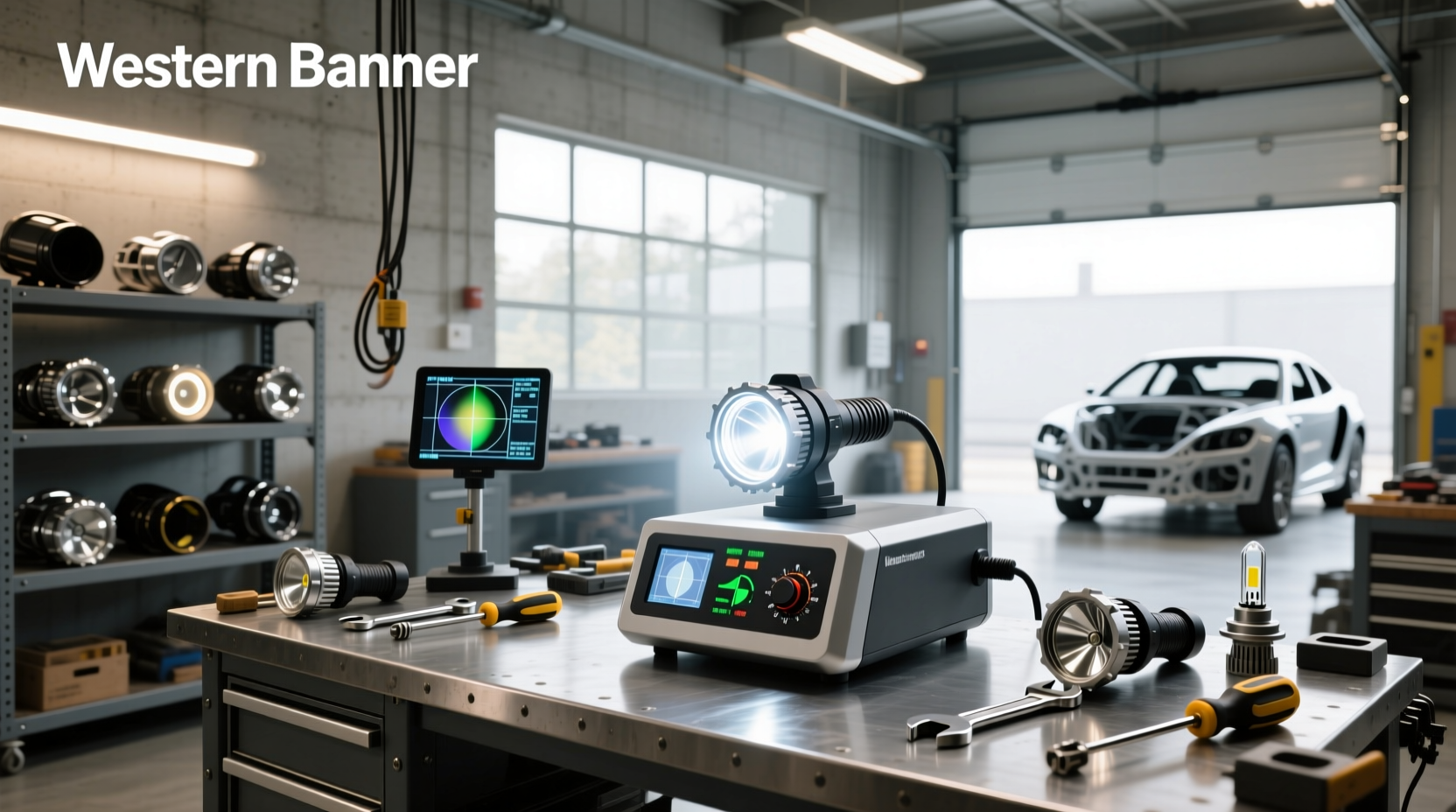
When it comes to ensuring road safety and passing vehicle inspections, properly aligned headlights are non-negotiable. A headlamp tester is a critical diagnostic tool used by automotive professionals to measure and adjust headlight beam direction, intensity, and alignment with precision. Whether you're managing a repair shop, operating a vehicle inspection station, or involved in fleet maintenance, understanding how to select and use the right headlamp testing equipment can significantly impact accuracy, efficiency, and compliance with regional lighting standards.
This guide breaks down everything you need to know about headlamp testers — from core functionality and types (manual vs. automatic), key technical specifications, and common use cases, to practical buying considerations based on your operational scale and regulatory environment. We’ll explore real-world applications across different regions, compare measurement technologies like camera-based systems versus inclinometers, and help you avoid common pitfalls when investing in this essential workshop equipment.
How Does a Headlamp Tester Work?
A headlamp tester evaluates the aim and output of vehicle headlights to ensure they meet legal requirements for safe nighttime driving. Misaligned beams can blind oncoming drivers or fail to illuminate enough of the road ahead, creating serious hazards. The device measures both vertical and horizontal beam deviation, typically displaying results in degrees or millimeters per meter (e.g., mrad).
The most advanced models use camera-based technology ✨ to capture the light pattern projected onto a screen or target board. These systems automatically detect the cutoff line of low beams and center point of high beams, calculating misalignment in real time. Older or budget-friendly units may rely on inclinometers ⚙️ or mechanical gauges that require manual positioning and interpretation.
During operation, the vehicle is positioned at a specified distance from the tester — usually between 3 and 10 meters, depending on the model and calibration method. Some testers come with integrated rails or wheel bases 📍 to ensure consistent placement. Once aligned, the technician activates the headlights, and the system records data for each side independently.
Types of Headlamp Testers: Manual, Semi-Auto, and Fully Automated
Not all headlamp testers are created equal. Your choice should align with your workflow volume, technical expertise, and regulatory demands. Below is a breakdown of the three main categories:
🔧 Mechanical / Manual Headlamp Testers
These are the most basic tools in the category. They often consist of a movable sensor arm equipped with an inclinometer or optical sight. The user manually positions the device in front of each headlight and reads the angle from a dial or digital display.
- Pros: Low cost, portable, no power required for some models
- Cons: Prone to human error, slower process, limited data logging
- Best for: Small garages, mobile technicians, occasional use
⚡ Camera-Based Electronic Testers (Semi-Automatic)
This mid-tier option uses a digital camera mounted on a stand or rail system to analyze the headlight beam. After placing the vehicle correctly, the system captures the beam image and calculates alignment automatically.
- Pros: High accuracy, faster than manual methods, supports left- and right-hand drive configurations
- Cons: Requires stable lighting conditions, higher initial investment
- Examples include: Hofmann 433-HA, BM2600 from BM Test Equipment
🏭 Fully Automated Systems
Integrated into modern inspection lanes, these systems operate without direct technician intervention. Using AI-powered image recognition and motorized positioning, they scan multiple vehicles rapidly and generate compliance reports.
- Pros: Fast throughput, minimal training needed, full traceability and reporting
- Cons: Expensive, requires dedicated space and infrastructure
- Ideal for: Government inspection centers, large dealerships, certification labs
| Type | Average Price Range | Accuracy Level | Setup Time | Recommended Use Case |
|---|---|---|---|---|
| Manual / Inclinometer | $500–$1,500 | Moderate | 5–10 min per vehicle | Small workshops, field service |
| Camera-Based (Electronic) | $2,000–$6,000 | High | 3–5 min per vehicle | Mid-sized repair shops, inspection stations |
| Fully Automated | $10,000+ | Very High | Under 2 min per vehicle | Large-scale inspection facilities |
Key Features to Evaluate Before Buying a Headlamp Tester
Selecting the right unit isn’t just about price. Several technical and operational factors determine long-term value and usability.
✅ Measurement Technology: Camera vs. Inclinometer
Camera-based systems offer superior repeatability and eliminate subjective readings. However, they may struggle under bright ambient light unless shielded. Inclinometers are robust but depend heavily on correct setup and operator skill.
📍 Positioning System: Rails vs. Free-Standing
Testers mounted on rails ensure precise, repeatable alignment relative to the vehicle. Wheel-based or free-standing units offer more flexibility but require careful marking and leveling. For high-volume environments, fixed rail systems reduce variability.
🌐 Software Integration and Reporting
Modern testers often connect to PC software or cloud platforms for storing test records, generating PDF reports, or integrating with broader inspection management systems. Look for units that support export formats compatible with local regulations (e.g., EU MOT, U.S. DOT).
⏱️ Calibration Requirements
All testers drift over time. Check how often recalibration is needed and whether it can be done in-house or must be sent to a certified lab. Some manufacturers offer self-calibrating routines using reference LEDs.
🛒 Compatibility with Vehicle Types
Ensure the tester supports various headlamp technologies: halogen, HID, LED, and adaptive driving beams (ADB). Some older models may not accurately read pixelated or matrix LED systems due to complex beam patterns.
Regional Regulations and Compliance Standards
Headlight aiming rules vary globally, affecting how testers must be configured:
- Europe (ECE R112): Uses symmetric beam patterns; strict limits on glare above the cutoff line.
- United States (FMVSS 108): Allows asymmetric beams with steeper downward tilt on driver’s side (for right-hand traffic).
- Japan (JIS D 5500): Similar to ECE but includes specific tolerances for kei cars and domestic models.
A good headlamp tester should allow switching between regional standards within its software. If you service imported vehicles, dual-mode capability becomes essential.
Common Challenges and How to Avoid Them
Even experienced technicians encounter issues when using headlamp testers. Here are frequent problems and solutions:
🔍 Inconsistent Results Between Tests
Cause: Poor vehicle positioning, unlevel ground, or tire pressure imbalance.
Solution: Always park the vehicle on a level surface, maintain standard load (typically empty except driver), and check tire pressures before testing.
📊 False Readings on LED or Matrix Headlights
Cause: Adaptive systems may cycle through modes during test; cameras might misread dynamic cutoff lines.
Solution: Disable ADB if possible, use static mode, or consult manufacturer guidelines for test procedures.
❗ Equipment Not Recognizing Beam Type
Cause: Outdated firmware or missing lamp profiles in database.
Solution: Regularly update software and verify compatibility list before purchasing.
Where Are Headlamp Testers Used?
Understanding application contexts helps determine what kind of tester fits your needs:
👥 Independent Repair Shops
For shops performing routine maintenance or post-repair checks, a semi-automatic camera tester offers the best balance of speed and affordability. It adds credibility to service reports and reduces liability from improper alignment.
🏢 Official Inspection Stations
In countries with mandatory periodic testing (e.g., Germany’s TÜV, France’s Contrôle Technique), certified, calibrated, and tamper-proof systems are required. These often involve third-party validation and audit trails.
🚚 Fleet Maintenance Centers
Commercial fleets benefit from fast, standardized testing to ensure all vehicles comply with safety standards. Automated systems integrate well with preventive maintenance schedules.
🏭 Manufacturing and Pre-Delivery Inspection (PDI)
Automakers and dealers use high-precision testers during final assembly or PDI to confirm factory settings. These setups often include robotic arms and vision systems for zero-defect quality control.
Cost Considerations and Total Ownership
The upfront cost of a headlamp tester is only part of the equation. Consider total ownership expenses:
- Purchase price: Ranges from under $1,000 for basic models to over $15,000 for automated lines.
- Installation: Rail systems may require floor modifications or anchoring.
- Maintenance: Sensor cleaning, software updates, periodic recalibration (~annually).
- Training: Staff must understand proper setup, interpretation, and troubleshooting.
While cheaper options exist — especially on global marketplaces like Alibaba.com — buyers should assess build quality, after-sales support, and availability of spare parts. A malfunctioning tester can lead to incorrect adjustments and failed inspections downstream.
Used vs. New Headlamp Testers: What You Should Know
Purchasing used equipment can save money, but carries risks:
- Calibration history: Unknown usage may mean inaccurate sensors.
- Obsolete technology: Older models may lack support for modern LED or ADB systems.
- No warranty: Repairs could exceed replacement cost.
If buying used, insist on a demonstration, recent calibration certificate, and access to firmware/software documentation.
Tips for First-Time Buyers
If you’re setting up a new workshop or upgrading outdated tools, follow these steps:
- Assess your volume: Fewer than 5 tests/day? Manual or compact electronic unit suffices.
- Check local laws: Confirm which standards apply and whether digital records are required.
- Verify compatibility: Ensure the tester works with common vehicle makes and headlight types in your region.
- Demand training: Ask suppliers for onboarding sessions or video tutorials.
- Plan for future needs: Choose scalable systems that can add modules later (e.g., brake testers, suspension analysis).
Conclusion: Choosing the Right Tool for Reliable Results
A headlamp tester is more than just a diagnostic gadget — it's a cornerstone of vehicle safety and regulatory compliance. From simple inclinometer-based tools to fully automated inspection cells, the right choice depends on your operational context, accuracy needs, and budget constraints. Prioritize reliability, ease of use, and compatibility with evolving headlight technologies. By investing in a well-suited system and maintaining it properly, you ensure consistent, defensible results that protect both drivers and your business reputation.
Frequently Asked Questions
- Can I use a headlamp tester on LED and adaptive headlights?
- Yes, but only if the tester supports modern beam patterns and has updated software. Some adaptive systems require special modes or disabling ADB temporarily for accurate reading.
- How often should a headlamp tester be calibrated?
- Most manufacturers recommend annual calibration. However, high-use environments may require biannual checks. Always refer to the device manual and local regulatory requirements.
- Do I need a headlamp tester for every vehicle type?
- No single tester fits all scenarios perfectly, but many modern units handle passenger cars, trucks, and motorcycles with adjustable settings. Verify vehicle height range and beam type coverage before purchase.
- Is there a difference between headlamp and headlight testers?
- No significant technical difference — the terms are used interchangeably. 'Headlamp' is more common in Europe, while 'headlight' dominates in North America.
- Can I perform headlight alignment without a professional tester?
- You can use wall projection methods for rough adjustment, but these lack precision and aren't accepted for official inspections. For safety and compliance, a certified headlamp tester is necessary.





 浙公网安备
33010002000092号
浙公网安备
33010002000092号 浙B2-20120091-4