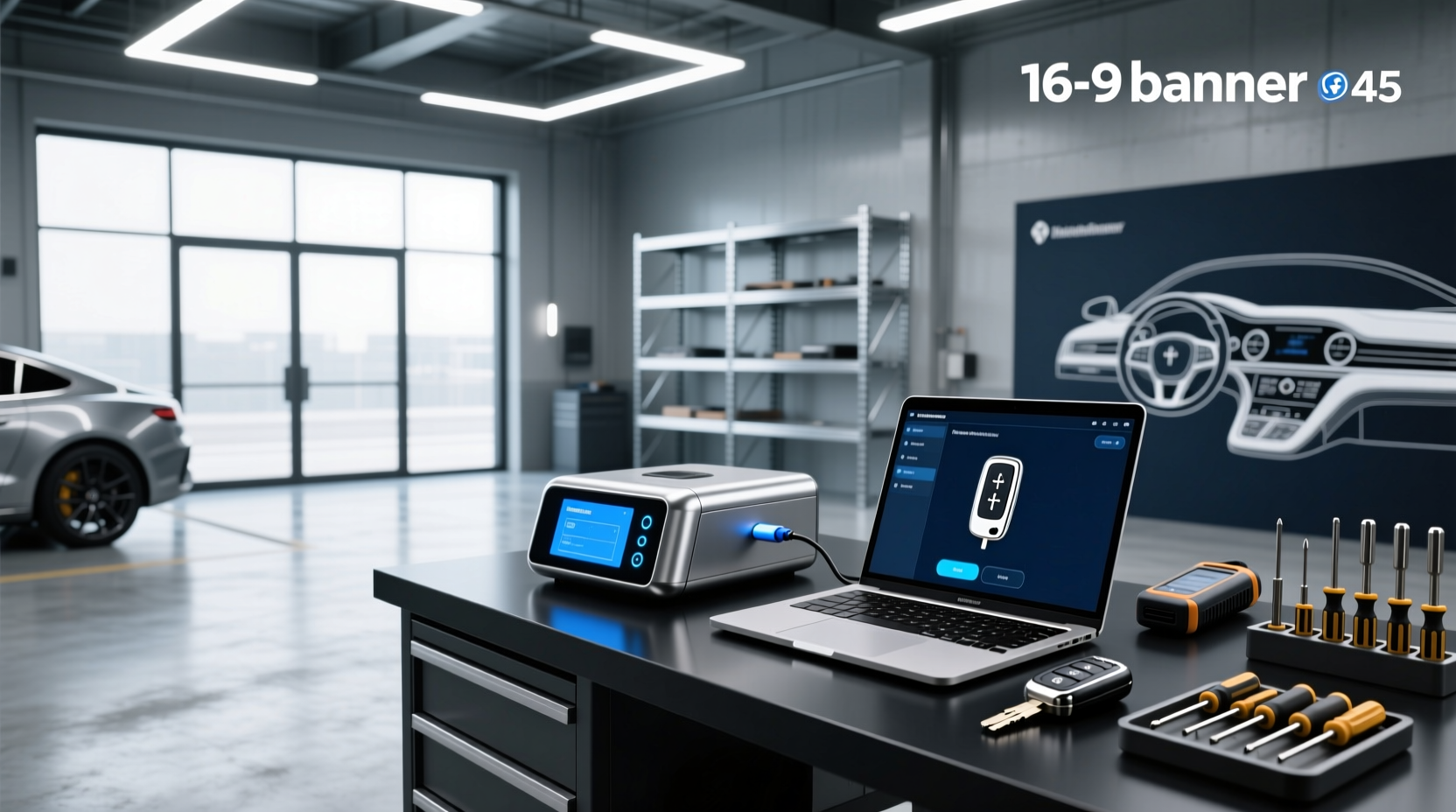
If you're searching for how to use an immobilizer key programmer to replace or duplicate a car key without visiting a dealership, you're not alone. Thousands of DIYers and independent mechanics use these tools every year to save time and money on key replacement. But choosing the right device—and knowing whether it will actually work with your vehicle—requires understanding compatibility, security protocols, and technical limitations. This guide breaks down everything you need to know about immobilizer key programmers, including how they work, which models support common vehicles, and when professional help might still be necessary.
What Is an Immobilizer Key Programmer?
An immobilizer key programmer is a diagnostic tool that communicates with a vehicle’s Engine Control Unit (ECU) or Immobilizer Control Module to register new transponder keys or smart fobs. Modern cars use electronic immobilizer systems to prevent unauthorized engine starts. These systems rely on encrypted chips embedded in the key blade or remote. Without proper programming, even a correctly cut key won’t start the car.
🔧 The programmer connects via the OBD2 port (usually under the dashboard) and sends authentication signals to add, delete, or reprogram keys. Some advanced tools can generate universal transponder codes, while others require original keys to initiate learning modes.
Why Do You Need a Key Programmer?
There are several real-world scenarios where having access to a key programmer becomes essential:
- Lost or damaged keys: Replacing a lost key typically requires full immobilizer system access—not just cutting metal.
- Used car purchases: If previous owners kept spare keys, you may want to erase them from the system for security. \li> DIY repairs: After replacing an ECU or BCM (Body Control Module), reprogramming keys ensures the vehicle recognizes authorized users.
- Cost savings: Dealerships often charge $200–$600 per key; using a compatible programmer can reduce this to under $50 in parts and time.
However, success depends heavily on your vehicle make, model, year, and the encryption method used by its immobilizer system.
Types of Immobilizer Systems and Key Technologies
Not all immobilizers are created equal. Understanding the type of system your car uses helps determine if a given programmer will work.
1. Fixed Code Transponders (Legacy Systems)
Found in older vehicles (pre-2000s), these use simple RFID chips that transmit a static ID number when powered by the ignition coil. Examples include:
- Philips Crypto (used in many Fords and Volvos)
- Toyota G Transponder
- Renault IRIS4
✅ These are relatively easy to clone with basic tools like the XTOOL IM508S or Ldor K518 Pro.
2. Rolling Code / Encrypted Systems (Modern Vehicles)
Post-2000 vehicles increasingly adopted rolling code technology, where each start generates a new encrypted signal. Cloning isn't possible—only official addition through secure handshake protocols.
Examples include:
- BMW EWS III/IV, CAS3/CAS4+
- Mercedes-Benz W204/W207 with NEC/KMZ encryption
- Volkswagen Group MQB platform (PIN + CS required)
- Honda HONDA-IMMO3 with AES encryption
⚠️ Programming these often requires additional data such as PIN codes, CS numbers, or EEPROM dumps—information not always accessible without dealer-level subscriptions.
3. Smart Keys & Push-to-Start Systems
Vehicles with keyless entry and push-button ignition use more complex modules integrating proximity sensing, Bluetooth, and multi-layered encryption. Reprogramming usually involves synchronizing multiple control units (e.g., BCM, Gateway, ECU).
⚙️ Tools like the Autel MaxiIM IM608 Pro or Vidant iSmart 800 Pro BT offer broader coverage for smart key programming across brands like Toyota, Hyundai, and GM.
Key Features to Look for in an Immobilizer Key Programmer
When evaluating devices, focus on functionality rather than brand names. Here are the critical factors:
Vehicle Compatibility
No single tool supports every car. Check manufacturer-provided compatibility lists carefully. Pay attention to:
- Supported makes and models (especially European luxury brands)
- Year ranges (newer models may require firmware updates)
- Specific functions: key addition, key deletion, ECU reset, PIN reading
📌 For example, some programmers support only pre-2018 Ford PATS2 systems but fail on newer SYNC 3-equipped models.
Firmware Updates and Long-Term Support
Immobilizer algorithms evolve constantly. A tool that works today may become obsolete in two years without regular software updates.
- Look for tools offering lifetime free updates (e.g., via cloud sync)
- Avoid devices requiring paid annual subscriptions unless you're a professional shop
- Check community forums for update frequency and bug fixes
Connectivity and User Interface
Most modern tools connect via Wi-Fi or USB to tablets or smartphones. Consider:
- Screen size and readability in sunlight
- Battery life during extended sessions
- On-screen guidance (step-by-step instructions vs. raw menus)
📱 High-end models like the Launch X431 V+ Pro Elite come with ruggedized Android tablets built-in, reducing reliance on external devices.
Security Bypass Capabilities
Some tools claim to “bypass” immobilizers entirely. Be cautious:
- True bypass methods (like EEPROM chip reading/writing) require soldering skills
- Software-only bypasses may violate local laws or void warranties
- Many advertised features only work on specific firmware versions
🔍 Always verify claims through independent reviews or technician communities before purchase.
Can You Program a Key Fob Yourself?
The short answer: yes—but with major caveats.
For basic key fobs (e.g., older Toyotas, Hondas, or domestic trucks), self-programming is straightforward using OBD2-based tools and factory procedures. However, for high-security vehicles (e.g., BMW, Audi, Land Rover), success rates drop significantly due to:
- Lack of access to dealer-only servers for PIN retrieval
- Need for synchronized module coding after key registration
- Requirement of original keys to enter programming mode
⏱️ Even experienced users report needing multiple attempts or supplementary tools (like JMA TPx) to complete certain jobs.
Step-by-Step Process: Programming a Transponder Key
While exact steps vary by vehicle, here's a general workflow using a typical immobilizer key programmer:
- Prepare the vehicle: Ensure battery voltage is stable (>12.4V). Low voltage can interrupt communication and brick modules.
- Connect the programmer: Plug into the OBD2 port (usually below steering column).
- Select vehicle info: Input make, model, year, and engine type accurately.
- Enter programming mode: Follow prompts to initiate key learning. This may require inserting existing keys in sequence.
- Add new key: Place the unprogrammed transponder near the ignition or reader coil.
- Confirm registration: Test the new key by attempting to start the engine.
❗ Failure at any step could mean incompatible hardware, incorrect procedure, or missing security data (e.g., PIN).
Common Mistakes When Using Immobilizer Programmers
Avoid these frequent pitfalls:
Mistake #1: Assuming All Keys Are Equal
Not all blank transponder keys work with all systems. Using the wrong chip type (e.g., T5 vs. ID46 vs. ID48) leads to failed programming. Always match the key to your vehicle’s specification.
Mistake #2: Ignoring Battery Health
A weak car battery can cause communication errors between the ECU and programmer. Use a jump starter or charger during the process.
Mistake #3: Skipping Backup Procedures
Before deleting old keys, ensure at least one working key remains registered. Losing all keys forces expensive recovery procedures involving ECU reflashing.
Mistake #4: Relying Solely on YouTube Tutorials
Video guides often skip critical details like firmware version requirements or regional differences. Cross-reference with official documentation or service manuals.
Professional vs. DIY: When to Call a Locksmith or Dealer
While DIY tools have improved, there are situations where professional expertise is unavoidable:
| Scenario | DIY Feasibility | Recommended Action |
|---|---|---|
| One working key available | High | Use mid-range programmer (e.g., Xtool D7) |
| No working keys (all lost) | Low | Contact locksmith with bench programming capability |
| European luxury vehicle (e.g., Porsche, Jaguar) | Moderate–Low | Verify tool supports VIN-specific protocols first |
| Aftermarket alarm or ECU swap installed | Very Low | Seek specialist with wiring diagnostics experience |
Top-Rated Immobilizer Key Programmers in 2025
Based on user feedback, technical depth, and market availability, here are widely recognized tools:
- X-tool D7: Balanced performance for Asian and American vehicles. Supports over 90% of models up to 2023.
- Autel Maxom MK808S: Integrated with Autel’s broader diagnostic suite. Strong support for Chrysler and Ford immobilizers.
- Vidant iSmart 800 Pro BT: Excellent Bluetooth connectivity and intuitive interface. Popular among mobile locksmiths.
- Ldor K518 Pro: Offers cost-effective access to Mercedes and BMW systems with optional add-on modules.
- Source VVDI Key Tool Plus Pad: Targets high-end European markets with robust encryption handling.
🌐 All require internet access for initial setup and periodic updates. None guarantee 100% coverage across all vehicles.
Legal and Ethical Considerations
Using an immobilizer key programmer isn’t inherently illegal—but how you use it matters.
- You should only program keys for vehicles you own or have explicit permission to service.
- Cloning keys without authorization may violate anti-theft laws in countries like the UK, Australia, and Canada.
- Selling unrestricted programming tools may attract regulatory scrutiny.
Always follow local regulations and ethical guidelines when performing key programming tasks.
Final Tips Before Buying a Key Programmer
Before investing in a tool, ask yourself:
- Do I own multiple vehicles that need occasional key servicing?
- Am I technically comfortable troubleshooting communication errors?
- Will I recoup the cost over time compared to dealership visits?
- Does the tool offer direct customer support or community forums?
🛒 For occasional use, renting equipment or hiring a mobile locksmith may be more economical. For frequent needs (e.g., fleet maintenance), a professional-grade tool pays off within a few jobs.
Frequently Asked Questions
- Can I program a car key with no original keys?
- No, most immobilizer systems require at least one working key to enter programming mode. In cases where all keys are lost, ECU or immobilizer module replacement—and often bench programming—is required.
- Do immobilizer key programmers work on all cars?
- No. Coverage varies widely by brand and model. While many tools support common American and Asian vehicles, European cars with advanced encryption (e.g., Mercedes W213, BMW F-series) may require specialized hardware or dealer access.
- How much does a good key programmer cost?
- Entry-level tools start around $300–$500. Professional models with broad coverage range from $1,500 to $3,000. Additional modules or subscriptions may increase long-term costs.
- Are firmware updates included for life?
- It depends on the brand. Some manufacturers (e.g., Xtool, Launch) offer free lifetime updates. Others charge annual fees after the first year. Always confirm update policy before purchasing.
- Can a key programmer damage my car’s ECU?
- Rarely, but improper use (e.g., voltage spikes, interrupted programming) can corrupt memory in the ECU or immobilizer module. Using a stable power source and following procedures reduces risk.





 浙公网安备
33010002000092号
浙公网安备
33010002000092号 浙B2-20120091-4