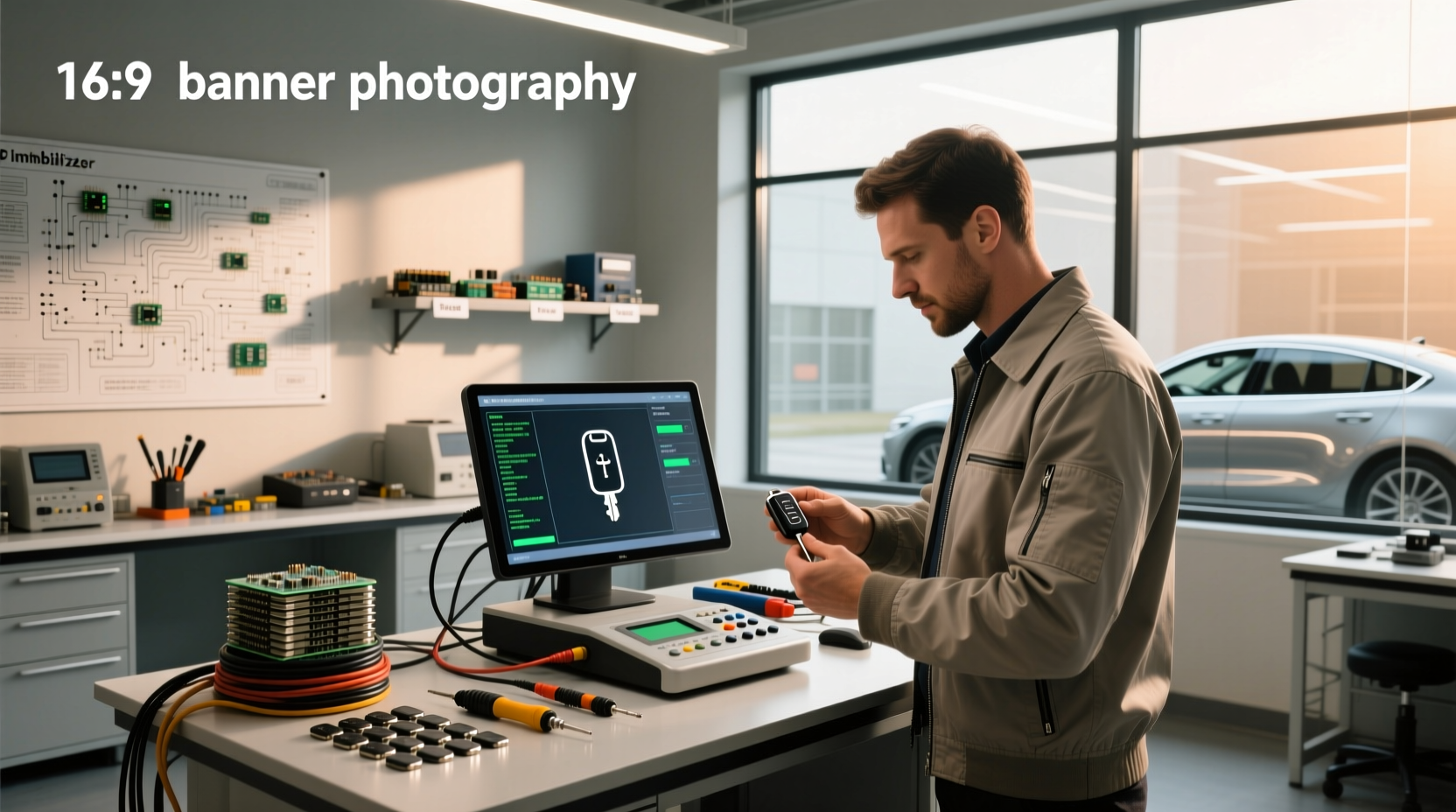
If you're searching for immobilizer key programming, you're likely facing a locked car, lost keys, or replacing a faulty transponder system. The good news is that modern diagnostic tools and standardized OBD2 protocols make it possible—though not always simple—to reprogram immobilizer keys without visiting a dealership. This guide breaks down exactly what immobilizer key programming entails, which tools work across makes and models, when you can do it yourself, and when to seek professional help.
What Is an Immobilizer System and Why Does It Matter?
The engine immobilizer is a built-in electronic security feature designed to prevent unauthorized vehicle starting. It works by disabling the fuel and ignition systems unless the correct transponder-equipped key is detected. When you insert or bring a programmed key near the ignition, the vehicle’s immobilizer control module communicates with a microchip inside the key via radio frequency (RF). If the chip ID matches one stored in the ECU, the engine starts. If not, the car remains disabled—even if someone hot-wires it ⚙️.
This system has significantly reduced car theft since its widespread adoption in the late 1990s. However, it also introduces complexity when replacing keys or repairing electrical components. A failed or unprogrammed key won’t just be inconvenient—it will leave your vehicle completely inoperable ❗.
Common Scenarios That Require Immobilizer Key Programming
- Lost or damaged key: You need to add a new key while deactivating the old one.
- Replacement after theft: All previous keys must be erased from the system.
- Battery replacement in key fob: Sometimes resets memory; may require re-synchronization.
- New ECU or immobilizer module installation: After repair or upgrade, full system reprogramming is required.
- Used car purchase without all original keys: Ensures no prior owner retains access.
Each scenario demands precise steps and compatible equipment. Mistakes can lock you out permanently until professional intervention ✅.
Can You Program an Immobilizer Key Yourself?
Yes—but only under specific conditions. Whether DIY programming is feasible depends on three factors:
- Vehicle make and model year: Older vehicles (pre-2008) often support basic manual programming sequences (e.g., turning the ignition on/off multiple times). Newer cars use encrypted rolling codes that require specialized software.
- Type of immobilizer system: Some brands like Toyota, Honda, and Ford allow limited key additions using OBD2-based tools. Luxury European models (BMW, Mercedes, Audi) typically require dealer-level access or advanced third-party scanners.
- Available tools: Generic code readers won’t suffice. You need a dedicated immobilizer-capable scanner with up-to-date firmware.
For example, certain Hyundai and Kia models let users program spare keys using two already-programmed keys in under five minutes 🔧. In contrast, a 2020 Porsche Cayenne requires secure server authentication through manufacturer-specific platforms, making independent programming nearly impossible without proprietary tools.
Tools Needed for Immobilizer Key Programming
To successfully program an immobilizer key, you’ll need more than just a physical key blank. Here’s what’s essential:
| Tool | Purpose | Required For Most Reprograms? |
|---|---|---|
| OBD2 Immobilizer Scanner | Communicates with ECU, reads PIN codes, adds/deletes keys | ✅ Yes |
| Transponder Key Blanks | Physical keys with embedded chips matching OEM specs | ✅ Yes |
| Vehicle-Specific Software Access | Needed for BMW ISTA, Toyota Techstream, etc. | ⚠️ Varies by brand |
| Power Supply / Battery Maintainer | Prevents voltage drop during programming (critical!) | ✅ Recommended |
| Secondary Authentication Device | e.g., Token generator for Mercedes FBS4 | ⚠️ High-end European cars |
Popular multi-brand tools include devices capable of reading PIN codes, supporting J2534 pass-thru programming, and offering regular firmware updates 🌐. These are used by locksmiths and independent shops to service various makes without relying on dealerships.
Step-by-Step Process: How to Program an Immobilizer Key
While exact steps vary by manufacturer, here's a generalized workflow applicable to many vehicles that support third-party tool programming:
- Prepare the vehicle: Connect a battery maintainer to avoid power loss during the session. Turn off all accessories.
- Access the immobilizer menu: Plug the scanner into the OBD2 port (usually beneath the dashboard), turn the ignition to “ON” (do not start), and launch the immobilizer function.
- Read immobilizer data: Check how many keys are currently registered and verify system status (e.g., no faults).
- Enter security PIN (if required): Some systems require a factory-generated PIN extracted from the ECU or obtained via online calculators based on VIN/chassis number.
- Add new key: Follow on-screen prompts to initiate key learning mode. Insert the new transponder key and confirm detection.
- Test the key: Remove all other keys, turn ignition off, then attempt to start the engine with the newly programmed key.
- Save backup data (optional but advised): Many tools allow saving EEPROM dumps or immobilizer states for emergency recovery.
A single misstep—like a voltage dip or incorrect PIN entry—can trigger a security lockout requiring hours of troubleshooting or even module replacement ⚠️.
Differences Between Brands: What Works Where?
Not all immobilizer systems behave the same. Below is a breakdown of compatibility trends:
- Toyota/Lexus: Often use standardized Toyota TIS protocols. Many models allow key addition via OBD2 after entering a 4–6 digit PIN retrieved from the ECU or provided by dealers.
- Honda/Acura: Use HDS-style systems. Some post-2015 models require immobilizer reset after battery disconnects, even with existing keys.
- Ford/Lincoln: Utilize PATS (Passive Anti-Theft System). Earlier versions were vulnerable to cloning; newer ones use encrypted transponders.
- GM/Chevrolet: PK3/PK4 systems with resistance-based chips evolved into encrypted digital formats. Requires GM-specific scan tools or high-end universal programmers.
- BMW/Mercedes-Benz: Use complex rolling-code encryption tied to central gateway modules. Often require token-based authentication or dealer login credentials.
- Volkswagen/Audi: Use NEC-keyed systems where EEPROM reading/writing is necessary. Misprogramming can brick the instrument cluster.
Always confirm tool compatibility before attempting any procedure. A tool advertised as “universal” may still lack support for certain VIN ranges or regional variants 🌍.
When Should You Avoid DIY Immobilizer Programming?
Despite advances in consumer-grade tools, there are clear situations where professional assistance is safer and more cost-effective:
- You have only one remaining key (most systems require at least two valid keys to add a new one).
- Your vehicle uses encrypted immobilizers (e.g., Mercedes FBS4, BMW CAS4+) requiring online synchronization.
- The ECU or immobilizer module was replaced and needs coding from scratch.
- You’re unsure about retrieving PIN codes or handling EEPROM backups.
- There’s an active immobilizer fault code (e.g., U0140 – Lost Communication with Immobilizer Module).
In these cases, attempting DIY fixes could result in permanent immobilization, necessitating tow services and expensive bench repairs 🚚.
Cost Comparison: DIY vs Dealership vs Locksmith
Understanding cost drivers helps decide whether to invest in tools or pay for service:
| Option | Average Cost (USD) | Time Required | Best For |
|---|---|---|---|
| DIY with Tool | $300–$900 (one-time) | 30–90 mins | Frequent key needs, hobbyists, small shops |
| Dealership Service | $250–$600 per key | 1–3 hours | New cars under warranty, complex systems |
| Mobile Locksmith | $120–$250 per key | 45–75 mins | Emergency roadside service, older models |
While buying a programmer seems expensive upfront, it pays off over time if you manage multiple vehicles. However, keep in mind that firmware subscriptions and regional restrictions may apply ⏱️.
Common Myths About Immobilizer Key Programming
Misinformation leads to frustration and wasted effort. Let’s clarify some misconceptions:
- Myth: Any OBD2 scanner can program keys. Reality: Only scanners with dedicated immobilizer functions and updated databases can perform this task.
- Myth: Replacing the battery in a key fob erases programming. Reality: Transponder chips retain memory, but some smart fobs may lose sync and require re-pairing.
- Myth: Immobilizers can be bypassed easily with cheap tools. Reality: Modern encrypted systems resist brute-force attacks; low-cost “bypass modules” often fail or damage ECUs.
- Myth: Used ECUs work immediately after swap. Reality: Swapped modules usually come locked and must be matched to the vehicle’s VIN and keys.
Tips for Success When Programming Immobilizer Keys
- Always back up immobilizer data before making changes ✅.
- Use OEM-spec key blanks—cheap clones may not register reliably.
- Ensure stable power supply throughout the process 🔋.
- Double-check vehicle year, make, model, and engine type in the tool database.
- Keep original keys secure and functional—they’re often needed for future programming.
- Update scanner firmware regularly to maintain compatibility.
Legal and Ethical Considerations
Programming immobilizer keys involves accessing sensitive vehicle controls. In most jurisdictions, you must prove ownership or authorization before performing such tasks. Unauthorized key programming may violate anti-theft laws or void insurance policies ❗.
Reputable tools enforce VIN logging and usage tracking to deter misuse. Always follow ethical guidelines and local regulations when assisting others with key programming 👥.
Conclusion: Is Immobilizer Key Programming Worth Doing Yourself?
For technically inclined users with compatible vehicles, DIY immobilizer key programming offers independence and long-term savings. With the right OBD2 scanner and careful preparation, adding or replacing keys is achievable outside dealership networks. However, high-security systems, lack of backup keys, or unfamiliarity with diagnostics warrant professional help to avoid downtime.
The key takeaway? Know your vehicle’s immobilizer type, assess your tools and skills honestly, and never skip safety steps like battery maintenance. Whether you choose DIY or professional service, understanding the process empowers better decisions and prevents costly errors ⚡.
Frequently Asked Questions
- Can I program an immobilizer key without any special tools?
- No, you need an OBD2 scanner with immobilizer programming capability. Basic code readers cannot communicate with the security system.
- Why won’t my newly programmed key start the car?
- Common causes include incomplete programming sequence, low battery voltage during setup, incorrect key type, or existing system faults (check for error codes).
- Do I need to program both the transponder and remote functions separately?
- Yes. Immobilizer programming enables engine start; remote functions (lock/unlock) require separate key fob pairing, often done through the vehicle’s settings menu or diagnostic tool.
- Can a locksmith program immobilizer keys cheaper than a dealership?
- Typically yes. Mobile locksmiths use similar tools but charge less than dealerships, especially for standard replacements. Prices vary by region and vehicle complexity.
- Will programming a new key erase my old ones?
- It depends on the procedure. Adding a key usually preserves existing ones. Performing a ‘key all keys lost’ operation erases all prior registrations—you’ll need to reprogram every key afterward.





 浙公网安备
33010002000092号
浙公网安备
33010002000092号 浙B2-20120091-4