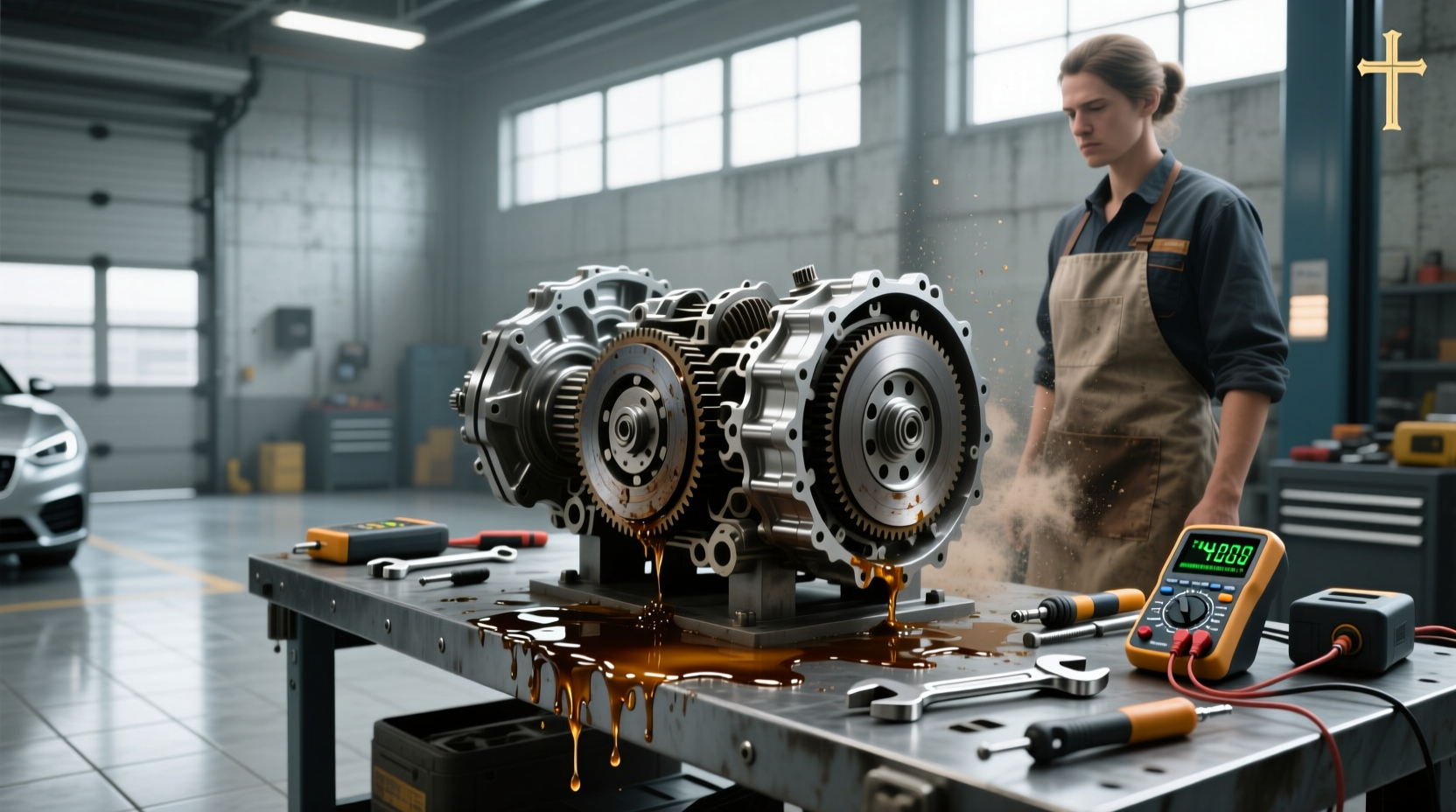
Owners of 2012–2016 Ford Focus, Fiesta, and other models equipped with the Powershift dual-clutch automatic transmission have frequently reported issues such as shuddering, hesitation, gear slippage, and premature clutch failure. These recurring powershift transmission problems stem from its dry dual-clutch design, lack of a torque converter, and software-related control challenges—particularly under low-speed driving conditions. While some owners have found relief through TCM (Transmission Control Module) updates or driving habit adjustments, others continue to experience reliability concerns even after repairs. This guide breaks down the root causes, real-world symptoms, potential fixes, and long-term ownership implications so you can make informed decisions about repair, maintenance, or replacement.
What Is a PowerShift Transmission?
The Ford PowerShift transmission is a 6- or 7-speed dual-clutch automatic gearbox introduced in the late 2000s and used primarily in compact Ford vehicles like the Focus and Fiesta from 2010 to 2016. Unlike traditional automatic transmissions that use a torque converter, the PowerShift relies on two wet or dry clutch packs—one for odd gears and one for even—to enable rapid, seamless shifts by pre-selecting the next gear 1.
This system was designed to improve fuel efficiency and deliver sportier performance compared to conventional automatics. However, the version used in North American and European markets—specifically the DPS6 (Dual Clutch PowerShift 6-speed)—utilized a dry clutch configuration, which became central to many of its reliability issues.
Why Did Ford Use a Dry Clutch Design?
Ford’s decision to implement a dry clutch in the PowerShift aimed at reducing mechanical complexity, weight, and parasitic losses—all contributing to better fuel economy. In theory, this setup works well in light-duty applications with smooth engagement. But in real-world urban driving—characterized by frequent stop-and-go traffic—the dry clutches are prone to overheating, wear, and inconsistent engagement.
In contrast, most other automakers using dual-clutch systems (like Volkswagen’s DSG or Porsche’s PDK) opted for wet clutch designs, where the clutch assembly is submerged in oil for cooling and durability. The absence of this feature in the Ford PowerShift made it less robust under sustained load or aggressive use.
Common PowerShift Transmission Problems
Based on widespread owner reports, service bulletins, and technical forums, several recurring problems define the PowerShift experience:
- Shuddering or jerking during take-off: Especially noticeable at low speeds or when moving from a stop, often linked to worn or contaminated clutch plates.
- Delayed or missed shifts: Caused by software lag or sensor inaccuracies in predicting driver intent.
- Transmission hesitation under AC load: When air conditioning engages, engine load increases, causing momentary power interruption during gear changes.
- Clutch slippage or burning smell: A sign of excessive heat buildup due to repeated partial engagement or aggressive driving.
- Sudden loss of power or limp mode activation: Often triggered by overheating or internal fault detection.
- Noise during shifting (grinding, clunking): May indicate synchronizer wear or hydraulic pressure issues.
These symptoms typically emerge between 40,000 and 80,000 miles, though earlier failures have been documented, particularly in high-traffic urban environments.
Did Ford Ever Fix the PowerShift Transmission?
Ford acknowledged transmission complaints and issued multiple Technical Service Bulletins (TSBs) over the years, including updates to the Transmission Control Module (TCM) software aimed at smoothing shift behavior and improving clutch engagement logic. Some owners reported noticeable improvements after a TCM reflash, especially in reducing hesitation and smoother low-speed operation.
However, software alone could not resolve fundamental hardware limitations. In later model years (around 2015–2016), Ford began phasing out the dry-clutch PowerShift in favor of traditional automatic transmissions in certain markets. For example, the U.S.-spec Ford Focus switched to a conventional 6-speed automatic starting in 2015, effectively discontinuing the problematic unit.
So while Ford attempted to mitigate issues via calibration updates, there was no comprehensive hardware redesign that fully resolved the core weaknesses of the dry dual-clutch system.
Do All 2012 Ford Focus Models Have PowerShift Transmission?
No, not all 2012 Ford Focus vehicles came with the PowerShift transmission. It was standard on SE and SEL trims with the 2.0L Duratec engine, but only if the automatic transmission option was selected. The base S trim typically came with a manual MTX75 transmission as standard equipment.
Additionally, enthusiasts have noted that swapping to the MTX75 manual transmission—a known durable unit—is a popular long-term solution among owners seeking reliability 2. This conversion eliminates the PowerShift entirely and restores predictable driving dynamics.
Can Driving Habits Reduce PowerShift Issues?
Yes—many experienced owners report that modifying driving behavior can reduce stress on the transmission and delay symptom onset:
- Avoid 'creeping' in traffic: Instead of lightly pressing the accelerator to inch forward, come to a complete stop and restart smoothly. This reduces clutch slippage.
- Use neutral at extended stops: Shifting into Neutral (N) when stopped for more than 10–15 seconds helps cool the clutch pack.
- Pre-cool before hills or towing: Let the vehicle idle briefly before ascending steep grades to stabilize clutch temperature.
- Minimize rapid acceleration from stop: Aggressive launches generate excess heat and wear.
Some forums also mention a ground modification—improving electrical grounding between the transmission and ECU—which some believe stabilizes communication signals and improves shift consistency.
Maintenance Tips to Extend PowerShift Life
Although Ford originally claimed the PowerShift required no regular fluid changes, many mechanics and specialists now recommend proactive maintenance:
| Maintenance Task | Recommended Interval | Potential Benefit |
|---|---|---|
| Transmission fluid & filter change | Every 40,000–60,000 miles | Removes debris, restores hydraulic pressure |
| TCM software update | As available (check dealer or independent shop) | Improved shift logic, reduced hesitation |
| Clutch inspection (via diagnostic scan) | At first sign of shudder or delay | Early detection prevents total failure |
| Cooling system check | Annually or with fluid service | Ensures proper thermal management |
Using OEM-specified fluids is critical—aftermarket substitutes may not meet thermal or friction requirements. Some shops offer a “transmission flush,” but experts caution against high-pressure flushing, which can dislodge debris and cause blockages. A simple drain-and-fill with filter replacement is generally safer.
Is PowerShift Transmission Good? A Reliability Review
Evaluating whether the PowerShift is “good” depends heavily on usage context:
- For highway commuters: With minimal stop-and-go driving, the PowerShift can last beyond 100,000 miles with proper care.
- For city drivers: Frequent starts/stops accelerate wear; failure before 80,000 miles is common.
- For performance or towing use: Not recommended—the system lacks durability under sustained load.
Reliability ratings from consumer agencies and independent surveys consistently rank the PowerShift-equipped Focus and Fiesta below average for powertrain dependability. J.D. Power and Consumer Reports both listed transmission concerns among top complaints during the 2012–2014 model years.
How to Diagnose PowerShift Problems Early
Early diagnosis can prevent catastrophic failure. Watch for these warning signs:
- Subtle vibration at take-off: Feels like driving over rumble strips at 5–10 mph.
- Increased shift time: Noticeable pause between pressing gas and vehicle response.
- Check Engine Light or Wrench Icon: Often indicates transmission fault codes (e.g., P178F, P276C).
- Burning odor near center console: Suggests overheated clutch material.
- Inconsistent behavior in Eco mode: More pronounced shuddering due to delayed upshifts.
A qualified technician can pull stored OBD-II codes and assess clutch wear using live data parameters such as clutch slip rate and engagement timing. Independent specialists familiar with Ford DPS6 units often provide more detailed analysis than dealerships.
Repair vs. Replace: What Are Your Options?
Once significant symptoms appear, owners face three main paths:
1. Repair (Clutch Pack Replacement + TCM Update)
Rebuilding the transmission involves replacing the internal clutch packs and updating the TCM. Labor-intensive and costly ($2,500–$4,000), this fix may restore function—but does not guarantee long-term reliability, especially if driving habits remain unchanged.
2. Used or Remanufactured Unit Swap
Installing a salvaged or remanufactured PowerShift avoids labor costs of rebuilding. However, used units may have unknown wear history, and remanufactured versions still use the same flawed design.
3. Manual Transmission Conversion
Many owners opt to replace the PowerShift entirely with the robust MTX75 manual transmission. This requires a donor car, ECU tuning, and physical installation work, but results in a reliable, engaging driving experience. Kits and guides are available online from enthusiast communities.
Are There Aftermarket Upgrades Available?
Currently, no direct aftermarket upgrade exists for the PowerShift transmission itself. Unlike performance-oriented DCTs, there are no reinforced clutch kits or enhanced cooling systems widely available. However, some tuners offer ECU/TCM recalibration services to adjust shift points and improve throttle-blip coordination during downshifts.
Aftermarket support remains limited due to low demand and the platform’s declining market presence. As Ford discontinued the PowerShift in most passenger vehicles, focus has shifted toward newer transmission technologies.
Powershift in Other Applications: Tractors and Heavy Equipment
It's important to distinguish Ford’s automotive PowerShift from similarly named systems in agricultural and off-highway machinery. Brands like John Deere, ZF, and Dana manufacture powershift transmissions for tractors that allow clutch-free gear changes under load 3. These are robust, torque-converter-based units designed for heavy-duty use—not related to Ford’s dual-clutch passenger car system.
Confusion arises because the term “powershift” generically refers to any transmission capable of shifting under load. Always verify the context—automotive vs. industrial—when researching parts or solutions.
Should You Buy a Used Car with PowerShift Transmission?
If considering a used Ford Focus or Fiesta from 2010–2016, proceed with caution:
- Verify the transmission type: Confirm it’s not a PowerShift if avoiding known issues.
- Get a pre-purchase inspection: Have a specialist test-drive and scan for hidden codes.
- Ask for service records: Look for TCM updates or prior transmission work.
- Test drive in city conditions: Replicate stop-and-go driving to observe shift quality.
Vehicles with documented maintenance and post-repair TCM updates may be acceptable, but expect higher long-term ownership risk compared to models with conventional automatics or manuals.
Conclusion: Weighing the Risks and Realities
The Ford PowerShift transmission represents an ambitious engineering effort that fell short in real-world durability. While it delivered on fuel economy goals, its dry dual-clutch design proved unsuitable for everyday driving demands. Software updates provided marginal improvements, but could not overcome inherent thermal and mechanical limitations.
For current owners, proactive maintenance, adjusted driving habits, and early diagnostics offer the best chance of extending lifespan. For buyers, choosing a manual-transmission variant or opting for a different model altogether remains the most reliable path.
Frequently Asked Questions (FAQs)
Q: Can I drive with a failing PowerShift transmission?
A: Short-term driving may be possible, but continued use risks complete failure and higher repair costs. If shuddering or slipping occurs, limit driving and seek diagnosis.
Q: How much does PowerShift transmission repair cost?
A: Clutch replacement and rebuild typically range from $2,500 to $4,000 at a dealership. Independent shops may offer lower rates, but results vary.
Q: Does changing transmission fluid fix PowerShift problems?
A: Not always, but fresh fluid can help if contamination or degradation is present. It’s a preventive step, not a cure for worn clutches.
Q: Is the PowerShift the same as a DSG transmission?
A: Both are dual-clutch designs, but Volkswagen’s DSG uses a wet clutch (in most versions), making it more durable than Ford’s dry-clutch PowerShift.
Q: Are there class-action lawsuits over PowerShift issues?
A: Yes, multiple class-action suits were filed in the U.S. and Australia. Some resulted in extended warranties or buyback programs, though these have largely expired.





 浙公网安备
33010002000092号
浙公网安备
33010002000092号 浙B2-20120091-4