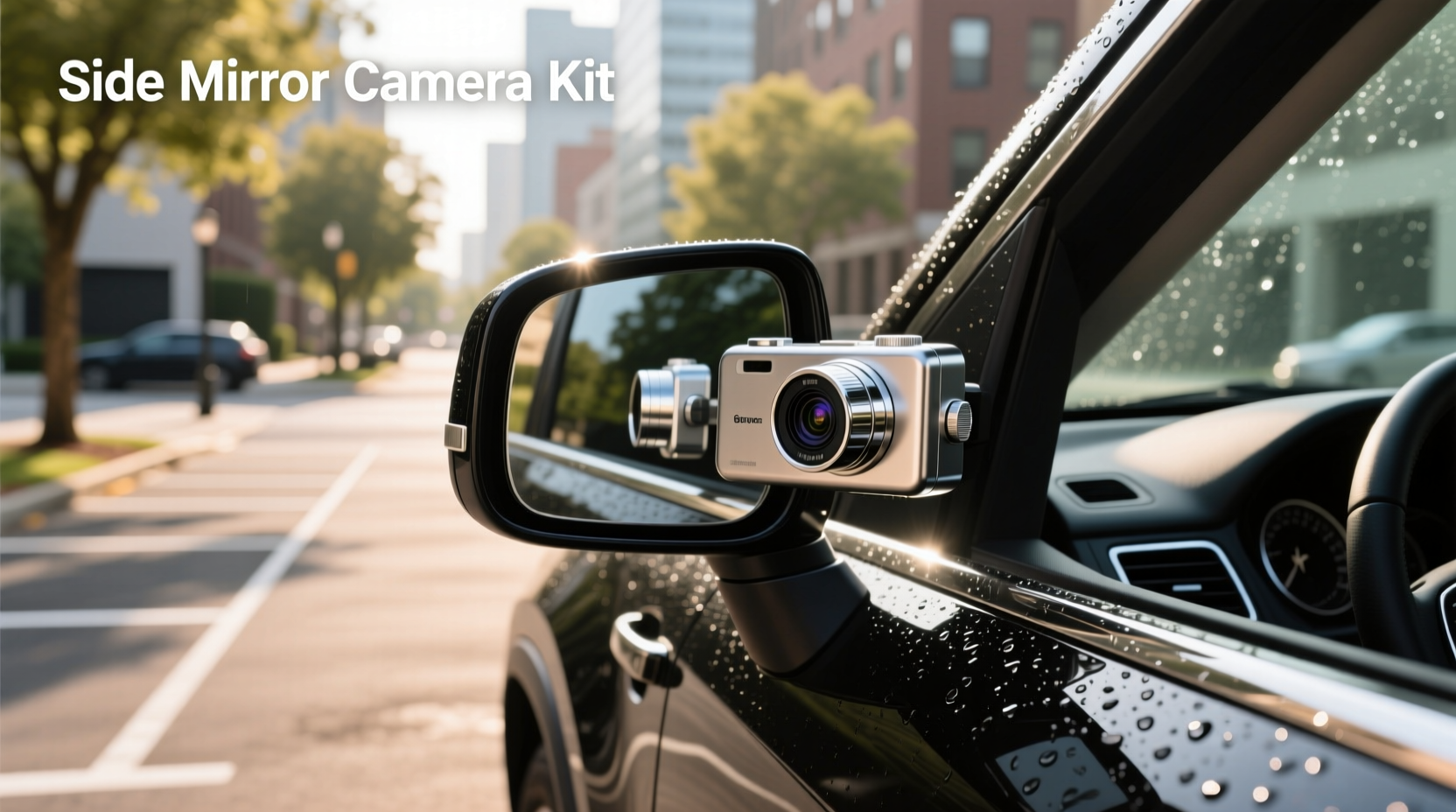
Upgrading your vehicle's traditional side mirrors with a side mirror camera kit can significantly improve road visibility, especially in low-light conditions or tight parking situations. These systems replace or supplement standard mirrors with compact cameras that transmit real-time video to a display inside the cabin—often integrated into the rearview mirror or dashboard. As automakers like Honda, Audi, and Tesla adopt camera-based mirror technology, aftermarket solutions are becoming more accessible for older vehicles too1. Whether you're looking to reduce blind spots, improve aerodynamics, or modernize your car’s tech, understanding how these kits work—and what to look for—is essential before making a decision.
Why Drivers Are Switching to Side Mirror Camera Systems
Traditional side mirrors have limitations: they create wind noise, increase drag, and often fail to eliminate blind spots completely. A side mirror camera kit addresses these issues by offering wider viewing angles, digital zoom, and night vision capabilities. Drivers report improved confidence during lane changes and highway merging because the camera feed provides a clearer, less distorted view than flat or convex glass mirrors.
One major advantage is dynamic adjustment. Unlike fixed mirrors, camera views can be digitally panned or tilted depending on speed or steering input. Some advanced systems automatically switch to the passenger-side camera when indicating a turn, mimicking OEM-level functionality found in high-end models like the Honda e or Audi e-tron. This kind of adaptive assistance reduces cognitive load and helps prevent accidents involving cyclists or adjacent vehicles.
Types of Side Mirror Camera Kits Available
Not all side mirror camera systems are created equal. They vary based on integration method, power source, display type, and compatibility. Understanding the main categories will help you choose the right setup for your needs.
1. Add-On Camera Kits (Aftermarket)
🛒 These are designed for retrofitting onto existing side mirrors. The cameras mount externally using adhesive brackets or drill mounts and connect wirelessly or via coaxial cable to an internal monitor. Most operate on 12V power from the fuse box or OBD-II port.
- Pros: Easy to install, affordable, compatible with most vehicles
- Cons: May require drilling, exposed wiring if not routed properly
These kits typically support left and/or right-side installation and often include waterproof ratings up to IP68, ensuring durability in rain, snow, or car washes. Resolution ranges from 720p to 1080p HD, with wide-angle lenses (150°–170°) to maximize coverage.
2. Integrated Mirror-Dash Cams
⚙️ These units replace the entire rearview mirror with a smart device that includes built-in screens and multiple camera inputs. Popular models allow connection to front, rear, and side cameras—all managed through one interface.
- Pros: Clean installation, minimal clutter, unified user experience
- Cons: Higher cost, may not fit all mirror bases
Some mirror-dash cams offer additional features such as Apple CarPlay, Android Auto, GPS tracking, and emergency recording triggered by G-sensors. Brands like Rydeen and WOLFBOX produce models that accept AHD (Analog High Definition) signals from side cameras, enabling plug-and-play expansion.
3. OEM-Style Replacement Mirrors with Built-In Cameras
🏭 These mimic factory-installed systems by embedding small cameras directly inside redesigned mirror housings. They look nearly identical to stock mirrors but transmit video instead of reflecting light.
- Pros: Sleek appearance, aerodynamic design, no external protrusions
- Cons: Vehicle-specific fitment, higher price point, professional installation recommended
These are ideal for enthusiasts seeking a clean, modern upgrade without visible modifications. However, compatibility must be verified carefully—some only work with certain makes or model years.
Key Features to Evaluate Before Buying
When comparing different side mirror camera kits, several technical and practical factors should guide your choice. Prioritize reliability, clarity, and ease of use over flashy extras.
📹 Video Quality and Lens Type
Look for at least 1080p resolution and a wide dynamic range (WDR) sensor. WDR ensures balanced exposure in mixed lighting—critical when transitioning from tunnels to sunlight. Low-light performance matters too; infrared or starlight sensors help maintain visibility at night.
The lens angle should cover at least 150 degrees laterally. Too narrow, and you’ll miss approaching traffic; too wide, and distortion increases at the edges. Fisheye correction software in the display unit can mitigate this issue.
💧 Weather Resistance and Build Quality
📍 Since cameras are mounted externally, they must withstand moisture, dust, vibration, and temperature extremes. An IP67 or IP68 rating indicates full protection against water immersion and particulate ingress. Stainless steel or UV-resistant plastic housings resist corrosion and yellowing over time.
🔌 Power and Signal Transmission
Two primary options exist: wired and wireless transmission.
| Transmission Type | Latency | Reliability | Installation Difficulty |
|---|---|---|---|
| Wired (AHD/Coaxial) | Low (~0.1s) | High – immune to interference | Moderate – requires routing cables |
| Wireless (Wi-Fi/RF) | Medium (~0.3–0.5s) | Variable – prone to signal dropouts | Easy – no drilling needed |
While wireless kits offer simpler installation, latency can affect responsiveness during fast maneuvers. For consistent performance, especially in urban environments with many radio signals, wired connections are preferred.
🖥️ Display Options and User Interface
The display is where the camera feed becomes useful. Common options include:
- Dedicated LCD screen mounted near the dash
- Integrated mirror display (replaces rearview mirror)
- Infotainment system integration (requires compatible head unit)
✅ Choose a display with anti-glare coating and adjustable brightness. Touch controls can simplify menu navigation, but physical buttons are more reliable while driving.
Common Installation Scenarios and Tips
🔧 Installing a side mirror camera kit varies by vehicle and kit type. Here’s a general workflow:
- Choose mounting location: Cameras should face slightly downward to capture the curb and side lanes. Avoid obstructions like door seals or trim pieces.
- Route wiring: Run cables along the door frame gasket into the cabin. Use rubber grommets to prevent chafing.
- Connect power: Tap into a switched 12V source so cameras activate with ignition.
- Pair with display: Follow manufacturer instructions to sync camera feeds.
- Test and calibrate: Adjust viewing angle and verify image orientation (some systems include flip function for driver-side mounting).
⏱️ DIY installations typically take 1–3 hours. If you’re uncomfortable working with electrical systems, consider professional help. Poor grounding or incorrect polarity can damage components.
Legal Considerations and Regional Differences
🌐 Regulations regarding camera-based mirrors vary globally. In the U.S., the National Highway Traffic Safety Administration (NHTSA) permits camera systems as mirror replacements under Federal Motor Vehicle Safety Standard (FMVSS) No. 111, provided they meet minimum visibility requirements2.
However, some states still require physical mirrors in addition to cameras. Canada generally follows similar rules but enforces stricter electromagnetic interference standards. In Europe, ECE Regulation 46 allows camera-monitor systems if certified by an approved body.
❗ Always check local laws before removing original mirrors entirely. Even if legal, insurers may question modifications after an accident.
Potential Drawbacks and Limitations
No technology is perfect. While side mirror camera kits offer clear benefits, they come with trade-offs:
- Lag in video feed: Especially with wireless systems, even slight delays can disrupt spatial judgment.
- Screen dependency: Requires driver attention shift to monitor—potentially increasing distraction.
- Failure modes: Electronics can malfunction due to moisture, impact, or voltage spikes.
- Cost vs. benefit: For city drivers with frequent parking challenges, the investment pays off. For highway-only users, traditional mirrors may suffice.
🧼 Maintenance is another consideration. Camera lenses can accumulate dirt, ice, or water droplets, obscuring the view. Hydrophobic coatings help, but periodic cleaning remains necessary.
How Side Cameras Compare to Traditional Mirrors
Let’s compare core attributes between conventional mirrors and camera-based systems:
| Feature | Traditional Mirrors | Camera-Based Systems |
|---|---|---|
| Field of View | Limited by glass size | Adjustable, wider angles possible |
| Night Visibility | Reflective glare from headlights | No glare, enhanced low-light imaging |
| Aerodynamics | Bulky, creates drag | Streamlined, lower wind resistance |
| Durability | Resistant to weather, mechanical failure rare | Susceptible to electronic faults |
| Blind Spot Coverage | Partial, requires head movement | Near-complete, real-time monitoring |
This comparison shows that while cameras outperform mirrors in visibility and adaptability, they introduce new dependencies on power, software, and screen integrity.
Who Should Consider a Side Mirror Camera Kit?
👥 Not every driver needs this upgrade. It makes the most sense for:
- Fleet operators managing large vehicles with significant blind zones
- Urban commuters navigating narrow streets and bike lanes
- Drivers with neck mobility issues limiting shoulder checks
- Owners of older trucks or vans lacking modern safety aids
If you frequently tow trailers, park in tight garages, or drive in heavy traffic, the added situational awareness justifies the cost. Conversely, if your car already has blind spot monitoring and good mirror geometry, the marginal gain might not warrant the effort.
Frequently Asked Questions
- Can I legally remove my side mirrors and use only cameras?
- In some regions, yes—but only if the camera system meets regulatory standards for field of view, latency, and redundancy. Always confirm local laws before removal.
- Are side mirror camera kits waterproof?
- Most reputable kits have an IP67 or IP68 rating, meaning they’re sealed against dust and temporary water immersion. Proper installation ensures long-term protection.
- Do these systems work in snowy conditions?
- Snow accumulation on the lens can block the view. Some models include heating elements or hydrophobic coatings to mitigate this, but manual clearing may still be needed.
- Can I install a side camera kit myself?
- Yes, many kits are designed for DIY installation with detailed instructions. Basic tools and familiarity with automotive wiring improve success rates.
- Will a side mirror camera kit drain my battery?
- When wired to an ignition-switched circuit, the system only operates when the engine runs. If connected directly to the battery, it could cause parasitic drain unless equipped with auto-shutdown.





 浙公网安备
33010002000092号
浙公网安备
33010002000092号 浙B2-20120091-4