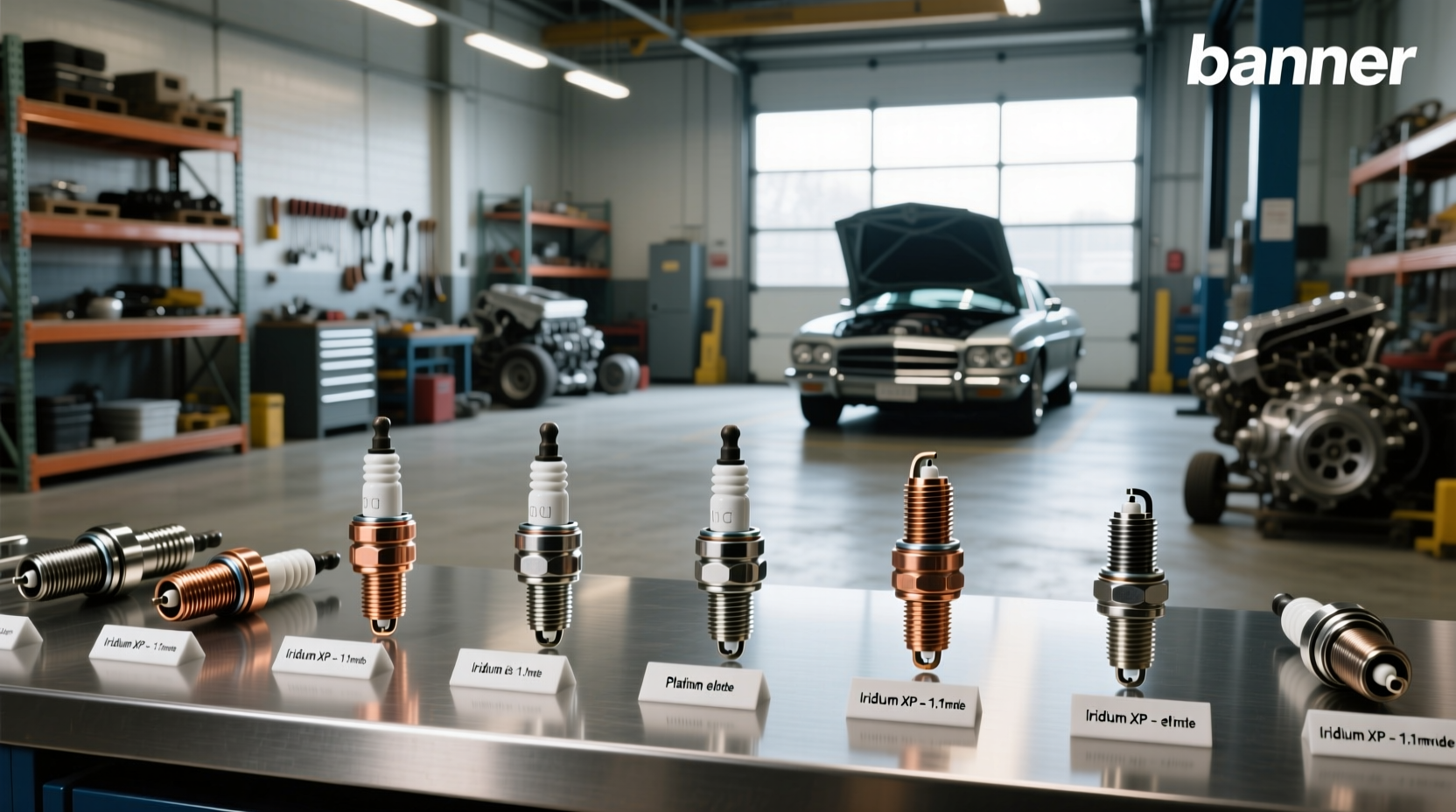
When it comes to maintaining optimal engine performance, understanding the different types of spark plugs is essential. Not all spark plugs are created equal—variations in electrode material, design, and heat range significantly impact ignition efficiency, fuel economy, and engine longevity. Whether you're replacing worn-out plugs or upgrading for better performance, knowing the key differences between copper, platinum, iridium, and other spark plug types helps ensure compatibility and reliability. This guide breaks down each type’s construction, advantages, lifespan, and ideal use cases so you can make an informed decision based on your vehicle’s requirements and driving conditions.
Why Spark Plug Type Matters for Engine Performance
The primary function of a spark plug is to deliver an electrical spark that ignites the air-fuel mixture inside the combustion chamber 1. While this may seem straightforward, the effectiveness of that spark depends heavily on the plug’s design and materials. Using the wrong type can lead to misfires, reduced fuel efficiency, increased emissions, or even engine damage over time.
Modern engines are engineered with specific ignition demands. High-performance vehicles often require finer-wire electrodes and higher durability, while older or standard models might perform well with more basic designs. Additionally, factors like turbocharging, compression ratio, and fuel type (gasoline vs. CNG/LPG) influence which spark plug type performs best. Selecting the correct one isn’t just about fit—it’s about matching thermal characteristics, resistance to wear, and voltage requirements to your engine’s operating profile.
Main Types of Spark Plugs by Electrode Material
The most significant distinction among spark plugs lies in the metal used for the center and ground electrodes. These materials determine conductivity, melting point, corrosion resistance, and service life. Below are the four primary types available today:
Copper Core Spark Plugs
🔧 Construction: Copper core spark plugs feature a soft copper core surrounded by a nickel alloy electrode. The copper provides excellent thermal conductivity, helping transfer heat away from the tip efficiently.
✅ Pros:
- Excellent electrical conductivity
- Lower cost compared to precious-metal variants
- Good cold-start performance due to efficient heat dissipation
❌ Cons:
- Softer metal wears faster, leading to shorter lifespan (~20,000–30,000 miles)
- Nickel alloy electrode erodes quicker under high temperatures
- Not suitable for modern distributorless ignition systems (DIS) or coil-on-plug setups
📌 Best For: Older vehicles manufactured before the mid-1990s, especially those with conventional ignition systems. Still found as OEM parts in some economy cars where long-term durability isn’t prioritized.
Platinum Spark Plugs
🔧 Construction: Platinum plugs use a platinum disc welded to the tip of the center electrode. Some models also include platinum on the ground electrode (double platinum), enhancing durability.
✅ Pros:
- Higher melting point than nickel alloys (~3,224°F / 1,773°C)
- Greater resistance to erosion and fouling
- Longer lifespan (~60,000–100,000 miles)
- Suitable for modern electronic ignition systems
❌
- Less conductive than copper, requiring slightly higher voltage
- More expensive than standard copper plugs
- Single platinum versions still wear faster than iridium
📌 Best For: Vehicles with distributorless ignition systems, particularly V6 and inline-four engines designed from the late 1990s onward. Commonly used as original equipment in many Honda, Toyota, and Ford models.
Iridium Spark Plugs
🔧 Construction: Iridium spark plugs utilize a fine-wire iridium center electrode, typically only 0.4–0.6 mm in diameter. This ultra-thin design allows for lower required firing voltage and more precise sparking.
✅ Pros:
- Extremely high melting point (~4,435°F / 2,446°C)
- Superior resistance to wear and deposits
- Longest lifespan of any common plug type (~80,000–120,000 miles)
- Improved throttle response and fuel efficiency
- Fine wire design enables consistent spark even at low voltages
❌ Cons:
- Highest initial cost among mainstream options
- Overkill for low-compression, non-performance engines
- Requires proper gap setting; fragile tip can be damaged during handling
📌 Best For: Modern high-efficiency engines, direct-injection systems, turbocharged applications, and performance vehicles. Frequently specified by manufacturers like Acura, Lexus, and BMW.
Ruthenium Spark Plugs (Emerging Option)
🔧 Construction: A newer addition to the market, ruthenium spark plugs use ruthenium-tipped electrodes. Ruthenium offers a balance between iridium’s durability and platinum’s stability.
✅ Pros:
- High melting point (~4,150°F / 2,287°C)
- Better anti-corrosion properties than platinum
- Can operate effectively in lean-burn and high-compression environments
- Some designs allow for extended service intervals
❌ Cons:
- Limited availability and application-specific fitment
- Premium pricing, similar to iridium
- Still being evaluated for long-term field performance
📌 Best For: Select newer European and Japanese vehicles where OEM specifications call for advanced noble-metal technology. Not yet widely adopted but gaining traction in premium segments.
Design Variations Beyond Material: Surface Discharge & Projected Nose Plugs
While electrode material is the main differentiator, physical design also plays a crucial role in performance and compatibility.
Surface Discharge Spark Plugs
⚙️ Unlike traditional spark plugs that create a spark across a defined gap between center and ground electrodes, surface discharge plugs lack a protruding ground strap. Instead, the spark travels along the insulator surface.
✨ Advantages:
- Reduced risk of quenching (flame suppression near cold metal)
- Better performance in rotary engines (e.g., Mazda RX-7/RX-8)
- Resistant to carbon buildup in certain configurations
❗ Limitations:
- Less precise spark control
- Typically shorter lifespan due to insulator wear
- Niche application—rarely used in standard piston engines
Projected Nose Spark Plugs
⚙️ These have an extended ceramic insulator nose that projects further into the combustion chamber. This positioning places the spark closer to the center of the air-fuel mixture.
✨ Advantages:
- More efficient ignition, especially in lean-burn engines
- Helps reduce carbon deposits by keeping tip temperature higher
- Common in many OEM applications for improved emissions control
❗ Considerations:
- Must match engine chamber depth—too long can cause piston contact
- More susceptible to overheating if heat range is incorrect
Heat Range: Why It’s Just as Important as Plug Type
Each spark plug type comes in various heat ranges, indicating how quickly the plug transfers heat from the firing tip to the cylinder head. Choosing the correct heat range is critical:
- Hot plugs retain more heat, helping burn off deposits—ideal for short-trip city driving.
- Cold plugs dissipate heat faster, preventing pre-ignition in high-performance or turbocharged engines.
Selecting a plug with the wrong heat range—even if the material is correct—can result in fouling (if too cold) or piston damage (if too hot). Always refer to your vehicle manufacturer’s recommendation or consult a reliable cross-reference chart when selecting replacements.
How to Choose the Right Spark Plug Type for Your Vehicle
Selecting the appropriate spark plug involves more than just matching thread size. Consider these five key factors:
- Manufacturer Specifications: Check your owner’s manual or service documentation for recommended plug type, gap, and heat range.
- Ignition System Type: Distributorless and coil-on-plug systems benefit from platinum or iridium plugs due to their durability under repeated high-voltage discharges.
- Driving Conditions: Frequent short trips increase carbon buildup—platinum or iridium helps resist fouling. Highway driving favors longer-life plugs.
- Fuel Type: Natural gas (CNG/LPG) engines run hotter and produce different combustion byproducts. Specialized plugs with modified electrode geometry and materials are often required 2.
- Performance Goals: Upgraded intake or forced induction systems may demand colder heat ranges and more durable electrode materials.
🧰 Pro Tip: Never assume compatibility based on appearance. Use a trusted plug lookup tool or consult a professional mechanic when unsure.
Common Misconceptions About Spark Plug Types
Despite their simplicity, several myths persist about spark plugs:
- Myth: “More expensive plugs always improve horsepower.”
Reality: Unless your engine is tuned to take advantage of a finer spark or higher durability, gains are negligible. Focus on correct specification over price. - Myth: “Iridium plugs last forever.”
Reality: While long-lasting, they still degrade over time. Environmental factors, oil consumption, and poor fuel quality shorten lifespan. - Myth: “Any plug that fits will work.”
Reality: Incorrect reach, seat type, or heat range can cause serious engine issues including detonation or physical damage.
Maintenance Tips for Maximizing Spark Plug Life
To get the most out of any spark plug type, follow these maintenance practices:
- Inspect regularly: Remove and examine plugs every 30,000 miles to check for signs of fouling, erosion, or abnormal wear patterns.
- Check gap: Even pre-gapped plugs can be damaged in shipping. Verify gap with a wire feeler gauge before installation.
- Torque correctly: Under-tightening causes poor heat transfer; over-tightening risks damaging the cylinder head threads.
- Replace in sets: Mixing old and new plugs leads to uneven combustion and potential misfires.
- Address root causes: If plugs foul repeatedly, investigate underlying issues like oil burning, rich fuel mixture, or weak ignition coils.
FAQs About Spark Plug Types
Below are answers to frequently asked questions related to spark plug types and selection:
| Can I replace copper spark plugs with iridium? | Yes, provided the heat range, thread size, and reach are identical. Iridium offers longer life and better performance but at a higher cost. Ensure compatibility using a fitment guide. |
| Do all V8 engines use the same type of spark plug? | No. While most V8s use individual plugs per cylinder (totaling eight), the type varies by make, model, and year. Some use platinum, others iridium or even dual-electrode designs. |
| How do I know if my engine needs surface-discharge spark plugs? | Only certain engines—primarily rotary designs—require surface-discharge types. Consult your service manual or OEM specifications to confirm. |
| Are there spark plugs specifically for natural gas engines? | Yes. CNG and LNG engines generate higher combustion temperatures and different deposit profiles. Dedicated natural gas spark plugs feature specialized materials and electrode configurations for durability. |
| Does spark plug material affect fuel economy? | Indirectly. Superior materials like iridium maintain consistent spark efficiency over time, which supports optimal combustion. Worn copper plugs may cause slight drops in fuel economy due to misfires. |





 浙公网安备
33010002000092号
浙公网安备
33010002000092号 浙B2-20120091-4