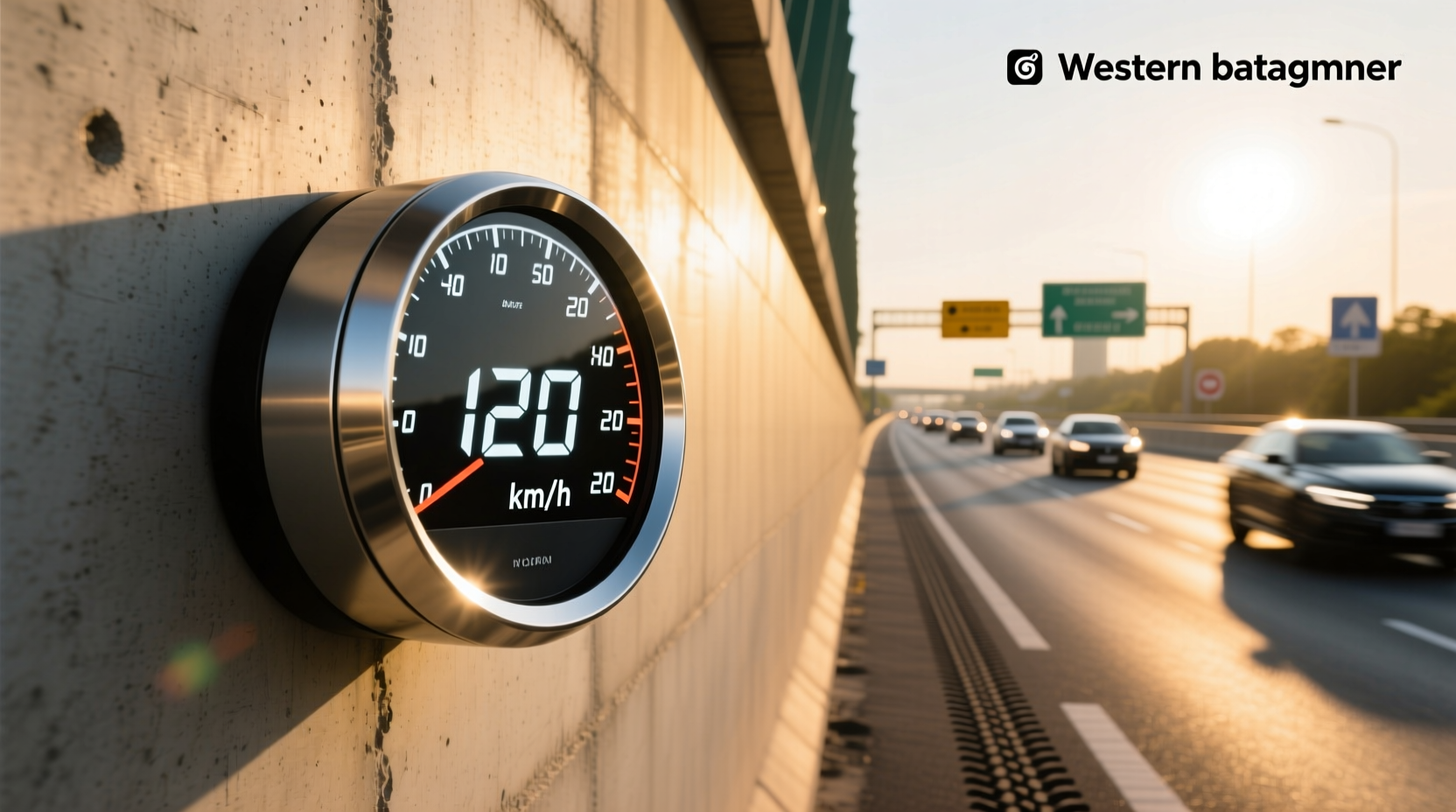
When you're evaluating a used vehicle or verifying instrument cluster accuracy, performing a speed test odometer check is essential for ensuring the displayed mileage reflects actual travel distance. This process helps detect tampering, calibration errors, or mechanical faults in both analog and digital systems. Whether you’re a mechanic, car buyer, or fleet manager, understanding how to accurately perform a speed test on an odometer can prevent costly mistakes and support transparency in vehicle history assessment.
What Is a Speed Test for an Odometer?
A speed test for an odometer involves measuring the relationship between vehicle speed and distance traveled over time to verify whether the odometer reading aligns with real-world performance. While often confused with speedometer testing, this evaluation goes beyond instantaneous speed measurement—it focuses on cumulative distance recording accuracy. The goal is to confirm that the odometer increments correctly as the vehicle moves, which directly impacts resale value, maintenance scheduling, and legal compliance.
This type of test is especially important when inspecting pre-owned vehicles, where odometer fraud remains a persistent issue. According to the National Highway Traffic Safety Administration (NHTSA), thousands of cases of rolled-back odometers are reported annually in the U.S. alone1. A proper speed test provides objective data to either validate or challenge the recorded mileage.
Why Conduct a Speed Test on an Odometer?
There are several practical reasons why someone would need to run a speed test on an odometer:
- Fraud Detection: Identifying if the mileage has been altered illegally.
- Pre-Purchase Inspection: Buyers use it to verify claims made by sellers.
- Fleet Maintenance: Companies track wear-and-tear based on accurate mileage logs.
- Calibration Verification: After repairs or part replacements (e.g., sensors, ECUs), confirming correct function.
- Legal Compliance: Some regions require odometer verification during registration or import processes.
Ignoring this step could lead to purchasing a vehicle with hidden damage due to excessive use, incorrect service intervals, or future disputes over title legitimacy.
Types of Odometers and How They Work
To understand how a speed test works, it's crucial to know the two main types of odometers currently in use:
Mechanical Odometers (Analog)
Found primarily in older vehicles, these rely on a physical cable connected from the transmission to the instrument cluster. As the driveshaft rotates, the cable turns gears inside the speedometer head, moving the needle and advancing the mileage counter. Over time, wear in the cable or gear train can cause inaccuracies, making a speed test necessary to assess drift.
Electronic/Digital Odometers
Modern vehicles use electronic systems where wheel speed sensors send signals to the Engine Control Unit (ECU) or Body Control Module (BCM). These modules calculate speed and update the digital odometer reading stored in memory. Because they’re software-controlled, they’re more precise—but also vulnerable to manipulation via diagnostic tools.
Digital odometers are typically integrated into the vehicle’s CAN bus network, meaning any changes must be synchronized across multiple control units to avoid error codes. However, specialized odometer programming devices exist that allow recalibration under legitimate circumstances—such as replacing a faulty dashboard unit.
Tools Used for Speed Testing an Odometer
Accurate testing requires appropriate equipment. Here are the most commonly used tools:
OBD2-Based Diagnostic Scanners
On-Board Diagnostics (OBD2) scanners connect to the vehicle’s data port and retrieve live sensor readings, including vehicle speed and stored mileage from various modules. Advanced models like the AUTOOL CS310 can read mileage data from multiple ECUs simultaneously, helping detect discrepancies that suggest tampering 🛒.
These devices do not alter data but extract it directly from the vehicle’s internal networks. When conducting a speed test, technicians compare GPS-derived movement data with ECU-reported values to identify inconsistencies.
GPS Speedometers and Mobile Apps
Smartphone apps such as GPS Speedometer & Odometer use satellite signals to measure speed and distance independently of the vehicle’s system 🌐. While less precise than professional tools, they offer a low-cost method for preliminary checks.
For example, driving at a constant 60 km/h for 10 minutes should result in approximately 10 kilometers added to the odometer. Comparing this with GPS-tracked distance gives a quick indication of accuracy. Limitations include signal delay, terrain interference, and app calibration issues.
Professional Speedometer Testers
Used in automotive workshops, these bench or road-based testers simulate wheel rotation and measure output from the speed sensor or instrument cluster. Devices like the MAHA TPS II EURO VP 440003 apply controlled input and monitor response, allowing detailed analysis of both speedometer and odometer behavior 🔧.
They are often used during MOT inspections or after component replacement to ensure full functionality before returning a vehicle to service.
Online Speed Test Tools
Solutions like Zpeed.in provide web-based speedometers that use a phone’s GPS to display real-time speed without installing an app ⏱️. While convenient for casual users, they lack the precision needed for formal verification and should only be used for rough estimates.
Step-by-Step Guide: How to Perform a Speed Test on an Odometer
Follow this structured approach to conduct a reliable speed test:
- Inspect Physical Condition: Check for signs of tampering—loose dials, misaligned numbers, scratches around screws, or mismatched fonts in digital displays.
- Record Initial Readings: Note the current odometer value from the dashboard and, if possible, from the ECU via OBD2 scan.
- Select a Controlled Route: Choose a straight, flat road with minimal traffic and good GPS reception.
- Drive at Constant Speed: Maintain a steady speed (e.g., 50–70 mph) for at least 10 miles (16 km). Use cruise control if available.
- Track GPS Distance: Use a calibrated GPS device or app to record the exact distance traveled.
- Compare Final Readings: Add the expected mileage to the initial reading and compare it with the post-drive odometer value.
- Analyze Discrepancies: A variance greater than ±3% may indicate a problem requiring further investigation.
If differences exceed acceptable tolerance, consider retrieving stored mileage from other vehicle modules (e.g., transmission control unit, airbag module) using advanced scanning tools. Inconsistent readings across modules strongly suggest odometer rollback.
Common Challenges and Misinterpretations
Several factors can affect the outcome of a speed test, leading to false conclusions:
- Tire Size Variations: Larger or smaller tires change the effective rolling radius, altering distance calculations. Always verify original tire specifications.
- Aftermarket Wheels: Modified suspensions or non-standard rims impact speed sensor input and thus odometer accuracy.
- Software Glitches: In rare cases, corrupted firmware in digital clusters can freeze or miscalculate mileage.
- Rollback Detection Algorithms: Some modern vehicles store historical mileage snapshots in multiple locations. Even if the display is changed, hidden logs may reveal prior readings.
Understanding these variables ensures that your speed test results reflect true system performance rather than external influences.
Regional Differences in Odometer Regulations
Laws regarding odometer accuracy and modification vary significantly by country:
- United States: Federal law prohibits odometer tampering under 49 U.S.C. § 32703. Sellers must disclose mileage changes and provide written statements.
- European Union: Regulations require that any replacement of digital dashboards includes proper mileage transfer procedures. Unauthorized adjustments are considered criminal offenses.
- India: While enforcement is improving, odometer fraud remains widespread. Independent testing through authorized centers is recommended before purchase.
- Canada: Transport Canada enforces strict penalties for falsification, similar to U.S. standards.
In regulated markets, certified inspection reports often include odometer validation as part of safety or emissions testing. Always check local requirements before relying solely on visual or manual checks.
Can You Trust Digital Odometers?
While digital odometers are generally more accurate than mechanical ones, they are not immune to manipulation. Specialized tools marketed as “odometer correction devices” enable rewriting of mileage data, sometimes legally—for instance, when replacing a malfunctioning instrument cluster.
However, unregulated use creates opportunities for fraud. Unlike mechanical rollbacks, digital edits leave no visible trace unless forensic-level diagnostics are performed. That’s why relying solely on the displayed number is risky. Cross-referencing with service records, previous inspection reports, and ECU data is critical.
Best Practices for Verifying Odometer Accuracy
To maximize confidence in your findings, follow these best practices:
- Use Multiple Data Sources: Combine GPS tracking, OBD2 scans, and physical observation.
- Check Service History: Compare past maintenance entries with current readings for consistency.
- Verify VIN Records: Access vehicle history reports (like Carfax or AutoCheck in North America) for documented mileage over time.
- Consult Professionals: For high-value purchases, hire a certified technician with access to multi-module scanning tools.
- Document Everything: Take photos, save GPS logs, and keep scan printouts for future reference.
When Not to Rely on a Speed Test Alone
A speed test provides valuable insight but isn’t foolproof. Situations where additional verification is needed include:
- Newly Replaced Instrument Clusters: If the dashboard was recently changed, the mileage might have been reset or reprogrammed.
- Vehicles with Known Electrical Issues: Intermittent faults can corrupt stored data.
- Imported Vehicles: Units from countries with different measurement standards may require conversion or recalibration.
- Hybrid/Electric Cars: Regenerative braking and complex powertrain logic can influence sensor outputs.
In such cases, deeper diagnostics using manufacturer-specific software may be required.
Emerging Technologies in Odometer Validation
The automotive industry is adopting blockchain-based vehicle histories and secure cloud logging to combat fraud. Some luxury brands now store encrypted mileage records that cannot be altered without detection. Additionally, AI-powered analytics can detect anomalies in driving patterns that suggest inconsistent usage relative to reported mileage.
As connectivity increases, future vehicles may automatically sync verified mileage to owner accounts, reducing reliance on manual testing methods.
Conclusion: Why Accurate Odometer Testing Matters
Performing a speed test on an odometer is a vital step in assessing a vehicle’s true condition. It protects buyers from fraud, supports fair pricing, and ensures accurate maintenance planning. By combining modern tools like OBD2 scanners and GPS verification with careful observation and documentation, individuals and professionals alike can make informed decisions about vehicle integrity.
Remember, no single method guarantees 100% accuracy. The key lies in triangulating evidence from multiple sources to build a complete picture of a vehicle’s journey.
Frequently Asked Questions (FAQs)
Can I perform a speed test on an odometer myself?
Yes, you can conduct a basic speed test using a smartphone GPS app and a known route. Drive at a consistent speed for a set distance and compare the odometer increase with the GPS-measured distance. While not as precise as professional tools, it can reveal major discrepancies.
What is the acceptable margin of error in an odometer speed test?
Most manufacturers allow a tolerance of up to ±3%. For example, if you drive 100 km, the odometer should read between 97 km and 103 km. Exceeding this range warrants further investigation.
Are there legal consequences for odometer rollback?
Yes, tampering with an odometer is illegal in many countries, including the U.S. and EU nations. Offenders can face fines, imprisonment, and civil liability. Sellers are required to disclose any changes to the recorded mileage.
Do GPS apps replace professional odometer testing tools?
No, GPS apps are useful for estimation but lack the precision and integration capabilities of professional OBD2 scanners. They don’t access vehicle module data or detect hidden mileage logs, so they shouldn’t be relied upon for formal assessments.
How often should an odometer be tested?
Routine testing isn’t necessary for personal vehicles unless there’s suspicion of tampering or after major repairs involving the instrument cluster or ECU. For fleet operators or used car dealers, regular checks help maintain accountability and trust.





 浙公网安备
33010002000092号
浙公网安备
33010002000092号 浙B2-20120091-4