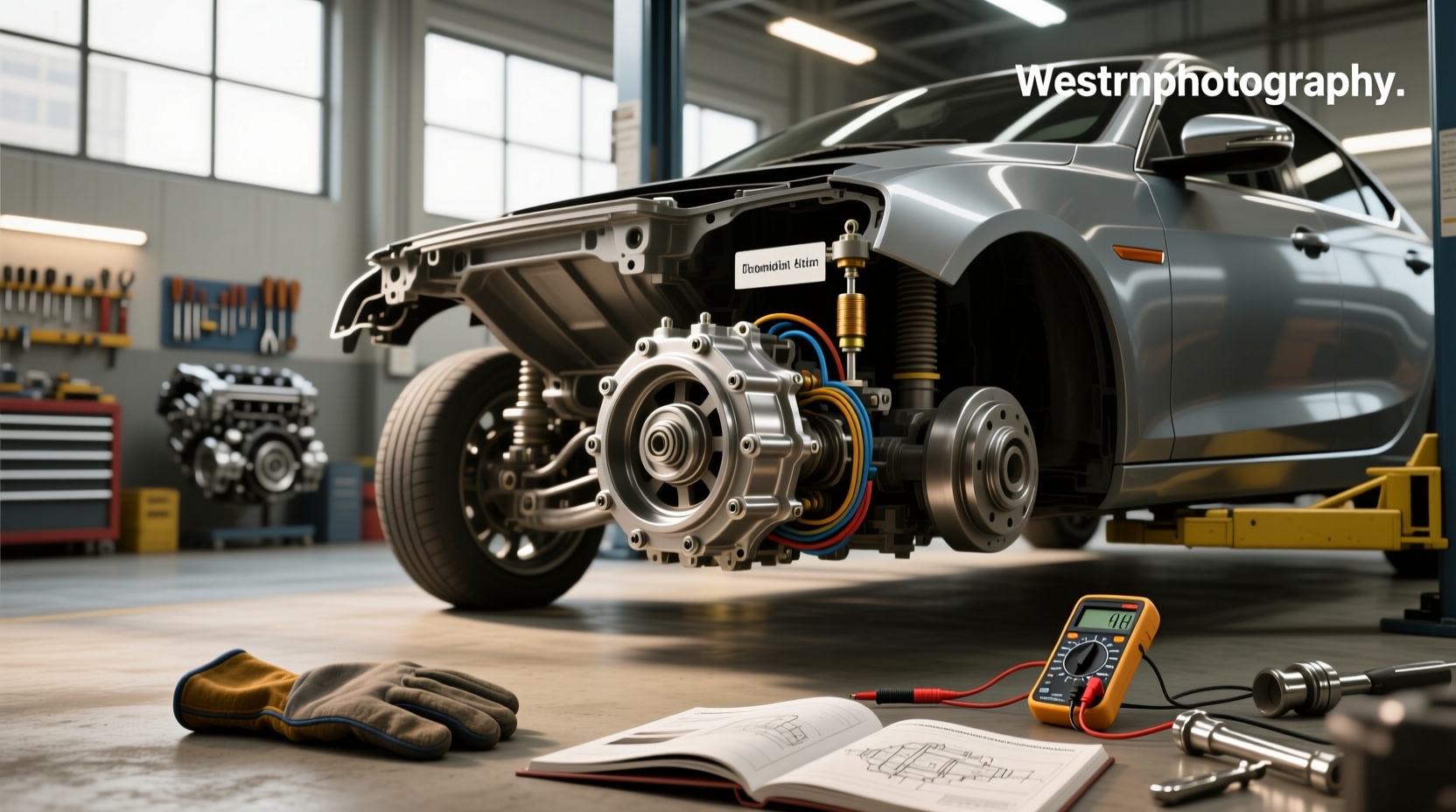
If you're searching for where the transmission sensor is located, the answer depends on your vehicle’s make, model, transmission type, and the specific sensor in question. Most modern vehicles use multiple transmission sensors—such as input speed, output speed, pressure, and temperature sensors—each serving a unique function and installed in different areas on or inside the transmission. For example, the CVT secondary speed sensor on a Nissan Rogue is typically found on the top rear portion of the transmission housing 1. Understanding their locations helps with diagnostics, replacement, and avoiding unnecessary repairs. This guide breaks down exactly where to find each type, why location matters, and how to verify the correct position for your car.
Understanding Transmission Sensors: Purpose and Types
Transmission sensors are critical components that monitor various aspects of transmission operation and send real-time data to the Transmission Control Module (TCM) or Powertrain Control Module (PCM). These sensors ensure smooth shifting, accurate gear display, fuel efficiency, and overall drivability. There are several types of transmission sensors commonly used across automatic, CVT, and dual-clutch transmissions:
- Input Speed Sensor (ISS): Measures the rotational speed of the transmission’s input shaft, which connects directly to the engine via the torque converter.
- Output Speed Sensor (OSS): Tracks the speed of the output shaft, which delivers power to the wheels. Used to calculate gear ratios and verify proper shifting. \li> Transmission Pressure Sensor: Monitors hydraulic pressure within the transmission valve body to ensure correct clutch engagement and shift timing.
- Temperature Sensor: Detects transmission fluid temperature to prevent overheating and adjust shift behavior accordingly.
- Range or Position Sensor: Identifies the current gear selector position (P-R-N-D) and ensures the vehicle starts only in Park or Neutral.
- CVT Ratio Sensor: Specific to continuously variable transmissions, this sensor tracks pulley positions to confirm correct belt-to-pulley ratio.
Each sensor plays a role in maintaining optimal performance. A faulty sensor can lead to incorrect shift patterns, warning lights, poor fuel economy, or even no-start conditions 2.
Common Locations of Transmission Sensors by Type
The physical location of transmission sensors varies significantly based on transmission design and manufacturer. However, there are general placement patterns you can rely on when diagnosing or replacing these parts.
📍 Input Speed Sensor Location
The input speed sensor is usually located near the front of the transmission, close to the torque converter or bellhousing area. On many front-wheel-drive vehicles like the Subaru Outback (2015–2019), it's mounted on the side of the transmission with a single 10mm bolt and an electrical connector facing upward or sideways 3.
To locate it:
- Lift the vehicle safely using jack stands.
- Locate the transmission pan and follow the casing toward the engine.
- Look for a small cylindrical sensor protruding from the transmission with a wire harness connected.
📍 Output Speed Sensor Location
Also known as the secondary speed sensor in CVT systems, the output speed sensor is often found at the rear or top-rear section of the transmission. In Nissan models such as the Altima, Rogue, and Juke (2008–2013), this sensor sits on the upper side of the transmission, making it more accessible than other internal components 4.
Steps to identify:
- Follow the driveshaft or axles back from the differential.
- Inspect the top or side of the transmission housing for a sensor with a visible wiring plug.
- Compare with OEM diagrams or repair manuals if uncertain.
⚙️ Transmission Pressure Sensor Placement
This sensor is typically integrated into the transmission valve body, meaning it may require partial disassembly to access. On JF011E and JF017E CVT units used in Nissan and Mini Cooper models, the pressure sensor is located inside the oil pump assembly or solenoid pack.
Because of its internal placement, diagnosis often relies on scan tool readings rather than visual inspection. Common trouble codes include P0841 (Transmission Fluid Pressure Sensor/Switch A Range/Performance).
🌡️ Temperature and Range Sensor Locations
The transmission temperature sensor is usually embedded in the valve body or attached externally near the transmission fluid passage. Some models integrate it with the output speed sensor.
The range sensor (also called PRND switch) is mounted on the external linkage of the transmission, aligned with the gear selector cable. It's commonly found on the driver’s side of the transmission in longitudinal setups or along the shift linkage in transverse engines.
How Vehicle Make and Model Affect Sensor Location
Sensor placement isn't standardized across brands. Here's how major manufacturers typically install key sensors:
| Make | Transmission Type | Input Sensor Location | Output Sensor Location |
|---|---|---|---|
| Nissan | CVT (JF015E) | Front lower housing | Top rear of transmission |
| Subaru | Lineartronic CVT | Driver-side mid-housing | Rear upper housing |
| Honda | CVT (H5A) | Near torque converter | Opposite side of input |
| Ford | 6F35 Automatic | Bellhousing area | Tailshaft housing |
| Toyota | U880E Automatic | Side near flexplate | Extension housing |
Always consult a factory service manual or reliable repair database before beginning work, especially for newer models with compact engine bays.
Symptoms of a Failing Transmission Sensor
Knowing where the transmission sensor is located is only half the battle. Recognizing early signs of failure helps prevent costly damage. Common symptoms include:
- ❗ Check Engine Light with codes like P0700 (Transmission Control System Malfunction), P0715 (Input Speed Sensor Circuit), or P0720 (Output Speed Sensor Circuit)
- 🚗 Erratic or delayed shifting
- 📉 Inaccurate speedometer readings
- 🛑 Vehicle stuck in one gear or fails to shift
- ⚠️ Transmission slipping or surging during acceleration
- ⛔ No-start condition (if range sensor fails)
- 📉 Poor fuel economy due to incorrect shift strategy
These issues may mimic more serious transmission problems, so proper diagnosis is essential.
🔧 How to Diagnose and Verify Sensor Issues
Before replacing any sensor, confirm the problem through systematic testing:
- Scan for Trouble Codes: Use an OBD-II scanner to retrieve stored codes. Note whether they point to circuit issues, signal out-of-range, or intermittent faults.
- Check Wiring and Connectors: Inspect the sensor’s electrical connector for corrosion, bent pins, or loose fit. Damaged wiring harnesses are a common cause of false failures.
- Test Signal Output: With a digital multimeter or oscilloscope, measure AC voltage (for magnetic sensors) or frequency output while rotating the driveshaft manually or driving slowly.
- Inspect for Debris: Remove the sensor and check for metallic shavings or sludge buildup, especially on Hall-effect sensors that contain magnets.
- Compare with Known Good Data: Use live data from a scan tool to compare input and output speeds under load. A mismatch indicates a failing sensor or mechanical issue.
Never assume a code means the sensor itself is bad—many times, the issue lies in the wiring or TCM communication.
🛠️ Step-by-Step: Replacing a Transmission Speed Sensor
Replacing a sensor is generally straightforward if it's externally mounted. Here’s a universal procedure:
Tools Needed:
- Socket set and ratchet
- Extension bar (usually 10mm socket)
- OBD-II scanner
- New sensor (OEM or high-quality aftermarket)
- Gloves and safety glasses
Procedure:
- Park on a level surface and engage the parking brake.
- Disconnect the negative battery terminal to prevent electrical surges.
- Lift the vehicle using a floor jack and secure with jack stands.
- Locate the sensor using the diagrams above or a repair manual.
- Unplug the electrical connector by pressing the release tab.
- Remove the mounting bolt with a socket wrench.
- Twist and pull the sensor gently from its bore.
- Insert the new sensor straight in to avoid cross-threading.
- Reinstall the bolt and reconnect the wiring.
- Reconnect the battery and clear any stored codes.
- Take a test drive and monitor shift quality and scan tool data.
For internally mounted sensors (e.g., pressure or temperature sensors inside the valve body), professional help is recommended due to complexity and risk of contamination.
Common Misconceptions About Transmission Sensors
Several myths persist about transmission sensors that can lead to misdiagnosis:
- Misconception 1: “All speed sensors are the same.” — False. Input and output sensors may have different resistance values, signal types (analog vs. digital), and mounting depths.
- Misconception 2: “A new sensor will fix all shifting problems.” — Not always. Mechanical wear, low fluid, or solenoid issues can produce similar symptoms.
- Misconception 3: “Sensors don’t fail—they just get dirty.” — While debris can interfere, internal electronics can degrade over time, especially in high-heat environments.
- Misconception 4: “You must replace both input and output sensors together.” — Only replace what’s faulty. There’s no maintenance-based replacement interval for most sensors.
Tips for Ensuring Correct Installation
Even experienced DIYers can make mistakes during sensor replacement. Follow these best practices:
- ✅ Match the part number exactly—aftermarket sensors may vary in length or thread pitch.
- ✅ Clean the sensor bore with electrical contact cleaner before installation.
- ✅ Do not overtighten—typically 8–12 ft-lbs is sufficient.
- ✅ Ensure the air gap (if applicable) is correct; some sensors require a precise distance from the reluctor ring.
- ✅ Double-check routing of the wiring harness to avoid heat or moving parts.
When to Seek Professional Help
While external sensors can be replaced at home, consider professional assistance if:
- The sensor requires transmission removal or internal access.
- You lack diagnostic tools to verify the repair.
- Multiple codes appear simultaneously, suggesting deeper control system issues.
- Your vehicle has adaptive learning features that require reprogramming after replacement.
Some modern vehicles require a relearn procedure after installing a new sensor to recalibrate shift timing and idle control.
Preventive Maintenance Tips
Although transmission sensors aren’t serviceable items, their lifespan can be extended through good maintenance habits:
- 🧼 Change transmission fluid according to manufacturer intervals using the correct specification.
- 🧰 Inspect wiring harnesses during routine service for chafing or heat damage.
- 🌍 Avoid frequent hard launches or towing beyond capacity, which increases stress on sensors and controls.
- 🔍 Address minor symptoms early—delaying repairs can lead to compounded failures.
Frequently Asked Questions
- ❓ Where is the transmission speed sensor usually located?
- The input speed sensor is typically near the front of the transmission close to the torque converter, while the output speed sensor is often found at the rear or top-rear section of the transmission housing.
- ❓ How do I know if my transmission sensor is bad?
- Common signs include the check engine light, erratic shifting, inaccurate speedometer readings, or getting stuck in gear. A scan tool can confirm diagnostic trouble codes related to sensor circuits.
- ❓ Can I drive with a bad transmission sensor?
- Short-term driving may be possible, but it can lead to improper shifting, increased wear, or unsafe conditions. It's best to diagnose and repair promptly.
- ❓ Do transmission sensors need to be programmed after replacement?
- Most do not, but some modern vehicles require a relearn procedure via a scan tool to recalibrate the transmission control module.
- ❓ Are input and output speed sensors interchangeable?
- No. They are calibrated differently and serve distinct functions. Always install the correct sensor for the designated location.





 浙公网安备
33010002000092号
浙公网安备
33010002000092号 浙B2-20120091-4