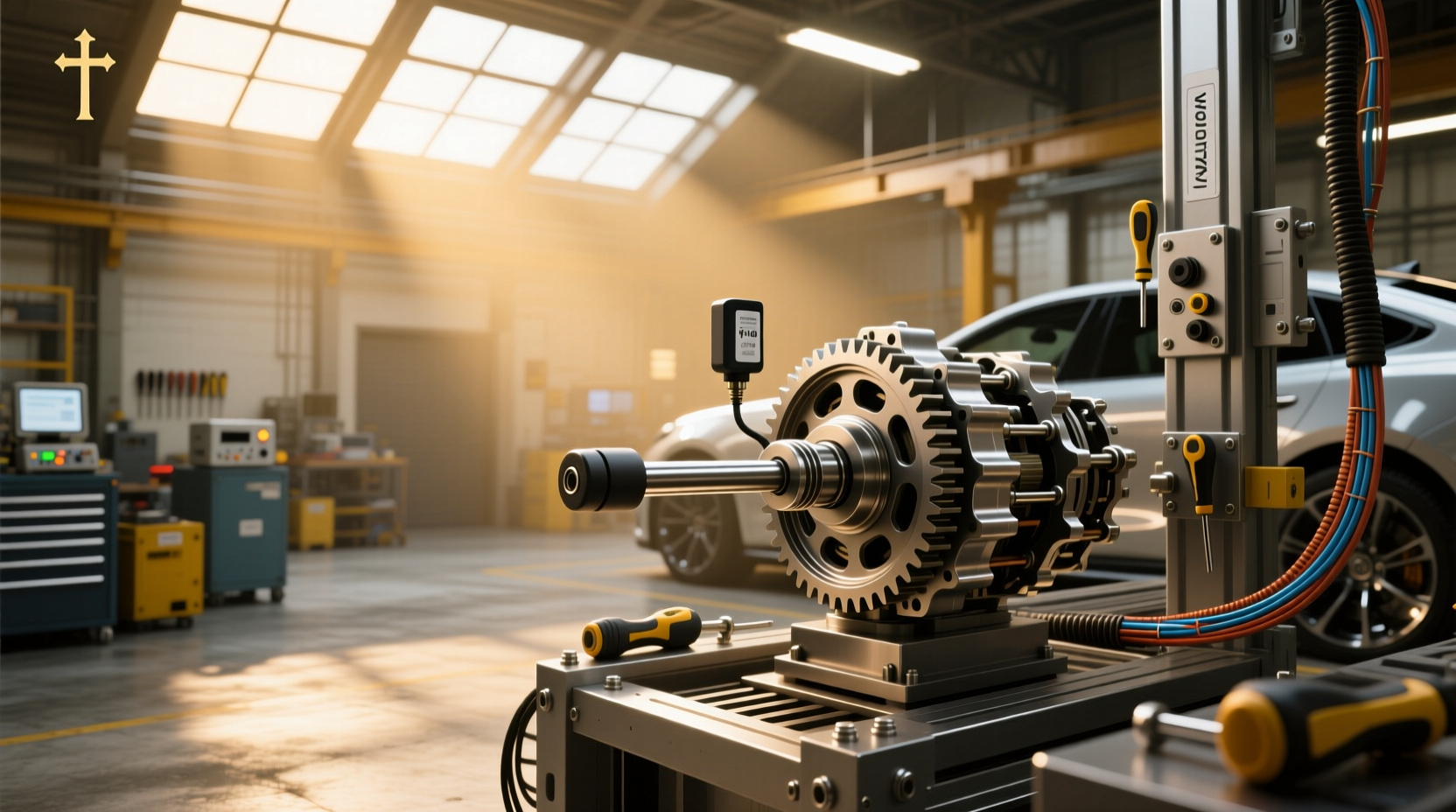
If you're searching for the gear position sensor location on your vehicle, you're not alone. This small but critical component—also known as the transmission range sensor or shift lever position sensor—plays a vital role in ensuring your car starts only in Park or Neutral, shifts gears properly, and communicates accurate gear data to the powertrain control module (PCM). In most vehicles, the gear position sensor is mounted on the outside of the transmission, directly connected to the shift linkage or selector shaft. However, its exact shift lever position sensor location varies significantly by make, model, and transmission type. This guide breaks down exactly where to find it, how to identify symptoms of failure, and what steps to take next—whether you're diagnosing an issue or planning a DIY replacement.
What Does a Gear Position Sensor Do?
The gear position sensor, sometimes referred to as the manual lever position switch (MLPS) or neutral safety switch, monitors the physical position of your transmission gear selector. When you move the shifter from Park to Drive or Reverse, the sensor sends a signal to the PCM indicating the current gear. This information is used for several key functions:
- Preventing the engine from starting unless the transmission is in Park or Neutral (📍 safety function)
- Controlling shift timing and torque converter lockup
- Activating reverse lights when shifted into Reverse
- Displaying the correct gear on the instrument cluster
- Enabling drive-by-wire throttle response based on selected gear
Without an accurate signal from this sensor, your vehicle may enter 'limp mode,' fail to start, or display incorrect gear readings—posing both operational and safety concerns.
Common Symptoms of a Failing Gear Position Sensor
Before diving into the gear shift position sensor location, it's important to confirm whether the sensor is actually the issue. Many drivers mistake sensor problems for transmission failure. Here are the most common signs of a faulty unit:
- Engine won’t start – Especially if it only starts in Neutral but not Park (or vice versa)
- Check Engine Light is on – Often with diagnostic trouble codes (DTCs) like P0705, P0706, P0707, or P0708
- Gear indicator mismatch – Shifter shows 'Drive' but dashboard reads 'Neutral'
- Vehicle stuck in one gear or unable to shift out of Park
- Reverse lights don’t turn on
- Transmission enters limp mode (usually limiting speed to 35 mph)
If you're experiencing these issues, the next step is to locate and test the sensor.
Typical Gear Position Sensor Locations by Vehicle Type
There is no universal shift lever position sensor location; placement depends on the transmission design, drivetrain layout, and whether the vehicle uses a mechanical cable linkage or electronic shift-by-wire system.
1. Rear-Wheel Drive Vehicles (e.g., Ford F-150, Chevrolet Silverado)
In many RWD trucks and SUVs with automatic transmissions like the 4L60E or 6L80, the sensor is mounted on the side of the transmission near the shift linkage arm. It’s typically accessible from underneath the vehicle, just behind the oil pan.
- 🔧 Common models: GM trucks (2000–2014), Ford trucks with 6R80 transmission
- 📍 Location: Driver’s side of transmission, attached to the manual selector shaft
- 🛠️ Access: Requires crawling under the vehicle or using a lift
2. Front-Wheel Drive Transaxles (e.g., Honda Accord, Toyota Camry)
FWD vehicles often have the sensor mounted on the outer housing of the transaxle, usually near the top or front side for easier access. Some models integrate it into the valve body, requiring partial disassembly.
- 🔧 Common models: Toyota U241E, Honda B7XA transmissions
- 📍 Location: Top or front side of transmission, near shift cable attachment point
- 🛠️ Access: May require removing air intake ducts or battery tray
3. BMW & German Luxury Vehicles (Drive-by-Wire Systems)
Many BMW, Mercedes, and Audi models use electronic gear selectors without physical cables. The sensor is often located at the base of the shifter console inside the cabin rather than on the transmission itself.
- 🔧 Common models: BMW 3/5 Series with ZF 6HP or 8HP transmissions
- 📍 Location: Inside center console, attached to the shifter mechanism
- 🛠️ Access: Remove interior trim panels around the shifter
4. Manual Transmission Applications
Even manual transmissions use gear position sensors in modern vehicles, especially those with paddle shifters, launch control, or automated clutch systems. These are usually found on the transmission housing near the shift forks.
- 🔧 Common models: Subaru WRX, Volkswagen GTI, Porsche 911 PDK
- 📍 Location: On the side or rear of the gearbox
- 🛠️ Access: Limited clearance; may require lifting the vehicle
| Vehicle Type | Transmission Example | Typical Sensor Location | Access Difficulty |
|---|---|---|---|
| Ford F-150 (RWD) | 6R80 | Driver-side transmission, selector shaft | Moderate |
| Toyota Camry (FWD) | U241E | Top-front of transaxle | Easy |
| BMW 335i | 6HP19 | Inside center console | Easy-Moderate |
| Honda Civic Manual | MA5 | Side of gearbox | Moderate |
| Jeep Wrangler (4x4) | 42RLE | Rear of transmission, passenger side | Difficult |
How to Confirm the Exact Sensor Location for Your Car
Because placement varies so widely, relying on general descriptions can lead to wasted time and effort. Follow these steps to pinpoint the exact manual lever position sensor location for your specific vehicle:
- Check the service manual – Factory repair manuals (like those from Mitchell1 or Alldata) provide exploded diagrams showing sensor placement.
- Use VIN-specific parts diagrams – Websites like Partsouq or NAPA AutoCare allow you to enter your VIN and view OEM part locations.
- Search by part number – If you know the OEM number (e.g., Toyota 89451-48010), cross-reference it with installation guides.
- Watch verified repair videos – Platforms like YouTube host real mechanic walkthroughs that show disassembly paths.
- Consult dealership technicians – A quick call to the service department can save hours of guesswork.
Can You Replace the Gear Position Sensor Yourself?
Yes, in many cases—but success depends on your mechanical skill level and the sensor’s accessibility. Here’s what to consider before attempting a DIY replacement:
Tools You’ll Likely Need
- Socket wrench set (metric and SAE)
- Extension bars and universal joint
- Trim removal tools (for interior sensors)
- OBD2 scanner (to clear codes after replacement)
- Torque wrench (some mounts require precise tightness)
Step-by-Step Replacement Overview
- Disconnect the battery – Prevents electrical shorts during work.
- Locate the sensor – Refer to diagrams or previous inspection.
- Unplug the electrical connector – Usually a weatherproof clip with a release tab.
- Remove mounting bolts – Typically one or two 8mm or 10mm bolts.
- Pull out the old sensor – May require gentle wiggling if sealed with RTV.
- Install the new sensor – Align tabs or grooves correctly; do not force.
- Reconnect wiring and battery.
- Test operation – Cycle through all gears and verify仪表显示正确.
- Clear error codes using an OBD2 scanner.
Do You Need to Calibrate After Installation?
In some vehicles, yes. Modern cars with electronic transmission controls often require a shift position sensor calibration after replacement. Failure to calibrate can result in incorrect gear readings or failure to start.
Calibration procedures vary:
- GM vehicles: Turn ignition ON (engine OFF), move shifter through all positions 3 times, wait 30 seconds.
- Toyota/Lexus: Use Techstream software or follow specific sequence involving brake pedal and ignition cycling.
- BMW: Requires INPA or ISTA+ diagnostic tool to relearn position.
Always check manufacturer-specific recalibration requirements before finalizing the job.
Aftermarket vs OEM Sensors: What’s the Difference?
You’ll find various options when sourcing a replacement—ACDelco, Dorman, Bosch, and other brands offer aftermarket versions. While OEM parts are designed to exact specifications, high-quality aftermarket units can perform just as well.
Key considerations:
- Fitment accuracy – Some universal kits require modifications
- Sealing quality – Poor seals lead to moisture ingress and early failure
- Electrical resistance – Must match factory specs to avoid signal errors
- Warranty length – OEM typically offers longer coverage
For reliable performance, choose sensors labeled “direct fit” and verify compatibility using your VIN.
Common Mistakes to Avoid
- Assuming all sensors are interchangeable – Even similar models may have different voltage outputs.
- Forgetting to disconnect the battery – Risk of short-circuiting the PCM.
- Over-tightening mounting bolts – Can crack plastic housings or damage threads.
- Skipping calibration – Leads to persistent warning lights or shifting issues.
- Misdiagnosing the problem – Always scan for codes before replacing parts.
When to Seek Professional Help
While many repairs are DIY-friendly, certain situations warrant professional assistance:
- Sensor is located inside the transmission (requires valve body removal)
- Your vehicle requires specialized software for calibration
- You lack proper lifting equipment or tools
- Multiple related codes appear (could indicate wiring or PCM issues)
A certified technician can perform a full circuit test, inspect harness integrity, and ensure proper communication between modules.
Cost Considerations
The price of a gear position sensor ranges from $35 to over $200 depending on brand and application. Labor costs at a shop typically run $80–$150 per hour, with total replacement averaging $150–$400.
To save money:
- Buy from reputable auto parts suppliers offering warranties
- Compare prices across retailers like Advance Auto Parts, NAPA, or CarParts.com
- Perform the replacement yourself if access is straightforward
Final Tips for Success
Finding the correct automatic transmission gear position sensor location is half the battle. The other half is confirming the diagnosis and installing the right part correctly. Always:
- Verify symptoms with an OBD2 scanner
- Cross-check part numbers before purchase
- Follow factory procedures for removal and installation
- Test thoroughly after completion
By understanding where the sensor is located and how it functions, you can avoid unnecessary repairs and get your vehicle back on the road safely and efficiently.
Frequently Asked Questions
- Where is the gear position sensor usually located?
- The gear position sensor is typically mounted on the transmission housing, connected to the shift selector shaft. In some vehicles, especially those with electronic shifters, it may be located inside the center console near the shifter base.
- How do I test a gear position sensor?
- You can test it using an OBD2 scanner to check for stored codes, or with a multimeter to measure voltage changes as you shift through gears. Compare readings to factory specifications.
- Can a bad gear position sensor prevent my car from starting?
- Yes. Since the sensor acts as a neutral safety switch, a failure can block the starter signal unless the transmission is in Park or Neutral—even if it already is.
- Do I need to reprogram the ECU after replacing the sensor?
- Not always, but some vehicles require a recalibration procedure using a scan tool or specific ignition sequences to relearn gear positions.
- Is the gear position sensor the same as the neutral safety switch?
- In many vehicles, yes. The gear position sensor often integrates the function of the neutral safety switch, preventing engine start in gear.





 浙公网安备
33010002000092号
浙公网安备
33010002000092号 浙B2-20120091-4