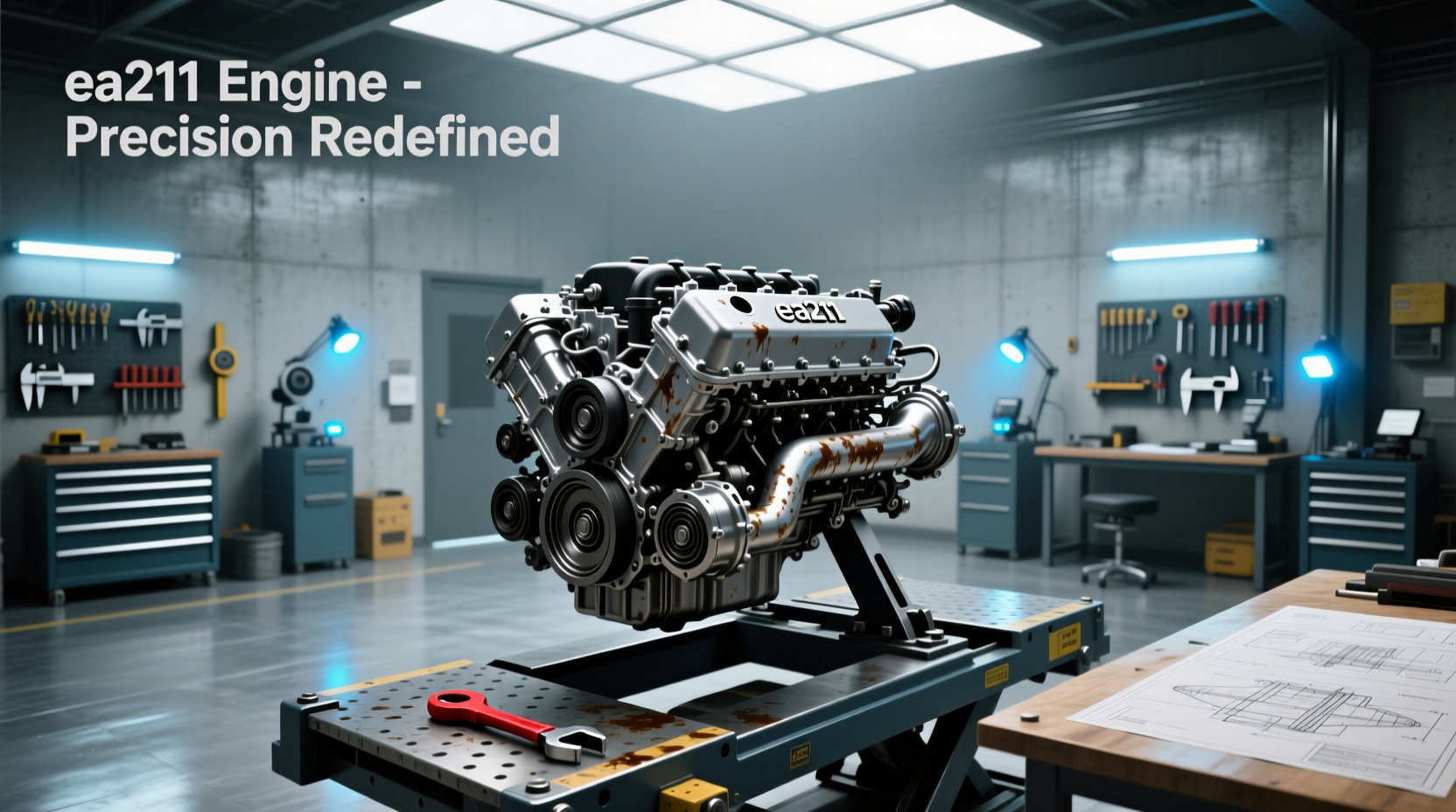
The Volkswagen Group's EA211 engine family is a cornerstone of modern compact and subcompact vehicles across brands like Volkswagen, Audi, Škoda, and SEAT. Introduced as a successor to the EA111 series, the EA211 represents a significant evolution in efficiency, weight reduction, and emissions control 1. If you're researching what cars have the EA211 engine, whether it’s reliable, or how it performs under real-world conditions, this guide delivers a comprehensive breakdown of its architecture, known strengths, potential weaknesses, and long-term ownership considerations.
Understanding the EA211 Engine Platform
The EA211 engine series was launched in 2012 and has since become one of the most widely used gasoline engines in Europe and other global markets. Designed primarily for transverse front-engine layouts, these inline-four (R4) units are found in models such as the Volkswagen Golf, Polo, Jetta, Tiguan, Audi A3, Škoda Octavia, and SEAT Leon.
⚙️ Key characteristics include:
- Displacement range: 1.0L, 1.2L, 1.4L, and 1.5L variants
- Configuration: Inline-4 (straight-four), turbocharged (TSI/TFSI)
- Material construction: Aluminum alloy cylinder block with cast iron liners
- Fuel system: Direct fuel injection (FSI/TSI)
- Cooling: Integrated exhaust manifold for faster warm-up and reduced emissions
- Valvetrain: DOHC, 16-valve with variable valve timing
This modular design allows for shared tooling and simplified production across multiple brands within the VW Group, contributing to cost efficiency and scalability.
EA211 vs. EA111: What Changed?
One of the most common user confusions—reflected in search trends and forum discussions—is distinguishing between the EA111 and EA211 engines. Both are four-cylinder turbocharged units used in similar vehicle segments, but they differ significantly in engineering philosophy and execution.
| Feature | EA111 | EA211 |
|---|---|---|
| Production Years | 2005–2014 | 2012–Present |
| Block Material | Cast iron | Aluminum with iron liners |
| Weight (approx.) | ~100 kg | ~85 kg |
| Turbocharging | Single or twincharger (1.4 TSI) | Single turbo only |
| Fuel Injection | Direct injection | Refined direct injection |
| Exhaust Layout | External manifold | Integrated into cylinder head |
| Timing System | Timing chain | Timing belt (on some versions) |
✅ The shift from cast iron (EA111) to aluminum (EA211) blocks resulted in a weight saving of up to 15%, improving fuel economy and handling balance. Additionally, the integrated exhaust manifold reduces cold-start emissions and improves cabin heating response—a practical benefit often overlooked by buyers.
Common EA211 Engine Variants and Applications
The EA211 platform covers several displacements and power outputs tailored to different performance and regulatory needs:
- 1.0 TSI (95–110 hp): Found in entry-level Golfs, Polos, and Up! models; praised for fuel efficiency
- 1.2 TSI (85–110 hp): Used in Golf, Jetta, and Škoda Fabia; balances power and economy
- 1.4 TSI (122–150 hp): High-output version used in GTI variants until replaced by EA888 evo4
- 1.5 TSI Evo (147–187 hp): Updated version with ACT (Active Cylinder Technology), Miller cycle, and improved thermal management
📍 Notable applications include:
- Volkswagen Golf Mk7 and Mk8 (1.0, 1.2, 1.4, 1.5 TSI)
- Audi A3 8V and 8Y (1.0 TFSI, 1.5 TFSI)
- Škoda Octavia III/IV (1.0 TSI, 1.5 TSI)
- SEAT Ibiza, Leon (various EA211 trims)
Reliability of the EA211 Engine: Year-by-Year Breakdown
❓ Are EA211 engines reliable? The answer depends heavily on model year, specific variant, and maintenance history.
Early EA211 units (2012–2015) inherited some issues from their EA111 predecessors, particularly around carbon buildup and oil consumption. However, ongoing refinements—especially with the introduction of the 1.5 TSI Evo in 2016—have made later models notably more durable.
Pre-Evo (2012–2015) Challenges
🔧 Common problems reported in early EA211 engines:
- Carbon buildup on intake valves: Caused by lack of port injection; leads to rough idling and reduced performance
- Timing belt failures (on belt-driven versions): Requires replacement every 5 years or 60,000–75,000 miles depending on market
- Dual-mass flywheel wear: Especially in diesel-hybrid driving patterns (frequent stop-start)
- PCV (crankcase ventilation) system clogging: Can cause oil leaks and vacuum issues
- High-pressure fuel pump (HPFP) noise or failure: More prevalent in high-mileage examples
While not universal, these issues highlight the importance of proactive servicing. For example, using top-tier detergent gasoline (like Shell V-Power or equivalent) can slow carbon accumulation.
Evo Update (2016–Present): Major Improvements
✨ The 1.5 TSI Evo introduced critical upgrades that address prior shortcomings:
- Miller cycle operation: Enhances fuel efficiency without sacrificing responsiveness
- Variable turbine geometry (VTG) turbocharger: Reduces lag and improves low-end torque
- ACT (Active Cylinder Management): Shuts down two cylinders during light load for better economy
- Improved cooling system: Better thermal regulation reduces stress on components
- Revised piston ring design: Lowers oil consumption risk
Data from owner forums and independent repair shops suggest that post-2016 EA211 engines, especially the 1.5 TSI Evo, exhibit fewer mechanical faults and greater longevity when maintained properly.
Maintenance Tips to Extend EA211 Engine Life
Proper care is essential to maximizing reliability. Here are key recommendations based on real-world service data:
1. Follow the Correct Service Schedule
⏱️ Adhere strictly to manufacturer intervals. In many regions, VW recommends an oil change every 10,000 miles or annually, whichever comes first. Use only VW 502 00 or 504 00 approved oils to ensure compatibility with emissions systems.
2. Address Carbon Buildup Proactively
🧼 Since EA211 engines use direct injection only, intake valves aren’t cleaned by fuel spray. Consider periodic walnut blasting (every 60,000–80,000 miles) if symptoms arise:
- Check engine light with P0300 (random misfire)
- Hard starting when hot
- Reduced throttle response
3. Replace Timing Belts on Time
❗ Some EA211 variants (e.g., 1.2 TSI, 1.4 TSI non-turbo) use timing belts instead of chains. Missing the replacement window risks catastrophic interference damage. Always replace tensioners and water pumps simultaneously.
4. Monitor PCV System Health
🔍 A failing PCV valve can lead to excessive crankcase pressure, oil leaks, and turbocharger contamination. Inspect hoses and valves during routine services.
5. Use Quality Fuel and Oil
⛽ Low-quality fuel accelerates injector fouling and carbon deposits. Opt for premium-grade fuels with detergents. Similarly, never substitute non-approved engine oils—they may fail under high heat and pressure.
Performance Tuning and Modifications
⚡ Enthusiasts often explore aftermarket tuning for EA211-powered vehicles. While gains are possible, modifications must be approached cautiously due to tight tolerances and reliance on precise sensor feedback.
Popular upgrades include:
- Stage 1 ECU remap: Gains of 20–30 hp with no hardware changes; generally safe if done professionally
- Downpipe and exhaust mods: Improve flow but may trigger check engine lights without proper coding
- Intercooler upgrade: Helps manage intake temps under boost
- Intake kits: Minimal real-world benefit; stock airbox is well-designed
⚠️ Risks of aggressive tuning:
- Increased risk of detonation (knock)
- Accelerated wear on turbocharger bearings
- Potential voiding of warranty or insurance coverage
For track use or sustained high-load driving, additional cooling solutions and higher-octane fuel (98 RON) are strongly advised.
Ownership Considerations: Buying a Used EA211 Vehicle
If you're shopping for a used car with an EA211 engine, here’s what to look for:
📋 Pre-Purchase Inspection Checklist
- Verify full service history, especially oil changes and timing belt replacements
- Scan for stored fault codes (even if no warning light is on)
- Test drive for smooth idle, absence of knocking or turbo lag
- Inspect under hood for oil leaks around valve cover gasket or turbo lines
- Check for signs of overheating (discoloration, coolant traces)
- Ask about any prior carbon cleaning or PCV repairs
🛒 Market Availability and Pricing Trends
New EA211 engines and short blocks are available through suppliers like Power Engines, mikmotoren.de, and specialized rebuilders. Prices vary:
- Complete 1.0 TSI engine: ~$2,000–$2,800
- 1.5 TSI Evo exchange unit: ~$3,500–$4,200
- Rebuilt long block: ~$1,800+
🚚 Shipping, import duties, and installation costs should be factored into total expense. In North America, availability may be limited compared to Europe due to lower demand.
Environmental and Regulatory Impact
🌍 The EA211 was designed with Euro 5 and Euro 6 emissions standards in mind. Its lightweight construction and efficient combustion contribute to lower CO₂ output—critical for fleet compliance in Europe.
However, real-world NOx emissions have been scrutinized, particularly after the Dieselgate scandal. While gasoline engines weren't directly implicated, scrutiny led to tighter monitoring of all VW Group powertrains.
The 1.5 TSI Evo further reduces environmental impact via ACT and improved catalytic converter warm-up strategies. Some markets offer mild-hybrid versions (eTSI) that pair the engine with a small electric motor for stop-start assist and energy recuperation.
Future Outlook and Replacement Platforms
As electrification accelerates, the role of internal combustion engines like the EA211 is evolving. VW plans to phase out pure ICE models by 2035 in Europe, though hybrid variants will persist longer.
The EA211 remains relevant in emerging markets and as part of plug-in hybrid (PHEV) configurations. Future iterations may focus on compatibility with synthetic fuels or higher bio-content gasoline blends.
Conclusion: Is the EA211 a Good Engine?
The EA211 engine represents a mature, well-engineered solution for everyday driving. While early versions had notable flaws, continuous refinement—especially with the 1.5 TSI Evo—has made it one of the most dependable options in its class.
✅ Strengths:
- Excellent fuel economy
- Strong low-end torque
- Lightweight and compact
- Good refinement and NVH levels
❌ Weaknesses:
- Risk of carbon buildup (pre-2016 models)
- Timing belt maintenance required on certain variants
- Sensitivity to poor maintenance practices
For buyers, the key is selecting a well-maintained example, ideally a post-2016 model with the Evo updates. With proper care, an EA211 engine can reliably exceed 150,000 miles.
Frequently Asked Questions
Q: What cars have the EA211 engine?
A: The EA211 is used in Volkswagen Golf, Polo, Jetta, Audi A3, Škoda Octavia, and SEAT Leon, among others.
Q: Is the EA211 engine reliable?
A: Yes, especially post-2016 models with the 1.5 TSI Evo update. Earlier versions require more attentive maintenance.
Q: Does the EA211 have a timing chain or belt?
A: It depends on the variant. The 1.2 TSI and some 1.4 TSI models use a timing belt; others use a chain. Always verify based on VIN and engine code.
Q: How often should I service an EA211 engine?
A: Follow the manufacturer schedule—typically every 10,000 miles or annually. Use only approved oils and inspect for carbon buildup beyond 60,000 miles.
Q: Can I upgrade my EA111 engine to an EA211?
A: Technically possible but complex due to differences in mounts, wiring, and ECU calibration. Not recommended unless done by a specialist with full conversion support.





 浙公网安备
33010002000092号
浙公网安备
33010002000092号 浙B2-20120091-4