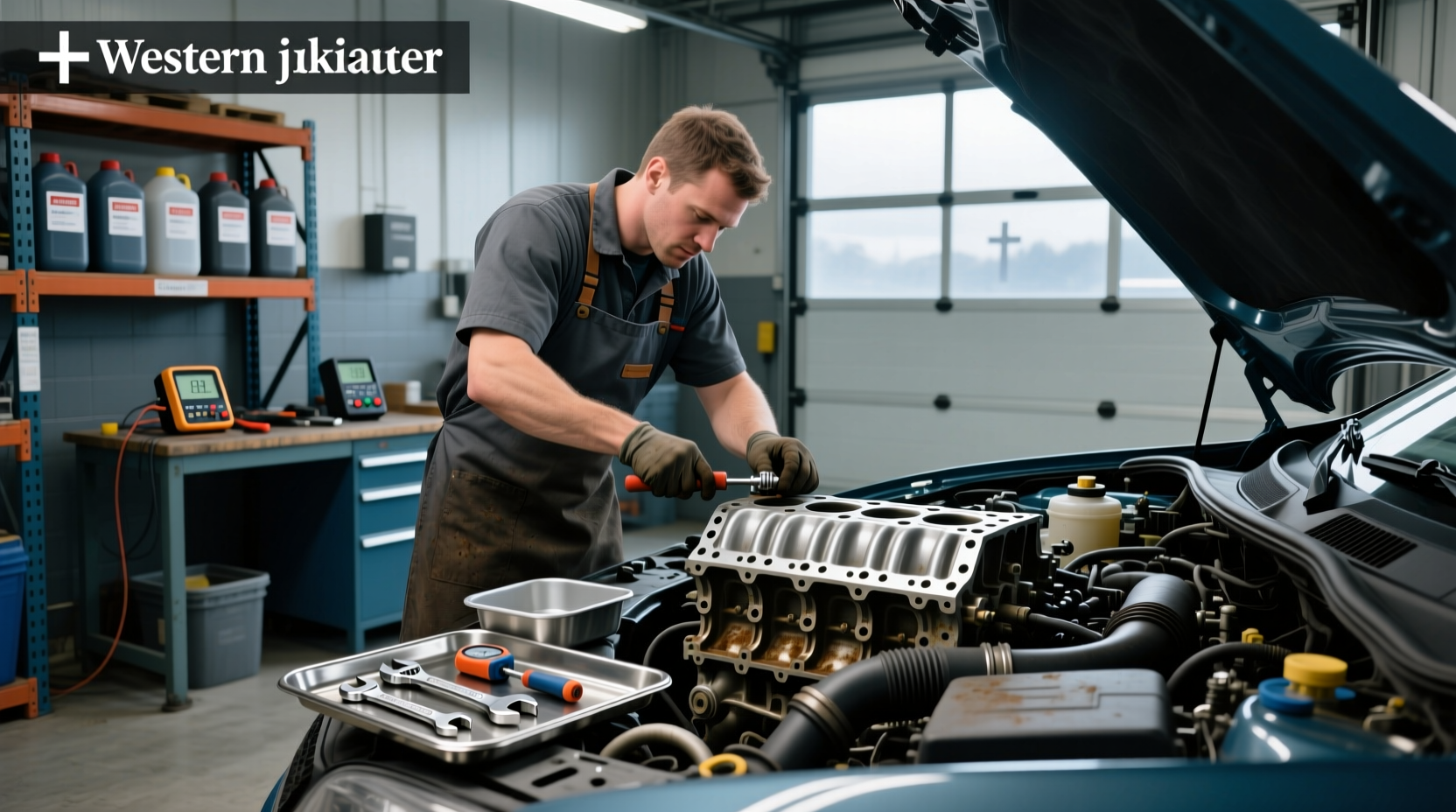
🔧 Replacing an engine water jacket is a critical repair task that helps restore proper coolant circulation and prevents engine overheating. A water jacket replacement becomes necessary when corrosion, cracking, or blockages compromise the cooling system’s ability to regulate engine temperature. This comprehensive guide explains why water jackets fail, signs of damage, step-by-step replacement procedures, and essential precautions mechanics and DIY enthusiasts should take before starting the job.
What Is an Engine Water Jacket?
An engine water jacket is a network of internal passages cast into the engine block and cylinder head through which coolant flows. Its primary function is to absorb heat generated during combustion and transfer it away from critical components like cylinders and pistons. The coolant circulates via the water pump, passes through the radiator where heat dissipates, then returns to the engine—maintaining optimal operating temperatures between 195°F and 220°F (90°C–104°C) 1.
These passages are not hollow chambers but carefully engineered channels designed to maximize surface contact with hot metal areas. They connect around cylinder liners, near exhaust ports, and within the head gasket zone. Over time, sediment buildup, electrolytic corrosion, or freezing coolant can damage these walls, leading to leaks or reduced efficiency.
Why Does a Water Jacket Need Replacement?
While water jackets are built to last the life of the engine, certain conditions accelerate degradation:
- Freeze damage: In cold climates, if antifreeze concentration is too low, water can freeze inside the jacket, expanding and cracking cast iron or aluminum walls.
- Corrosion: Old or improperly mixed coolant leads to rust in steel blocks or pitting in aluminum engines, weakening structural integrity. \li> Overheating stress: Prolonged high temperatures cause thermal fatigue, especially at thin sections between cylinders.
- Erosion from cavitation: High-speed coolant flow near水泵impellers can erode metal over time, particularly in diesel engines.
- Manufacturing defects: Rarely, porosity in casting creates weak spots that develop leaks under pressure.
When any of these occur, coolant may leak internally (into oil or combustion chambers) or externally (onto the engine surface), necessitating inspection and potentially full replacement.
Symptoms Indicating Water Jacket Damage
Recognizing early warning signs can prevent catastrophic engine failure. Common indicators include:
- White smoke from exhaust: Coolant entering combustion chamber burns off as steam, producing thick white smoke, especially at startup.
- Coolant loss without visible leaks: If reservoir level drops but no external leak is found, internal seepage through cracked jackets could be the culprit.
- Oil contamination: Milky residue under oil cap or on dipstick suggests coolant mixing with oil due to a breach in the water jacket wall.
- Engine overheating: Restricted flow from partial blockage or air pockets reduces cooling efficiency.
- Bubbling in radiator or overflow tank: Combustion gases entering cooling system point to cracks allowing compression leakage.
If multiple symptoms appear together, diagnostic testing should follow immediately.
Diagnosing Water Jacket Issues Before Replacement
Before disassembling the engine, perform these checks to confirm water jacket damage:
Pressure Testing the Cooling System ⚙️
Use a hand-operated pressure tester attached to the radiator neck or surge tank. Pressurize the system to 15 psi (typical cap rating). Watch the gauge—if pressure drops steadily, there's a leak. Check for bubbles in the oil filler or use a chemical test for hydrocarbons in coolant (radiator fluid).
Cylinder Leak-Down Test 🔍
This test introduces compressed air into each cylinder while valves are closed. High leakage percentages (over 20%) combined with hissing sounds in the coolant reservoir indicate a crack connecting combustion space to water jacket.
Borescope Inspection 🌐
A flexible borescope inserted through spark plug holes or core plug openings allows visual inspection of internal jacket surfaces. Look for cracks, scale buildup, or erosion patterns.
Dye Penetrant or Magnetic Particle Testing (for removed blocks)
Once the engine is out, technicians can apply fluorescent dye or magnetic fields to detect micro-cracks invisible to the naked eye.
Only after confirming structural damage should you proceed with replacement considerations.
Can You Replace Just the Water Jacket?
In most automotive applications, the water jacket isn’t a standalone replaceable part—it’s an integral casting within the engine block or head. Therefore, “replacing” the water jacket usually means one of three things:
- Replacing freeze plugs (core plugs): These soft metal discs seal casting holes used during manufacturing. When corroded, they can be replaced individually without engine overhaul.
- Rebuilding the block: For minor cracks, welding, brazing, or epoxy sealing may restore integrity. However, success depends on location and material type.
- Replacing the entire engine block or cylinder head: Severe damage often requires machining a new or remanufactured component.
So while the term water jacket replacement implies swapping the passage itself, in practice it refers to repairing or replacing the housing structure containing those passages.
Step-by-Step Process for Water Jacket Repair or Block Replacement
Here’s a realistic workflow for addressing serious water jacket damage:
Step 1: Drain Coolant and Remove Components ⏱️
Start by draining all coolant safely. Disconnect battery, remove radiator, hoses, intake manifold, valve covers, and timing components as needed. Label everything for reassembly.
Step 2: Assess Damage Extent
Inspect both block and head. If only core plugs are leaking, replacement is straightforward. If walls are cracked, determine whether repair is feasible based on crack depth and position.
Step 3: Remove Damaged Section or Entire Block 🧰
For localized repairs (e.g., rear main area), some shops section off the damaged portion. More commonly, the entire engine must come out to access deep-seated issues.
Step 4: Choose Replacement Strategy
Options include:
| Option | Pros | Cons |
|---|---|---|
| Replace core plugs | Low cost, minimal labor | Only fixes sealing points, not structural cracks |
| Weld/braze crack repair | Potentially saves original block | Risk of distortion; not suitable for aluminum |
| Install refurbished block | Cost-effective vs. new | Unknown prior history; may have hidden wear |
| New OEM block | Guaranteed quality and warranty | Expensive; long lead times |
Step 5: Install New or Repaired Component ✅
Ensure all mating surfaces are clean and flat. Use new gaskets, torque bolts to specification, and reinstall ancillary systems.
Step 6: Refill and Bleed Cooling System ✨
Add correct coolant mix (usually 50% ethylene glycol + 50% distilled water). Run engine with heater on max to purge air pockets. Monitor for leaks.
Step 7: Perform Post-Repair Tests
Conduct another pressure test and road test to verify stability under load.
Cost Considerations for Water Jacket Replacement
Repair costs vary widely depending on vehicle make, engine type, and labor rates:
- Core plug replacement: $100–$300 (parts + labor)
- Crack repair (welding/sealing): $400–$800
- Used engine block swap: $1,200–$2,500
- New long-block installation: $3,000–$6,000+
Labor typically takes 8–15 hours, making this a major repair. Always get a detailed quote and ask about warranty coverage.
Preventing Future Water Jacket Problems
Proactive maintenance significantly extends water jacket lifespan:
- Maintain proper coolant concentration: Use a refractometer to check freeze point annually; aim for -34°F (-37°C) protection.
- Flush coolant every 30,000–50,000 miles: Prevents sludge and corrosion.
- Monitor thermostat operation: Stuck thermostats cause uneven heating and thermal stress.
- Avoid hard starts in extreme cold: Let engine warm up gradually to reduce thermal shock.
- Use manufacturer-recommended coolant: Mixing incompatible types (OAT, HOAT, IAT) accelerates corrosion.
Common Misconceptions About Water Jackets ❗
Several myths persist among car owners:
- Myth: Water jackets can be cleaned like radiators.
Fact: Internal passages are fragile; aggressive flushing can dislodge debris that clogs narrower zones downstream. - Myth: All engines have easily accessible water jackets.
Fact: Some modern compact engines integrate jackets so tightly that even inspection requires partial disassembly. - Myth: Aluminum blocks don’t crack from freezing.
Fact: While more flexible than cast iron, aluminum still fractures under ice expansion forces if coolant isn’t protected.
Regional and Climate Factors Impacting Water Jacket Longevity
Geographic location plays a role in failure frequency:
- Cold regions (Canada, Northern US, Scandinavia): Higher risk of freeze-related cracking if winterization is neglected.
- Hot climates (Middle East, Southwest US): Increased thermal cycling promotes fatigue cracks over time.
- Coastal areas: Salt-laden air increases external corrosion, affecting core plugs and external coolant passages.
Tailor your maintenance schedule to local conditions. In harsh environments, consider upgrading to higher-grade coolants or auxiliary cooling systems.
When NOT to Attempt Water Jacket Replacement
Certain situations warrant professional intervention or alternative solutions:
- High-mileage older vehicles: If the engine has over 150,000 miles, investing in a block replacement may not be cost-effective.
- Limited mechanical experience: Incorrect reassembly can lead to head warping, oil starvation, or coolant leaks.
- Aluminum engine blocks: These require specialized welding techniques (TIG) and pre-heating protocols.
- Integrated cylinder heads: Some modern engines combine block and head into a single unit, making traditional repairs impossible.
In such cases, consult a certified mechanic or consider engine replacement.
Final Thoughts on Water Jacket Replacement
A failing engine water jacket poses a serious threat to reliability and performance. While the phrase water jacket replacement might suggest a simple part swap, the reality involves complex diagnostics and potentially extensive engine work. Understanding the underlying causes, recognizing symptoms early, and choosing the right repair path are crucial to restoring safe operation.
Whether you’re a DIYer or rely on professionals, knowing what to expect—from diagnosis to post-repair validation—empowers informed decisions. Regular coolant maintenance remains the best defense against premature failure.
Frequently Asked Questions
- Can I drive with a cracked water jacket?
- No. Continuing to drive risks severe overheating, warped heads, or complete engine seizure. Stop driving immediately and have the vehicle towed.
- Is water jacket repair permanent?
- It depends on method and location. Welded repairs on cast iron can last years if done correctly, but aluminum cracks are harder to fix permanently. Replacement offers the most reliable outcome.
- How do I know if my core plugs need replacing?
- Signs include coolant leaking from the side or bottom of the engine block, often near the transmission bellhousing or rear main seal area. A pressure test confirms internal leakage.
- Does coolant type affect water jacket longevity?
- Yes. Using incorrect or degraded coolant accelerates corrosion and scaling. Always follow the manufacturer’s recommended type and change intervals.
- Can stop-leak products fix a water jacket crack?
- Temporary at best. Chemical sealants may slow small leaks but won’t address structural weakness. They can also clog heaters or thermostats. Not recommended as a long-term solution.





 浙公网安备
33010002000092号
浙公网安备
33010002000092号 浙B2-20120091-4