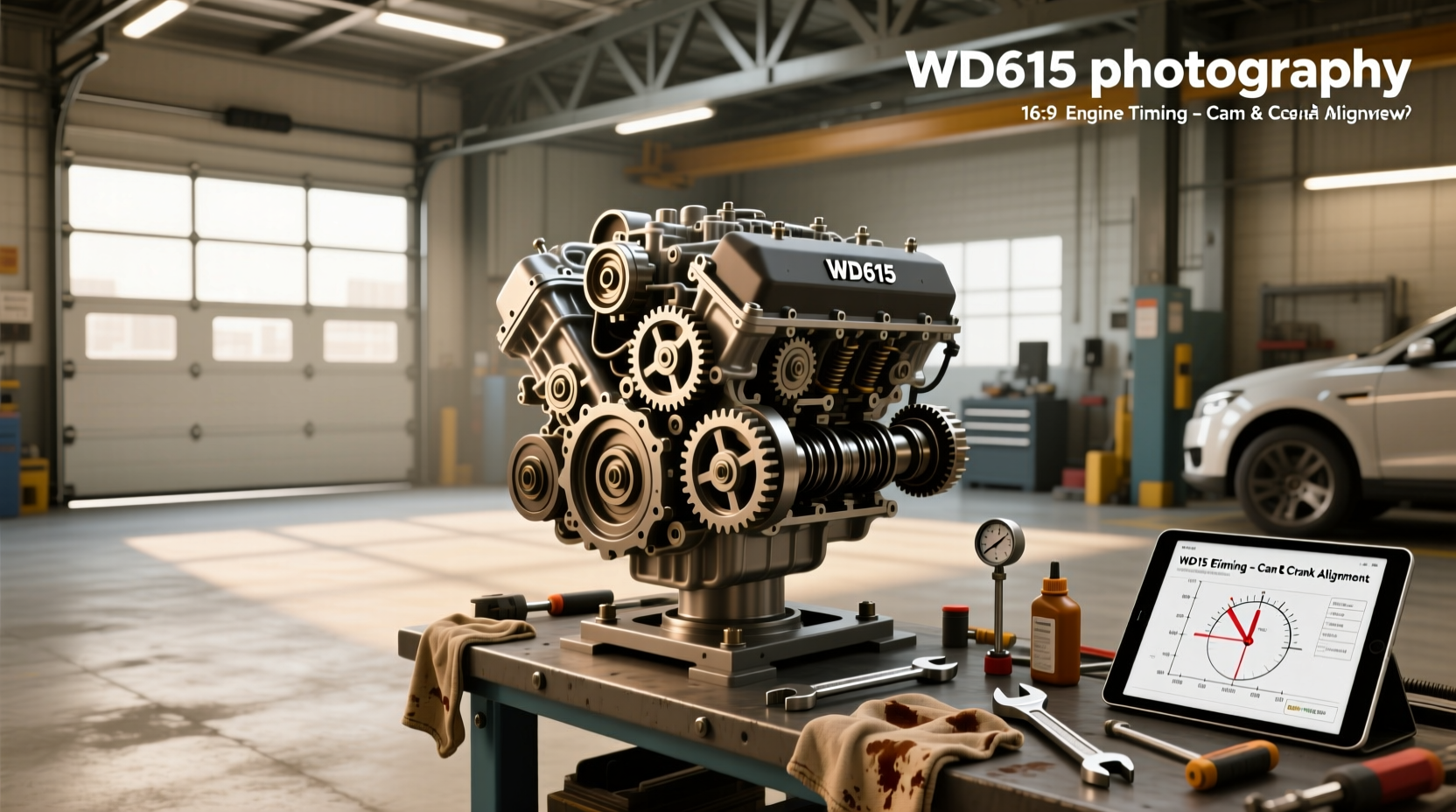
Setting the WD615 engine timing correctly is critical for optimal performance, fuel efficiency, and engine longevity—especially in heavy-duty Sinotruk HOWO trucks. If you're searching for how to adjust the timing on a WD615 diesel engine, particularly the injection pump or camshaft gear alignment, you’re not alone. Many fleet operators and mechanics face challenges due to unclear factory markings, worn components, or improper reassembly after maintenance. This comprehensive guide walks you through every step of the WD615 engine timing process, covering timing gear setup, injection pump synchronization, troubleshooting misalignment symptoms, and best practices verified by field technicians. Whether you're resetting the timing after replacing the pump or diagnosing power loss, this article gives you actionable insights to get it right the first time.
Understanding the WD615 Engine and Its Timing System
The Sinotruk WD615 series is a 6-cylinder inline, turbocharged diesel engine widely used in HOWO trucks, dumpers, and construction vehicles across Europe, Africa, and Asia. With displacements ranging from 9.7L to 10.3L and power outputs between 266hp and 420hp, it relies on precise mechanical fuel injection systems where correct diesel engine timing mark setting directly impacts combustion efficiency.
Unlike modern common rail engines that use electronic control modules (ECMs), the WD615 uses a mechanically governed plunger-type injection pump—typically made by Zexel or Bosch—synchronized via timing gears connected to the crankshaft and camshaft. Because there’s no ECU to self-adjust, any deviation in physical alignment leads to poor starting, black smoke, knocking, or even catastrophic damage like piston-to-valve contact.
⚙️ Key Components Involved in WD615 Timing:
- Crankshaft sprocket – Drives the camshaft and injection pump via intermediate gears
- Camshaft gear – Controls valve opening/closing events
- Injection pump drive gear – Rotates the fuel pump at half engine speed
- Timing housing cover – Houses alignment marks and seals the gear train
- Flywheel timing marks – Used to confirm Top Dead Center (TDC) position
- Injection pump body – Adjustable relative to its drive gear for fine-tuning
Because all these parts are mechanically linked, one incorrect tooth mesh can throw off the entire system. That's why understanding both static timing (initial setup) and dynamic verification (on-road behavior) is essential.
When Do You Need to Reset WD615 Engine Timing?
You don’t need to reset timing during routine service unless specific work has been done on internal engine components. Common scenarios requiring timing realignment include:
✅ Replacing the injection pump – Even if using an OEM unit, angular positioning must be recalibrated✅ Rebuilding the front cover or gear train – Removing the timing housing disrupts gear mesh alignment
✅ Engine overhaul or head replacement – Involves camshaft removal, which affects valve timing sync
✅ After experiencing hard starts or detonation – Could indicate advanced or retarded timing
✅ Following injector line replacement or major tune-up – As preventive verification
If your truck exhibits rough idling, excessive smoke under load, or reduced power despite good compression and injectors, timing should be among the first checks—not the last.
Step-by-Step: How to Set WD615 Engine Timing Accurately
🔧 Tools Required:
- Socket wrench set (17mm–24mm)
- Torque wrench (for final bolt tightening)
- Flywheel turning tool or large spanner
- Timing pin or TDC locator tool (can be homemade steel rod)
- Marker pen or paint for marking gears
- Service manual (preferably Sinotruk AZ9719040001 series)
- Clean rags and degreaser
Step 1: Position the Engine at Top Dead Center (TDC)
📍 Begin with cylinder #1 at TDC on the compression stroke. This ensures all timing references align properly.
- Remove the valve cover to visually confirm both valves for cylinder #1 are closed.
- Rotate the engine clockwise using the crankshaft pulley bolt until the flywheel mark lines up with the pointer on the bellhousing.
- Insert a TDC pin through the inspection hole in the flywheel housing to lock the crankshaft in place.
Note: Some models use a hole near the starter mount; refer to your model-specific manual. Never force the pin—if resistance occurs, rotate slightly and retry.
Step 2: Align Camshaft and Crankshaft Gears
Once the crankshaft is locked at TDC:
- Check the camshaft gear—it should have a stamped mark aligned with a corresponding notch on the timing housing.
- On most WD615 variants (e.g., WD615.69, WD615.50), this is a dot or triangle facing upward when cylinder #1 is at TDC.
- If gears were removed, ensure the keyway on the camshaft matches the gear spline, then reinstall with proper torque (usually 180–200 Nm).
Step 3: Install and Time the Injection Pump
This is often where errors occur—even experienced mechanics skip critical steps.
- Ensure the injection pump drive gear is already installed and meshed with the intermediate/idler gear.
- Locate the timing mark on the pump flange (a small groove or punch mark).
- Align this mark with a fixed reference point on the pump mounting surface (often cast into the block).
- Gently insert the pump while keeping the shaft engaged, then hand-tighten bolts.
⚠️ Important: The pump must be rotated slightly against spring tension during installation so that when released, it settles into correct phase. Failure here causes the timing to shift upon startup.
Step 4: Fine-Tune Using the “Blow Test” or Pressure Method
To verify injection timing without specialized tools:
🔧 Blow Test Procedure:- Disconnect the high-pressure fuel line from cylinder #1 injector.
- Attach a clear tube back to the injector and submerge the other end in diesel fuel.
- Slowly rotate the engine clockwise while watching for fuel movement.
- Stop turning when fuel begins to rise—this indicates start of injection.
- Double-check flywheel position: It should read approximately 3–5° before TDC depending on engine variant.
| Engine Model | Injection Start (BTDC) | Flywheel Mark Offset |
|---|---|---|
| WD615.69 | 3.5° ± 0.5° | Marked line at -3.5° |
| WD615.50 | 4.0° ± 0.5° | Dash mark near window |
| WD615.47 | 5.0° ± 0.5° | Double notch visible |
If out of range, loosen the pump mounting bolts slightly and rotate the body forward (to advance) or backward (to retard), then recheck.
Common Mistakes When Setting WD615 Timing
Even with correct procedures, several pitfalls lead to repeated failures:
❌ Mistake 1: Assuming All WD615 Engines Use Identical MarksDifferent horsepower ratings and emission standards (Euro II vs Euro III) alter timing specs. Always confirm your exact engine code (e.g., WD615.69 vs WD615.47) before proceeding.
❌ Mistake 2: Ignoring Gear Backlash During Reassembly
When reinstalling gears, failing to account for gear clearance leads to false alignment. Always rotate the engine two full turns after initial setup and recheck all marks.
❌ Mistake 3: Forgetting to Prime the Fuel System
Air trapped in the injection pump prevents accurate testing. Bleed all fuel lines and use a hand primer before attempting rotation.
❌ Mistake 4: Using Worn or Non-OEM Gears
Aftermarket timing gears sometimes have incorrect tooth profiles or offset marks. Stick to OEM-specified parts (Sinotruk part numbers like AZ1500010932 for housing) whenever possible.
❌ Mistake 5: Not Verifying After Initial Fire-Up
Engine heat and oil pressure can shift components slightly. Run the engine to operating temperature, shut down, and reconfirm alignment cold.
Signs Your WD615 Engine Timing Is Off
🔍 If you suspect timing issues post-repair, watch for these symptoms:
- Hard starting, especially when hot – Retarded timing delays ignition
- Excessive black or white smoke – Poor atomization due to mistimed injection
- Loud knocking or pinging under load – Advanced timing causes premature combustion
- Loss of power despite normal boost pressure – Combustion event not synchronized with piston position
- Fuel leaking from injector lines – High backpressure from incorrect timing waves
- Overheating or high exhaust temps – Late combustion dumps energy into exhaust rather than crankshaft
If multiple signs appear together, do not continue operation. Prolonged running with bad timing risks bent connecting rods, blown head gaskets, or cracked pistons.
Regional Variations and Compatibility Notes
🌍 The WD615 engine is produced in various configurations globally. While core architecture remains consistent, regional emissions regulations affect calibration:
- China Domestic Models (Euro II/III): Typically run more aggressive timing for higher output; require lower cetane fuel
- African Export Versions: Often detuned for durability; timing set conservatively to handle variable fuel quality
- European Operators: Must comply with local noise and smoke limits; some retrofit electronic governors affecting perceived timing behavior
Always consult the VIN or engine serial number to determine original factory settings. A truck originally built for Nigeria may perform poorly in Germany if timing isn't adjusted per ambient conditions and legal requirements.
Can You Adjust WD615 Timing Without Special Tools?
Yes—but with limitations. While dedicated timing lights or oscilloscopes offer precision, most field adjustments rely on mechanical references:
✅ DIY-Friendly Methods:- Flywheel degree wheel + pointer (homemade)
- Compression test + stethoscope on injector line
- Diesel drip method (as described earlier)
Maintenance Tips to Prevent Future Timing Issues
🧼 Preventive Measures:- Inspect timing cover seals annually for oil leaks—contamination attracts debris
- Torque gear housing bolts to spec (usually 70–80 Nm) in a crisscross pattern
- Replace worn idler bearings—they cause gear wobble and erratic timing
- Use only high-quality multi-grade diesel oil to maintain hydraulic lifter stability
- Record timing values after each adjustment for future reference
Regular visual inspections during oil changes can catch early signs of gear wear or chain stretch (in newer variants). Early detection avoids costly downtime.
Conclusion: Getting WD615 Timing Right Matters
Accurate WD615 engine timing isn’t just about following steps—it’s about understanding how mechanical synchronization affects real-world performance. From setting TDC correctly to verifying injection onset with simple tools, each stage requires attention to detail. Missteps lead to avoidable repairs, increased fuel costs, and safety risks on the road.
By following the procedures outlined here—including double-checking alignment, avoiding common misconceptions, and validating results under load—you ensure reliable operation whether hauling freight across Europe or working on remote job sites. Remember: Precision beats guesswork every time in diesel engine maintenance.
Frequently Asked Questions (FAQs)
- ❓ How do I know if my diesel engine timing is off?
- Look for hard starting, unusual knocking sounds, excessive exhaust smoke, or sudden power loss. Confirm by checking flywheel and pump timing marks against factory specs.
- ❓ What should WD615 injection pump timing be set at?
- Typically between 3.5° and 5.0° BTDC depending on model. For example, WD615.69 is usually 3.5° BTDC, while WD615.47 runs at 5.0° BTDC. Always verify using engine serial number.
- ❓ Can I set engine timing without removing the injection pump?
- Yes, minor adjustments can be made by loosening the pump mounting flange and rotating the body slightly. But full realignment requires access to drive gear engagement.
- ❓ Why does my HOWO truck knock after changing the fuel pump?
- Knocking often means the new pump was installed with advanced timing. Recheck alignment—especially if the drive gear was remeshed incorrectly.
- ❓ Are there videos showing real WD615 timing procedures?
- Yes, several YouTube channels like "Hydraulic Mechanics 777" and "Tekingz Vlog" show practical demonstrations. Use them as visual aids, but always cross-reference with official manuals.





 浙公网安备
33010002000092号
浙公网安备
33010002000092号 浙B2-20120091-4