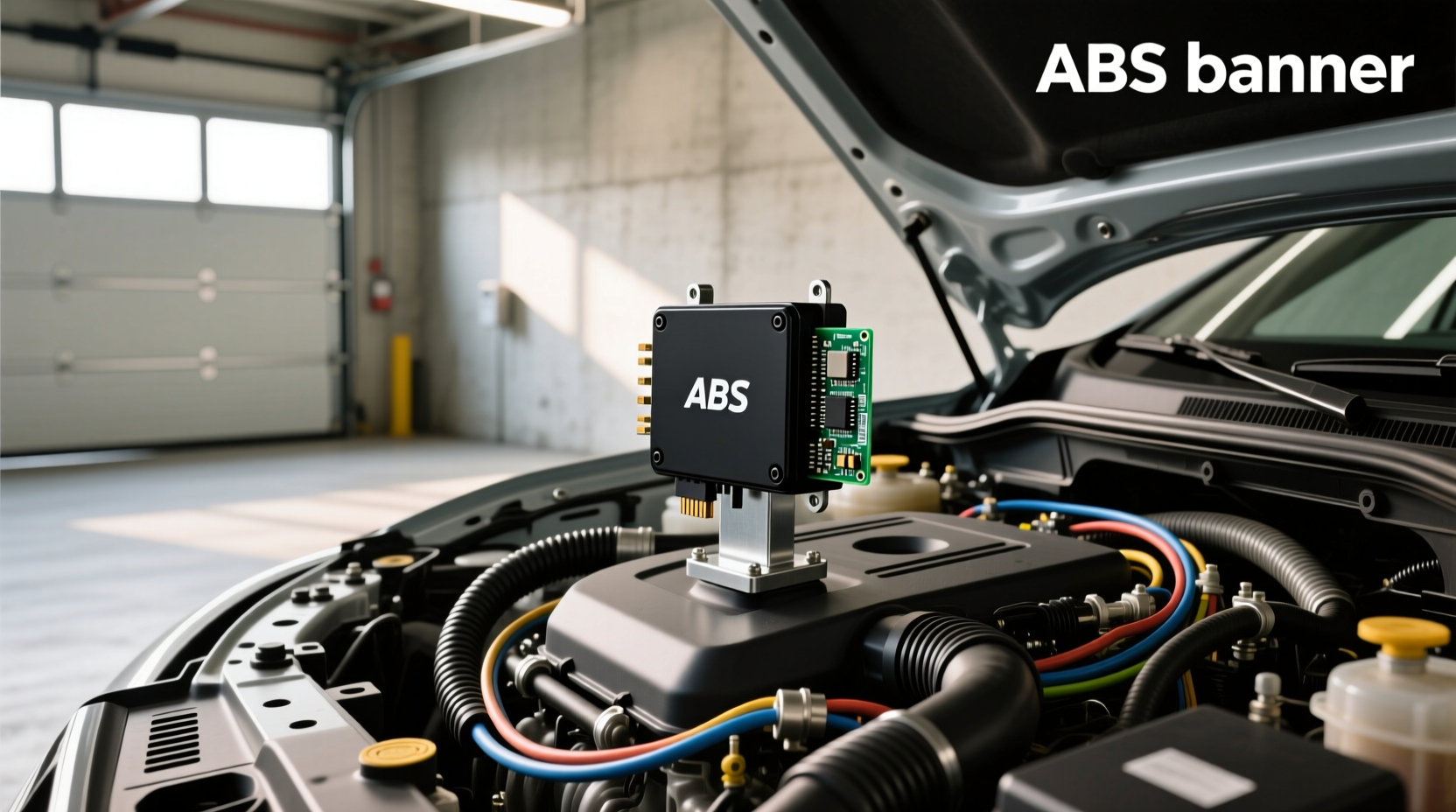
If you're searching for the ABS control module location in your car, you're not alone. This critical component of your vehicle’s braking system is typically found in the engine compartment near the brake master cylinder or integrated into the hydraulic control unit. Knowing the exact abs control module location by model is essential for accurate diagnostics, repair planning, or part replacement. In most vehicles—such as Ford F-150s, Honda Accords, Toyota Camrys, and Chevrolet Trailblazers—the module resides in the front engine bay, but placement can vary significantly between makes and years.
What Is the ABS Control Module?
The ABS (Anti-lock Braking System) control module ⚙️ is a microprocessor that monitors wheel speed sensors and manages brake pressure during sudden stops or slippery conditions. It prevents wheels from locking up by rapidly pulsing the brakes, maintaining steering control and reducing stopping distances on low-traction surfaces.
This electronic unit receives real-time data from individual wheel-speed sensors. When it detects imminent wheel lockup, it signals solenoids within the hydraulic control unit to modulate brake pressure. The module also runs self-diagnostics at startup and stores fault codes when issues arise, which can be retrieved using an OBD-II scanner 🔍.
Why Knowing the Exact Location Matters
Finding the correct ABS control module location isn’t just about curiosity—it directly impacts maintenance efficiency and cost:
- DIY Repairs: If you’re replacing or testing the module yourself, knowing where it is saves time and avoids unnecessary disassembly.
- Diagnostic Accuracy: Mechanics often check physical connections and wiring harnesses before concluding the module has failed.
- Part Purchasing: Some modules are model- and even year-specific due to software calibration; confirming location helps ensure compatibility.
- Safety Verification: A malfunctioning ABS system compromises braking performance—especially in wet or icy conditions.
Typical ABS Control Module Locations by Vehicle Type
While there's no universal rule, manufacturers follow general design patterns based on platform architecture and braking system configuration. Below is a breakdown by common vehicle categories:
📍 Front Engine Bay (Most Common)
In the majority of passenger cars and light trucks, the ABS control module sits in the engine compartment. Look along the firewall or near the brake master cylinder. Examples include:
- Ford F-150 (2004–2014): Mounted on the driver’s side inner fender well, behind the strut tower.
- Honda Accord (2003–2012): Located on the passenger side, close to the master cylinder with visible brake lines running into it.
- Toyota Camry (2007–2011): Integrated into the ABS hydraulic assembly bolted to the frame rail near the radiator support.
🔧 Under the Dashboard (Some European Models)
Certain BMW, Mercedes-Benz, and Volvo models route the ABS electronics inside the cabin for better protection against heat and moisture. These units may sit under the dash on the driver’s side, sometimes requiring pedal assembly removal for access.
🏭 Near the Frame Rail or Subframe (Trucks & SUVs)
Larger vehicles like the Chevy Trailblazer or GMC Envoy sometimes place the module lower in the chassis to reduce hose length and improve fluid dynamics. However, this exposes it to road debris, corrosion, and water damage—common causes of premature failure.
👥 Integrated Within the Powertrain Control Module (Rare Cases)
A few compact or older economy cars combine ABS logic with the main ECU. While rare today, this integration means diagnosing ABS faults requires full PCM evaluation.
| Vehicle Make/Model | Typical ABS Module Location | Access Difficulty |
|---|---|---|
| Ford F-150 | Driver’s side engine bay, near strut tower | Moderate |
| Honda Accord | Passenger side, adjacent to master cylinder | Easy |
| Toyota Camry | Front frame rail, behind bumper support | Moderate |
| Chevrolet Trailblazer | Below engine, near subframe | Difficult |
| Jeep Wrangler (JK) | Firewall-mounted, driver’s side | Easy |
| BMW 3 Series (E90) | Under dashboard, left side | Difficult |
Common Symptoms of a Failing ABS Control Module
Before diving under the hood, recognize warning signs that point to ABS module trouble ❗:
- ABS Warning Light Stays On: After ignition startup, the light should blink then turn off. If it remains illuminated, a fault code is stored.
- Firm Brake Pedal with No ABS Activation: During hard braking on slick surfaces, the system should pulse the brakes. Without feedback, the module may not be engaging.
- Wheels Lock Up Easily: Especially on wet pavement or gravel, indicating loss of modulation.
- Inaccurate Speedometer Readings: Since wheel speed data feeds both ABS and speed display, corruption here can affect instrument cluster output.
- Constant Pump Noise After Braking: A failing relay or internal short may cause the pump motor to run continuously.
- Intermittent Traction Control Issues: Modern systems share sensors and logic—failure in one affects the other.
How to Confirm the ABS Module Location in Your Car
Even if you know your model generally places the module in the engine bay, exact positioning varies. Here’s how to confirm it accurately:
Step 1: Consult the Owner’s Manual or Repair Guide ✅
Your vehicle’s service manual will have diagrams showing component locations. Factory manuals often label the ABS control unit clearly. Third-party resources like Haynes or Mitchell1 also provide detailed schematics.
Step 2: Use VIN-Based Lookup Tools 🌐
Many auto parts suppliers offer VIN-specific fitment tools. Enter your Vehicle Identification Number to see compatible components and sometimes installation diagrams that reveal placement.
Step 3: Trace the Brake Lines and Wiring Harness 🔧
Follow the metal brake lines from the master cylinder. They usually lead directly to the ABS hydraulic block, where the electronic module attaches. Also look for a multi-pin electrical connector (often 10+ pins) leading to a black plastic housing—this is likely the control unit.
Step 4: Check for Labels or Part Numbers 📋
Once located, inspect the unit for manufacturer labels (e.g., Bosch, Delphi, Aisin). Note the part number—it’s crucial for ordering replacements or researching known issues.
Can You Replace the ABS Module Yourself?
Replacing the ABS control module is technically feasible for DIYers with intermediate skills, but several factors influence success:
- Fluid Handling: Disconnecting brake lines introduces air into the system. You’ll need to bleed the brakes thoroughly afterward, ideally with a pressure bleeder or scan tool capable of cycling the ABS pump.
- Electrical Calibration: Some vehicles require module coding or reprogramming after replacement. Without proper tools, the new unit won’t function even if physically identical.
- Sealing Components: Reuse old seals or O-rings at your own risk—they often degrade and cause leaks.
- Safety First: Never work on the braking system without securing the vehicle and relieving pressure properly.
If unsure, consider professional help—especially if your car uses advanced driver assistance systems (ADAS), which rely on accurate wheel speed data.
Cost Considerations: Repair vs. Replace
The cost to repair or replace an ABS control module varies widely:
- New OEM Unit: $600–$1,500 depending on make and integration level.
- Remanufactured Module: $200–$500, often pre-programmed and tested.
- Rebuild Services: Companies specialize in repairing internal circuit boards or replacing faulty relays—costs range from $100–$300.
- Labor: $100–$300, depending on accessibility and bleeding requirements.
Before spending thousands, verify the diagnosis. Faulty wheel speed sensors, damaged wiring, or corroded connectors mimic module failure. Always perform basic tests first.
Myths and Misconceptions About ABS Modules
Several myths persist around ABS control units—here’s what’s true and false:
❌ Myth: "If the ABS Light Is On, the Module Must Be Bad"
Reality: Over 60% of ABS warnings stem from sensor issues or wiring problems, not the module itself. Always scan for codes before condemning the unit.
❌ Myth: "You Can Drive Forever with the ABS Light On"
Reality: While basic braking works, you lose anti-lock functionality. In emergencies, especially on ice or loose gravel, this increases skid risk.
❌ Myth: "All ABS Modules Are Interchangeable If They Fit"
Reality: Software calibration, firmware version, and communication protocols differ even between similar models. Swapping without verification leads to errors or non-operation.
Environmental and Design Factors That Affect Longevity
The location of the ABS control module influences its lifespan:
- Heat Exposure: Units mounted near exhaust manifolds or in direct sun degrade faster.
- Moisture and Road Salt: Undercarriage-mounted modules face higher corrosion risks, especially in winter climates.
- Vibration: Loose mounting brackets or worn bushings can crack solder joints over time.
- Electrical Surges: Jump-starting incorrectly or alternator voltage spikes can fry sensitive circuits.
Regular inspection during oil changes or tire rotations can catch early signs of damage—look for cracked housings, leaking fluid, or frayed wires.
When to Seek Professional Diagnosis
You should consult a technician if:
- You’ve replaced the module but the ABS light returns.
- Brake bleeding doesn’t resolve spongy pedal feel.
- Your scan tool shows inconsistent wheel speed readings across sensors.
- The vehicle exhibits drivability issues beyond braking (e.g., transmission shifting problems linked to speed signal errors).
A qualified shop can perform oscilloscope tests on sensor outputs, check ground integrity, and verify CAN bus communication—all critical for pinpointing root cause.
Final Tips for Locating and Servicing the ABS Module
To wrap up, here are actionable takeaways:
- Always start with a diagnostic scan. Don’t assume the module is faulty based on symptoms alone.
- Verify location using multiple sources. Cross-reference service manuals, forums, and teardown videos.
- Label all connectors and hoses. Prevent mistakes during reassembly.
- Use OEM-spec brake fluid. Contaminants or incorrect types damage internal valves.
- Test drive safely after repairs. Engage ABS intentionally on a dry, empty road to confirm operation.
Frequently Asked Questions
- ❓ Where is the ABS control module usually located?
- The ABS control module is most commonly found in the engine compartment near the brake master cylinder or integrated into the hydraulic unit. In some vehicles, it may be under the dashboard or mounted on the frame rail beneath the car.
- ❓ How do I reset my ABS control module?
- There’s no standard ‘reset’ button. To clear ABS codes, use an OBD-II scanner with ABS functionality. Some systems reset automatically after repairing the fault and driving above 10 mph. Battery disconnects may temporarily clear lights but won’t fix underlying issues.
- ❓ What happens when the ABS control module fails?
- Failure results in the ABS warning light staying on, reduced braking effectiveness in slippery conditions, possible wheel lockup, inaccurate speedometer readings, and disabled traction/stability controls.
- ❓ Can I drive with a bad ABS control module?
- Yes, standard braking remains functional, but you lose anti-lock protection. Avoid aggressive driving or poor weather conditions until repaired.
- ❓ Do ABS modules need programming after replacement?
- It depends on the vehicle. Many modern cars require module coding via a factory-level scan tool. Older models may work immediately if mechanically and electrically compatible.





 浙公网安备
33010002000092号
浙公网安备
33010002000092号 浙B2-20120091-4