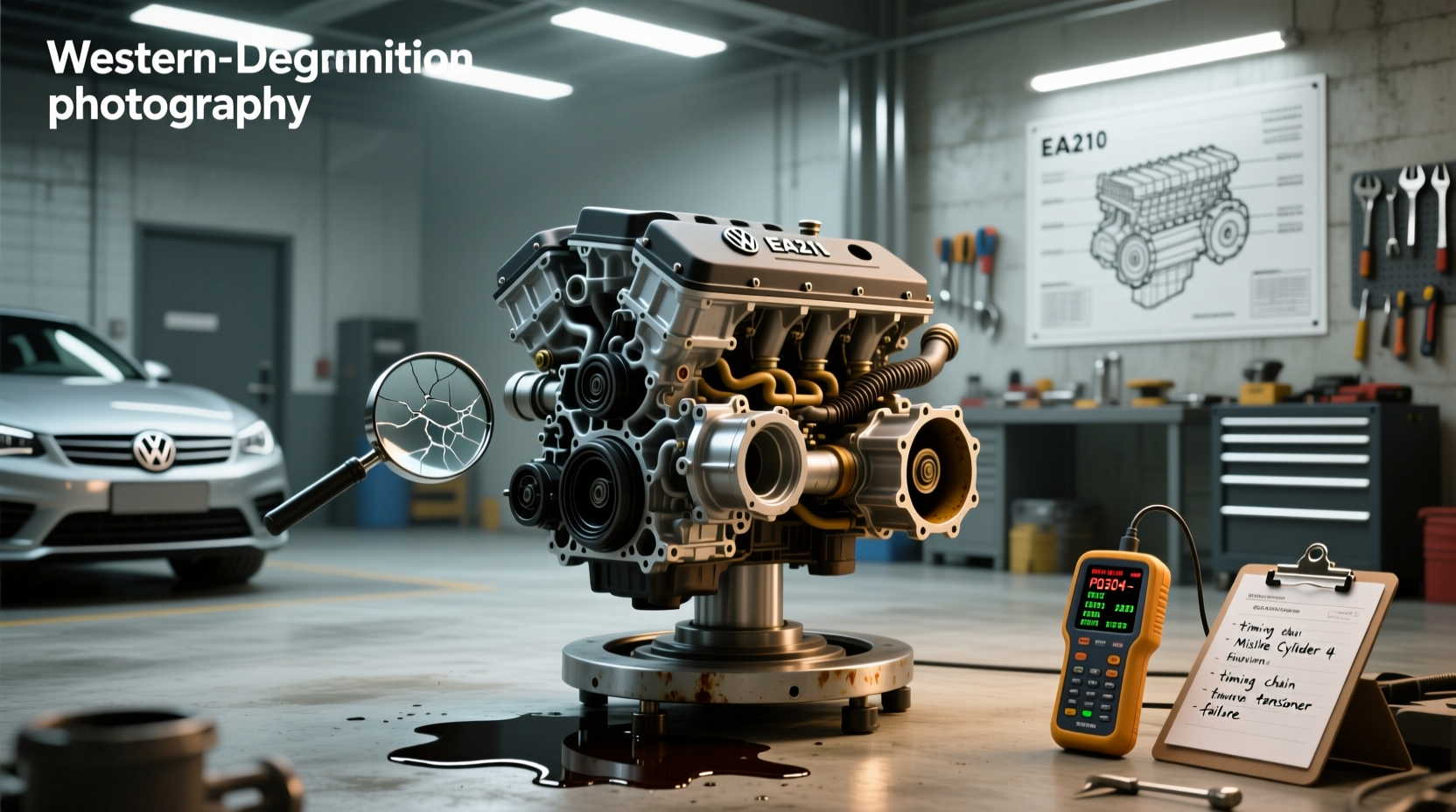
The Volkswagen EA211 engine is a widely used family of compact, fuel-efficient inline-three and inline-four gasoline engines found in models like the Golf, Jetta, Audi A3, and Škoda Octavia since 2012. While generally reliable when properly maintained, certain VW EA211 engine problems have emerged over time—especially in early turbocharged variants. Understanding these common issues, such as timing belt failures, excessive oil consumption, carbon buildup on intake valves, and coolant leaks, can help owners avoid costly repairs and extend engine life.
What Is the VW EA211 Engine?
🏭 The EA211 engine series was introduced by Volkswagen Group in 2011 as a successor to the EA111 platform. Designed for integration with the modular transverse matrix (MQB) architecture, this engine family emphasizes lightweight construction, improved thermal efficiency, and space-saving design. It includes both naturally aspirated and turbocharged direct-injection (TSI) versions ranging from 1.0L to 1.6L displacement.
⚙️ Key features include:
- Aluminum engine block with cast-iron cylinder liners
- Dual overhead camshafts (DOHC) with variable valve timing on the intake side
- Timing belt-driven valvetrain (not chain)
- Integrated exhaust manifold in the cylinder head for faster warm-up
- Use of turbocharging and direct fuel injection in TSI models
- Adoption of Miller cycle in later EVO versions for better efficiency
These engines power a wide range of vehicles across the VW Group, including the Volkswagen Golf, Polo, Jetta, Taos, Audi A1 and A3, SEAT Ibiza, and Škoda Fabia. Their popularity stems from strong fuel economy, responsive performance in smaller packages, and compatibility with modern emissions standards.
Are EA211 Engines Reliable? An Overview
✅ Overall, the EA211 engine is considered reliable—particularly post-2016 EVO revisions that addressed many earlier flaws. However, reliability heavily depends on regular maintenance and driving patterns. Short-trip city driving without sufficient warm-up periods increases risks related to carbon accumulation and oil contamination.
📌 Real-world data from owner forums and repair shops indicate that well-maintained EA211 units often surpass 150,000 miles (240,000 km), especially when key service intervals are strictly followed. But neglecting scheduled services—particularly timing belt replacement or oil changes—can lead to premature failure.
Top 7 Common VW EA211 Engine Problems
1. Timing Belt Failures ⚙️
One of the most critical concerns with the EA211 engine is its reliance on a rubber timing belt instead of a timing chain. Unlike chains, belts degrade over time and must be replaced at manufacturer-specified intervals.
🔧 Recommended replacement: Every 60,000–90,000 miles (96,000–144,000 km), depending on model year and region 1. Failure to replace the belt can result in catastrophic interference engine damage if it snaps or jumps.
❗ Warning signs:
- Squeaking or ticking noise from front of engine
- Misfires or rough idling
- Check engine light with camshaft or crankshaft sensor codes
📌 Pro Tip: Always replace the water pump, tensioner, and idler pulleys during timing belt service—they’re located behind the same cover and share similar lifespans.
2. Carbon Buildup on Intake Valves 🧼
A direct consequence of using only direct fuel injection (in pre-EVO models), carbon buildup occurs because fuel no longer washes over the back of intake valves. Without port injection, oil vapors and combustion byproducts accumulate, reducing airflow and causing poor idle, hesitation, or misfires.
🚗 Most affected models: Early 1.4 TSI EA211 engines (2012–2015).
🛠️ Solutions:
- Periodic walnut blasting of intake ports (~every 60k miles)
- Using high-detergent gasoline (Top Tier)
- Regular highway driving to promote self-cleaning
- Upgrading to EVO models with dual injection (port + direct)
3. Coolant Leaks from Water Pump or Housing 🔧
Many EA211 engines use an electric water pump integrated into the timing cover. While this improves efficiency, the plastic housing is prone to cracking due to heat cycling and pressure fluctuations.
📍 Common leak locations:
- Water pump seal or casing
- Coolant pipe connections near turbocharger
- Thermostat housing gasket
⚠️ Risks: Low coolant levels can lead to overheating and head gasket damage. Check coolant level monthly and inspect for white residue under the hood.
4. Oil Consumption Issues ⚠️
Some early EA211 1.4 TSI engines exhibit higher-than-normal oil consumption—sometimes losing a quart every 1,000 miles. This is often linked to piston ring design and PCV system behavior under high load or short-trip conditions.
🔍 Root causes:
- Piston ring coking due to infrequent oil changes
- PCV valve malfunction leading to increased crankcase pressure
- Worn turbocharger seals (less common)
✅ Mitigation strategies:
- Use VW 502 00 or 504 00 approved full-synthetic oil
- Change oil every 5,000–7,500 miles (8,000–12,000 km)
- Avoid prolonged idling or aggressive driving when cold
5. Turbocharger Wastegate Actuator Sticking ⚡
In turbocharged EA211 engines (e.g., 1.4 TSI), the wastegate actuator controls boost pressure. Over time, carbon deposits or lack of movement during short trips can cause it to stick open or closed.
📉 Symptoms:
- Lack of power or delayed turbo spool
- Overboost or underboost error codes
- Check engine light with P0299 (turbo underboost)
🛠️ Fixes:
- Regular decarbonization routines via extended highway runs
- Manual cleaning or replacement of actuator arm
- Software updates to improve actuator control logic
6. Cracked Pistons in High-Output Variants ❗
Reported primarily in high-output 1.4 TSI engines (150+ hp), some early EA211 units suffered from piston cracking due to thermal stress and inadequate cooling around the piston crown.
🔧 Affected models: Certain Golf GTI and R models pre-2015.
📌 Note: Volkswagen issued technical service bulletins and updated piston designs in later production runs. If considering a used high-performance variant, verify whether the engine has been upgraded or replaced.
7. Gasoline Particulate Filter (GPF) Clogging (EVO Models) ✨
Starting in 2017–2018, newer EA211 EVO engines equipped with GPFs (especially 1.5 TSI ACT) require longer regeneration cycles. City-only driving may prevent proper filter regeneration, triggering fault codes and reduced performance.
🚗 Signs of GPF issues:
- Reduced fuel economy
- Active regeneration warnings
- DPF-related error messages
✅ Best practices:
- Drive at highway speeds (>65 mph) for 15+ minutes weekly
- Avoid disabling regeneration prompts
- Use low-ash motor oil (C2/C3 rated)
EA211 Engine Generations: From Original to EVO Upgrades
Volkswagen made significant improvements starting in 2016 with the EA211 EVO update. These changes directly address several known weaknesses:
| Feature | Pre-2016 EA211 | EA211 EVO (2016+) |
|---|---|---|
| Fuel Injection | Direct only | Dual (port + direct) |
| Thermal Efficiency | Moderate | Improved via Miller cycle |
| Turbocharger | Fixed geometry | Variable geometry (VGT) option |
| Emissions Equipment | Catalytic converter | Gasoline particulate filter (GPF) |
| Valve Cleaning | Prone to carbon buildup | Reduced risk due to port injection |
✨ The addition of port fuel injection in EVO models significantly reduces intake valve carbon accumulation. Combined with the Miller cycle (early intake valve closing), these engines achieve up to 15% better fuel economy and lower NOx emissions.
How to Maintain Your EA211 Engine for Longevity
Proper maintenance is the single biggest factor in avoiding major VW EA211 engine problems. Follow these guidelines to maximize reliability:
1. Stick to Oil Change Intervals ⏱️
Use only VW-approved 502 00 (for non-GPF models) or 504 00 (for GPF-equipped engines) synthetic oils. Change every 5,000–7,500 miles or annually, whichever comes first.
2. Replace the Timing Belt on Schedule 🛠️
Don’t wait for symptoms. Replace the belt and associated components (tensioner, rollers, water pump) between 60,000 and 90,000 miles. Cost: $600–$1,000; skipping it risks $3,000+ in engine repairs.
3. Drive Strategically 🚗
Avoid exclusively short trips. Aim for at least one 20-minute highway drive per week to allow DPF/GPF regeneration, turbo clearing, and full engine warm-up.
4. Monitor Coolant and Oil Levels Monthly 📊
Check fluid levels regularly. A drop in coolant could signal a developing leak before overheating occurs.
5. Use Quality Fuel 🔗
Opt for Top Tier gasoline with detergent additives. Brands like Shell, Chevron, and Mobil have formulations that help reduce internal deposits.
Buying a Used Car with EA211 Engine: What to Watch For
If you're shopping for a used VW, Audi, or Škoda with an EA211 engine, perform these checks:
- 📄 Service history: Confirm timing belt replacement and consistent oil changes
- 🌡️ Coolant condition: Look for milky oil (sign of head gasket issue) or low coolant
- 💨 Exhaust smoke: Blue smoke indicates oil burning; white smoke may mean coolant leak
- 📱 Scan for codes: Use an OBD2 scanner to check for stored faults (P0300 misfire, P0016 cam timing, etc.)
- 🔊 Listen for noises: Whining turbo, ticking belt, or knocking pistons are red flags
📍 Regional considerations: In colder climates, ensure the thermostat and heater core function properly. In hot areas, verify radiator and cooling fan operation.
Myths vs. Facts About EA211 Engines
| Myth | Fact |
|---|---|
| "All EA211 engines burn oil" | Only some early 1.4 TSI units showed elevated consumption; later models improved |
| "The timing chain broke on my EA211" | EA211 uses a timing belt, not a chain—confusion is common |
| "Carbon cleaning isn't necessary" | Pre-EVO engines need periodic cleaning to maintain performance |
| "EA211 engines can't last beyond 100k miles" | Many exceed 150k+ with proper care |
When to Consider Engine Replacement or Repair
Not all issues require full engine replacement. Here’s how to decide:
- 🛠️ Minor issues (carbon buildup, small coolant leak): Address with routine service
- 🔧 Major mechanical failure (timing belt snap, cracked piston): Evaluate repair cost vs. vehicle value
- 🔄 Rebuilt or remanufactured long-block options available (~$2,000–$3,500 installed)
- 📊 Consider resale impact: A documented engine swap may reduce value unless done professionally
Conclusion: Balancing Performance and Practicality
The VW EA211 engine represents a solid balance of efficiency, compact design, and performance for everyday drivers. While certain common EA211 engine problems exist—particularly in early models—most are preventable with disciplined maintenance and informed ownership.
For prospective buyers, prioritize vehicles with complete service records and prefer EVO-generation engines where possible. For current owners, adhere to maintenance schedules, drive mindfully, and address small issues before they escalate.
By understanding what to look for and how to care for your EA211-powered vehicle, you can enjoy reliable transportation for years to come.
Frequently Asked Questions
- Does the VW EA211 engine have a timing belt or chain?
- The EA211 uses a timing belt, not a chain. It must be replaced every 60,000–90,000 miles to prevent serious engine damage.
- Is the EA211 engine reliable after 100,000 miles?
- Yes, provided it has been well-maintained. Regular oil changes, timing belt service, and driving habits greatly influence longevity.
- Which EA211 engine version is the most reliable?
- The post-2016 EA211 EVO engines (especially 1.5 TSI with ACT) are more refined, efficient, and less prone to carbon buildup due to dual injection and Miller cycle technology.
- Can I prevent carbon buildup on my EA211 engine?
- Yes. Use Top Tier gasoline, drive regularly at highway speeds, and consider professional intake cleaning every 60,000 miles for pre-EVO models.
- What is the average lifespan of an EA211 engine?
- With proper maintenance, most EA211 engines last between 150,000 and 200,000 miles. Some exceed 250,000 miles under ideal conditions.





 浙公网安备
33010002000092号
浙公网安备
33010002000092号 浙B2-20120091-4